Location: Cerkno / Stari plac / Slovenia
Date: Friday, 17.05.2019
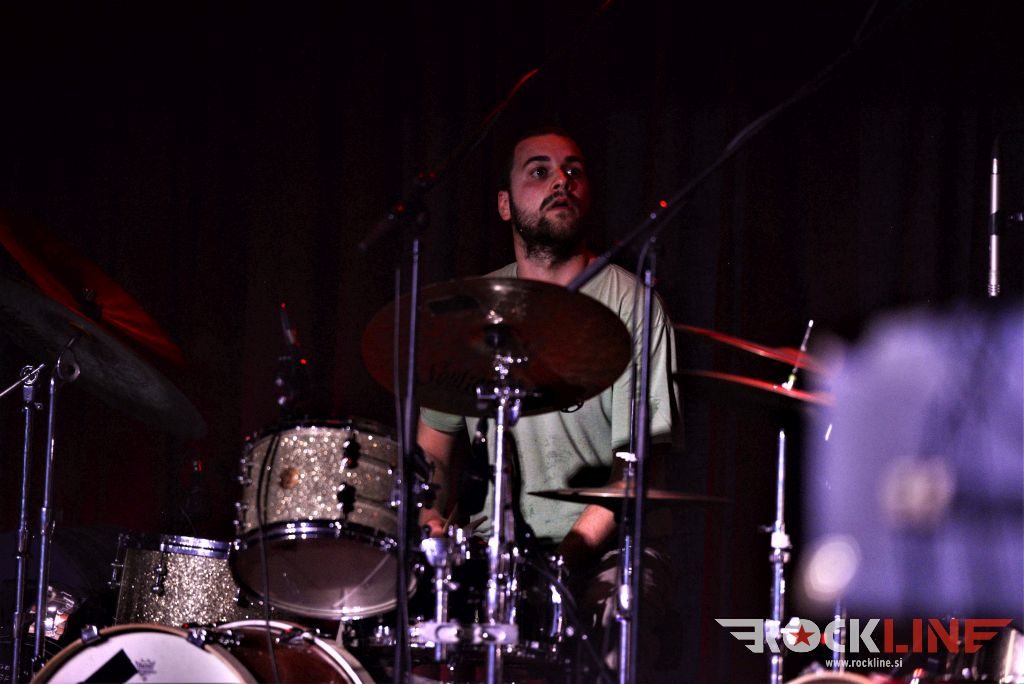
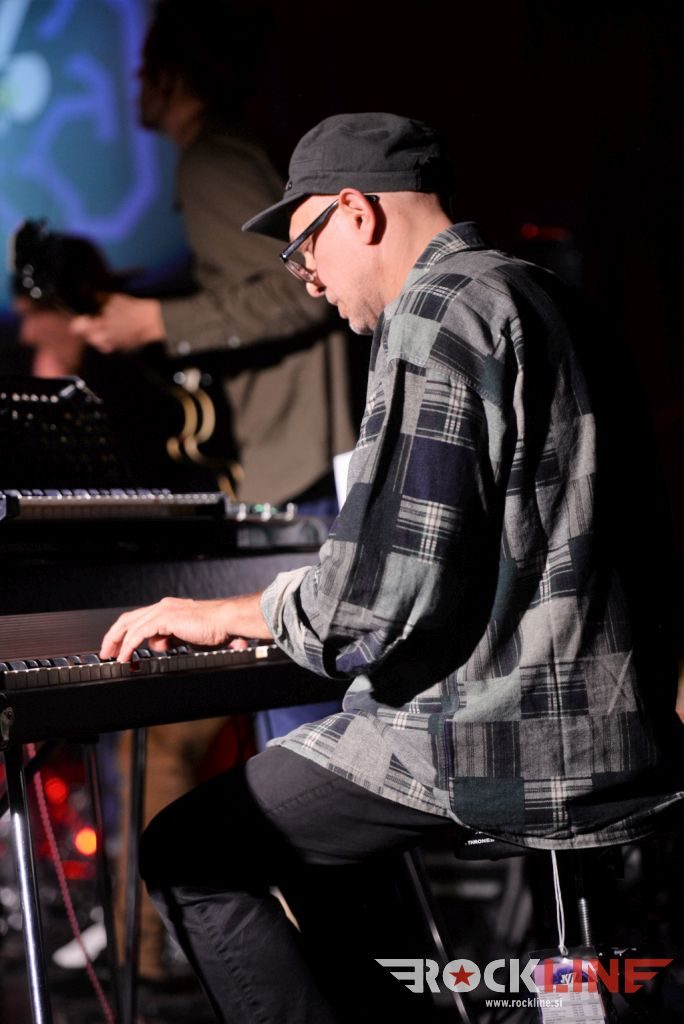
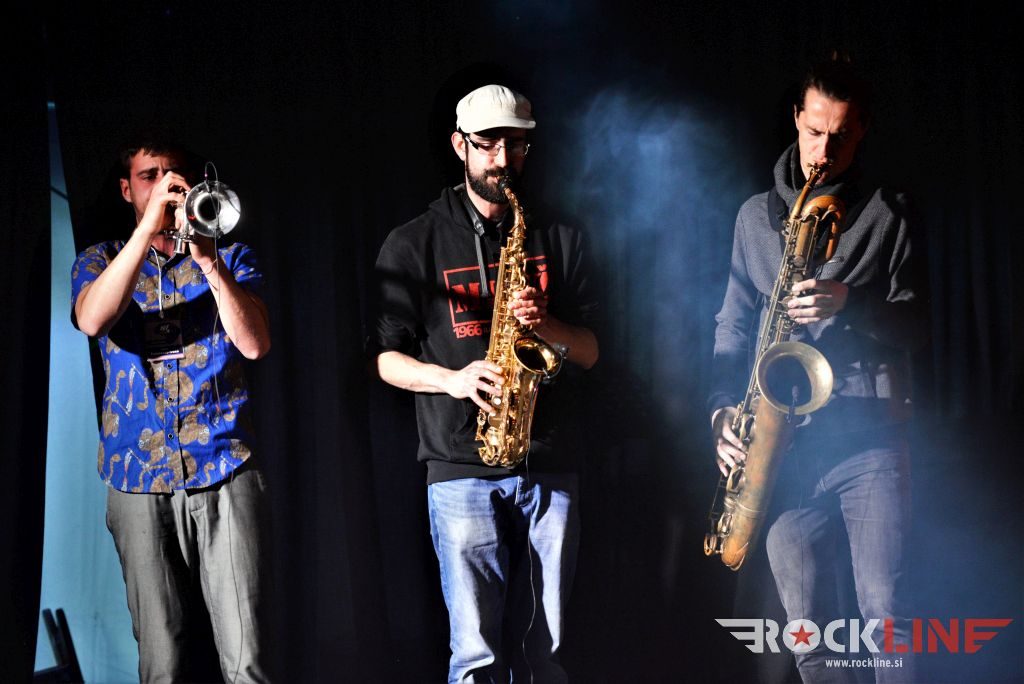
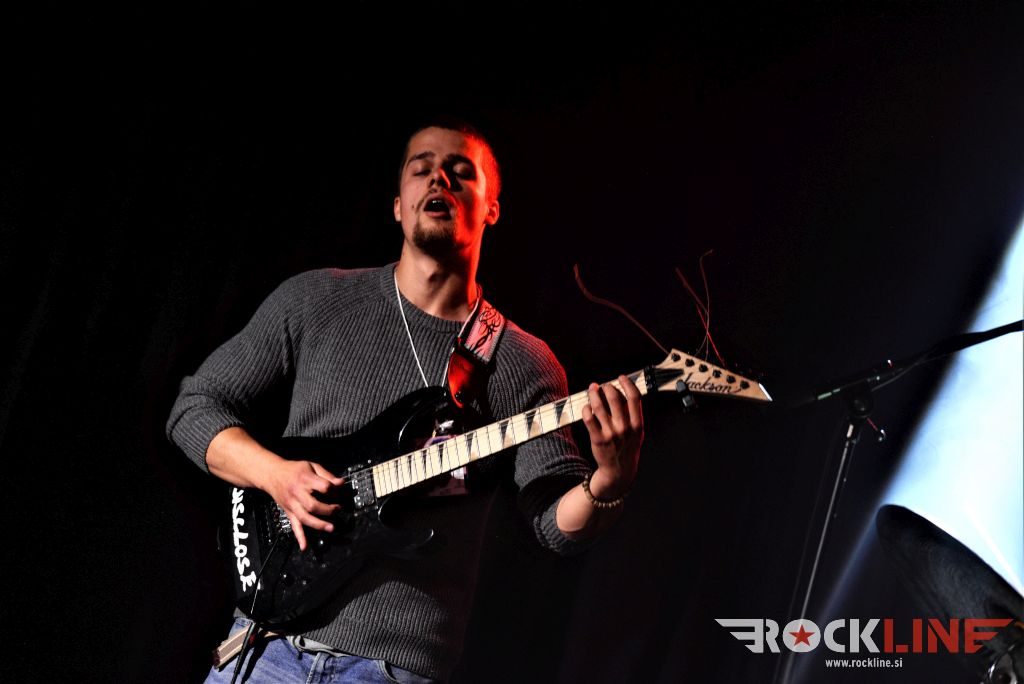
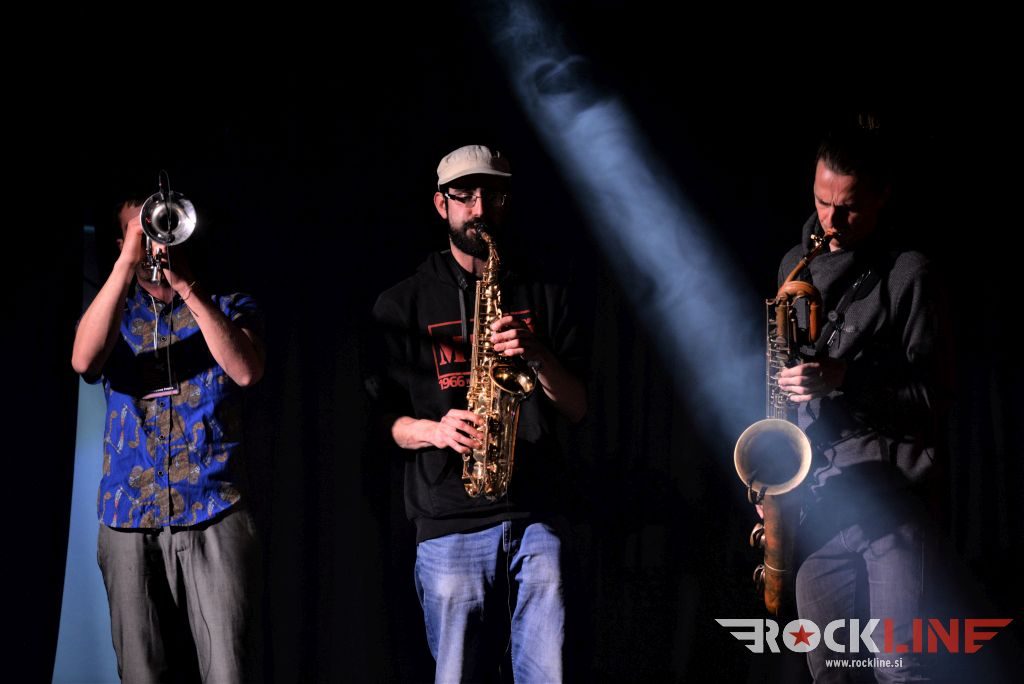
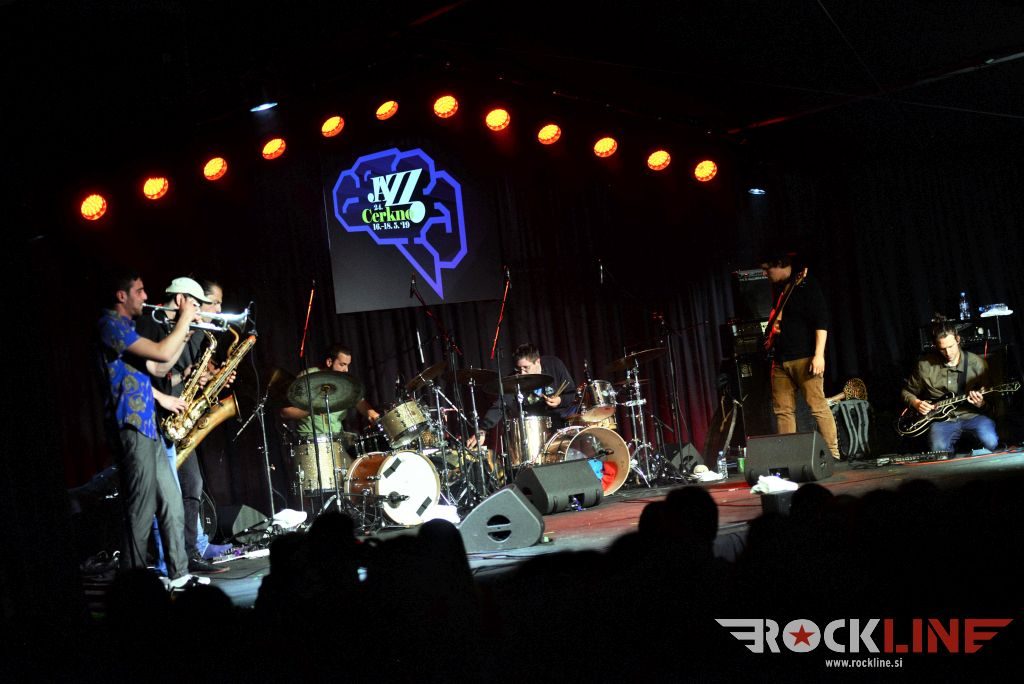
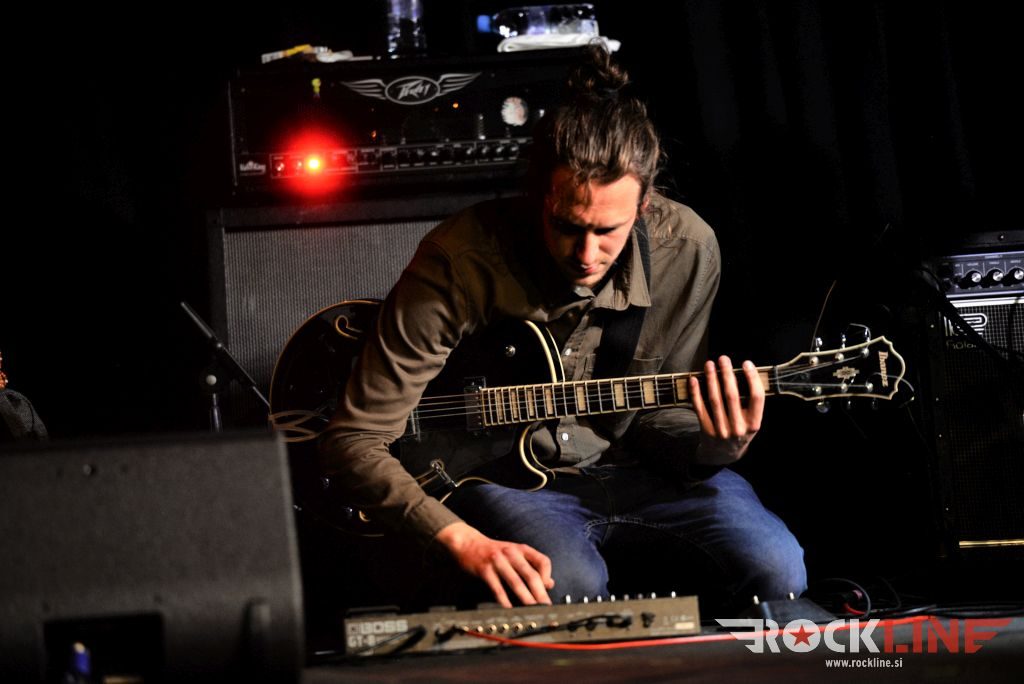
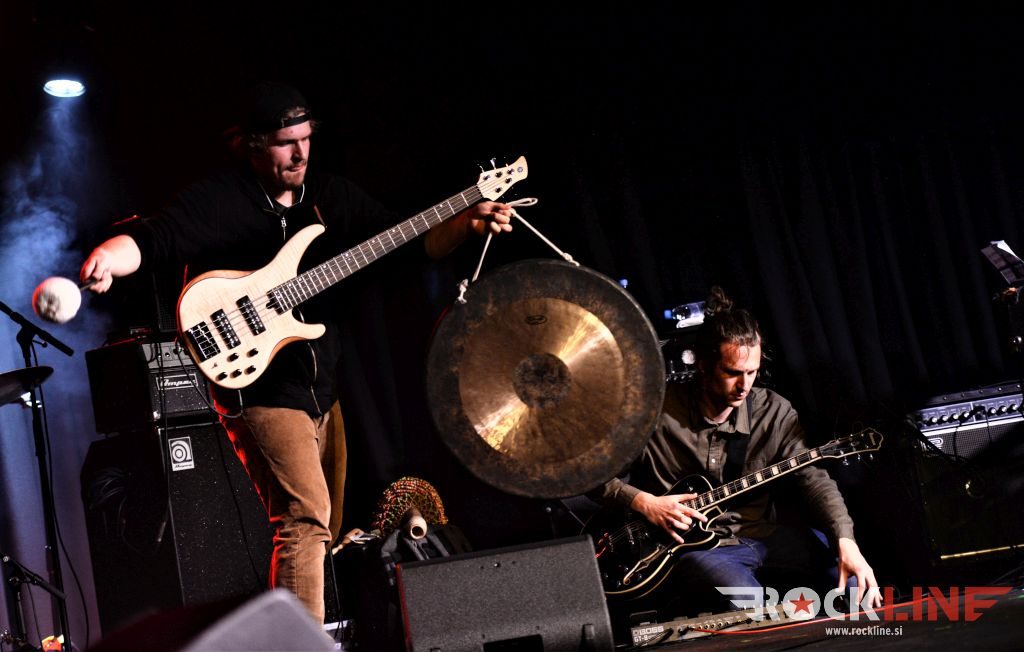
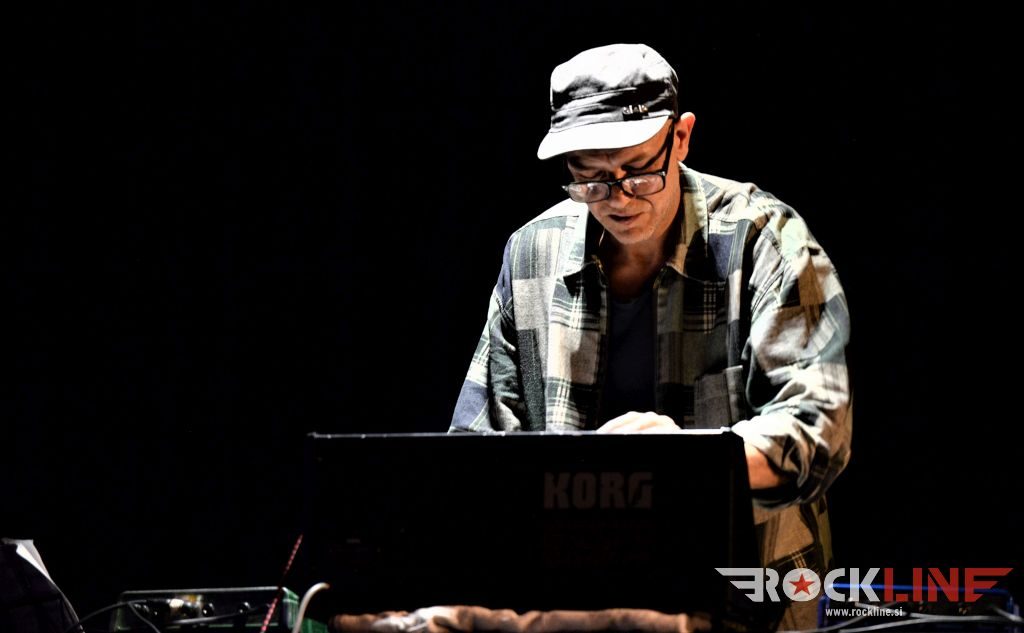
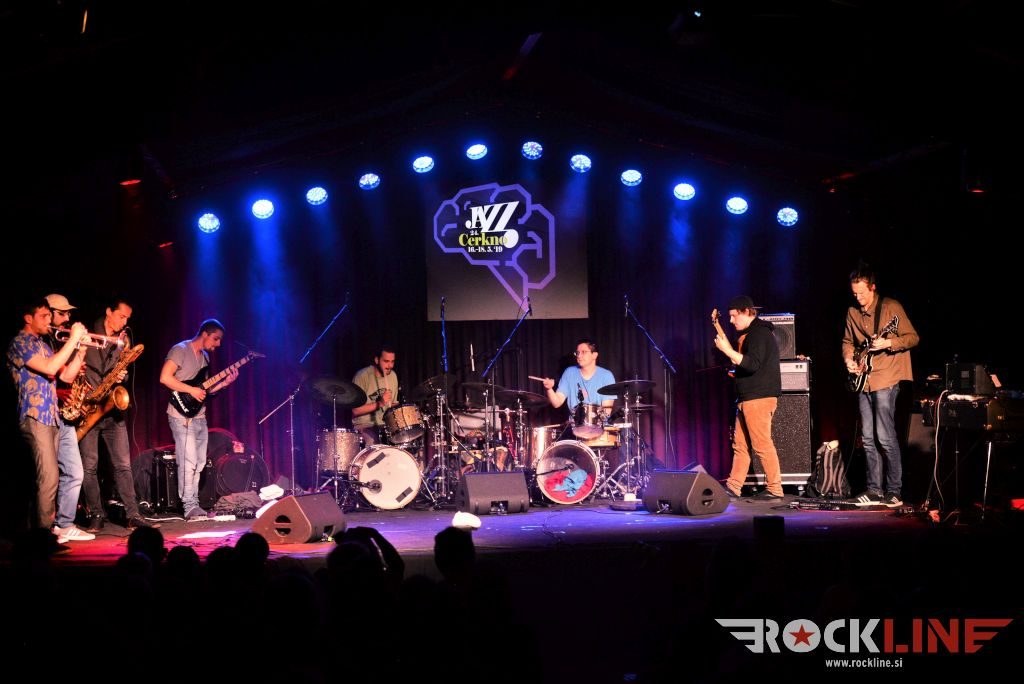
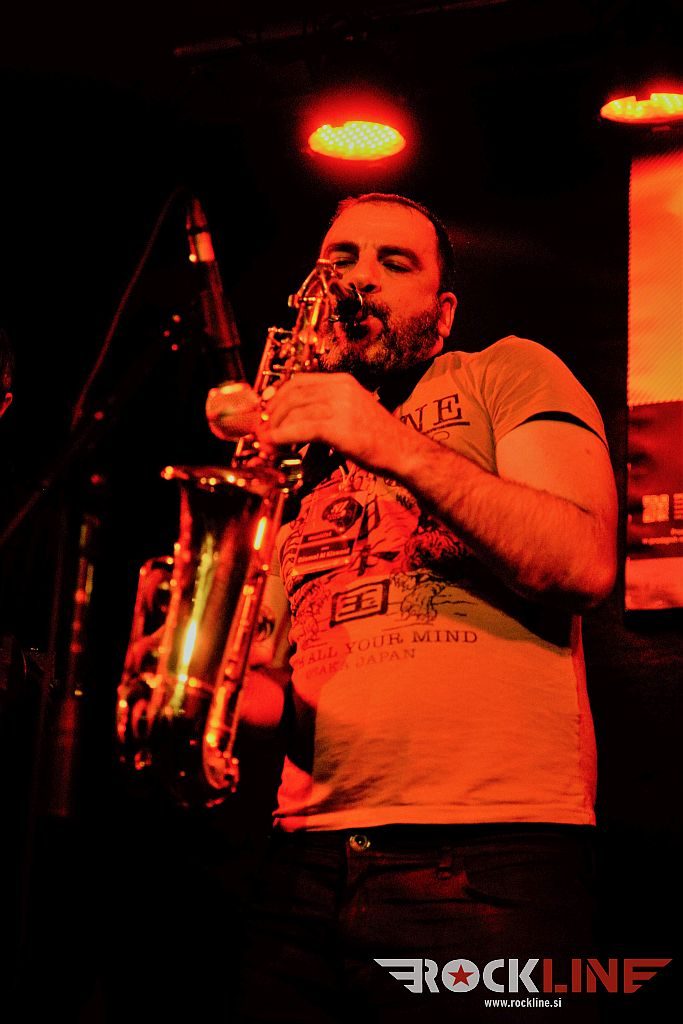
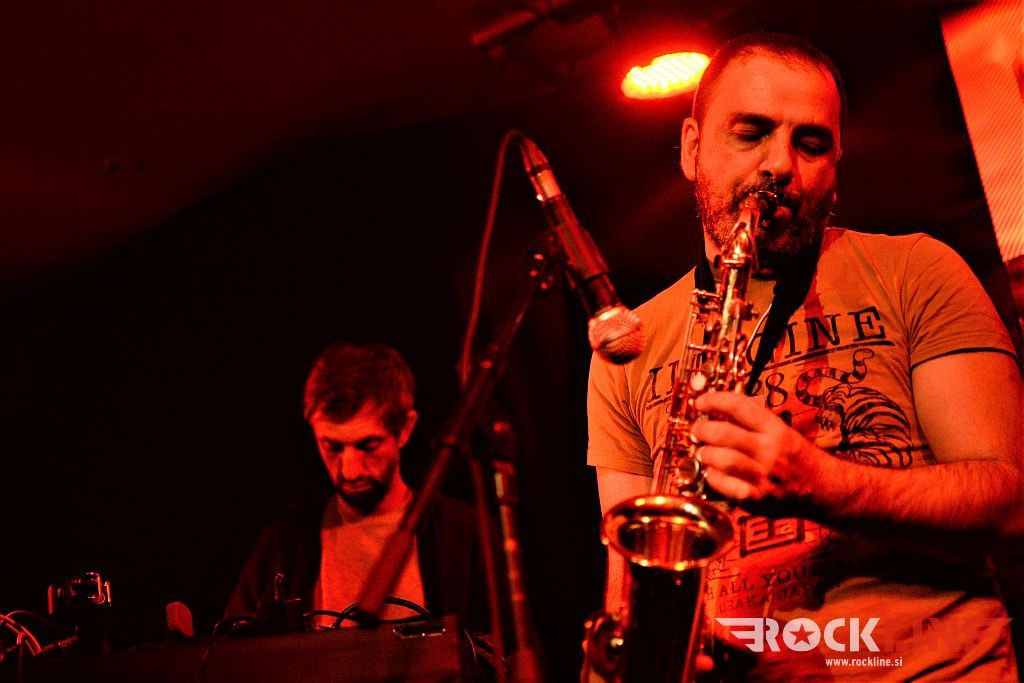
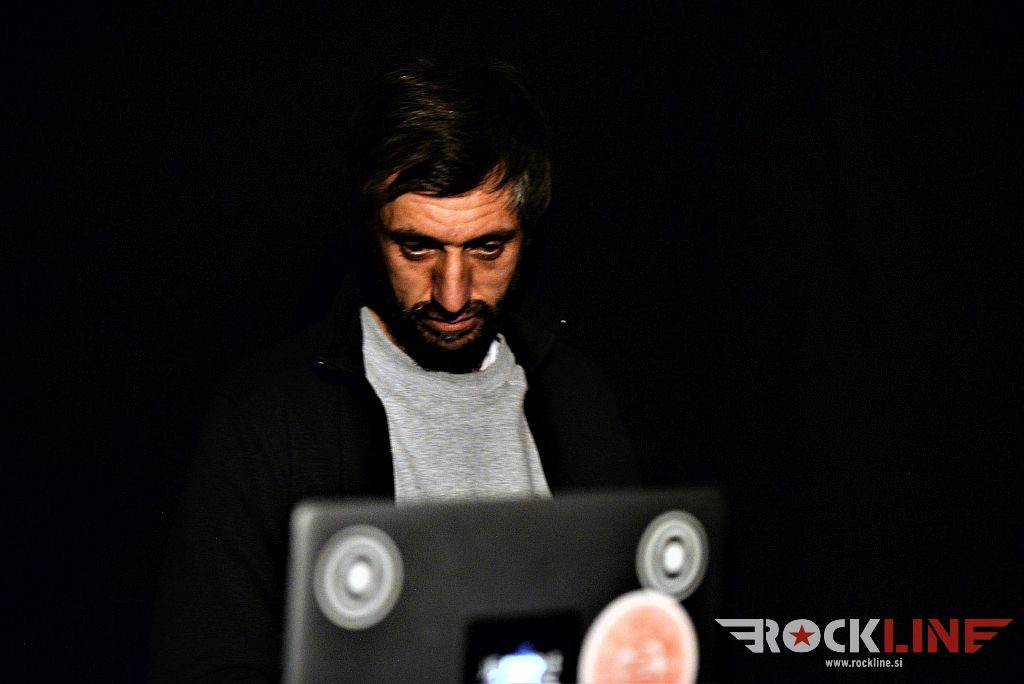
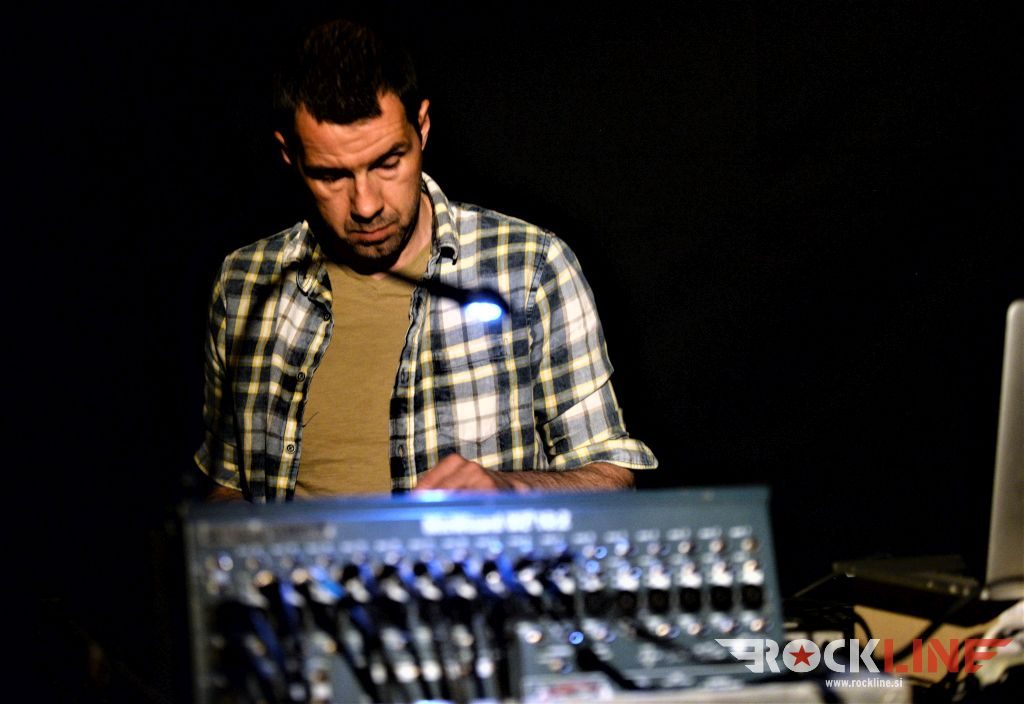
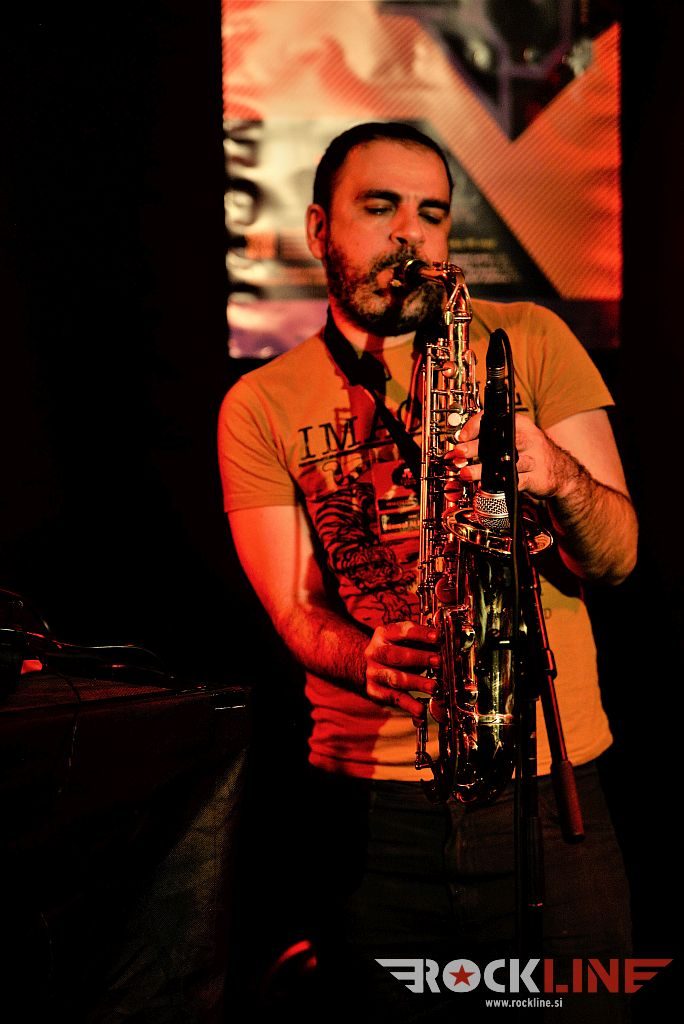
Day two of Jazz Cerkno festival! The first of the three acts on the festival’s second day was Koromač. That’s the plant that’s a bit of a “pain in the ass” when it comes to taste (for plenty of people anyway) — some love it to bits, while others just can’t get used to its peculiar flavor. The same goes for the Slovenian band of that name from Vrtojba, who had been happily hanging out in the foyer of the Gabrijel bar long before the show. You either love them hard or they just don’t grab you. We caught Koromač a while back, three years ago, at the Gala hala in Ljubljana, as part of the club’s beloved homegrown Thursdays. In their pocket they have the studio debut “Punk Enough?” (2015) – RockLine review HERE, which has also been out for quite a while now and, frankly, is “outdated.” If anyone from the band is reading this, they’ll get right away why “outdated” is a fitting adjective in this context, but still. The band, or rather the giant crew, made up of two guitarists, two drummers, a core horn section of tenor and alto sax plus trumpet, plus a bassist and a keyboardist, has grown into an incredibly forceful body of musical expression. Let’s refresh the names in the current lineup: Matjaž Bajc (electric bass), Urban Kušar (drums), Žiga Ipavec (drums), Aljaž Škrlep (electric guitar), Anton Lorenzutti (electric guitar), Jure Boršič (alto sax), Boštjan Simon (tenor and baritone sax), Francesco Ivone (trumpet) and Giorgio Pacorig (Korg MS-20, Rhodes).
Over the years Koromač have sharpened their senses, leveled up their playing and polished, or rather defined, their arrangements. In a word: they’ve matured. They’re developing an originality, an unusualness, which is no surprise since the members come out of the Zlatko Kavčič school (the drumming legend watched their set from the crowd), but they’ve slipped into a new dimension of their craft, and that puts them in a pretty special spot on the map of free-spirited rock-jazz fusion. Loose “jazzcore” is like the body of an amoeba — you can’t put a frame around it. The compositions work like extended jams, set up so that Koromač leave the beginnings and endings of the pieces totally “open,” which means the band can carve up every piece at every show in a noticeably transformed manner. The band uses its instrumentation far more effectively than when we first met them in January 2016 at Metelkova.
Koromač hit that real sweet spot between accessibility and improv adventures. Two guitars cut from completely different sonic cloths stretch the soundscape, contrasted by the horns on one side and widened by the keys on the other, while as a counterweight the rhythm section of two drummers and a bass guitar stands on equal footing. Two drummers with different styles, no less, which only hints further that the band is constantly experimenting and discovering new horizons. So Koromač have grown, they’ve served up some original novelties too, and it’s time for them to put out their new album. The guys are just “unhinged” enough to tease the more demanding listeners on one side, and at the same time musically accessible, even occasionally loaded with the sonic terror of riff-heavy rumbling, to grab the attention of those who like to get fired up on simpler musical forms. Great shot!
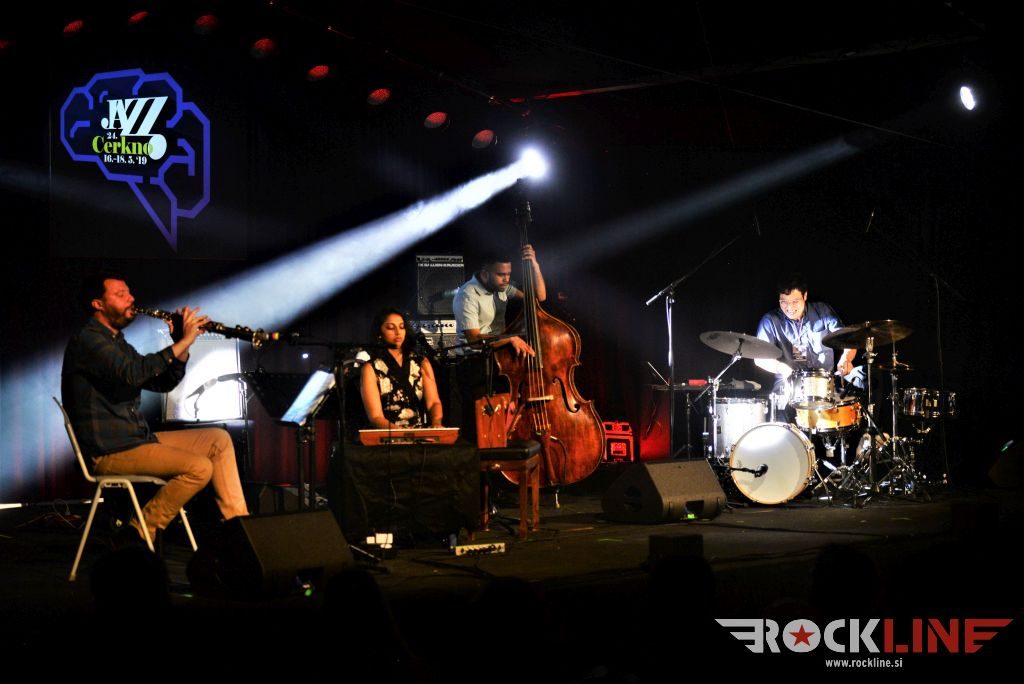
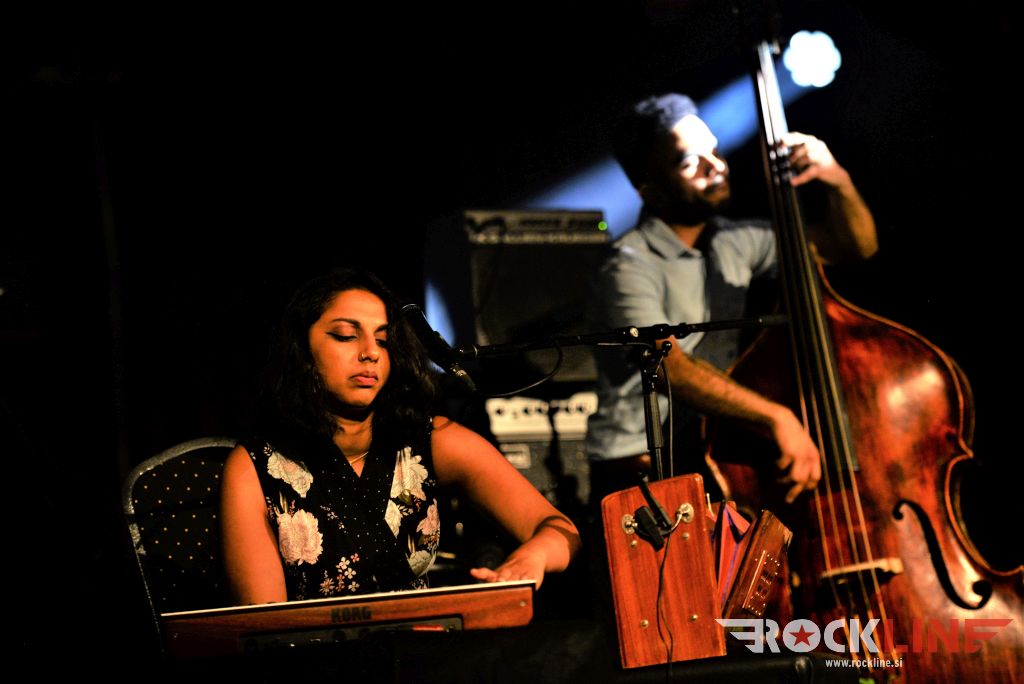
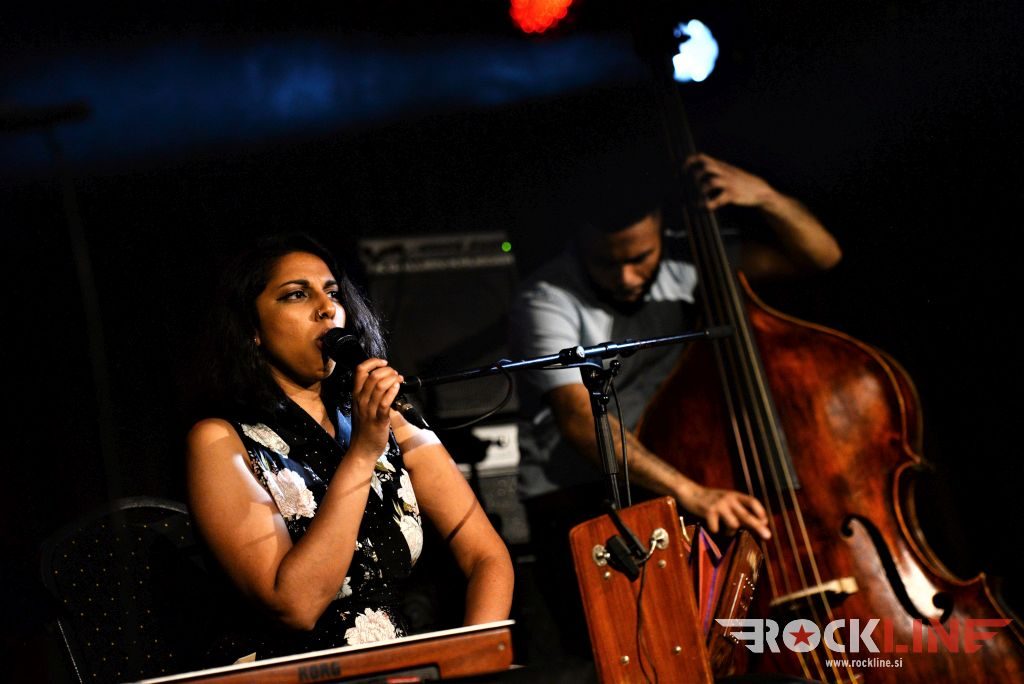
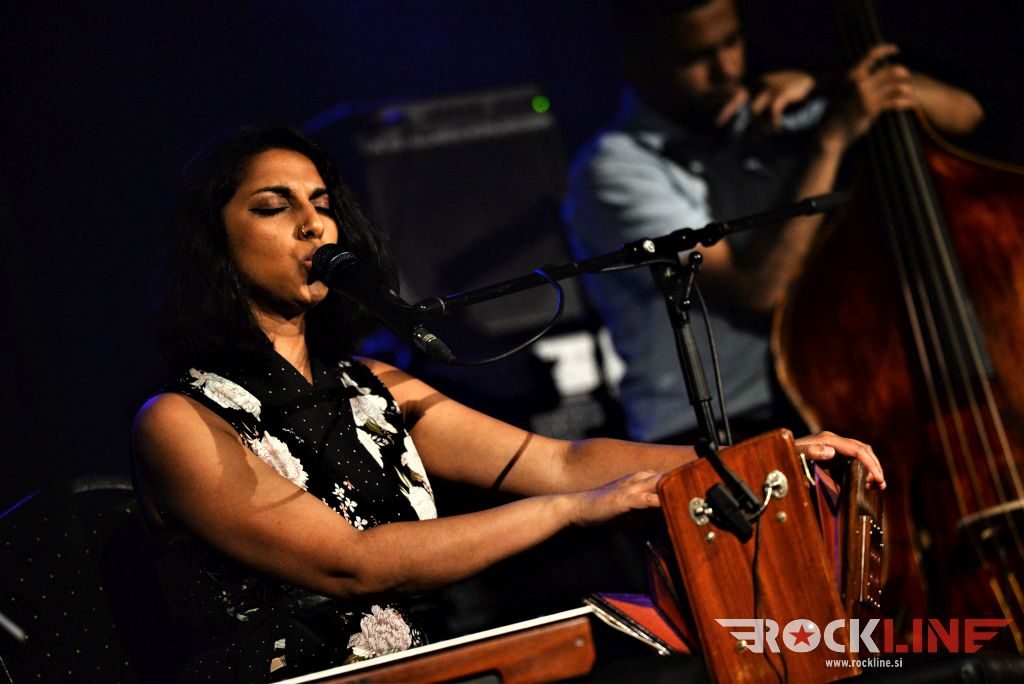
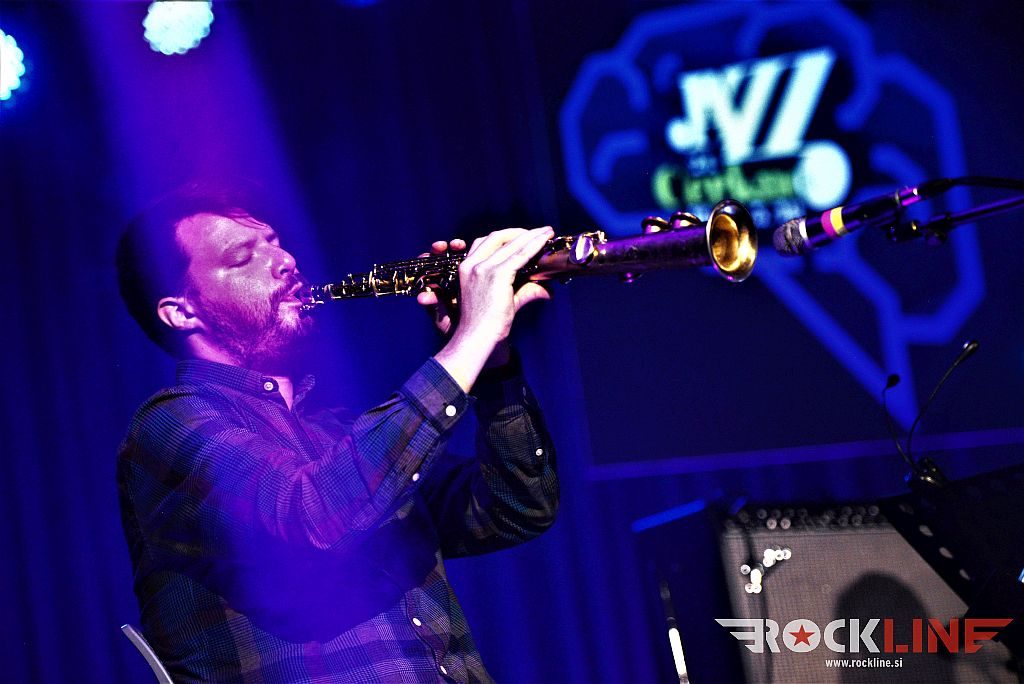
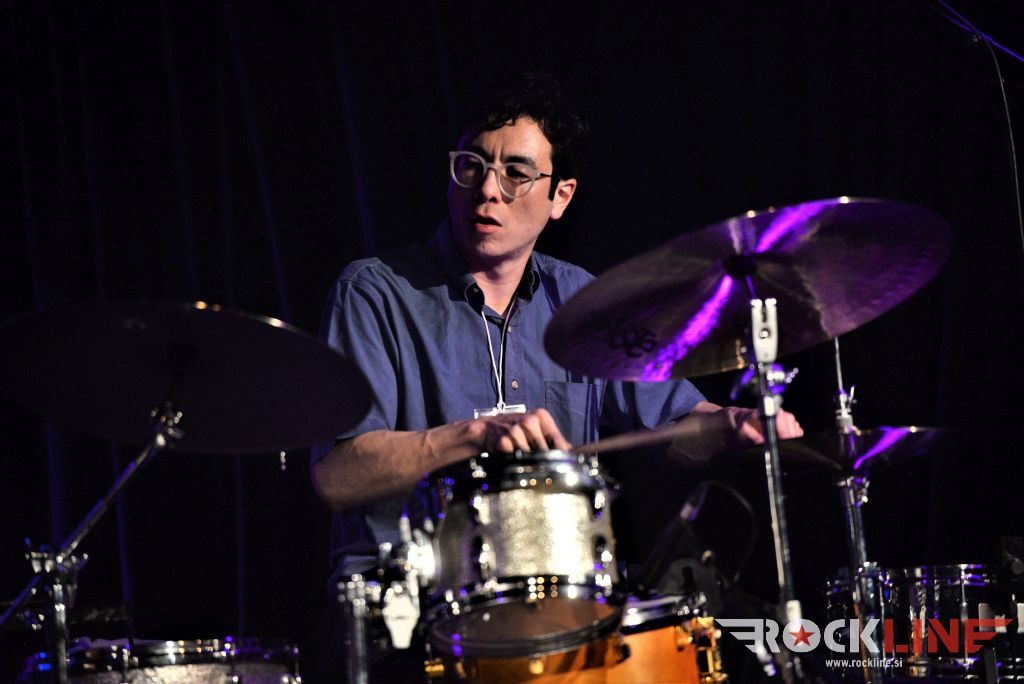
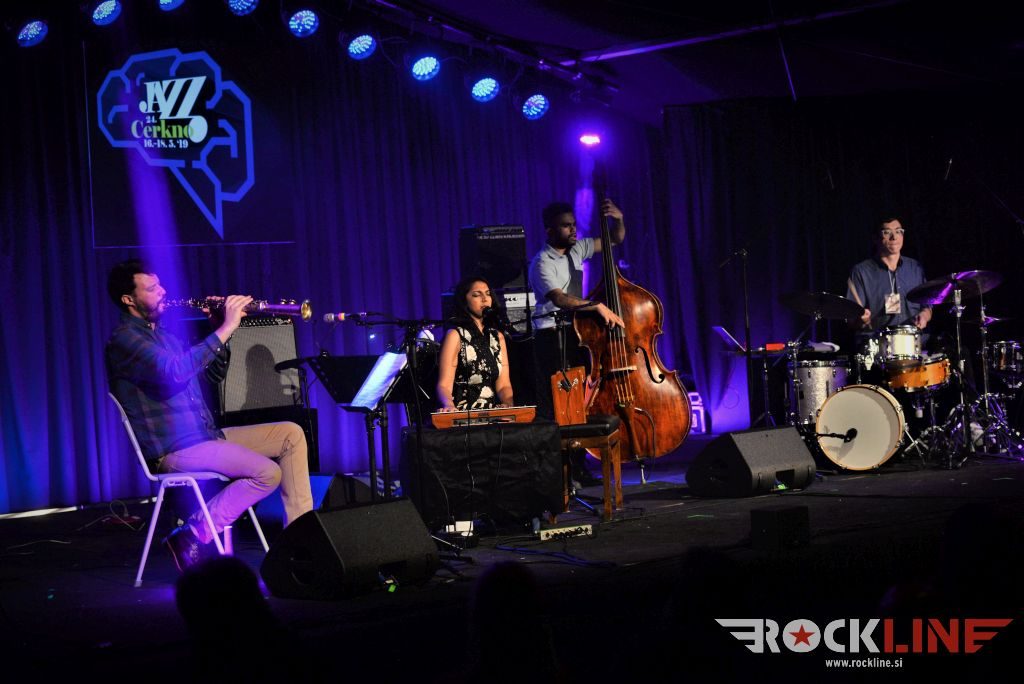
A total one-of-a-kind came next with Amirtha Kidambi Elder Ones, led by American musician of Indian roots Amirtha Kidambi (vocals, harmonium, synthesizer). The quartet is rounded out by Matt Nelson (soprano sax), Nick Dunston (double bass) and Max Jaffe (drums, electronic sensory percussion). The whole thing revolves around the vocal expression of the colorful Amirtha. Her voice is often used as the lead instrument in the compositions, as she wanders through free impulses of inspired improvisation to a variable payoff of vocal nuances, which of course brings in the obligatory Eastern melos. At times the voice works like a kind of mantra. It can be shattering, screaming, or it can rock you gently and carry you off to quiet corners of the soul. So, as you’ve guessed, the quartet builds on a strong ambient backbone, where the lines of the harmonium (an old instrument, a kind of bellows-driven piano) and the soprano sax are often emphatically doubled and create a unique musical landscape. Amirtha also uses a small synthesizer to paint the background her vocal improvisation leans on. The drum structures are constantly in motion and, with a run-up of massive dynamics, cut very effectively through the occasional mantra of hypnotic veils. Amirtha also brought in a heap of psychedelic inserts, not only with vocal improvisation but, as mentioned, with harmonium lines and sonic manipulations on the synthesizer. The vocal delivery of course touches on singing in the classical sense of the word too, where Amirtha reaches for critical messages (and not only in English) as the group presents the current album “From Untruth.” The vocal can be very biting, even annoyingly in-your-face. The range is incredible. The range Amirtha speaks to us with. And it can soar straight into the bosom of pure virginal sweetness. The vocal contrasts are outstanding. And so are the moods the quartet conjures up. The saxophone lines and vocal improvisations are often intertwined in a free-jazz way, which also stirs up feelings of chaos. Contrasting leaps between the moods are everywhere. Just when you’ve nearly drifted off in a trance, a sudden racket wakes you right up. Amirtha’s voice can be very angry, accusing, gruff and rough. Let me be banal and superficial to wrap up, but if the utopian The Cardigans reunion ever happens, they could easily call Amirtha up into the new lineup. She’s a singer whose performance charisma doesn’t just thrill but constantly shakes you up and surprises you.
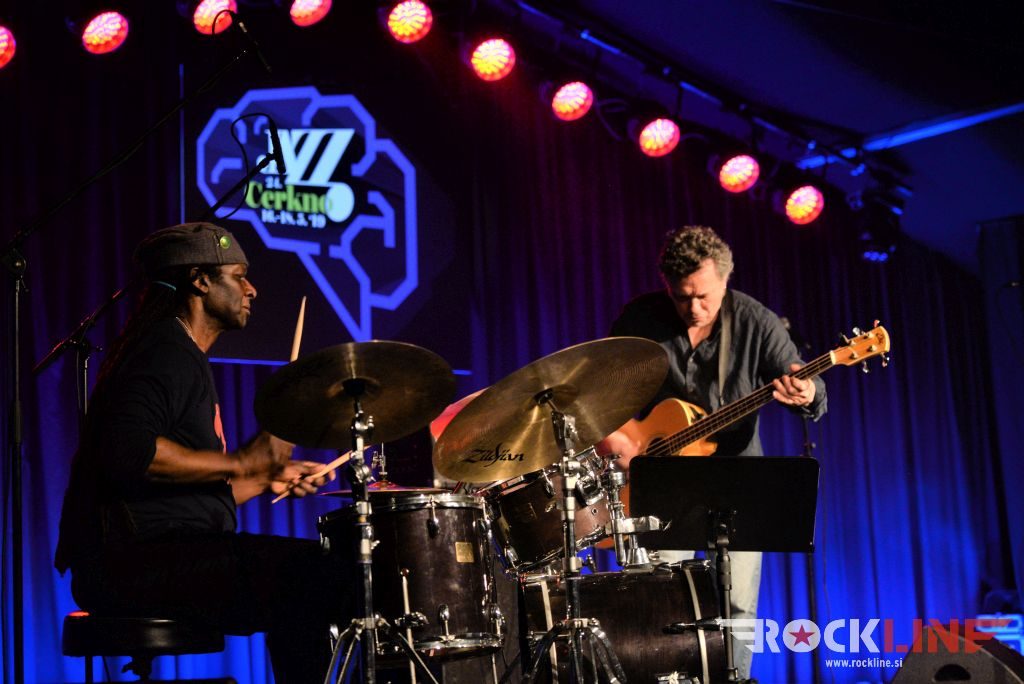
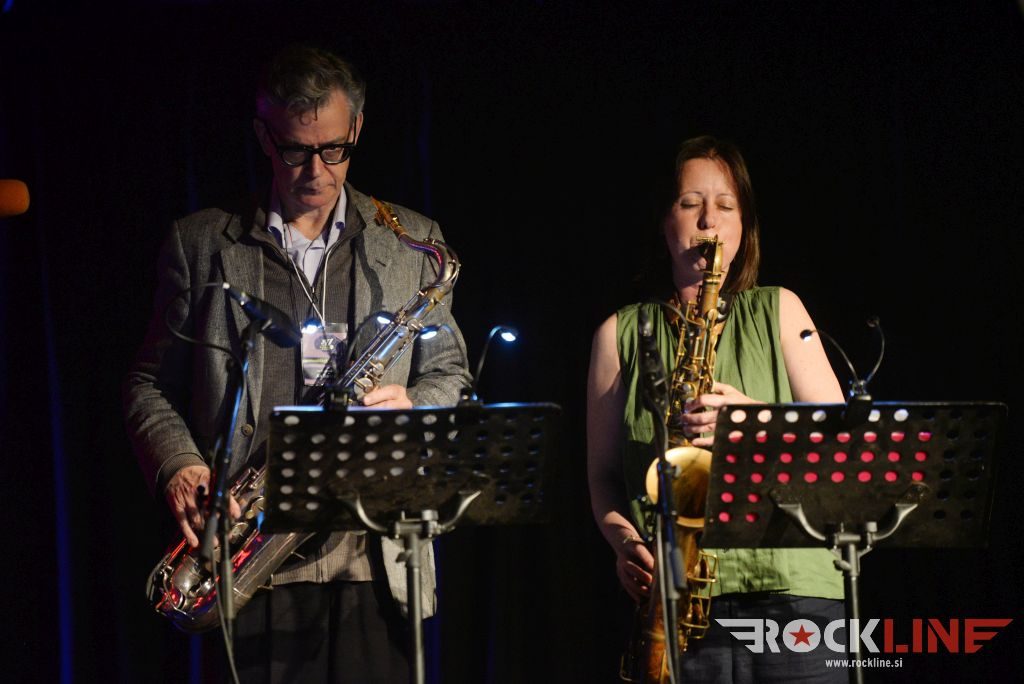
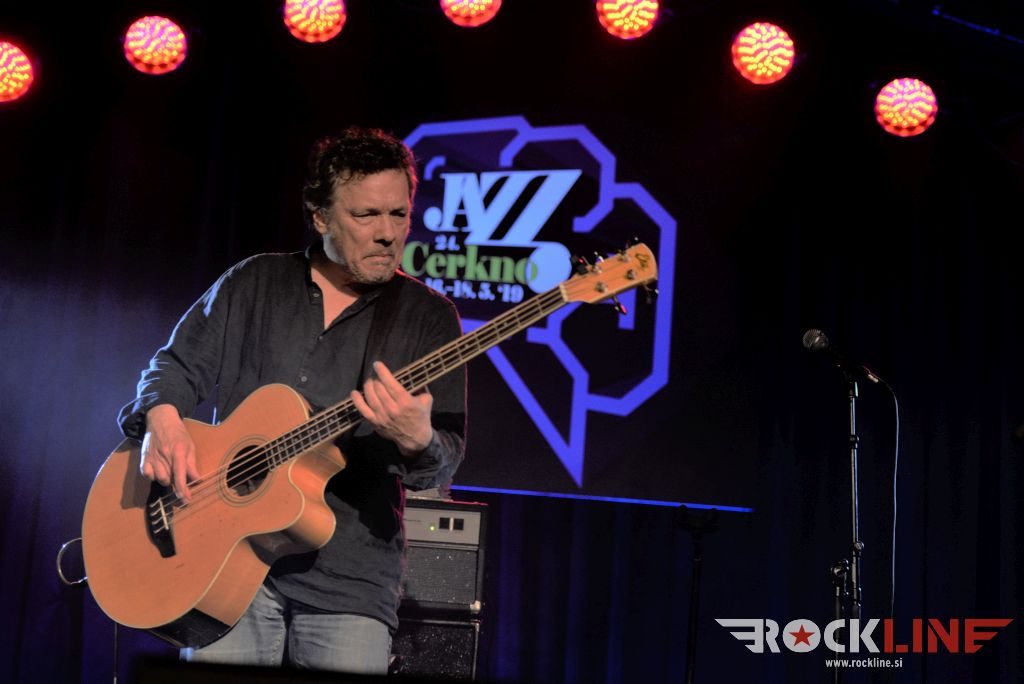
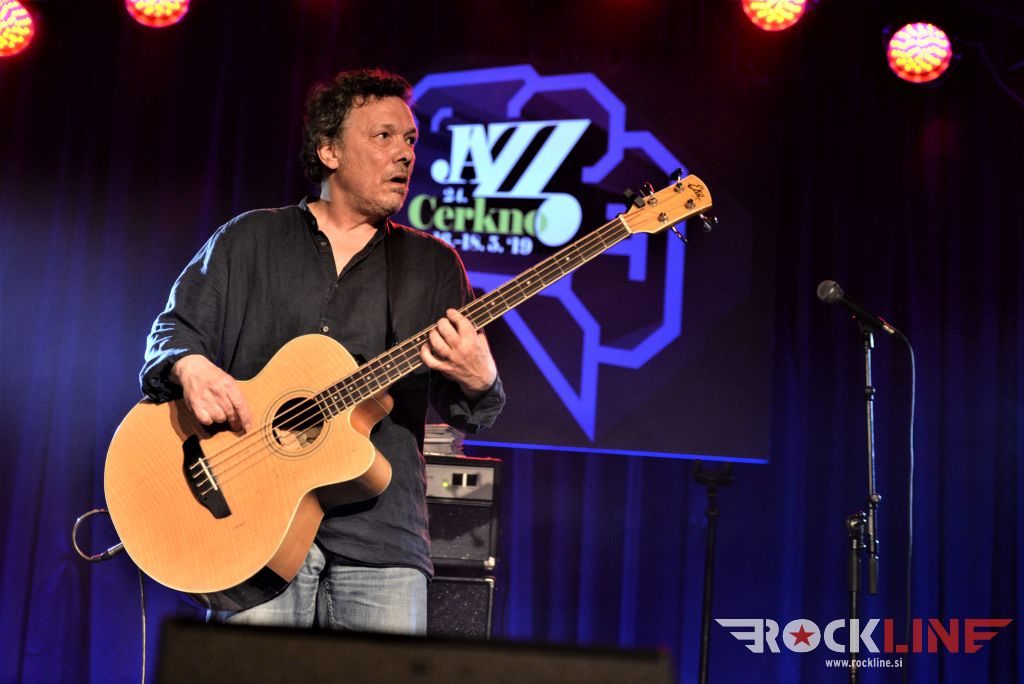
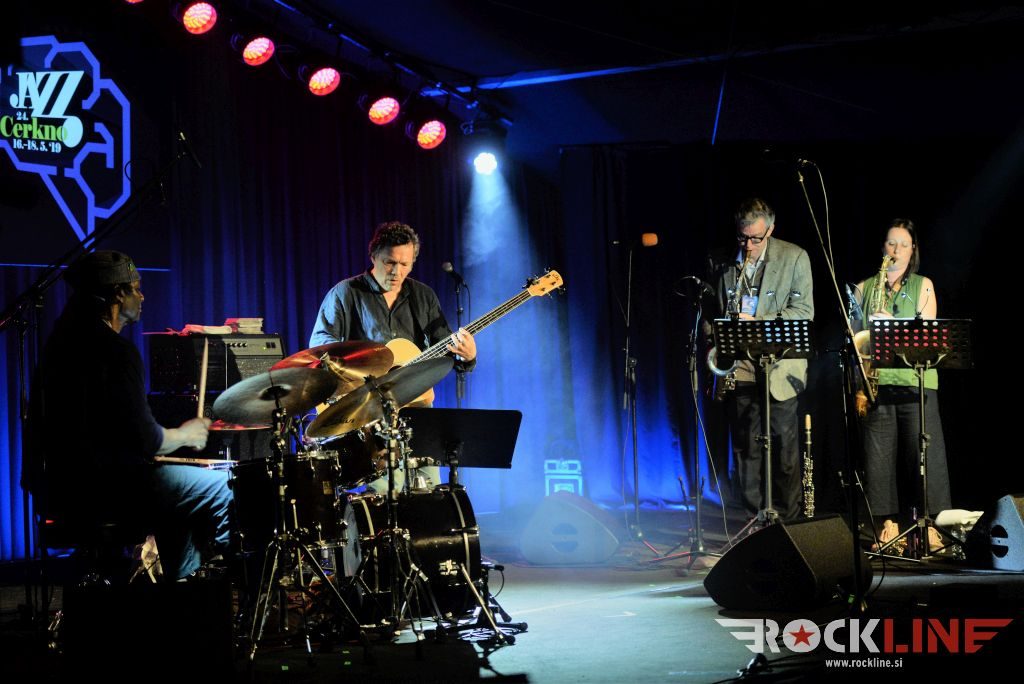
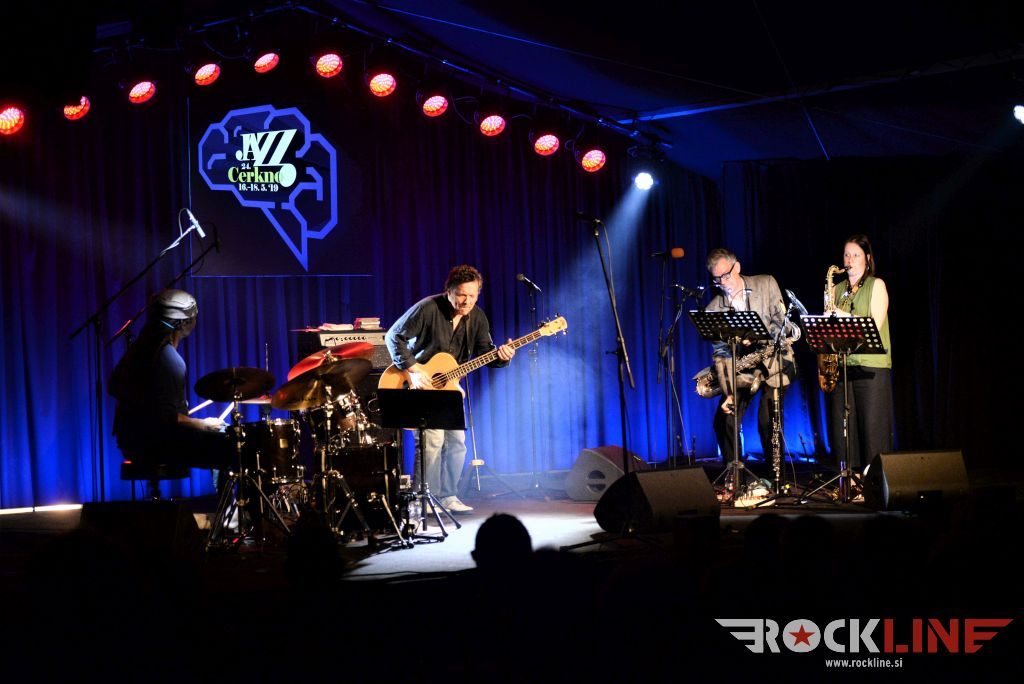
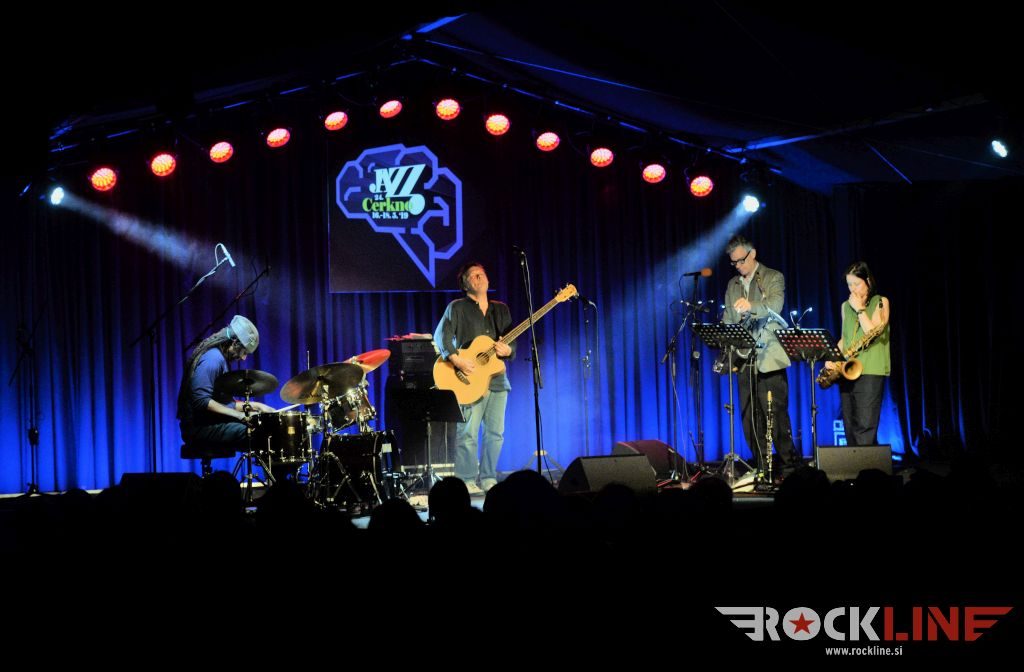
Last up on the festival’s second day were Luc Ex’ Assemblée. The highlight of day two, of course. A well-deserved highlight! Welcome to a kind of synthesis of avant – punk – world music – jazz, from an international band of two Dutchmen, a Welshwoman and an American, with a strong, tight section up front interweaving two tenor saxophones, and behind it the wild clanging of an acoustic bass guitar and the genius of the exceptional drummer Hamid Drake, whose presence gives this musical story a very special dimension. Luc Ex, who has also played in other experimental bands such as The Ex, Sol 6, Roof and 4Walls, leads a crew that, while blending untamed jazz deviations (even into free jazz forms), can easily swing into tangible melodic forms, where alongside the racket there’s no shortage of dealings with world music elements. In its modal phase the band can suddenly, at will, “fall apart” in all four directions, laying bare a proper cacophonous racket, then snap back together just as suddenly, which fills this kind of musical concept with a heartfelt note of spontaneity and an unpredictable turn of events. From the listener’s point of view, the band must be incredibly focused. A special story of the quartet is Hamid Drake, a real “big fish” in the field of contemporary advances in jazz drumming. He just shone, with an exceptional feel. Often he switched to simple rhythms that deepened the quartet’s punky nature, then created marvelous transitions and jazz-salted acrobatics out of that simplicity, full-blooded, provocative and sparkling ideas that take your breath away. Luc Ex on acoustic bass guitar grabbed attention especially with how he “tears” at it and flings himself around the stage during the performance. He gets theatrically into the material, and with his untamed movements, and grimaces too, in that zone of immersion and disconnect, he often reminded us of our own Peter Dekleva (Srečna Mladina), who also loves to throw himself around the stage when the energy carries him off. Straight up! Also very rough, and often with full chords slammed out. In that Luc developed an exceptionally penetrating and thick contrasting sound, above which the free forms of the saxophones floated. True, the band could go completely off the leash, but at moments it balanced the show with points of reconciling calm and sensual softness, which demand a good dose of sensuality and subtlety, and with that it could tease in a cabaret manner too. Utterly bonkers, lucid, fun, constantly invasive for the ear and tickling, cleverly sly. In their mischievous playfulness they even recalled the charm of the Finnish trio Mopo, who played in Cerkno in 2016. Ab Baars also spiced up the show with a Japanese bamboo flute called the shakuhachi, and otherwise Musson and Baars also dosed out moments of the concert with the clarinet (Baars) and soprano sax (Mussonova).
The biggest attraction in this story is of course Hamid Drake. A legendary drummer and one of the most distinctive avant-garde drummers of our time. Over his career he has worked with truly big names of jazz and fusion, including Don Cherry, Herbie Hancock, Peter Brötzmann, Ken Vandermark, Fred Anderson, Pharoah Sanders and David Murray. A truly accomplished and refined timekeeper on the drums who missed absolutely nothing. He cast a spell with his variety, his incredibly witty inventiveness and his perfect control over everything he tackled. A fusion of world rhythms from Afro-Cuban to Indian, and Latin rhythms too, which he does with feather-light ease and convincingly on a basic drum set. His drumming alone simply carried the listener off to a special sphere. He never loses the thread, and his reputation, which stuck to him back in the early nineties, as one of the most accomplished drummers of the contemporary jazz improv wizardry on the planet, is no accident. The band’s performance therefore often felt like it developed entirely depending on Hamid Drake’s setting up of the rhythmic framework, although that’s by no means the case. But the first and surely biggest draw of this band’s show is the esteemed drummer himself and his incredible skill. A brilliant set, for a brilliant close to day two, then!
But that’s not all. Those of us who couldn’t (or wouldn’t) sleep moved over to Gabrijel, where Serbia’s Tapan rocked us first with their gloomy electronic-jazz-horn-driven, oriental-rhythm-backed gallows vibe. The night was thus still long and still one of a kind.
author: Aleš Podbrežnik
photos: Aleš Podbrežnik