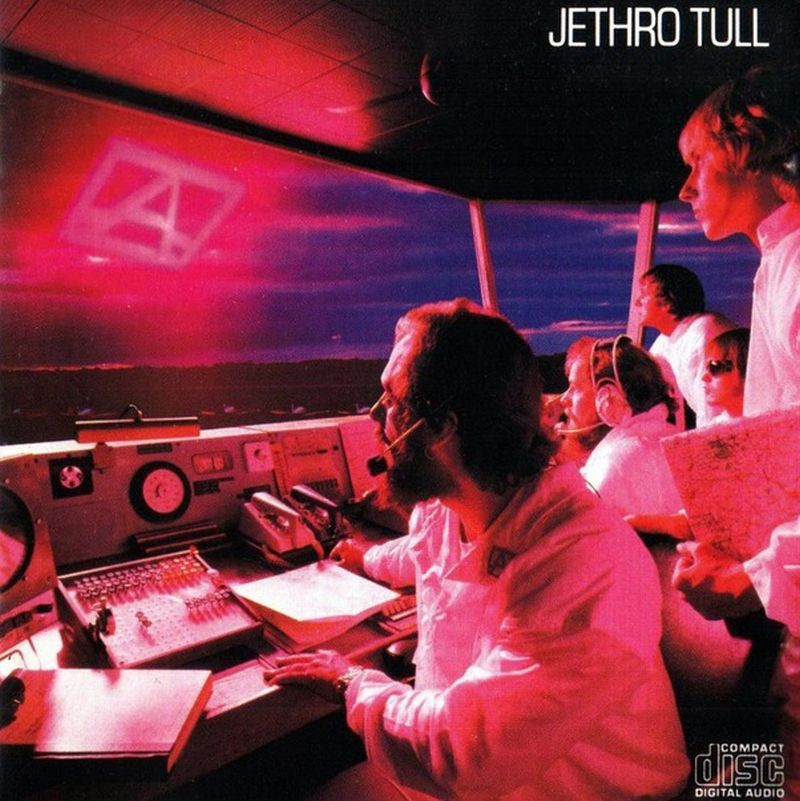
Label: Chrysalis Records
Release date: 8/29/1980
Produced by: Ian Anderson & Robin Black
Album length: 42:30 min
Genre: Progressive Rock
Rating: 8.5/10
After the end of the »Stormwatch« (1979) tour, Ian Anderson, a distant descendant of the mischievous Greek god Pan and the cunning Pied Piper of Hamelin, decided to record his first solo album, wanting to prove to a few inconsolable smart alecks that Jethro Tull were far from just another name for the Ian Anderson Band. To make it happen, he called in the fast-fingered Eddie Jobson, one of the finest multi-instrumentalists of the day, who had by then made a name for himself working with legends like King Crimson (he was never an official member, but he helped re-record a few instrumental parts on their second live album »USA«), Roxy Music, Frank Zappa and UK. Eddie also brought along drummer Mark Craney, with whom he was recording his own debut solo album at the time. With the two of them and the then brand-new Tull bassist David Pegg (best known as the longtime bassist of Fairport Convention) at his side, Ian headed into the studio to record something different from the folk-rock-soaked sound Jethro Tull had been known for. Suddenly he realized he was missing an electric guitarist, and he made a move he now regrets quite a bit. He invited his longtime Tull comrade Martin “Lancelot” Barre to join in, originally just on a few tracks. That bumped the number of existing Tull members up to three. In the end Martin played on every single track on the album, because the chemistry in the band was just unbelievable. Ian meant to turn his back on acoustic-soaked folk rock and create something modern for the time: an electrified hard rock seasoned with electronic touches. Meanwhile, he made it clear to the other three existing Tull members (that’s John Evans, David Palmer and Barriemore Barlow) that he’d be counting on them again once the solo experiment was over. But then came a big surprise. When the top brass at Chrysalis, with Terry Ellis at the helm, heard the album, they wanted »A« (A as in Anderson) to come out as a Jethro Tull album, not as Ian’s solo project, no matter what. At the same time, Ellis spread the word, without Ian’s knowledge, that Jobson had become the new member of the band, even though he officially appears on the album only as a special guest. When the other three members of the existing Tull lineup found out from the papers that they were no longer in the band, they were of course royally stung, and Ian still regrets today that their membership ended that way. Jobson made it clear from the start that he was only a special guest and not an official member, and that he planned to move on to other projects after the tour. But the damage was done. Evans and Palmer never came back, and Ian had to give up for a long time that natural, heartfelt sound of keyboards and orchestral arrangements that had defined the band in the ’70s.
The main reason »A« became such a special experiment, and a completely one-of-a-kind album in the whole Tull discography, is without a doubt the musical contribution of the androgynous maestro Jobson. He brought the band the mighty, orchestral sound of electric piano and the synthesizers that were cutting-edge at the time and already had one foot in the ’80s, while his electric violin, on the other hand, kept alive in some songs those folk-rock passages that were typical of their sound in the late ’70s. That’s also why »A« can be seen as a transitional album, somewhere on the road from folk prog rock to the synthetic, new-wave-tinged hard rock that dominated their music through the ’80s. Craney, meanwhile, brought a hugely massive and dynamic style of drumming, which was also typical of his jazz-rooted predecessor, and that’s no surprise given his work with the legendary French violinist Jean-Luc Ponty. You might expect that with the dawn of the ’80s the band would completely sell out the original Tull magic for robotic pop (which did happen four years later), but that’s not the case, and on »A« you can still find a string of bright, folk-spiced gems, though without any standout favorites like the ones on their masterpieces.
The opener »Crossfire« is an energetic hard rocker in classic Tull style that sends adrenaline racing through even the sleepiest head, laced with subtle piano passages, mighty guitar flourishes from Martin and a gentle flute melody that makes for a dynamic mix of folk and hard rock. Ian is in one of his best vocal forms here and (through most of the album). In fact, most of their better work in the ’80s would follow this very recipe. On the commercially minded energy charger »Flyingdale Flyer«, which also came out as a single, Jobson shows off his virtuoso use of ambient synthesizers more clearly for the first time, blending beautifully with witty flute and guitar passages. The epic chorus shows Ian’s lyrical interest in aviation, which this time has taken the place of seafaring on his list of interests. The rhythmically slightly monotonous but fiery burner »Working John, Working Joe«, on which Ian once again touches on the social problems of Thatcher’s Britain and life under the watchful eye of Big Brother, rests on a multi-voice chorus and a sharpened, repeating riff. Jobson’s excellent ambient keyboard arrangements and Ian’s vocal, tinted like a suffering martyr, pull this solid piece out of gray mediocrity. On the epic and dramatic »Black Sunday«, one of the most vivid pieces on the album, Tull once again superbly show off their energetic mix of hard rock, electronic sounds and Celtic keyboard arrangements. Dramatic synth sounds herald the intro to a witty tempo where the outstanding interplay between flute and guitar reigns. Ian’s dramatic vocal expression, backed by sawing guitar passages and witty jazzy piano inserts in the style of Jobson’s days with UK, is a real treat for all lovers of Celtic drama. Especially juicy is the second part of the composition, when a classic Barre guitar solo comes crashing in, joined by Ian’s flute solo that conjures up a genuine Celtic melancholy. »Protect And Survive« is another great Tull classic that still turns up in their live set from time to time. The excellent opening Celtic flute motif, escorted by a galloping rhythm and ambient keyboard sounds, creates the mood of preparing for a battle. Here we can also admire Craney’s white-hot machine-gunning of the drums. Ian briefly experiments here for the first time with a digital effect that robotizes the vocal, something he’d happily play with on the following albums too. The sharpened wit of »Batteries Not Included« is one of the bigger electronic experiments on the album, where electronic synth sounds accompany a punchy rhythm and a digitized vocal, which is still easy to recognize even under such extreme conditions. What builds on the mighty, varied rhythm infused with witty flute sounds are the excellent electric violin passages, which complement the traditionally sharp sound of Martin’s guitar beautifully. The electronic keyboard sounds also sit unbelievably well inside the galloping rhythm. »Uniform« would be a pretty boring piece if it weren’t rescued by the schizoid sounds of Jobson’s electric violin, which float the whole time somewhere between traditional folk rock and electronics, creating a “uniformed” atmosphere. It’s one of the few moments on the album when Jobson’s violin briefly manages to overshadow even Ian’s flute, and for that alone this piece deserves extra attention. »4.W.D. (Low Ratio)« is a pretty quirky, partly successful experiment, somewhere on the border between Dire Straits-style pub rock and traditional Tull folk prog. Barroom piano sounds, a funky rhythm and flute shenanigans create the mood of a sleepy afternoon. Ian’s vocal, run through a special bass effect on the chorus, Barre’s inventive solo and numerous electronic effects are the main virtues of this rather average piece. The merry bunch return to their traditional folk-rock antics on the cheeky instrumental »The Pine Marten’s Jig«, where on the way to the hunting lodge they swing by a Scottish pub as well. Besides that classic folk rock, which this time comes very close to Pegg’s comrades in Fairport Convention, there’s also a bunch of interesting ideas, brought by the excellent harmonies between Ian’s flute and Eddie’s violin. Martin, with his characteristic hard-rock licks on guitar, and the melodic purring of David’s bass are also clearly audible inside. The closing ballad »And Further On« is another classic Celtic lament in their finest tradition, adorned by Ian’s heart-wrenching vocal, ambient orchestral passages on piano and synthesizers, and Martin’s raw yet subtle guitar passages, providing a fitting finish to one of the strangest albums in the band’s story.
The current reissue of »A« will delight all the video fans, since it brings a bonus DVD containing the complete »Slipstream«, their first official concert video. It’s an excellent recording of a concert from the »A« tour that presents this unique, short-lived lineup as superb interpreters of some of Tull’s most beloved classics, too. Most of the footage is accompanied by some extremely witty videos that showcase Ian’s tremendous acting talent, which often borders on self-parody and boundless charisma. Among other things, Ian plays his alter ego Aqualung at the opening and closing of the show and in the performance of the song of the same name, a good-natured Count Dracula on »Sweet Dream«, and a lecherous old man on »Too Old To Rock’n’Roll To Young To Die«, which in my opinion is their funniest video, and in which the whole band shines in various disguises. The repertoire is limited and robbed of a good number of classics. Still, besides »Black Sunday« and »Flyingdale Flyer«, energetically played pieces from »A«, these guys play older classics in their own way too, like the acoustic Celtic ballad »Dun Ringill«, »Songs From The Wood«, »Heavy Horses«, where Jobson slots in an excellent electric violin solo, »Skating Away On The Thin Ice Of A New Day« and »Locomotive Breath«. Even though plenty of favorites are missing, it’s an interesting document of this short-lived incarnation of the band, who wear white parachute tracksuits with the A logo on stage, the true embodiment of ’80s fashion kitsch. Still, it all fades when you remember that Tull have plenty of much, much better video recordings from the ’70s that leave footage like »Slipstream« in the dust.
Alongside the Grammy-winning burlesque »Crest Of A Knave« (1987), »A« is surely one of the most entertaining experiments in their whole discography, one that turned out to be surprisingly listenable and yielded quite a few interesting gems. Despite the occasional experimenting with electronic sounds (which, unlike similar attempts to come, are played the way they should be and don’t sound synthetic), there’s still enough of that classic folk-rock sound on it to enjoy it quite decently. And that’s despite the fact that it’s far from the authentic folk magic of their earlier albums. If it had come out as Ian’s debut, it would have deserved a flat ten, but as it is, it’s just a solid experiment that already foretold the gradual synthesization of the sound and creatively tougher times for the old cats of progressive rock, who somehow had to fight their way through the inhospitable ’80s. »A« is a dynamic transitional album that most fans will be able to look upon with understanding, as a child of its era. The main credit for the album not disappointing in the least, and for the move to a new sound not being too merciless, goes to Jobson and Craney, who left right after the tour. In the following years Jobson turned to making music for film and TV (for the series Miami Vice, for instance), while Craney tragically passed away on 11/26/2005 from complications of a failed transplant. As was only fitting, Ian dedicated the reissue of the album to him, and it remains a unique keepsake of what was meant to be his first solo album, but never became one.
Author: Peter “Dr. ProgRock” Podbrežnik
Track list:
1. Crossfire (3:54)
2. Fylingdale Flyer (4:36)
3. Working John, Working Joe (5:04)
4. Black Sunday (6:36)
5. Protect and Survive (3:37)
6. Batteries Not Included (3:53)
7. Uniform (3:34)
8. 4.W.D. (Low Ratio) (3:42)
9. The Pine Marten’s Jig (3:28)
10. And Further On (4:22)
Total album running time: 42:46min
Bonus DVD-Video from 2004 remastered edition – “Slipstream”:
1. Introduction (3:15)
2. Black Sunday (6:44)
3. Dun Ringill (2:30)
4. Fylingdale Flyer (4:02)
5. Songs from the Wood (4:54)
6. Heavy Horses (6:06)
7. Sweet Dream (4:04)
8. Too Old to Rock ‘n’ Roll, Too Young to Die (5:58)
9. Skating Away on the Thin Ice of the New Day (3:14)
10. Aqualung (8:58)
11. Locomotive Breath (7:30)
Total running time: 57:15 min
Lineup:
Ian Anderson – vocals, flute
Martin Barre – guitar
Dave Pegg – bass guitar
Mark Craney – drums
Guest musicians:
Eddie Jobson – keyboards, electric violin
David Mallet – director of the concert film (DVD)