

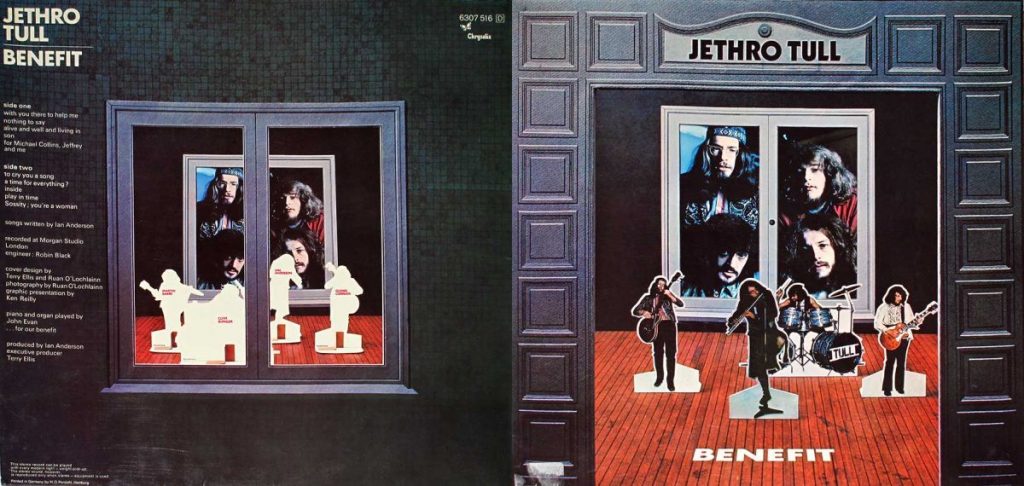
The third studio album by the legendary agrarian-progressive rockers from the UK, Jethro Tull, titled “Benefit“, recently turned 50. Sure, it’s not the career-defining record, but its transitional role matters: a year later it led these giants of progressive rock craft to the breakthrough they’d been craving, with its studio successor “Aqualung“, an album that became a household name among true rock believers. So “Benefit” deserves a few “commemorative” lines too.
The moment the band slowly started turning into a progressive rock force was really the arrival of Martin Barre. John Evan certainly added his bit too, but more on him below. Barre’s arrival fueled Ian Anderson’s (for the time) innovative vision, as well as his devilish stage eccentricity, which won the crowd over more and more. Barre recalls: “That was the turning point for everything we became recognizable for, and for everything that started inspiring other bands too.”
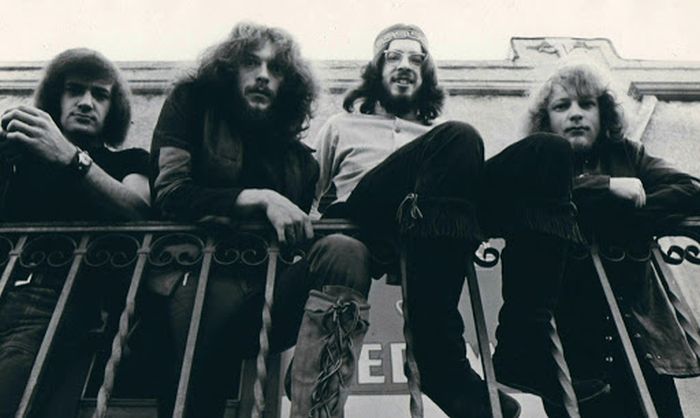
The band came home from a hugely successful American tour, during which they were also invited to play the Woodstock festival. Ian Anderson turned it down, since he didn’t want the band associated with the global hippie march of the day. After returning from the US, the members were pretty worn out, and their illusions about the land of milk and honey had crumbled. Anderson’s headaches were piling up thanks to that hippie business, and with relations fraying, tensions between the band and their label of the time were growing too. That’s also reflected in how Anderson wrote the material for “Benefit”, recorded between December 1969 and January 1970. Given those circumstances, it’s darker than its predecessor “Stand Up“. Either way, the transition was necessary. Without it, Jethro Tull would have had a hard time getting from “Benefit” to “Aqualung” and on to the point where they catapulted themselves to the front of the most prominent bands in an increasingly hot genre, the one that got tagged progressive rock.
In this period the band enjoyed one of its rare stretches of lineup stability, and Anderson wanted to bring in a keyboardist as well. A fifth member, that is. He managed to lure in his old John Evan Band buddy John Evan. Evan had stayed in London after the John Evan Band fell apart. He shared a flat with Anderson and was just starting his studies at the University of London. Anderson and Evan hardly saw each other, because Anderson had suddenly become swamped with Jethro Tull business. Evan wavered about joining the band, since he didn’t want to neglect his studies. On stage and in the studio, Evan wasn’t yet an official member. That’s why Jethro Tull still appear as a quartet on the sleeves of “Benefit”. At the end of January 1970, the band turned up again on the BBC’s Top of the Pops, performing Witch’s Promise. Already with Evan on stage.
The warmly received predecessor “Stand Up” gave the band a safe creative cushion, and with new ideas and a new sound Jethro Tull could dive even more confidently into the free-spirited expanses of experimentation. Stylistically they moved more decisively away from the previous two albums and left the influence of their blues roots even further behind. On release, April 20, 1970, “Benefit” shot up to No. 4 on the UK albums chart and No. 11 on the US Billboard chart. The success opened the way to the biggest concert venues. Among other things, Jethro Tull suddenly started filling arenas holding up to 20,000 people. On the new American tour, the band cemented its status as a highly respected live attraction.
In August of that year, Jethro Tull played the British version of Woodstock, the Isle of Wight festival, where they faced the biggest crowd they’d ever seen up to that day. The Isle of Wight show was followed by another American tour. When it ended, Glenn Cornick left the band. Cornick later said Ian Anderson had fired him, although according to the band’s then-manager and producer of Jethro Tull albums Terry Ellis, the band “invited Cornick to leave”. Ellis adds that the band also offered Cornick full support and encouraged him to form a new band of his own. He did just that, and Wild Turkey were born. Many decades later he revived them for a show at one of the Jethro Tull conventions. Cornick passed away in August 2014. It’s quite likely that when things snapped, Anderson really did shoot Cornick out of the band. Anderson says Jethro Tull began drifting apart from Cornick during the American tour. Glenn was turning into more and more of a “party animal”, which didn’t fly with the other three, who went to bed early and after gigs preferred to read books, each in their own hotel room.
So … compared to its two predecessors, Benefit is a much more varied album. Some songs were conceived with particular ambition, as the opener, the occasionally schizophrenic “With You there to Help Me”, announces. It’s marked by the contrast between the gentle haze of the flute’s recruited sound and a bigger helping of decibels when Barre’s phrasing teams up with Anderson’s flute. The fervor of Barre’s phrasing and Anderson’s unbridled, headlong flute playing, combined with moments of sophistication, peaks in “For Michael Collins, Jeffrey And Me”, which only underlines the album’s stylistic shift toward a progressive rock stance.
The arrangements were getting more complex, as “Nothing to Say”, “A Time for Everything” and “To Cry You A Song” make no secret of, while the album is skillfully balanced by moments where folk structures take the lead, as emphasized in “Inside” or the mystical “Alive and Well and Living In”.
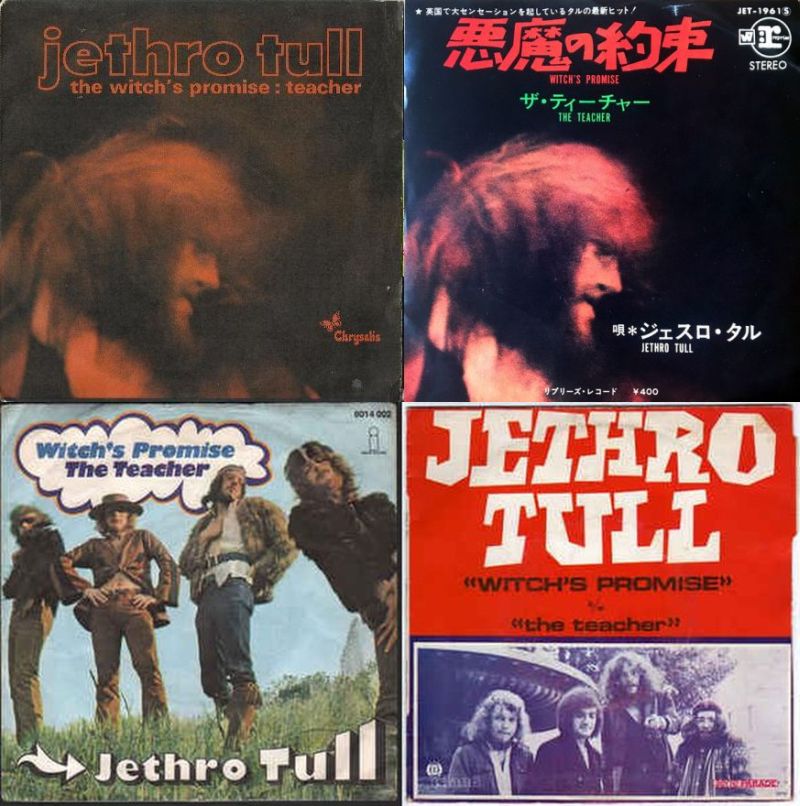
It’s also worth pointing out how little confidence the label, Island Records, had at the time. It didn’t know whether “Benefit” would even catch on commercially, and if it did, how. The market was a big mystery to them. So they felt out the market in various ways, which clashed with the artistic stance of Ian Anderson and his crew, and that still gives Anderson a headache today. The track Teacher, which came out in the UK only as the b-side of the “Witch’s Promise” single, wasn’t included on the European version of the album. Anderson’s headache comes mainly from the label wanting a song with two guitars and not a single flute arrangement. “Teacher” was on the version of the album released in the American market. Instead, the European version of “Benefit” contained “Alive and Well and Living”, which wasn’t on the American one. The two songs are stylistically miles apart, proof that the label had no idea what the audience would grab onto. Anderson still shakes his head over it, since he never liked the harder-rocking Teacher even a little. At that point Anderson’s already proverbial stubbornness and persistence bared its teeth at the label, and with the very next album Jethro Tull became a star shining so intensely that nobody on the planet could overlook it anymore.
After the American tour, Cornick was replaced by bassist Jeffrey Hammond-Hammond, and while still recording “Benefit” the band also built a bridge of collaboration with David Palmer, setting off into the most fruitful era of their creative life. Squeezed between two more successful Jethro Tull albums and unfairly overlooked in the band’s vast discography, the excellent “Benefit” nevertheless holds the key that opened the door for them to record, the following year, a huge album, if not the most important of their career. An album that belongs in the must-have collection of artistic relics of every household that gives a damn about itself and rock’n’roll. But more on that another time.
Anyone who wants to learn even more about “Benefit” can (always) read the in-depth, expanded review by Peter Podbrežnik, first published on our pages way back on June 17, 2006!
Author: Aleš Podbrežnik
