Venue: Dealvski dom Trbovlje
Concert date: 09/24/2010
Attendance: 500
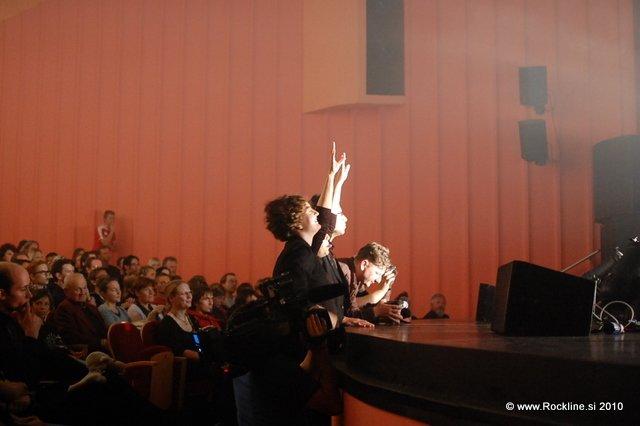
In the foyer of the Delavski dom in Trbovlje on Thursday, September 23, Milan Kučan ceremonially opened the exhibition Rdeči revirji + črn križ, kicking off four days of cultural and artistic events marking Laibach’s thirtieth anniversary. In his speech, the former president of the country also said that Laibach has to hold on to its mission even in new times and circumstances, a mission you could sum up as exposing totalitarianism and calling for revolt against it, and he wrapped up by adding: “There’s a lot of totalitarianism in the modern world, and in Slovenia too.” “He’d know,” some of the older wiseguys who still remember the leaden times might quip. But if we’re being totally honest, Laibach probably wouldn’t exist at all without the former state and its repressive organs. These days you simply can’t buy publicity that loud, and back then other forefathers of the Slovenian rock avant-garde – Pankrti – milked it for all it was worth. But where Pankrti went down together with the state that created them, Laibach survived thanks to their universality and many layers.
But let’s rewind thirty years. On September 27, 1980, the Laibach guys announced their first exhibition in their hometown of Trbovlje, under the wing of Ljubljana’s ŠKUC, only for the local authorities to ban it along with all the accompanying events. Restaging that happening and going back to the scene of the crime is therefore a more than fitting tribute to what is still, so far, the most successful Slovenian (music) act. The totalitarian symbolism isn’t as convincing and fear-inducing these days as it was three decades ago, but the music (which, of course, shouldn’t be studied outside the context of its accompanying imagery) is still one of a kind and timeless.
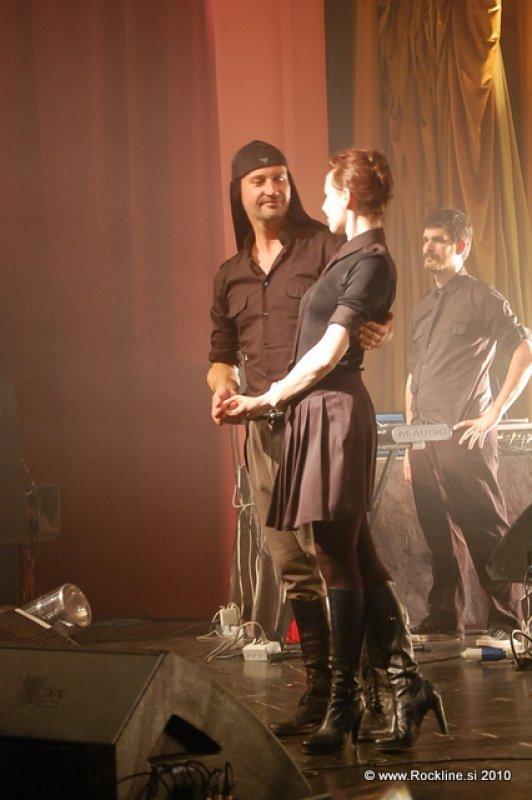
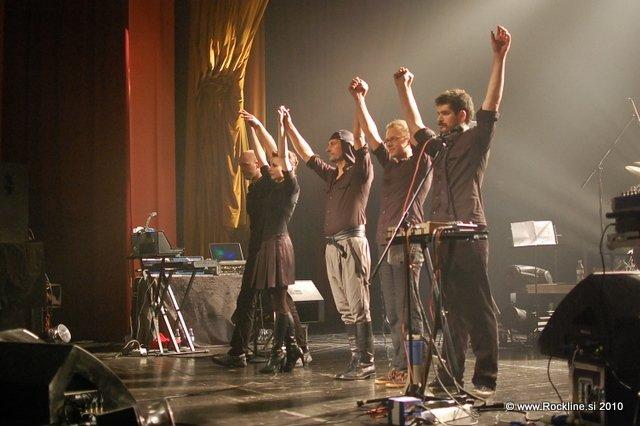
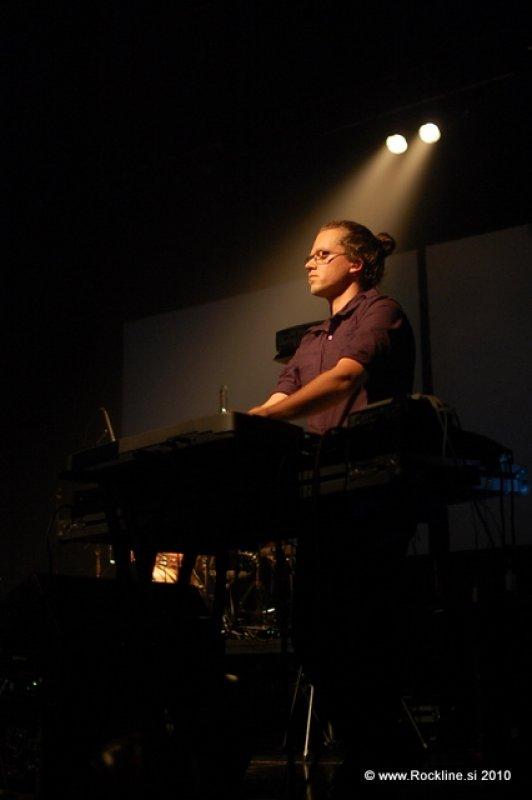
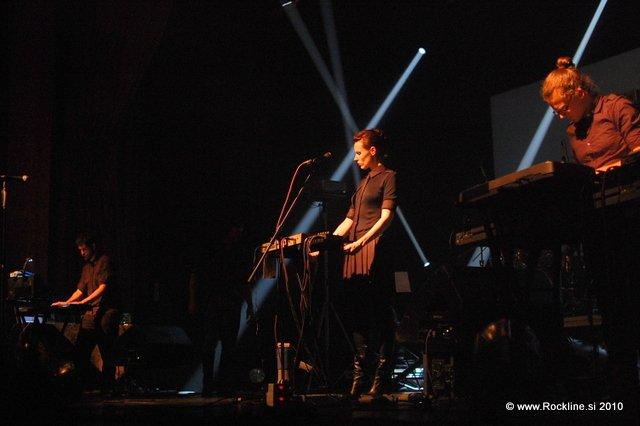
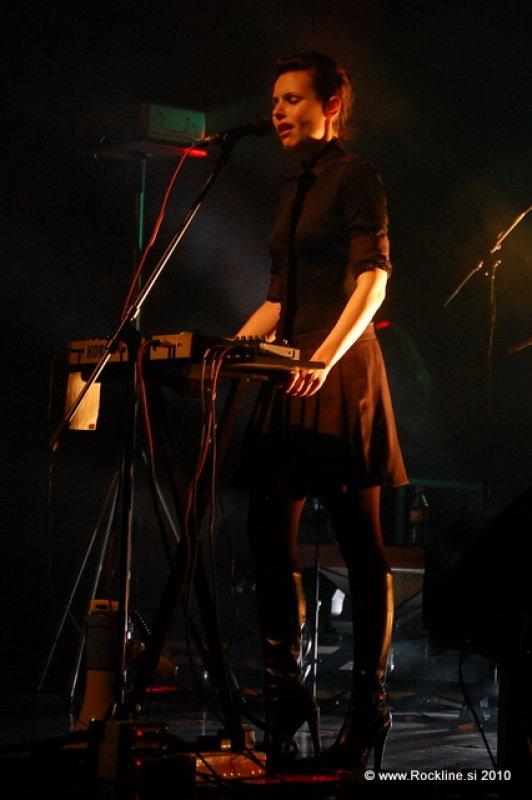
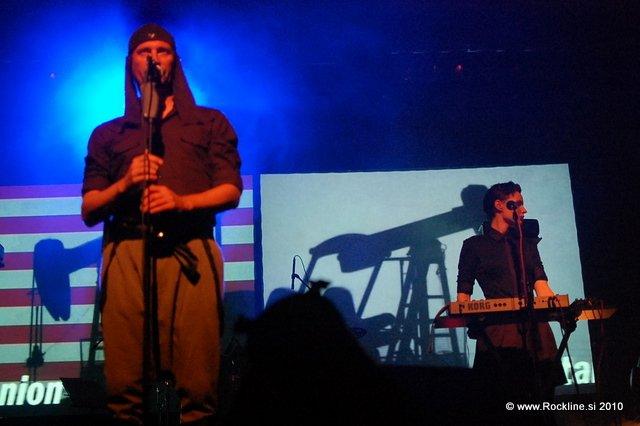
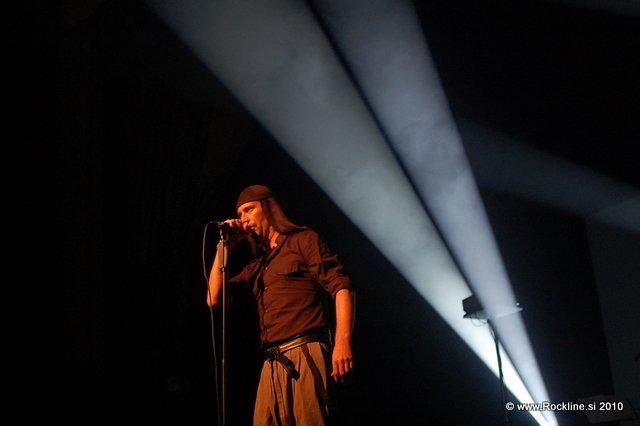
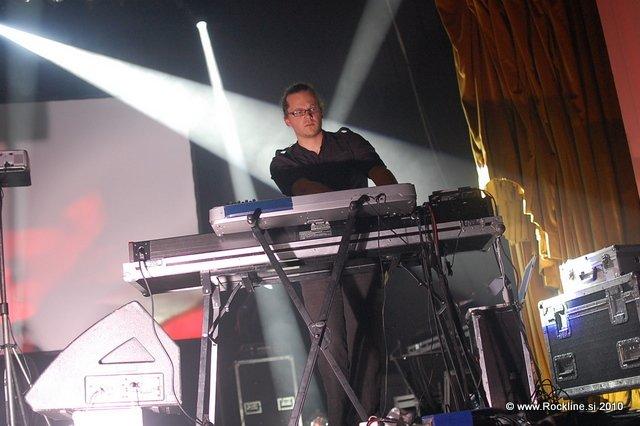
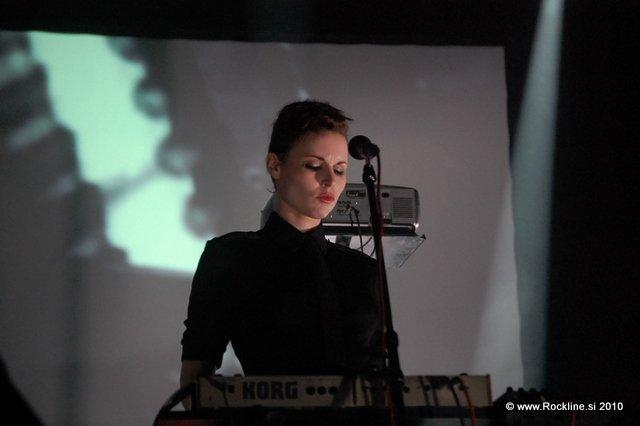
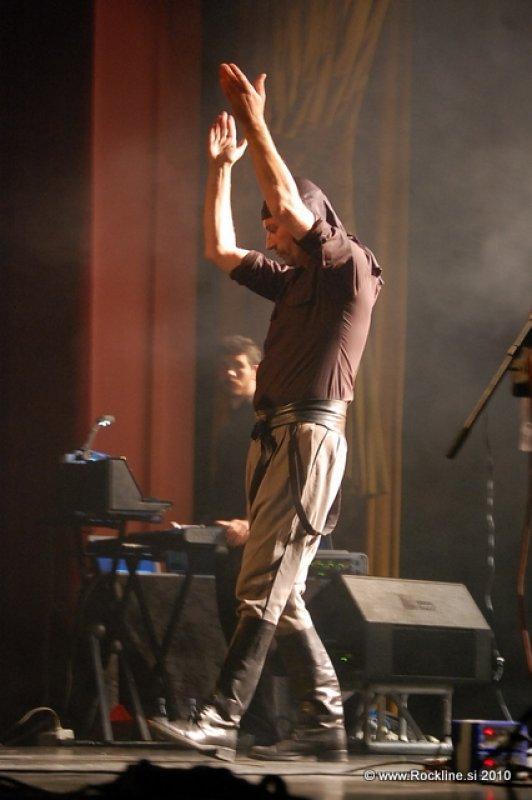
Saturday’s show at the Delavski dom was a repeat of Friday’s as far as the program goes. Fans of the band’s early stuff got their money’s worth too, since in the very first hour they could hear (admittedly somewhat polished) versions of Država and Mi kujemo bodočnost from the debut, plus Krvava gruda and Ti, ki izzivaš from the second album, Nova akropola. Next came a few reworked anthems from the album Volk (Amerika, Turčija), and then it was time for the (loosely speaking, of course) hits Tanz mit Laibach and Alle gegen alle. What you really missed, though, was more female vocals, which Laibach and Jadranka Juras spoiled us with on the Volk tour. Mina Špiler, who has been the band’s official backing vocalist for a while now, stepped out from behind her electronic keyboard only once or twice, and even then her voice was completely buried under the high frequencies of the megaphone she paced the stage with. The musical punch also suffered from the absence of guitars (most noticeable in God is God), but the fact is that the band only uses that instrument on stage now and then.
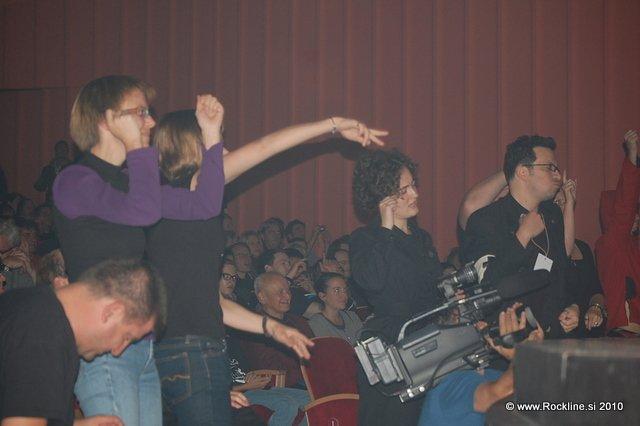
So the second show, too, was in the style of early Laibach: dark, Kraftwerk-style static and, above all, monumental. Just the way it should have been thirty years ago (apart from a few electronic gadgets nobody knew back then). Those at Sunday’s concert, which closed out Laibach’s stint in the coal country, probably got a bit more musicality. But we were nowhere near leaving the hall of the Delavski dom, which for that hour and forty minutes was a kind of spiritual capital of the NSK state, disappointed, even if we didn’t get all the citizen’s rights. Only a handful of deserving chosen ones went home with its passport, and Milan Kučan was one of them.
photo: Martin Prezelj
Setlist
1. Boji 2. Mi kujemo bodočnost 3. Smrt za smrt 4. Brat moj 5. Krvava gruda 6. Ti, ki izzivaš 7. Država 8. America 9. Anglia 10. Francia 11. Turkey 12. Tanz mit Laiabch 13. Alle gegen alle 14. Du bist unser 15. Hell: Symmetry 16. Das spiel ist aus —encore— 17. Nova akropola 18. God Is God
Photo gallery