Legends Of Rock

0 11

Concert date: 12.07.2006
Attendance: 707
Ticket price: 4500

This one’s for everyone who worships the bands that made rock history in the seventies! For everyone who misses the sounds of the progressive, notoriously “punk” extravagance of ELP, for everyone who wants to hear that orchestra of orchids gathered at a wizard’s party with Uriah Heep one more time, for everyone forever hunting with a divining rod for the miraculous spring of water that keeps you dewy and young, and who love Wishbone Ash, for everyone who hasn’t forgotten the hellish, primal force of the rock n’roll wildness of the unforgettable Nazareth, and for everyone who looks back fondly on Woodstock and the performance of the then-enchanting young Melanie: this year’s Legends Of Rock was absolutely the kind of festival that, if you were there, was unmistakably made for you.

Of course, some of the most devoted fans were taken care of selflessly by none other than Koncert Freak, who, knowingly or unknowingly (on purpose or not, the main thing is that they enjoy what they do), is one of the few benefactors keeping the rock legacy alive and spreading it among Slovenes. The ride flew by in a minibus carrying a handful of fired-up Uriah Heep fans, which filled me with great joy and surprise that anything like this is still possible in Slovenia today. We made a stop along the way where some of us stuffed our faces with high-calorie goulash, and after a warm welcome at the “press window” of the box office in Wiesen, Peter and I soon found ourselves in the steam on the meadow set aside for tents. Why a tent, when the festival only lasted one day? Because Deep Purple play here the next day, so why would I go back to Slovenia? I didn’t fall on my head and suffer some fateful concussion that would turn me into a “premature yuppie”. Not even Divlje Jagode in Veliko Ubeljsko could make up for that. In any case, the region where Wiesen sits is strawberry country! And captive-bred strawberries at that, meaning domesticated ones. Strawberries and fruit (pears and so on…). The coat of arms of the “village” of Wiesen even has a big juicy red “yum-yum” strawberry painted on it. The fact that I even brushed my teeth that day doesn’t matter anymore anyway. So, on to the festival grounds.

A huge white tent, which at first, untrained glance looks like a castle in Disneyland, is closed off on two sides. On one side is the stage, with the VIP boxes running across from it, and on the other side it opens into a festival town where you can treat yourself to fast-food concoctions, buy souvenirs and other knick-knacks for the relatives, CDs, even drop off your excess cargo in the restrooms… Opposite the stage there’s room for around 4000 people under the canvas. From there on it opens up with no walls and flows into a lawn covered with properly mowed English grass. The lawn rises at a gentle slope, so if you’re worn out or tired, you bring a cushion (or don’t) and lie down on the grass, where the sound and the view of the stage are still perfectly acceptable. The unbearable survival conditions in this kind of tent, say at the annual Tollwood festival in Munich, are not an issue here! 

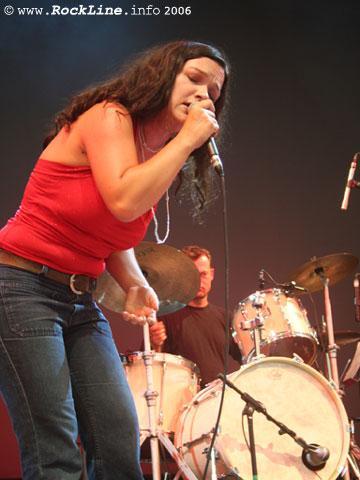
MEENA CRYLE&THE FILLMORE BLUES BAND:16.30-17.00
It started right on the dot! Local Austrian enthusiasts took the stage and honestly surprised everyone with their mastery of first-class “rhythm n’ bluesy” stuff. The charismatic dark-haired Meena Cryle and her backing group The Fillmore Blues Band conjured up an excellent, compact gig in which Meena reigned supreme with a great vocal performance and a feel that evoked the very sentiment of someone like Aretha Franklin. The band shone with how tight they were and delivered excellent concert sound. As a complete layman, I was left thoroughly shocked, and I hope so were plenty of other tourists who “drove in” from God-knows-where in Austria for the Legends Of Rock festival. A very bold opener.
 
NAZARETH: 17.40 – 18.35
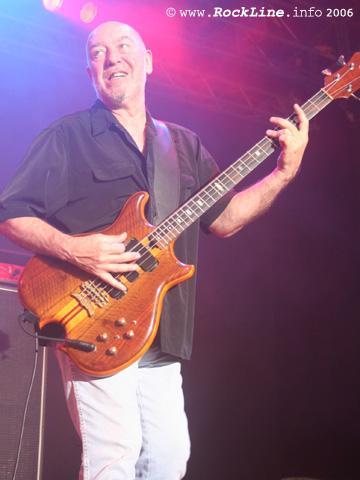
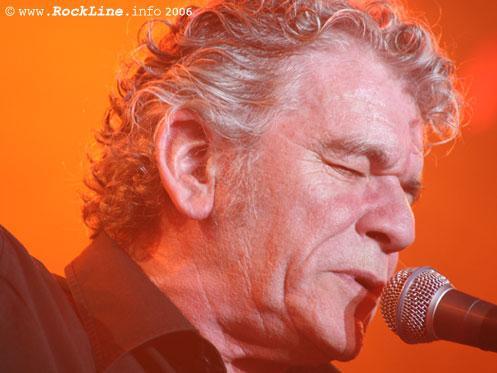
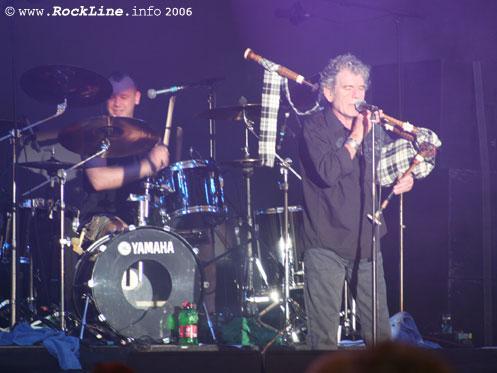
Next on stage were our old friends, the legendary rock n’ roll Scottish rowdies Nazareth. By the time they played, the floor had packed out incredibly and counted surely some 3000 heads, 4000 together with the ones lying on the lawn behind it. Nazareth didn’t hesitate. First the stage filled up with smoke, then the sound of a Celtic intro with typical highland melodies crept onto it. The guys got a thunderous welcome from the crowd and went straight into Miss Misery, a very fitting choice for opening any show of theirs. The legends Dan McCafferty and Pete Agnew, in their late fifties (or early sixties, huh?), still haven’t settled accounts with that general trait of the phenomenon sent down from Adam’s rib (read: women), namely occasional naughtiness, and the setlist was packed with songs about the troubles of taming with “carrot and stick”. Nazareth immediately served up their standard, rockin’ lofty, raw sound that’s recognizable as theirs alone. McCafferty’s vocals remain unblemished after all these years. After Miss Misery Dan announces a song that’s 150 years old, adding that it’s from the days of “….when I was beautifull and tall….” and Nazareth are already racing into Razamanazz. After This Flight Tonight they slowed the tempo, but the atmosphere only grew, because the phenomenal ballad Dream On followed, where Dan absolutely shone with a performance that sent shivers down your body without any trouble. A song of broken hearts… Well, so that Nazareth wouldn’t accidentally end up too serious, they returned to first-class clowning, kicked off by the song Holiday. Dan said it’s a tale about the band’s stay in California and their experiences there, or about the feeling of having a pile of everything up to your ears. The merry, debauched moments were far from over, and My White Bicycle revived the well-known habits Nazareth brought from Amsterdam, while McCafferty polished off some feather-light dance moves straight from the highlands. After that number Dan took a swig of water from a plastic bottle and accompanied it with the comment: “This is water! Fish fuck in it!” Thanks for the warning, Dan, from now on I’ll try to live off inhaling water vapor. In Shanghai’d In Shanghai, Jimi Murrison wittily spiced up the transition by borrowing the riff from Satisfaction by the Rolling Stones, but that’s a staple of Nazareth shows. Anyway, we were back to women again, and this time to downright naughty ones! In Whiskey Drinkin’ Woman, Pete and Dan delivered a vocal duet in the chorus, polished “to zero”, that was a genius copy of that kind of harmony from the band’s records (“vinyls”). Nazareth wrapped up the regular set by scratching “the hair of the dog” (“the dog’s hair”, whichever you prefer). During the song McCafferty picked up his Scottish bagpipes and that was the peak of Nazareth’s show. A roadie (read: one of the band’s tech assistants) also appeared on stage during the set, with orders to bang away as hard as possible on some object that produced a percussive sound reminiscent of a cowbell clanging. You know that one-of-a-kind, crawling, penetrating riff in Hair Of The Dog, right? Heh, heh, heh… and brrrr…. So the legends sped off the stage, only to come right back, and the encore was opened by the excellent drummer Lee Agnew, bassist Pete Agnew’s son! You can’t miss him by the characteristic high forehead he inherited from his father, but more important than that was the energetic drum intro the boy played, which his father soon joined on bass guitar, and for a few moments the two “chugged” along on stage in a shared groove. Then, once Nazareth were back on stage as a quartet, they opened a new chapter about women, more precisely about a “night owl” (Night Woman). That definitely got the crowd thoroughly back on its feet. The audience stomped even more briskly when Nazareth closed with their biggest hit Love Hurts, where the band once again showed off how well they handle multi-part harmonies with backing vocals, and where once more the one and only singer Dan McCafferty dominated with his unforgettable voice. Still screaming as if in a trance today, and, to put it superficially, reminding you of “Janis Joplin in a man’s skin”! Flawless! Nazareth flawless too! People were visibly euphoric. It was too short! The little group of Slovenes in the front row, with whom we shared the minibus from Ljubljana to Wiesen (read: “swaying from Ljuljana to Vizen”), commanded by the great fearless concert leader “Concert Freak”, were, for example, sweat-soaked with flushed faces, and didn’t hide their orgasmic resurrection at the fact that a great rock n’ roll mortar from the First World War had just rolled over them and thoroughly bombed them with unique rock n’ roll bombs. Good old experienced Nazareth still deal these out masterfully, short and sweet and to the point.
 
Nazareth setlist:
1. Intro
2.  Miss Misery
3. Razamanazz
4. This Flight Tonight
5. Dream On
6. Holyday
7. My White Bicycle
8. Shanghai’d In Shanghai
9. Whiskey Drinkin’ Woman
10. Hair Of The Dog
—encore—
11. Night Woman
12. Love Hurts
 
WISHBONE ASH: 19.10 – 20.00
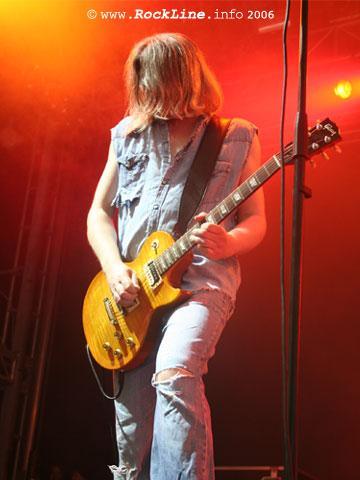
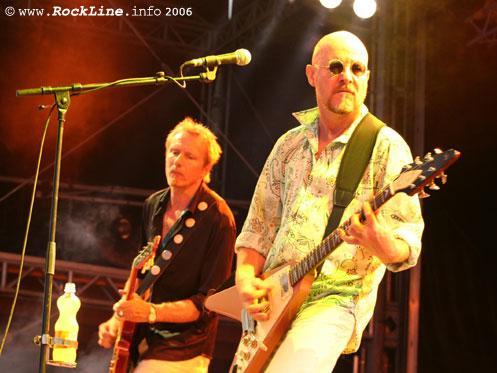
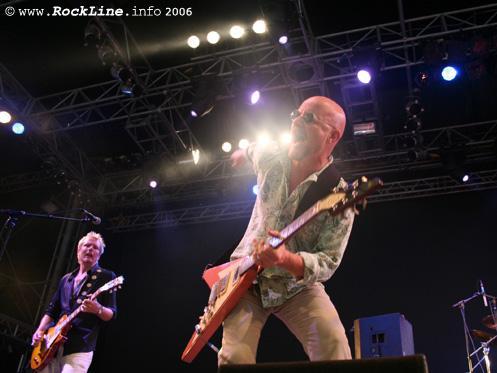
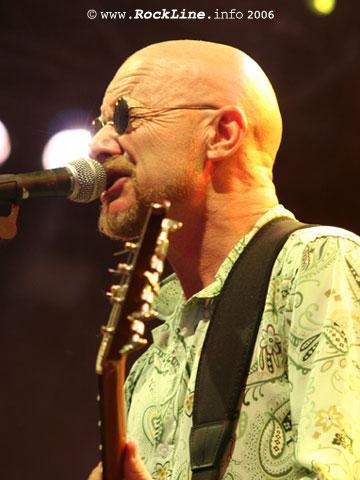
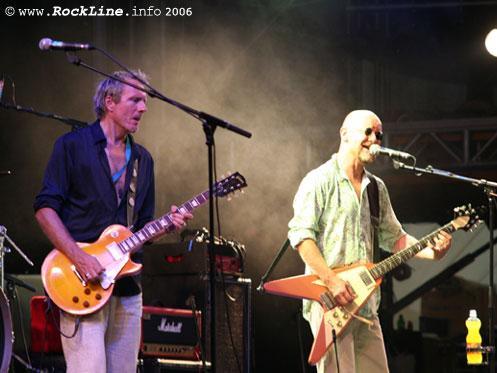
I was waiting for Wishbone Ash with impatience, since I’d never had the chance to see them live. Okay, I’m lying. There was the “Twin Barrels Burning” tour and Hala Tivoli in 1982, when Trevor Bolder played with Wishbone Ash, who I’ll get to when we reach Uriah Heep, but back then my folks would have skinned me alive if I’d run off to a rock concert at 12. Wishbone Ash! A divining rod! Even the Flyin’ V in the hands of the band’s only original member, guitarist/singer Andy Parker, kept reminding me of a divining rod. The quartet first drew attention to itself with an interesting tuning method. The band members took care of the “tuning up” themselves. First Muddy Manninen and Andy Parker struck a twin-harmony motif and the crowd was convinced the show had really started. The guys cut off after a few seconds. Parker nods at his colleague. Moving on. Multi-part vocal harmonies follow. Same principle. A few melodic “syllables” and the guys are ready. They leave the stage for just a minute or so. They’re back up. Now it’s for real. The first song is an instrumental. It showed all the hallmarks of Wishbone Ash. Masters of twin-guitar harmonies in thirds, and the instrumental practically wept with that characteristic melody that Wishbone Ash pioneered. Superb tuning. Calm, serene. Above all calm. I’d even say a reserved start, but in the second song they warmed up their limbs and shifted into “higher gear”. Next came a song from the freshly released studio album “Clan Destiny” (2006) called Healing Ground, in which the now-seated Muddy Manninen laid his Gibson Les Paul across his knees during the solo like cradling a baby and rocking it a little, then slipped on a slide and pulled long slides along the neck in the style of playing a pedal steel guitar, which came off as a very attractive stage move. There were far fewer people on the floor than for Nazareth. Barely 2000. Maybe even fewer. The whole thing was much calmer. Of course. Wishbone Ash brought a completely different energy to the stage. Unlike the wild, untamed Nazareth, Wishbone Ash aim for total sonic perfection and a much finer concert sound, concentrated mainly on perfect execution of their material and not so much on partying and firing up the crowd. So the band’s contact with the audience was completely different, and unlike today’s Nazareth, today’s Wishbone Ash cope much worse at festivals. They’ve evidently forgotten what it means to be a real “arena band”, since they left their seventies far behind and fully surrendered to the role of a club band, visited mostly by today’s older “daddy-os”, their peers. In other words, it felt like the band either can’t or won’t make use of the big stage, or doesn’t want to do some “silly thing” that would please the rowdy, horny rockers below the stage who waited for exactly that throughout the whole set. But there was no sign of it, and so the crowd’s feedback during the show was pitiful. What’s more, Wishbone Ash pulled back even further on the stage and screwed themselves each into their own instrument. Still, the true fans and connoisseurs got what they came for. Because next came a song from the album “Argus” (1972), The King Will Come, and after it Warrior, which blazed hardest of all with its proto-power-metal riff, and the crowd finally plugged into the band’s show more intensely. The sound was precise, as already said. Wishbone Ash are exceptional when it comes to filigree precision. Multi-part harmonies in the choruses, guitar thirds. That magic flared up on stage, their unique magic, close to the “Byron era” Uriah Heep magic, with a mystical touch completed by the specific timbre of Andy Parker’s voice. This is where the Wishbone Ash show climbed. Tales Of The Wise (“Illumination”, 1996) followed, and then they surprised with Almighty Blues (“Bona Fide”, 2002), a song built precisely for opening concerts. The crowd began to sway and shuffle in time once again, more intensely now, to the beat Wishbone Ash were dictating more decisively. The eighth and last (!) song was Time Was (“Argus”, 1972). The incredibly cold response evidently contributed to Wishbone Ash packing up and leaving the stage quickly, and so, after a mere 50 minutes, they left the crowd and never came back to the stage that evening, not even for an encore. They left a sad, pale impression and many people grumbled and complained, disappointed, about this kind of attitude! Nazareth destroyed Wishbone Ash! Soaked like a puppy under a cold shower, I just couldn’t get over it after the Wishbone Ash set. Plain, bare routine! Apparently we’ll have to catch them on a solo tour when they’re somewhere in Germany, since Austria clearly isn’t to their liking, they seemed downright exotic. Many left the grounds uninterested during the show and preferred to knock back another mug of beer in the nearby tent, which proves that Wishbone Ash are in fact a deeply forgotten and written-off band in Austria today. Too bad, really too bad.

MELANIE: 20.30 – 21:35

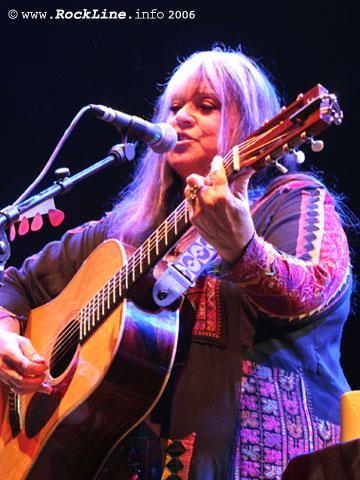
 The area in front of the stage radiated a completely different picture just before Melanie’s set. She was eagerly awaited. A crowd of at least 4000 heads was feverishly anticipating her performance. The lady, who is well into her mature years today, hasn’t shed her “flower power” attire in the slightest and came onto the stage wrapped in a colorful blanket with a folk guitar in her lap, with her sidekick Beau (short for Beautifull), who helped her strum the strings of the acoustic guitar. Things in sleepy Wiesen fell into place the instant Melanie opened her mouth. She started the concert with the song Beautifull People. The people spontaneously exploded and greeted the lady with huge applause and cheers. Melanie put in special effort on the performance and her voice was unforgettable. After all these years, simply magnificently, even blessedly unforgettable. Powerful and literally the kind that strikes you like a bolt from the blue and hits right at the very core of the essence. It seemed this voice could cut through concrete, especially with its sentiment and the specific charm that adorns Melanie. You could feel how full of enthusiasm Melanie was, how happy she was to be on stage again and to share her joy with people, how much she’s wanted among people and how the whole audience was absolutely with her and on her side. Next came Rock N’ Roll Heart and after it Nickel Song, which the crowd especially caught fire to. The Austrians greeted Melanie with enthusiasm after every song and always reacted truly wildly between numbers, which was downright shocking given the ignorance they’d shown Wishbone Ash. Evidently Melanie is “the people’s choice”, “the voice of the people”, “the wish of the people”! The lady won over the crowd with such feather-light ease that it was a pleasure to watch and be part of this unique meeting, or rather fusion, of Melanie with the audience. Jammin’ Alone follows and after it the song Smile, where the crowd again joined in the singing more actively. Then Melanie took a little breather, and Beau played a shortened version of Malaguena. The air jumped up a notch again with Ruby Tuesday. After it came I Tried To Die Young and Look What They Done To My Songs, and for the finale she played Peace Will Come. During this song the stage was flooded with dark blue, with no spotlights aimed at the crowd. This performance left a strong impression, not far from the idea that if Melanie “bangs on the table” and says there’ll be peace, then there’s no doubt left, none that might contradict the fact that this wild human race, doomed to self-destructive behavior, might someday finally come to its senses. Melanie was an outstanding highlight of the festival! A true halogen bulb! Maybe a bit much for hardcore rockers, but it was incredible how popular Melanie still is in Austria today and how the people cheered with fire throughout her whole set. The energy was grandiose! After the show Melanie came out among the people, to the very stand where the “merchandise” was (read: sales of shirts, CDs and other “official” music knick-knacks), and generously signed CDs that her loyal fans held out to her. If there were a vote on the most popular act of the day, Melanie would probably take first place in that category with ease!
 
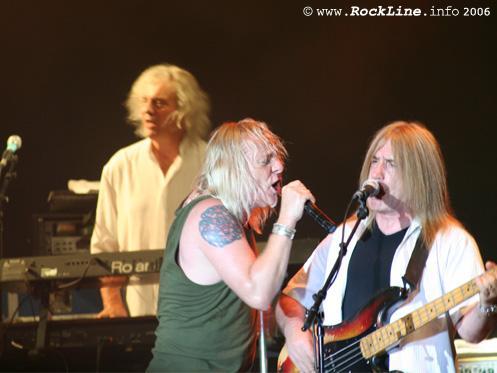
URIAH HEEP: 22.20 – 23.40
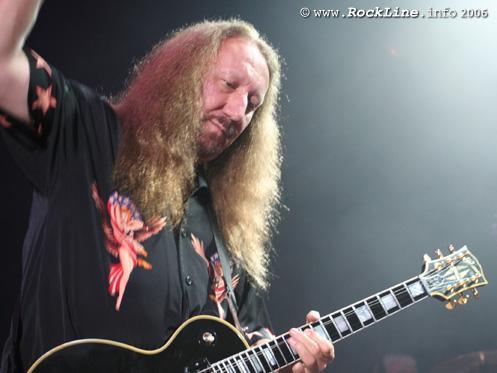
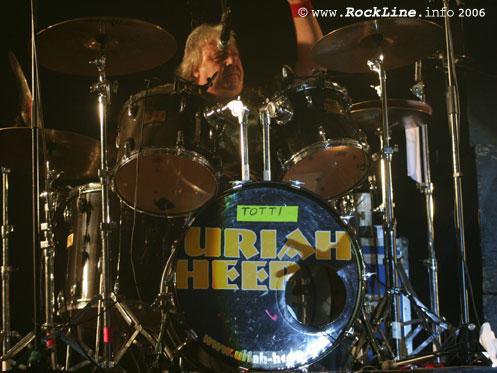
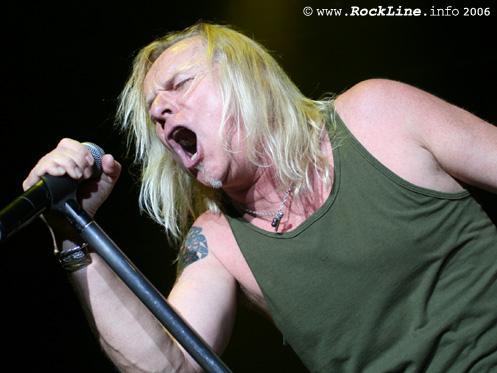
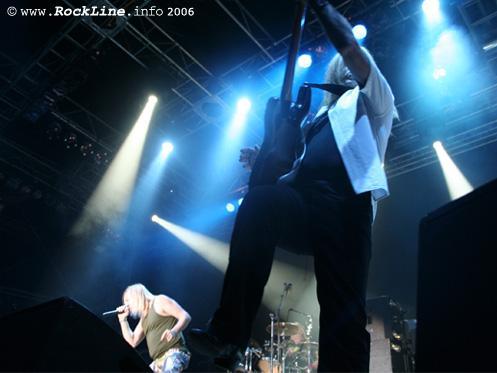
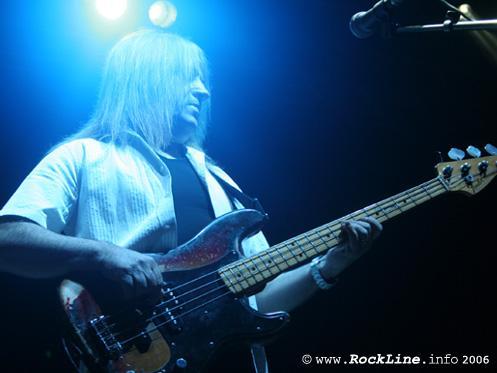
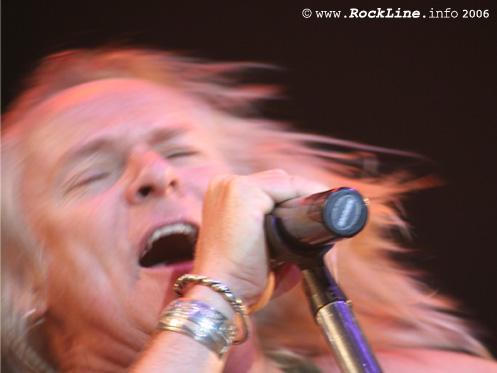
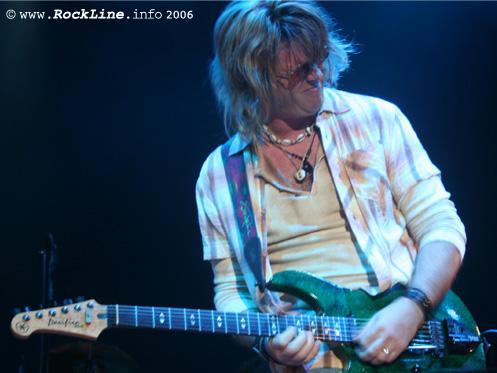
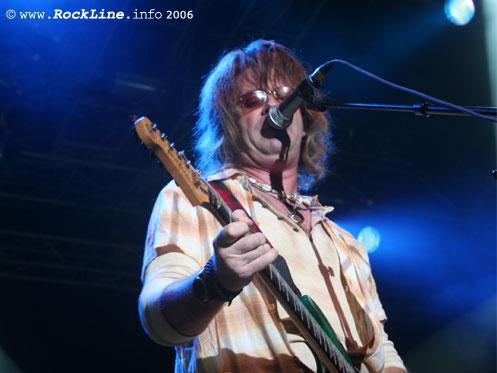
Aaaaaa!!! Still fanatical about Uriah Heep after all those millions of miles of concert routine! But when the blood in your veins starts to boil, you know you’ve come to a gig by your favorite band. I just got goosebumps all over again from remembering my new unforgettable hangout with Uriah Heep in Wiesen! Uriah Heep played fifth on the bill and their job was to give the festival name “Legends Of Rock” back its true meaning. Uriah Heep are old acquaintances of Wiesen and a very popular and appreciated, not to say highly respected, band in Austria. The space in front of the stage was once again phenomenally packed, and that heralded a real onslaught!!! So Tired and there they are! They surprised with So Tired, since it’s one of the weaker tracks on the album “Wonderworld” (1974) and somehow not the happiest choice for opening a concert. Maybe Heep wanted to say they’re a little tired and maybe fed up with everything. But that couldn’t possibly be true! Anyway, you couldn’t feel my petty analytical remark at all, since the crowd literally carried the band on wings of euphoric enthusiasm through this opening song of the Heep show. My grumbling about the opener was immediately muffled even further by the excellent AOR song Cry Freedom (“Raging Silence”, 1989), where Bernie Shaw first signaled that he’s a “devilish” vocalist! The third song was a literal shock, since Heep picked a song from the John Lawton era, which is a very tough nut to crack for any vocalist, however “trained” the voice or innate the feel for singing. The song Faling In Love (“Fallen Angel”, 1978) filled the room with energy! After it the guys moved without a pause into the superb Words In A Distance (“Sea Of Light”, 1995), where that energy was only built up further and the show truly caught fire now! Uriah Heep came at us like never before. Last year at Biker’s Fest by Faaker See the stage was almost ten meters away from the audience, the year before last the Carl Orff Saal in Munich was filled by nothing but grannies with season tickets at the Heep acoustic tour, in 2003 Heep played to half as many people at the Muffathalle in Munich, and in 2002 in Italy (6.7.2002, Riolo Terme), where Heep just don’t burn the way they do in Germanic lands. This time everything looked ideal. The place packed with people, the crowd right up against the stage. The sight of the dancing audience woke the band up and they truly came at it with their full run-up. Even Trevor Bolder pulled off a few jerky moves, especially during his lightning-fast flailing on the bass guitar, when he energetically pulled “licks” along the strings. Bolder is usually the best indicator of the band’s overall mood and working chemistry on stage. This time Bolder was “mischievous” like never before, which meant the other members were galloping around the stage at 200 km/h. Box was constantly having fun with “yogi” gestures and enjoying the energy the crowd sent him, and he also enormously enjoyed teasing fans in the front rows about handing out picks. Anyway, he’s the guitarist who throws a pick out of his hands most beautifully, so it finds the right place in the hands of the right fan. The band was top-notch. Again without a mistake. Maybe at the start of Stealin’ Lee followed Shaw with backing vocals a notch lower than required, but that was all. Uriah Heep trademarks shone again in all their recognizable standard glory. For the connoisseurs, Uriah Heep kept the classics If I Had A Time and Year Or A Day in the setlist and confirmed their invaluable power of creating in today’s times with Between Two Worlds (“Sonic Origami”, 1998). Otherwise the whole setlist was tailored for a real “power” show, so in an hour and 20 minutes the lineup played practically the bulk of the hits and some of their best-known songs. The sound was spotless, the tightness top-notch, and the perfect delivery of the multi-part vocal harmonies in particular took your breath away. Among these hits there was no shortage of Free Me, where Shaw egged the audience on to join in with Heep as loudly as possible, and after it the one-of-a-kind The Wizard. As always, the atmosphere got electrified to the max again in the second half, when Heep began with the yearning Sunrise, then went wild with the obscure and possessed Gypsy, which carries an elemental heavy metal riff you can’t resist, and then pure white light flooded the place as Bernie sat down on one of the monitors. Of course. It was July Morning and the evening was in fact tipping over into a new July morning. Box especially stood out in the song with his soulful “wah-wah” solo. The guys “cooked up” Easy Livin’ for the finish and a closing dance of debauchery was guaranteed. Heep greeted the people and left the stage. They were right back. The clock was running them into the ground over the scheduling of minutes! So Mick Box addressed the audience, saying the band begs those present once more to join them for one more performance of a classic. He held an acoustic guitar in his hands, like Melanie before him, to whom Mick took the occasion to pay deep tribute through words of thanks, since he couldn’t get over her voice. The riddle was quickly solved and Lady In Black greeted the people! Of course we sang along loudly and together with Shaw and company on stage, through a moving finale full of positive vibes and the authenticity that Uriah Heep carry within them. Admittedly, after Lady In Black Look At Yourself or Bird Of Prey would have fit nicely, but there was no time left for anything like that.

The legends delivered the most intense set of the festival! Most intense in the sense that it was brimming throughout with the biggest dose of elemental rock energy, which can only be created by the exceptional feeling of combining punchy riffs with unforgettable melodies, written together only by Uriah Heep. A show that offers you literally everything! Pure perfection that makes you crave the next meeting with the unforgettable magic Uriah Heep conjure as soon as possible. Guys! Now hurry up and “drum out” that long-promised new studio album in the studio and “hop” back out on a new tour, where we’ll meet at another party like this one. 

Uriah Heep setlist:
1. So Tired
2. Cry Freedom
3. Fallin’ In Love
4. Words In A Distance
5. Stealin’
6. If I Had A Time
7. A Year Or A Day
8. Between Two Worlds
9. The Wizard
10. Free Me
11. Sunrise
12. Gypsy
13. July Morning
14. Easy Livin’
—encore—
15. Lady In Black
 
KEITH EMERSON BAND: 0.30 – 2.00
(Author of this piece: Peter Podbrežnik)
After Uriah Heep, we finally got the set by the most important member of the legendary trio that helped put progressive rock on its feet and popularize it among wider audiences too. I’m talking about the “three holy kings” of progressive rock – Emerson, Lake & Palmer, who (again) went their separate ways in 1998 over disagreements. While Lake is currently concentrating mostly on the soil of Great Britain (his tour of continental Europe was cancelled last year) and Palmer was in Vienna last year and reportedly left a good impression there, the keyboard wizard Keith Emerson finally showed up somewhat closer than usual. Not alone, but with a band of four top-notch musicians. I admit that before his set and my first Emerson show, I didn’t have particularly high hopes, nor any idea how he would perform. My expectations were more or less pessimistic, since at one point I even imagined he’d perform entirely solo, surrounded by his numerous keyboards, just playing through compositions by the masters of 20th-century classical music, adding his own arrangements here and there. I devoutly hoped that, if he was in a good mood, he might also remember some ELP or The Nice classic. So I had Emerson completely wrong in my head, both as a musician and as a personality. I was probably also somewhat misled by footage of his old ELP shows, where he came across not only as a fast-fingered master but also as an extremely energetic and temperamental musician.

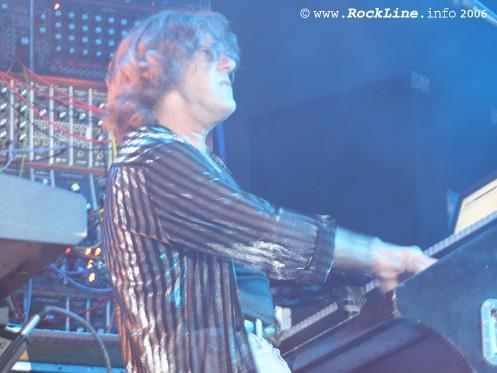
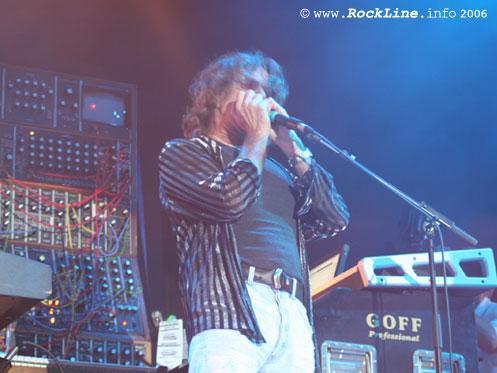
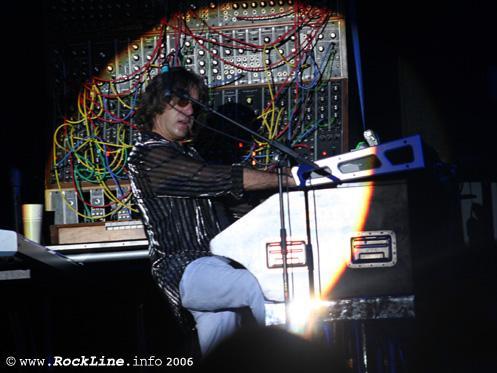
At midnight, when the indestructible Uriah Heep left the stage and the roadies started preparing everything needed for the maestro’s set, I already sort of sensed this would be the highlight of the festival. His Hammond organ and modern synthesizers were already set up. Then a huge box full of colorful cables connected to keys appeared on stage, which I figured out was a moog modular, which Emerson has used on stage since about 1973. The gigantic toy somewhat revived the memory of Emerson’s extravagant shows in the 60s and 70s, when his gear was hauled around in as many as three trucks and between songs he would stab knives into his Hammond organ, rise into the air during the set and, without fail, smash the organ at the end. Of course, nothing like that was to be expected anymore, since Emerson has long since become a refined member of British society who likes to sip afternoon tea with the Queen.

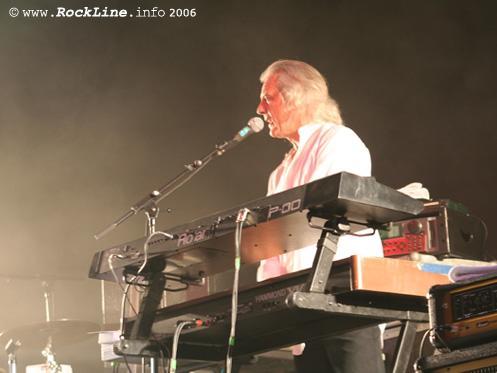
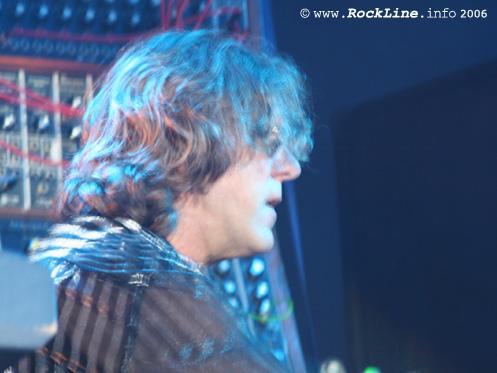
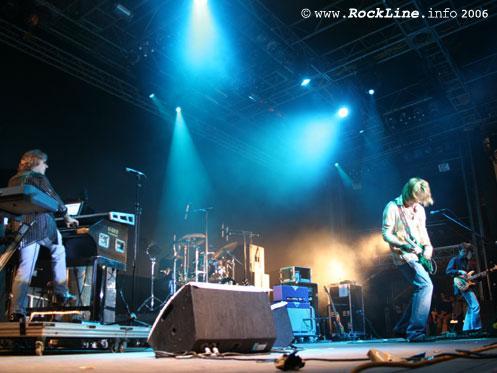
At 0:30 Emerson and his band, which besides him included a guitarist/singer, a drummer and a bassist, marched onto the stage. Emerson, with graying but long hair, looked vital even before he started playing (he’s also kept some of his 70s glam image). When he turned a knob on his moog modular and it started coaxing out electronic sounds, all eyes were glued to him. I admit I first thought something was wrong, since Keith and his band members were smirking knowingly and shaking their heads. But suddenly I recognized that electronic effect which was the intro to ELP’s unforgettable sci-fi epic “Karn Evil 9” (specifically the 1st impression part 2 section) from the unforgettable “Brain Salad Surgery” (1973) and the band immediately grabbed their instruments. My attention was understandably focused on Emerson most of the time, who after all these years has lost little of his speed and command of keyboard instruments and played two instruments at once with ease. Singer-guitarist Marc Bonilla started singing the unforgettable lines “welcome back my friends to the show that never ends…” His voice was unusually similar to Lake’s, so at moments I thought I was witnessing a “real” ELP show. An exceptional vocal resemblance, and slightly a physical one too. As for his command of the guitar, though, Bonilla beats Lake across the board. Of course that’s a slightly unfair statement, because Bonilla had the excellent bassist Phil Williams keeping him company, while Lake was in charge of both instruments, mostly bass. Williams is also an excellent musician who often plays bass like a guitar, which he showed in his short solo spot too. Keith then introduced the band and a big surprise followed. Namely, a song ELP never played live – “Living Sin” (Trilogy, 1973). Bonilla brought some of his own way of singing into it, and added some new guitar arrangements too, and the song sounded a lot harder than the original. The album “Trilogy” continued with the instrumental “Hoedown” (original A. Copland), another ELP classic, which Emerson stretched out superbly while sticking to the original motif the whole time. Of all the performances at the show, “Hoedown” came out closest to the studio version. The songs from “Trilogy” are practically made for live performance, since they’re among ELP’s more compact works. Then came another surprise. Lake’s immortal ballad “Lucky Man” (Emerson, Lake & Palmer, 1970), the band’s biggest hit. Bonnila gave the song completely new arrangements, which added to its depth. His spacey guitar solo was especially thrilling, as was Emerson’s extended solo at the end. Undoubtedly a version that surpassed the original in terms of polish and arrangements, although the singer somehow didn’t quite capture Lake’s original magic vocally this time. Then Keith announced a very old composition from as far back as 1968. It was immediately clear it was a The Nice classic. “America” followed, a popular The Nice song known for the fact that many years ago Keith burned an American flag during it in protest, and for that wasn’t allowed to perform at the Royal Albert Hall for 25 years. This time, of course, the show went off without the slightest incident, and Emerson proved his perfect command of classical arrangements, and at one point he and Bonilla also took up harmonicas. Keith later pulled off a deft twist and tipped the composition over into “Rondo”, where with the help of a portable synthesizer he also polished off a comic “duel” with Bonilla. Then came what I’d been quietly, devoutly hoping for the whole time before the show – one of the best compositions the human mind has ever created. The fantastic suite “Tarkus” (1971), which over more than 20 minutes tells the story of reverse evolution after an atomic war, when animal-machines took over and the armadillo-tank Tarkus began his merciless campaign of battle. When Keith started playing the “Eruption” intro on the Hammond organ I got goosebumps. It contains that famous solo of his, which is the basic foundation of one of the best and most influential instrumental creations for keyboardists. Bonilla played added guitar solos where there are none, in fact in the original there’s one only in one section (“Battlefield”), while he accompanied Keith almost as an equal the whole time. When the immortal part “Stones of Years” followed, Bonilla again sounded like Lake’s twin. In the “Battlefield” section he drew attention back to himself with the famous Floyd-style solo. At one point drummer Pete Riley also took a solo spot and proved he’s an extremely solid “replacement” for Palmer. When at the end the main motif (Aquatarkus) returned over Keith’s Hammond organ solo, closing the entire composition, Emerson in my eyes finally confirmed his reputation and proved that after all these years he’s still among the best in the business. So I got to experience one of the most magnificent concert moments so far, one that can’t be described in words. Not only was “Tarkus” played in full, they extended it by a whole ten minutes. Came, saw, conquered – “Tarkus” was for me not only the peak of Emerson’s set but of the entire festival. After a short break the band came back for an encore. Fanfares rang out on the moog and “Fanfare for a Common Man” (The Works – Vol. 1, 1977) followed, which just can’t be left out. It’s usually played either at the beginning or the end of a show. Emerson skillfully wove into it motifs from the most varied musical sources, from rock to classical. In one of the motifs the listeners could immediately recognize the Van Halen song “Jump” (their enthusiasm was indescribable), as well as the well-known Bach symphony, the flight of the bumblebee and part of the “Nutcracker” (in The Nice/ELP version called “Nutrocker”). Along the way Keith demonstrated the most varied ways of playing keyboards, including playing from the opposite side of the keyboard. This version was noticeably extended too. And with that his set came to an end.

Emerson’s set was truly seventh heaven for every progressive rock fan. The sound was very good, Emerson’s keyboards surprisingly weren’t pushed too far into the foreground, so all the other instruments could be clearly made out, and the performance was, as expected, at a professional level, with the individual musicians exceptionally tight and full of energy.

With his energetic and professional performance, Emerson confirmed that after all these years he’s still the epitome of professional keyboardists, even though some wanted to write him off before the show. He’s still a real fast-fingered wizard and an outstanding virtuoso who hits the Hammond, electric keyboards and moog modular with three fingers as if it were nothing. Only rarely does he happen to slip slightly on some motif. After all, he’s only human too. He’s managed to gather younger, talented musicians around him in the band, who have surely contributed significantly to his revitalization. This was undoubtedly one of the best shows I’ve seen from him so far. With his set, Emerson simply completely overshadowed all the bands before him. It was truly an unrepeatable night. I hope that those who see him at his upcoming shows will share my enthusiasm for this great musician

 
Keith Eemerson Band setlist:
1. Karn Evil 9 (1st impression part 2)
2. Living Sin
3. Hoedown
4. Lucky Man
5. America/Rondo
6. Tarkus
—encore— 
7. Fanfare For A Common Man

Setlist

KEITH EMERSON BAND URIAH HEEP MELANIE WISHBONE ASH NAZARETH MEENA CRYLE & THE FILLMORE BLUES BAND DOORS: 15:30 START:16:30

Photo Gallery
Leave a comment

Your email address will not be published.

This website uses cookies to provide online services, advertising systems and functionality that we would not be able to offer without cookies. By visiting and using the website, you consent to the use of cookies. Accept Read more

Privacy & cookies