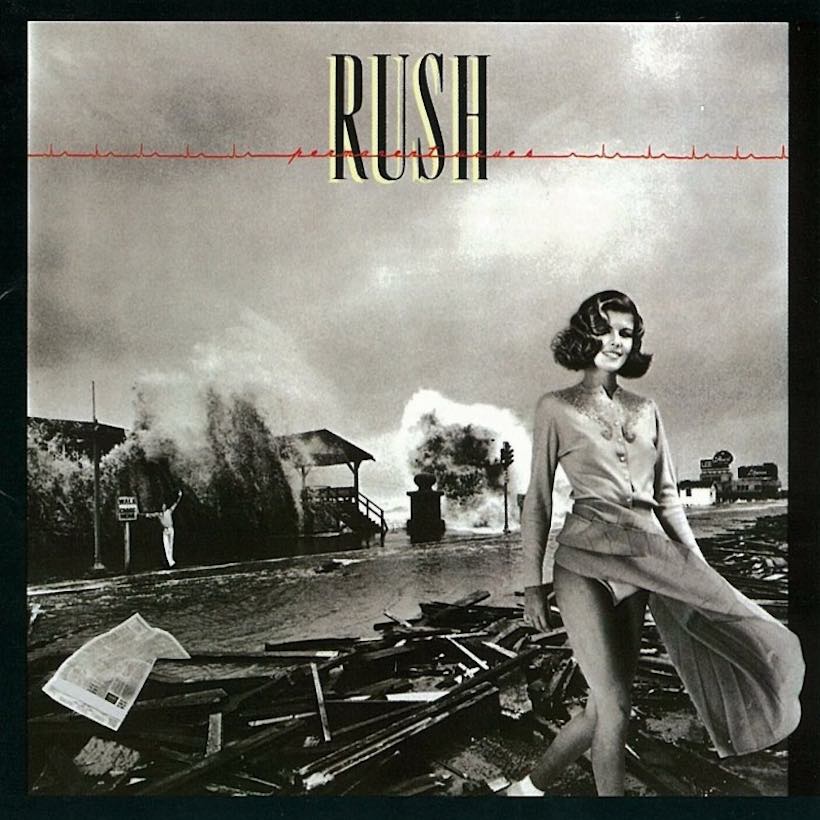
“Permanent Waves”, the seventh studio album from the mighty Canadian prog-rock fortress Rush, came out on 14.01.1980 on Mercury Records, which means exactly 40 years ago.
On this album, Rush started approaching arrangements in a more deliberate way. They became more defined and, as a result, more memorable, and with the shorter Free Will and the wake-up call that is The Spirit Of Radio, with its powerfully distinctive opening guitar phrase that kicks off the album and flirts with reggae near the end, Rush started knocking on the door of radio airwaves. Even so, their recognizable, trademark prog-rock recipe is still clearly present and all over the place, especially in the album’s closing treat Natural Science and the gloomy Jacob’s Ladder.
As always, drummer Neil Peart wrote all the lyrics this time too, except for Different Strings, while bassist and vocalist Geddy Lee and guitarist Alex Lifeson wrote all the music.
It’s also the first album of the band’s career on which Geddy Lee completely dropped the frenetic singing, so often aimed at extreme heights, and approached the vocals with his natural voice. “Permanent Waves” is the herald of a change in the band’s style, one that Rush took boldly into the eighties. Peart’s poetry is more personal and confessional, and for the first time these messages decisively take the spotlight away from the world of fantasy that filled the previous albums. “Permanent Waves” is also an album that soaks up the influences of the New Wave boom of the time, which the band worked brilliantly into their own recipe of artistic originality.
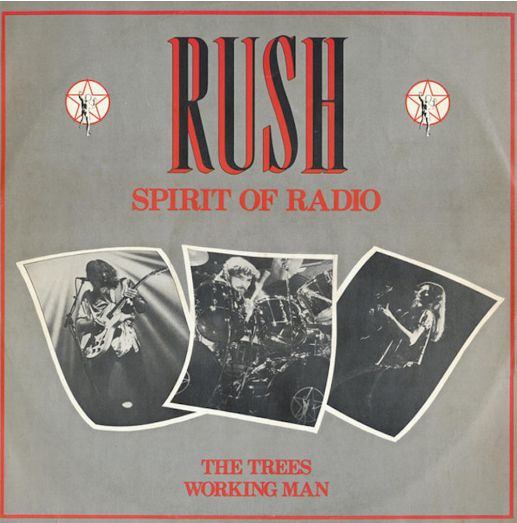
After the tour supporting “Hemispheres” (1978), on which Rush played stages in their native Canada, then the US and the UK, the trio gathered in July 1979 in Lakewood, near the larger city of Fleshertown (Ontario), where they spent the next 14 days trying out new material. By the time they got to Lakewood, the trio had written only one song, Entre Nois, but without any special effort Rush quickly wrote The Spirit Of Radio, Free Will and Jacob’s Ladder together in the very first days after arriving. Later that year, Rush headed to Le Studio, located in the mountainous Morin-Heights area of the Canadian province of Quebec, and recorded the new album under the production baton of Terry Brown. That’s where Different Strings came together, with a piano solo contributed by Hugh Syme, who also created the album cover, and Neil Peart finished the most demanding composition on the new album, Natural Science, for which he also used some material left over from his initial wish during this period to write a longer piece inspired by the medieval romance Sir Gawain And The Green Knight.
The idea for the reggae bit in The Spirit Of Radio came from the band’s habit of playing Working Man in a reggae version on tours at the time. The song Entre Nois (in Slovenian, “Med nami”, or “Between Us”) was meant to be a potential hit single, but it got little airplay, and the band didn’t play it live at all until the “Snakes And Arrows” tour in 2007.
At the time of its release, “Permanent Waves” counted as the band’s most successful studio album, landing at number three on the best-selling charts in their native Canada and the UK, and at number four in the US. In the US the album went platinum, selling over a million copies.
In the foreground of the album cover is the Canadian model Paula Tornbull, while the man waving in the background is Hugh Syme. The backdrop comes from a photo of a seawall in Galvestone (Texas, USA) that protects the city from sea flooding. The background photo was shot by photographer Flip Schulke on 11.09.1961, during Hurricane Carla.
You can read all this and more in the RockLine review of “Permanent Waves” at the link below: https://en.rockline.si/rush-permanent-waves/ .