Author: Peter Podbrežnik
Location: Kassematenbuehne (Schlossberg) / Graz / Austria
Concert date: 26.07.2007
Attendance: 800
Ticket price: 25.00€
When it comes to catching quality gigs, Graz has become more and more of a second home to me in recent years. When the Orpheum hall doesn’t land any music name interesting enough, the action moves to the top of the gorgeous Schlossberg castle hill, the city’s main landmark, which will forever stay in my memory as the setting of my first and still most picturesque encounter with Jethro Tull. The castle walls have a special charm, and they definitely lift the concert atmosphere at least a notch above the usual, no matter the genre (though I’d say they suit jazz and folk melodies best). This time it was Passport’s turn, German jazz fusion rock legends playing as part of the local summer jazz festival, which pulled in quite a few big names this year (Blood, Sweat & Tears, John Mayall, Mike Stern, etc.), many of them well known in the rock world too. Passport, led by the indestructible multi-talented saxophonist Klaus Doldinger, who enjoys a reputation as one of the best German saxophonists of all time, are one of the most important bands of the golden age of jazz fusion rock, hardly any of which has survived to this day, so there was no way I was going to miss this. On top of that, they’re one of the first bands I ever remembered, as a tiny kid, thanks to their classic “Looking Thru” (1974). The striking cover of that album, which I once saw in a record shop window in the 80s, stayed lodged in my brain until the moment a few years ago when I finally got to know the band musically too, and since then I’ve counted them, alongside the much better known Mahavishnu Orchestra, Return To Forever and Weather Report, among my favorite jazz fusion bands.
After a happily completed border check, carried out under the watchful eye of the biggest passport enthusiasts, my travel buddy, driver and aspiring photographer, who’s always in the mood for a lame joke, and I were already tight on time. We still swung by a local record shop (strangely good prices on some classics), which is now marked down for future visits. By the time we reached the city center there were only ten minutes left before showtime, so we dashed straight up the castle steps and sprinted uphill. God only knows how we pulled it off, but we arrived with seconds to spare, right as the maestro and his gang of old buddies marched onto the stage. In front of it, as is usual for legends from the “prehistoric era”, the crowd was mostly gray and thinning heads.
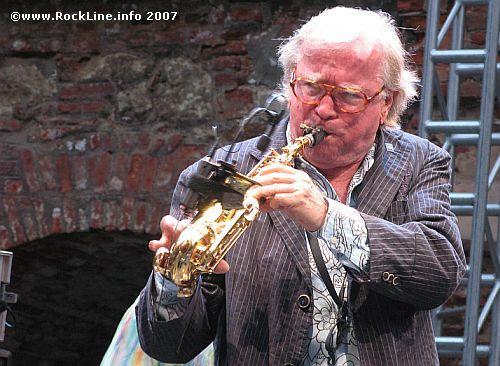
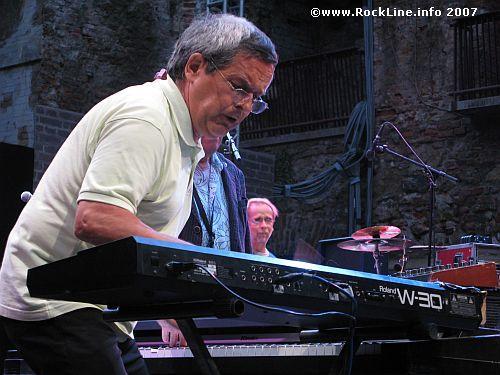
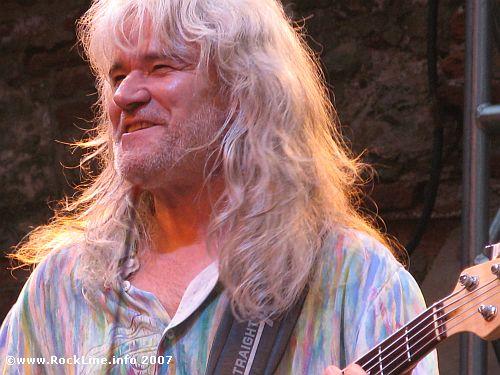
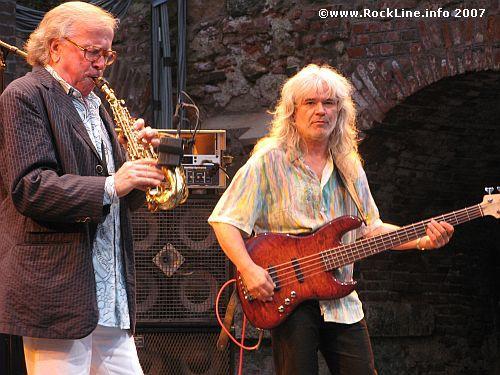
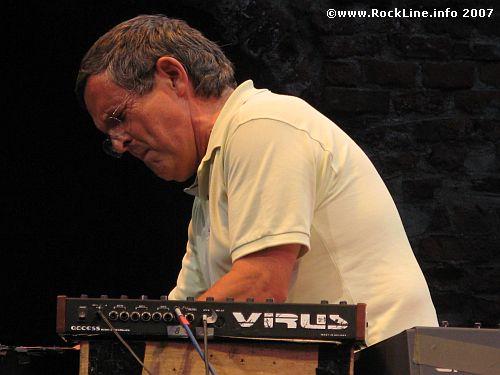
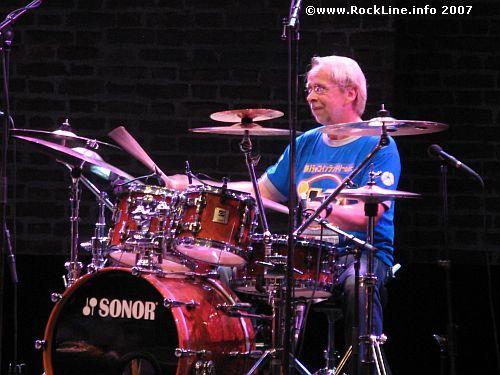
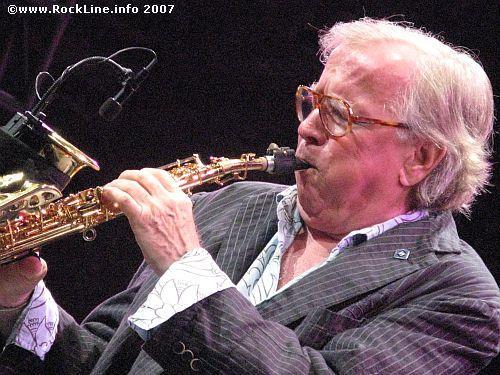
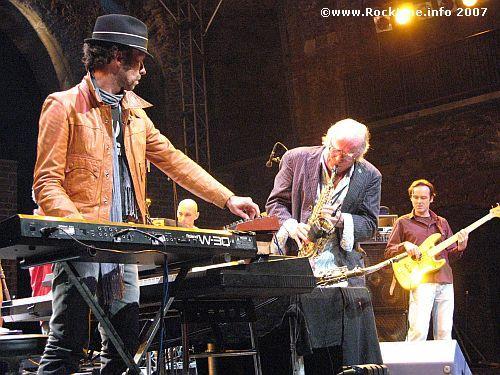
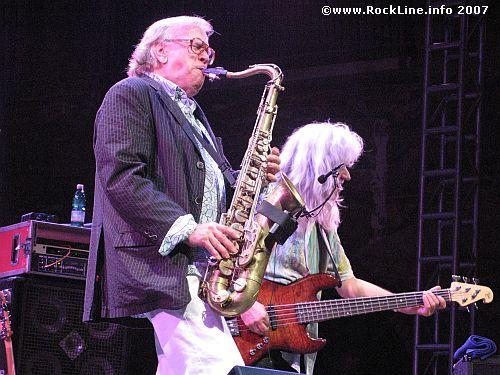
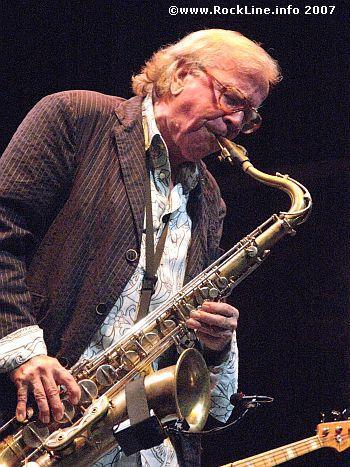
Passport’s show was set up as a spectacle from the start, split into two parts that showed two different historical faces of the band. The first part featured the classic and best-loved Passport lineup, which recorded their best albums in the first half of the 70s, such as “Looking Thru”, “Cross Colateral” (1975) and “Infinity Machine” (1976). Klaus, in great spirits and unusually talkative between songs, kept dazzling with his mastery of the saxophone (alto, soprano and tenor, to be precise), and he was joined on stage by comrades from the “good old days”: the rock-minded bassist Wolfgang Schmid (once also a member of bands like Kick and Paradox with the legendary Billy Cobham), whom I missed on guitar that night since he’s usually no less of a virtuoso on it; the electronics-minded keyboardist Kristian Schultze, the main “culprit” for the band’s popularity among prog rock fans; and the superb drummer Curt Cress, whom some of us also remember as an occasional member of Canadian art rockers Saga.
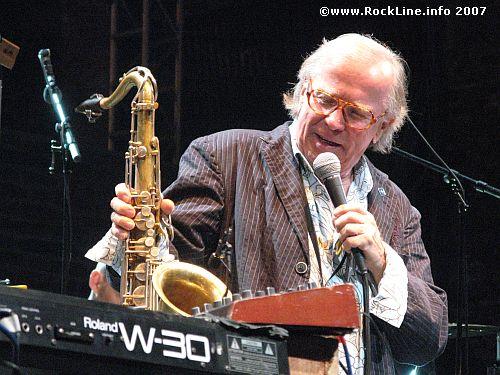
As expected, the four legendary musicians played their classics from the 73-76 period, when they were together. Standouts included the opener “Morning Sun” (Infinty Machine, 1976), where they immediately showed off their trademark symphonic and melodic jazz rock fusion, and they also surprised with excellent versions of the classics “Will-O’ The-Wisp” and Jado” (both from the album “Cross Colateral”, 1975). The venerable Klaus, who, contrary to my image of some uptight dictator, came across as an extremely good-natured, witty and refined gentleman, was of course the star of the evening and the center of attention the whole time. When he wasn’t swapping between his three saxophones with astonishing ease, he was enjoying himself dancing along to the rhythm and dropping a string of fairly witty speeches, which were of course in German, so I could only barely follow them. The classic Passport gave a good lesson in tightness, though I couldn’t shake the feeling that a possible reunion would fall apart quickly. This was just a symbolic meeting of old friends, which surely drew at least a few more people than usual. As for the technical chops of the other “passports”, bassist Schmid, the only “rocker” of the night, showed a rarely seen speed of string-rubbing, though he cheated a bit with a pick. Maestro Schultze fully lived up to his reputation as a keyboard “wizard”. His approach, with its heavy use of electronic keyboards, is in my view at least as close to prog rock as to jazz, which may be the main reason that, besides Doldinger, he impressed me most of the classic lineup. Cress, as a classic jazz drummer, kept a solid rhythmic foundation throughout, though I expected a little more from him, at least in terms of improvising. Still, his solo was nothing to sneeze at. The nostalgia trip was over (too) quickly, and I probably wasn’t the only one who found the barely three-quarter-hour set of the classic Passport, very good as it was, absolutely too short.
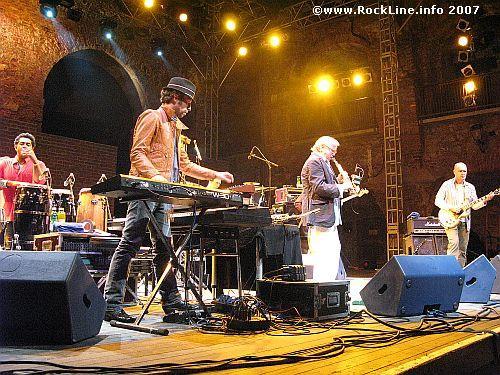
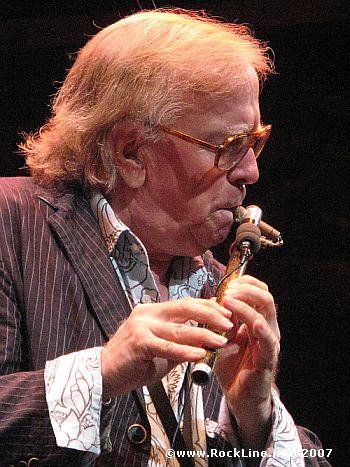
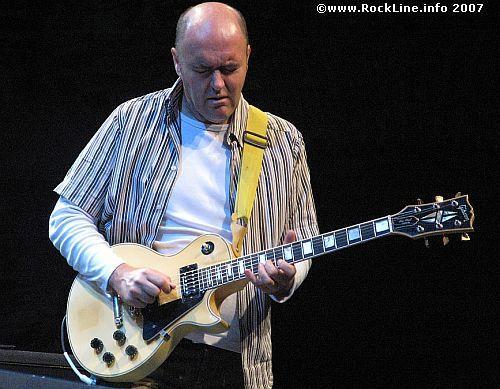
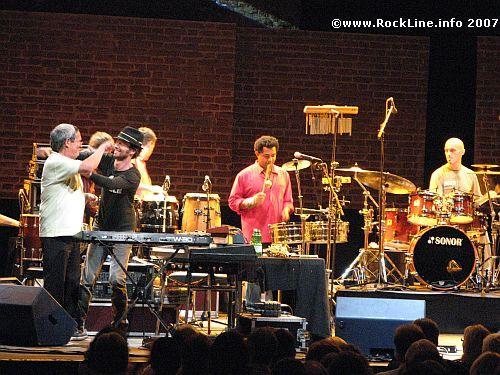
After a twenty-minute break it was time for the modern Passport, who, Doldinger included, count seven members. It’s a colorful, international lineup of established musicians: Australian Peter O’ Mara on guitar (best known for working with the legendary Dave Holland), Italian Roberto Di’ Gioia on keyboards, American Patrick Scales on bass, Cameroonian Bibioul Darouiche and German Ernst Ströer on percussion, and local Christian Lettner on drums. Since I don’t know Klaus’s newer work, I was just guessing what kind of jazz to expect in the second part, but from the way the instruments were set up I figured the top-notch fusion would carry on in a more modern form. In the end, this second part came across even better than the first in my eyes, which I would never have dared to predict. During the set, Klaus and his bandmates mostly played material from the latest album “To Morocco” (2006), which is full of North African folk ethno elements. Klaus explained his current interest in African ethno elements as a result of an unforgettable trip to Morocco and hanging out with local musicians. Most of the pieces from that album, among which I remember the performances of “Riyad El Capi” and “Djema El-Fna”, were thrilling, and Klaus even picked up a bamboo flute twice, proving his musical versatility. Among the newer material, the setlist also included “After Hours” (Back To Brasil, 2003). Worshippers of classic jazz fusion got their due again with a newly arranged version of “Ataraxia”, which comes from the album of the same name from 1978. The individual musicians showed a rarely seen rhythmic tightness and complete command of their instruments, so that apart from the out-of-this-world Klaus, I can’t single anyone out. The two percussionists swapped instruments several times, with Ernst also taking care of special sound effects, and everyone naturally treated themselves to the obligatory solo spot.
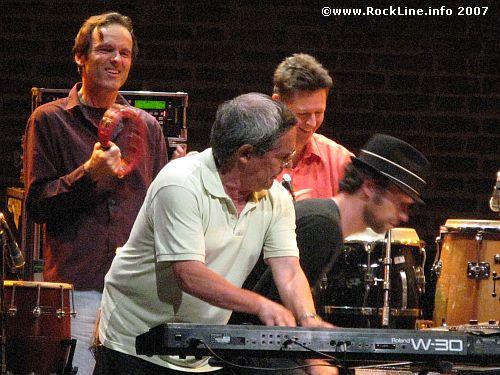
Sadly, few people today know that in the 80s Klaus also tried his hand at film scoring and created a theme that a good number of people know without ever having heard of him or Passport, and never will. What followed were the three most picturesque pieces of his film career: two he recorded for films by the famous director Wolfgang Petersen (Troy), and one he recorded for Hollywood. I didn’t recognize the first one (I had been expecting his theme from “Neverending Story”), but it was followed by probably one of the best-known film themes of all time, “Das Boot”, the main theme from the film of the same name about an ill-fated German submarine in WWII, which is by far Klaus’s best-known work. Its performance was definitely a special experience and one of the highlights of the evening, though in my opinion, in artistic terms, it doesn’t rank among the peaks of Klaus’s career. After the “submarine” came Klaus’s current hit “Soul People” from the American blockbuster “Ocean’s Thirteen”, which is playing in cinemas around the world right now. After one more excellent, electronics-driven piece, Klaus and company left the stage, but they were quickly back in a mightier way than you could imagine. Every member of both the classic and modern Passport marched onto the stage, except for Curt Cress, whose reason for absence I can only guess at (four percussionists would probably have been a bit “too much” given the instruments available). What followed was an unforgettable closing jam that combined all the best finesse from their rich history, and it was without a doubt the peak of the night, with the crowd rising to their feet and starting to “cheer” for the band as at a classic rock concert, leaving the band visibly moved. After the show and many thank-yous to the audience, Klaus invited the festival’s main organizer onto the stage, thanked him from the heart for the excellent organization, and proved once more that he’s a real stand-up guy and a professional, whose generosity and charisma many musicians today can only envy.
Despite more than two hours of top-notch jazz fusion, the gig was over far too soon in my eyes, as Klaus and his musicians managed to hypnotize me like no jazz or rock band has in a long time. A top-shelf demonstration of the German school of jazz fusion rock in the magical castle atmosphere was truly a godsend given the general lack of gigs by similar bands (the ones that still exist rarely stray this far south on the European map). The mysterious green dude with sunglasses from the “Looking Thru” cover revealed himself as one of the most big-hearted musicians around, and the crowd knew how to reward him with a response worthy of an artist who left an indelible mark on the world of jazz and prog rock too.
Photo Gallery