

Intro
These days, lots of music fans are discovering the experimental side of sixties and seventies rock for the first time, or rediscovering it after a long break, and it’s getting the respect it deserves again. With the genre that critics of the day dubbed progressive rock about to turn fifty, it feels like a good moment to run through the key artists and essential records from the colorful history of this musical movement, which first took shape in the English-speaking world.
Strip away the influences of eighteenth- and nineteenth-century classical music and the early twentieth, and the roots of progressive rock reach back to the first half of the sixties, to Great Britain, when The Beatles kicked off the British pop/rock ‘n’ roll invasion and started writing their own songs, with bands like The Shadows, The Who, Manfred Mann, The Moody Blues and The Kinks and others quickly following suit. With the first signs of rock experimentation and genre-bending on the sonically “transitional” albums »Help« and »Rubber Soul« in 1965, it was the Beatles who laid the foundations of psychedelic rock, which in turn indirectly gave rise to progressive rock.
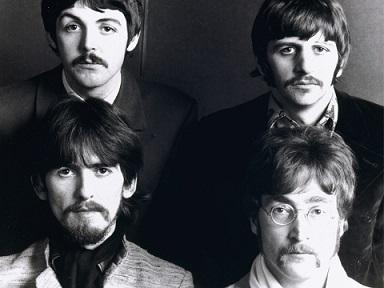

Pictured: The Beatles and their first big experimental project, Revolver
The Revolutionary Sixties: The Birth of Experimental Psychedelia, Symphonic Rock and Jazz Rock Fusion (1965-1969)
In 1966 the Beatles dropped the groundbreaking, psychedelic-tinged »Revolver«, on which they experimented with the sitar and traditional Indian music for the first time, along with orchestral arrangements, laying the groundwork for the symphonic prog rock to come. Around the same time, on the other side of the Atlantic in the US, the eccentric avant-garde rock outfit The Mothers of Invention appeared. Led by the multi-talented composer, guitarist, singer, satirist and director Frank Zappa, they stirred up the music world with utterly unconventional, one-of-a-kind musical forms that mixed avant-garde, psychedelia, jazz, musique concrète, doo-wop and rock. Plenty of people still count their 1966 debut »Freak Out« as the first progressive rock album.


Pictured: The brilliant Frank Zappa and his always unpredictable backing band, The Mothers of Invention
Alongside Zappa, the famous American trumpeter Miles Davis played a hugely important role in the development of jazz rock fusion, or “electric jazz”, with the albums »In a Silent Way« and »Bitches Brew«, successfully blending the jazz orchestra with electric guitar, with English guitar master John McLaughlin playing a key part. Davis’s backing bands later spawned numerous important jazz rock fusion groups in the early seventies, like Weather Report, Return to Forever and The Mahavishnu Orchestra, led by the aforementioned McLaughlin, all of which had a major impact on both sides of the Atlantic.


Pictured: Miles Davis and his most famous jazz fusion album, Bitches Brew (1969)
By 1967, psychedelic rock was in full bloom on the back of The Beatles’ masterpiece »Sgt. Peppers’ Lonely Hearts Club Band«, and plenty of innovative psychedelic rock bands followed in their footsteps. On British soil, the ones that really stood out for how far they pushed the experimentation were Pink Floyd, Procol Harum, The Moody Blues, The Nice, Traffic, The Crazy World of Arthur Brown, The Pretty Things, early Deep Purple, The Zombies and Family. In the US, the experimental wing of the psychedelic rock invasion in the late sixties, especially when it came to commercial success, was successfully led by bands like Iron Butterfly, The Jimi Hendrix Experience, Santana and Vanilla Fudge.

With ‘A Whiter Shade of Pale’, Procol Harum created the first big psychedelic/proto-prog hit
The Moody Blues, The Nice and Deep Purple were the first rock bands to record albums with a classical orchestra, laying the foundations for symphonic prog rock. Pink Floyd, meanwhile, were pioneers of both psychedelic rock and so-called space rock, before the label had even caught on. Right up to 1968, when original singer, guitarist and main lyricist Syd Barrett left because of drug problems and psychosis, and a major sonic shift followed, they were the leading band in the field, with their debut »The Piper at the Gates of Dawn« and its follow-up »A Saurceful of Secrets«.


Pink Floyd in 1967 with original singer/guitarist Syd Barrett, and the cover of their important debut The Piper At the Gates of Dawn
The Birth of British Prog Folk Rock and the Canterbury Scene
In 1968, riding the wave of the short-lived British blues rock invasion, Colosseum and Jethro Tull appeared. Both started out firmly blues-oriented, but soon began pushing past genre boundaries, bringing elements of jazz, folk and symphonic music into their sound (‘progressive blues rock’). Led by the charismatic singer and flutist Ian Anderson, Jethro Tull went on to become, through the seventies, one of the most important and most popular progressive rock bands, especially in prog folk rock, thanks to studio gems like »Aqualung«, »Thick As a Brick« and »Songs From the Wood«. That subgenre had already begun taking shape in the late sixties, when folk rock bands like Fairport Convention, Pentangle and The Strawbs suddenly started bringing electric guitar into their music and gradually dropped the traditional American folk influences.


Pictured: Jethro Tull in their original lineup (Glenn Cornick, Ian Anderson, Clive Bunker and Mick Abrahams) and the cover of their conceptual masterpiece Thick As a Brick
Meanwhile, in the English city of Canterbury, seat of the Anglican archbishopric, a whole crop of new bands emerged after The Wilde Flowers broke up, inventing a brand-new offshoot of progressive rock known as ‘Canterbury’. The leading and most important bands were Soft Machine, whose key figures at the start were Robert Wyatt, Kevin Ayers, Mike Ratledge and Daevid Allen, later joined by Hugh Hopper and Elton Dean; Gong, led by the aforementioned eccentric Allen; and Caravan, with Pye Hastings and Richard and Dave Sinclair in the starring roles. Caravan were the most popular of all the Canterbury bands, winning over the prog community above all with albums like »If I Could Do it All Over Again…«, »In The Land of Grey and Pink« and »For the Girls Who Grow Plump at Night«. Lesser-known Canterbury outfits formed in the first and second half of the seventies included Hatfield And the North, Gilgamesh, National Health, Khan, Matching Mole and Egg, plus the French Moving Gelatine Plates and the Dutch Supersister.

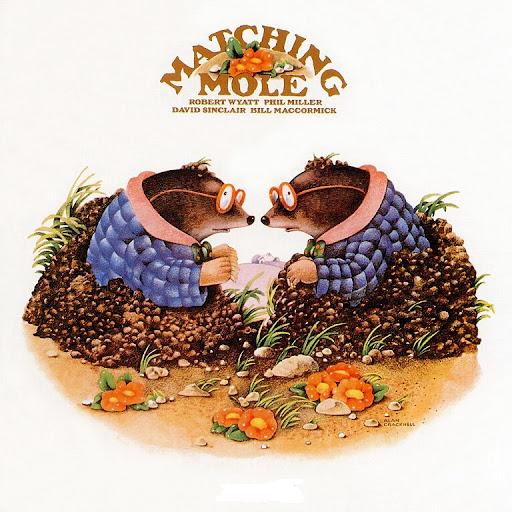
Pictured:Soft Machine in their original lineup (Kevin Ayers, Robert Wyatt, Mike Ratledge and Daevid Allen) and the cover of the first album from Wyatt’s later project Matching Mole
The Peak of Creative Bloom and Commercial Success (1969-1975)
The key moment for progressive rock, and the point when the genre got its name, came at the start of 1969, when the British band King Crimson released their studio debut »In The Court of the Crimson King«. It pretty much kicked off a new musical revolution and the biggest avalanche of new progressive rock bands ever, and it also inspired plenty of other rock bands who’d never been into mixing genres and improvising to change up their style. Sadly, the huge success of the debut was followed by the breakup of the original King Crimson at the end of that same year.

Pictured: In The Court of the Crimson King, 1969 – maybe not the very first, but definitely the most important album in the history of progressive rock
The first band to get the “progressive rock” label slapped on it by a journalist when their debut dropped went on to keep moving, under the guidance of guitar innovator Robert Fripp, through a whole string of different incarnations, and kept putting out a run of killer studio achievements, like the albums »Lizard«, »Larks’ Tongues in Aspic« and »Red«, to name just some of the most interesting ones. That lasted all the way until the first breakup in 1974, when Fripp decided, for personal reasons, to step away from making music for a while. Two former King Crimson members, singer/bassist John Wetton and drummer Bill Bruford, teamed up in the second half of the seventies with ex-Curved Air violinist/keyboardist Eddie Jobson and former Gong guitarist Allan Holdsworth to form the short-lived prog rock supergroup UK.
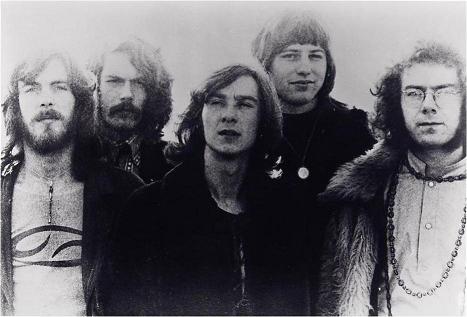
Pictured: King Crimson in their original lineup (Ian McDonald, Michael Giles, Peter Sinfield, Greg Lake and Robert Fripp)
The departure of original King Crimson singer Greg Lake helped give birth to the first true prog rock supergroup, Emerson, Lake and Palmer (ELP for short), which, besides Lake, featured The Nice keyboardist Keith Emerson and original Atomic Rooster drummer Carl Palmer. Their early albums from the start of the seventies, like »Tarkus«, »Trilogy« and »Brain Salad Surgery«, played a hugely important role in popularizing symphonic progressive rock. ELP’s popularity lasted until the second half of the seventies, when they quickly fell out of step with the times and, after a few misguided studio projects and financially ruinous tours with an orchestra, broke up (for the first time). Their later attempts at a comeback, first in the eighties with Cozy Powell in place of Palmer and then in the nineties, when all three original members got back together, sadly didn’t pan out.

Pictured: Emerson, Lake and Palmer – the first progressive rock supergroup
Around that time, four more bands that would prove hugely important for popularizing progressive rock popped up on British soil. It took Yes three years before they found their recognizable style in 1971 with the arrival of guitarist Steve Howe, and they became famous on both sides of the Atlantic with the albums »The Yes Album« and »Fragile«. Over the following years, with complex albums like »Close ot the Edge«, »Tales From Topographic Oceans« and »Relayer«, they became one of the most beloved and leading symphonic prog rock bands, and one of the few that managed to stay popular through the eighties too. Among fans, the most beloved Yes lineup is still the one with Howe, singer Jon Anderson, bassist Chris Squire (to this day the only original member), keyboardist Rick Wakeman and drummer Bill Bruford. Bruford joined King Crimson in 1973, so Alan White replaced him. Besides the music itself, a lot of Yes’s popularity also came from the album covers and stage sets designed by British graphic artist Roger Dean. After the album »Going For the One«, Yes hit a brief creative slump in the late seventies, but the albums »Drama« and »90125«, mainly thanks to the hit »Owner Of a Lonely Heart«, brought a rebirth in the early eighties along with a whole new fan base.

Pictured: Yes in their classic lineup (Chris Squire, Jon Anderson, Rick Wakeman, Steve Howe and Alan White)
At the same time, in the late sixties, Genesis showed up on English soil too. They started out as a modest high-school band led by schoolmates: singer Peter Gabriel, keyboardist Tony Banks, bassist Mike Rutherford and guitarist Anthony Phillips. Before long, mostly thanks to the incredibly charismatic Gabriel, they grew into a symphonic prog rock powerhouse, and their popularity and artistry only kept climbing steeply after 1971, when guitarist Steve Hackett and drummer/singer Phil Collins joined the band. The results of their musical vision were some of the greatest masterpieces of progressive rock, like »Nursery Cryme«, Foxtrot« and »Selling England By the Pound«. Alongside Yes and ELP, Genesis were, through the end of the seventies, when they went through a gradual transformation into a pop rock band after Gabriel’s departure and later Hackett’s, and became one of the most successful bands of the eighties, definitely the most influential and successful symphonic prog rock band of all.

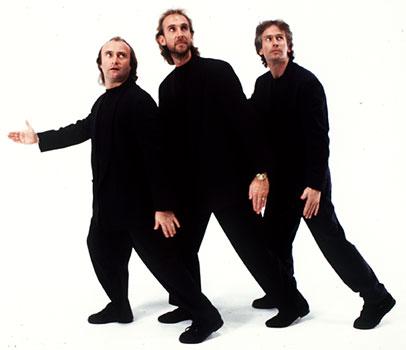
Pictured: Genesis in their classic lineup (Phil Collins, Mike Rutherford, Steve Hackett, Peter Gabriel and Tony Banks) and in their ‘pop’ era, when they worked as a trio (Collins, Rutherford and Banks)
In the eighties, Collins built an enormously successful career as a pop rock solo artist. Gabriel was similarly successful as a solo musician, but unlike Collins, he stayed an innovative art rock musician practically his entire career. With their solo careers, Hackett and his guitar predecessor Phillips stayed, musically speaking, the most faithful to the legacy of classic Genesis of all the former members. Rutherford also built a successful solo career with the pop rock band Mike and The Mechanics, while Banks wasn’t all that successful commercially as a solo musician.

Peter Gabriel Steve Hackett Phil Collins
Far less popular, but no less important or innovative, were Van Der Graaf Generator (VDGG for short), who were always inseparably tied to the persona and work of their unique singer, occasional guitarist and keyboardist, and composer Peter Hammill. VDGG put out some of the most innovative and complex prog rock albums of the seventies, like »Pawn Hearts«, »Godbluff« and »Still Life«, and that carried on through all their breakups and comebacks. Hammill successfully combined his work with VDGG with an extremely prolific solo career. Even though they never enjoyed the commercial success of some of their peers, VDGG and Hammill won themselves a cult status, especially in Italy, which they still enjoy today.
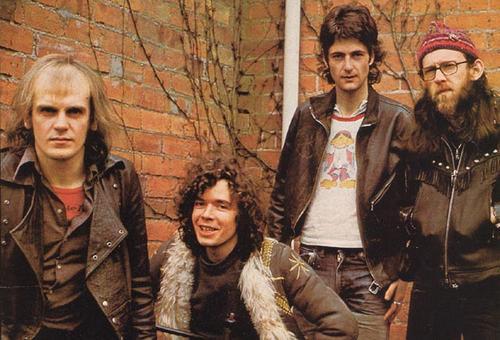
Pictured: Van Der Graaf Generator in their classic lineup (Guy Evans, Hugh Banton, Peter Hammill and David Jackson)
Gentle Giant were also one of the more important and most unique British pioneering prog rock acts. They successfully blended elements of symphonic rock, baroque folk, avant-garde and jazz, and on top of that nearly all the band members were multi-instrumentalists, blessed with a dry, biting sense of humor that showed up in individual lyrics and concepts. Their peaks are the albums »Octopus«, »In a Glass House« and »Free Hand«. Sadly, like plenty of other prog rock bands, they too ran into a creative crisis in the late seventies. After three more or less average albums, noticeably friendlier to radio and made under pressure from the label, they decided to call it quits in 1980.

Pictured: Gentle Giant
In the early seventies, Pink Floyd gradually shed their psychedelic and space rock elements and, mainly riding on the shared ideas of bassist/singer Roger Waters and guitarist/singer David Gilmour, developed a sound that was entirely their own. With a series of innovative concept albums like »Dark Side of the Moon«, »Wish You Were Here«, »Animals« and »The Wall«, released between 1973 and 1979, they became one of the most established and popular progressive rock bands of the seventies.

Pictured: Pink Floyd in the lineup most people remember best (Richard Wright, David Gilmour, Roger Waters and Nick Mason) and the cover of their most famous album, Dark Side of the Moon
The era of concept albums
In this period, meaning the late sixties and early seventies, thanks to pioneers in the field like Frank Zappa, the Beatles and The Who, the concept album project became hugely popular. Plenty of progressive rock bands took it on, and it peaked in the mid-seventies. Pink Floyd definitely reached the greatest mastery here, even though they faced stiff competition from the concept-album achievements of other prog rock giants like Jethro Tull, Yes, Genesis, Rush and The Alan Parsons Project. The last of those had the special quirk that every single album they released was a concept album, which is why they count as leading representatives in this field, even though plenty of artists outdid them when it comes to the depth and message of individual concepts.


Pictured: The Alan Parsons Project (Eric Woolfson and Alan Parsons) rose to fame with concept albums like I Robot, which tackled some sci-fi themes from the world of robotics
Different progressive rock subgenres and the international scene in the seventies
The prog rock pioneers on home turf in Britain, led by Genesis, Yes, King Crimson, Jethro Tull, Pink Floyd and VDGG, were followed by plenty of lesser-known but no less innovative bands. Among them, the symphonic prog rockers Camel definitely stood out with masterpieces like “Mirage,” “The Snow Goose” and “Moonmadness,” as did the ‘German’ Englishmen Nektar, who redefined space rock with the albums “A Tab in the Ocean,” “Remember the Future” and “Recycled.” Barclay James Harvest may not have been the most innovative representatives of symphonically spiced prog, but they won people over with their early orchestral projects and later managed to win the hearts of German audiences, thoroughly silencing the critics who so often compared them to The Moody Blues. As a solo artist, the then extremely young multi-instrumentalist Mike Oldfield had huge success already in the seventies, putting out pioneering albums of ambient orchestral rock music with the innovative and still highly regarded “Tubular Bells,” “Hergest Ridge” and “Ommadawn.” Oldfield enjoyed massive success especially in the eighties, after which his incredible creative spark began to fizzle out more and more over the following two decades.


Camel Mike Oldfield
In ambient prog rock, the later version of Jade Warrior, former Roxy Music keyboardist Brian Eno and the Fripp & Eno project led the way. Plenty of bands that weren’t known as prog bands for most of their careers, or that made their name in some other genre like hard rock, also kept a high artistic streak going throughout the seventies. In the UK, bands like Wishbone Ash, Deep Purple, Atomic Rooster, Uriah Heep and Queen led the charge, while in the US that role fell to the ‘notorious’ Blue Oyster Cult. Meanwhile, Hawkwind took over from Pink Floyd as the leaders of British space rock, partly under the influence of the krautrock scene of the day, and won a loyal following mainly through a handful of innovative albums and plenty of cult live shows at free festivals.


Wishbone Ash Uriah Heep
In the late sixties, a strong progressive rock scene took shape in Italy, led by bands like Premiata Forneria Marconi (PFM for short), Le Orme and Banco Del Mutuo Soccorso, as well as the commercially lower-profile Area, Museo Rosenbach, Metamorfosi, Il Baletto Di Bronzo, Quella Vecchia Locanda, Locanda Dellle Fate, New Trolls and others. PFM and Le Orme earned commercial recognition beyond Italy’s borders, while plenty of smaller Italian prog rock bands have stayed obscure to this day, releasing just one or at most two studio albums.

Pictured: Premiata Forneria Marconi, the most famous faces of Italian progressive rock
In the territory of the former shared country, i.e. Yugoslavia, progressive rock showed up a bit later, ‘fashionably late.’ Among the most interesting bands on the scene were definitely Smak, Leb i Sol, Time, Korni Grupa, Igra Staklenih Perli, Tako, and also early Bijelo Dugme, to name just the most important ones, while among the Slovenes the likes of Izvir, Predmestje, September and Buldožer were the ones who really got people excited.

Pictured: September, with Janez Bončina-Benč, defended Slovenian honor as part of the Yugoslav progressive rock scene, which was obscure on a global scale but remarkably colorful overall
Thanks to bands like Mahavishnu Orchestra, Weather Report, Return To Forever and Santana, as well as solo artists like Miles Davis, Billy Cobham, John McLaughlin, Herbie Hancock, Al DiMeola and Chick Corea, the jazz rock fusion scene enjoyed incredible popularity on both sides of the Atlantic in the mid-seventies. A pop-rock offshoot of jazz rock fusion was carried on successfully by Blood, Sweat & Tears, Chicago and Steely Dan. The Brits found their answer in bands like Nucleus, led by trumpeter Ian Carr, Brand X, who in their early days also had Phil Collins in their ranks, and the supergroup Colosseum II, which featured the cult Northern Irish guitar hero Gary Moore. Germany’s answer to jazz rock fusion came from saxophonist and keyboardist Klaus Doldinger with his band Passport.

Pictured: Weather Report, the toughest survivors of the jazz fusion scene
With the rise of krautrock, Germany also played an enormously important part in the development of the progressive rock scene. Tangerine Dream, Amon Düül II, Faust, Kraftwerk, Neu and Can all played very different, strongly experimental music, yet they were part of the same musical movement. Of all the German prog rock bands, the most ‘British’ were without a doubt the symphonic and space rock-leaning Eloy, who made their name with the albums “Dawn,” “Ocean” and “Silent Cries and Mighty Echoes.”

Pictured: Eloy, the best possible German answer to the British prog rock scene
Folk prog, meanwhile, kept developing nicely with the help of bands like Fairport Convention, Strawbs, Steeleye Span and Pentangle, while lesser-known bands with folk elements like Comus, Forest, The Trees and Spirogyra mostly thrilled a narrower circle of listeners.

Pictured: Strawbs with later Yes member, keyboardist Rick Wakeman
France ‘gave birth’ to the excellent symphonic prog rock band Ange around this time, but the country’s biggest surprise was the so-called Zeuhl scene, whose main representatives were the enigmatic Magma, who invented an entire language of their own and wrote their lyrics in it.

Pictured: Magma, not just music from ‘another world’ but also a half-fictional cult
The avant-garde form of prog rock and the later RIO movement (short for ‘rock in opposition’) began taking shape under the strong influence of certain albums by Frank Zappa and Captain Beefheart, and really took off toward the end of the seventies. Bands like the pioneers in the field, Henry Cow, shot to the front as main representatives, and they were soon joined by the likes of Univers Zero, Art Bears, Art Zoyd, Slappy Happy, Samla Mammas Manna, Stormy Six and so on. Some also count our own Buldožer in this group.

Pictured: Henry Cow, with guitarist Fred Frith, did the most for the avant-garde rock movement
The Dutch boasted the excellent symphonic prog rock band Focus, who, led by singer, keyboardist and flutist Thijs van Leer, became famous with the hit “Hocus Pocus” and the albums “Moving Waves,” “Focus III” and “Hamburger Concerto,” while besides the already mentioned Supersister, the often overlooked Kayak deserve a special mention.

Pictured: Focus, not just the best-known Dutch prog rock band, but also the best-known Dutch rock band, period
Art rock had already established itself in the early seventies as a label for bands that mixed the traits of many genres and didn’t want to be tied to any one genre tag. The ones who became most famous in the seventies were the innovators who kept strolling along the thin lines between genres, like Supertramp, Roxy Music, 10cc, The Alan Parsons Project and Electric Light Orchestra.


Roxy Music Supertramp
Around this time in Canada, Rush gradually rose to fame. They started out as a modest Led Zeppelin ‘clone,’ i.e. as hard rockers, but soon ‘caught’ the influence of the European prog rock scene and had their first big success with the album “2112,” then successfully followed it up through the end of the seventies with “A Farewell to Kings” and “Hemispheres.” Rush constantly polished and built on their style, and kept their popularity long after the seventies were over, something very few similar bands can boast. In Canadian art rock, it’s also worth mentioning Saga, who never had as much commercial success as the far better-known Rush, but still put out excellent albums today and boast an incredibly loyal fanbase.


Pictured: Rush and the cover of the legendary album 2112
In the US, apart from Zappa’s nonstop genius for innovation and a strong jazz rock fusion scene, classic prog rock never managed to reach a wider audience, spread its innovative wings, or really breathe with full lungs. By far the most successful at it were bands like Kansas and Styx, and even the early version of Journey had its charms for fusion and prog rock lovers. But by the end of the seventies all three had morphed into arena rock, or AOR, acts, while bands like Starcastle, Cathedral, Pavlov’s Dog, Yezda Urfa and Happy The Man more or less stayed buried in obscurity.

Pictured: Kansas, the leading lights of America’s answer to progressive rock
The era of commercial decline and soul-searching, and the new wave of progressive rock (1976-1989)
Arena rock and later AOR were side ‘products’ of the progressive rock movement, and by the end of the seventies plenty of former prog bands had changed their sound, then got noticeably ‘commercialized’ as the eighties kicked in. The second half of the seventies was a time of rapid fading for the prog movement, which started losing popularity, and its innovative drive too, after disco and punk showed up. Around then, a bunch of prog pioneers (temporarily) fell apart, or reshaped their sound so much that, under the influence of the trends of the day, they were at times barely recognizable in the eighties. In the first category you had King Crimson, VDGG, Gentle Giant, Emerson, Lake & Palmer, Procol Harum and Caravan, while the second included Genesis, Yes, Jethro Tull, The Moody Blues, Kansas and Styx. Pink Floyd with »A Momentary Lapse of Reason«, Rush with »Moving Pictures« and Camel with »Nude« were some of the very few prog bands that managed to stay popular through the eighties without straying too far from their classic sound. A great example of how to adapt to new trends in sound and score a monster success was the supergroup Asia, made up of former members of King Crimson, Yes and ELP.

Pictured: Asia (Steve Howe, Geoff Downes, John Wetton and Carl Palmer) thrilled the new ‘MTV’ generation while disappointing plenty of longtime fans of these musicians
In 1981, King Crimson came back to the scene with the excellent album »Discipline«, and by weaving in new wave influences they pulled off a sonic rebirth of their own, without drifting too far from their experimental past. Genesis and Yes were more popular as pop rock outfits in the eighties than ever before, but lost lots of old fans along the way, while Pink Floyd kept ruling the charts even after the traumatic departure of Roger Waters, when David Gilmour, Nick Mason and later Richard Wright carried on without him.

Pictured: King Crimson (Adrian Belew, Robert Fripp, Bill Bruford and Tony Levin) were still the best at what they do in the eighties, when they came back ‘from the dead’ after seven years
Regardless, prog rock’s popularity took a serious hit in the first half of the eighties, all the way until the arrival of the new wave of progressive rock, or ‘neo prog’ for short. This originally very British phenomenon kicked off in the early eighties with bands like Marillion, IQ, Pendragon, Pallas and Twelfth Night.
Of all the acts listed, only Marillion made it to worldwide fame, taking over the airwaves in 1985 with the help of charismatic singer Fish and the hits »Kayleigh« and »Lavender«. With Fish, up to his departure in 1989, Marillion recorded four masterpieces of the new wave of progressive rock: »Script For a Jester’s Tear«, »Fugazi«, »Misplaced Childhood« and »Clutching At Straws«. After Fish left and his replacement Steve Hogarth came in, they gradually moved toward art rock and shed almost all the influences of classic prog from their sound. Under Hogarth’s vocal command, Marillion became art rock champions in the nineties and beyond, and with masterpieces like »Brave«, »Marbles« and »Sounds That Can’t Be Made« they’re still among the most innovative prog bands around today.
 Pictured: Marillion with Fish and the later version of the band with Steve Hogarth; same name, but two almost completely different creative visions
IQ, on the other hand, with charismatic singer Peter Nicholls carrying the vocal baton, stayed true to their roots through most of their career and kept their sound consistent in the nineties and beyond, when, many would say, they put out their best work in the form of the albums »Subterranea«, »The Eleventh House« and »The Dark Matter«. Pendragon, under guitarist and singer Nick Barrett, more or less kept their sound consistent through »The Window of Life«, »Masquerade Overture« and »Not of This World« until the end of the nineties, then started experimenting a lot more, which brought pretty mixed results. The Scots Pallas went through many different incarnations and turbulent stretches of lineup and style changes. Their best work is generally considered to be the albums »The Sentinel«, »The Dreams of Men« and »XXV«.

Pictured: IQ, the new hope for symphonic prog rock
Besides those neo prog names, plenty of smaller bands, like Twelfth Night, quickly slipped into obscurity after early successes. Part of the new prog wave carried on into the first half of the nineties, when the British bands Shadowland, Jadis, Galahad and Arena, plus the Poles Collage, introduced themselves with their first albums.

Pictured: Arena, modern British ‘neo prog’ rock for music gourmets
Progressive rock from the nineties onward
In the early nineties, with the return of some legendary names (King Crimson, ELP, Procol Harum, etc.), the so-called third wave of progressive rock kicked in, picking up serious momentum mainly in Scandinavia and the US. In Scandinavia, the innovative bands Anglagard and Anekdoten popped up, reviving some of the old-school spirit of seventies classic prog. The Swedes The Flower Kings, which grew out of guitarist and singer Roine Stolt’s solo band, became the key group of the Scandinavian prog movement, with Stolt’s former band Kaipa not lagging far behind. Things went just as well in the US, where Echolyn and Spock’s Beard emerged, the latter led by charismatic singer and multi-instrumentalist Neal Morse. Stolt and Morse later teamed up with Marillion bassist Pete Trewavas and Dream Theater drummer Mike Portnoy to form the prog supergroup Transatlantic.

Pictured: Transatlantic (Pete Trewavas, Mike Portnoy, Neal Morse and Roine Stolt)
Thanks to bands like Dream Theater, Fates Warning, Symphony X, Threshold, Shadow Gallery, Crimson Glory, Opeth and Angra, a significant part of progressive rock in the mid-nineties became the popular subgenre known as prog metal, which heavy metal claims just as much as its own. The biggest influences on the development of progressive metal in the eighties were definitely acts like Rush, Iron Maiden and Queensryche.

Pictured: Dream Theater, the number one name in progressive metal
One of the most important bands of the so-called third wave, ironically, showed up on British soil in the form of Porcupine Tree. Led by the multidimensional singer, guitarist and producer Steven Wilson, they grew in the mid-nineties from Wilson’s not-too-serious solo project into a real band, and with innovative albums like »In Absentia«, »Deadwing« and »Fear Of a Blank Planet« they won over a wildly diverse crowd of fans, from lovers of ambient and electronic music to neo prog, psychedelic rock and prog metal heads. Wilson, the central figure of the modern progressive rock movement, went on to make his mark in the following years with a successful solo career, other side projects, and as a sound engineer remixing classic albums by some of the prog legends. Among the more important prog bands of the early 21st century, it’s worth mentioning acts like Phideaux, The Pineapple Thief, The Mars Volta and Beardfish. Some of them work elements of alternative rock into their music, but every last one of them cites the classic seventies prog scene as a major influence. All of this proves that the progressive rock movement is nowhere near dead today, even if it will never again be ‘hot property’ on the radio.

Pictured: Porcupine Tree and Steven Wilson (second from left), the most important names in 21st-century progressive rock
