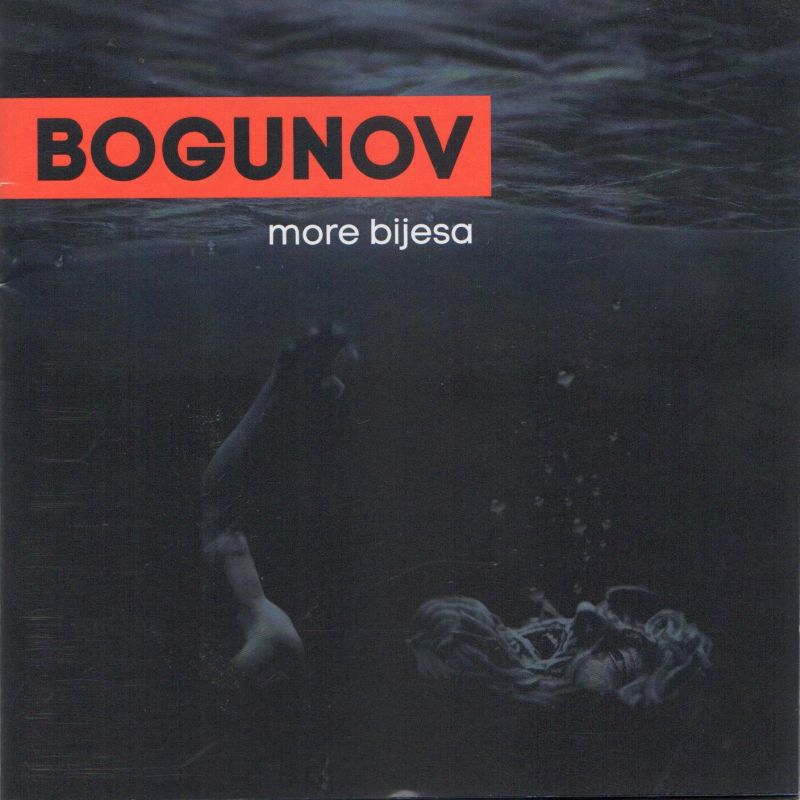
Label: Dallas Records
Release date: 9/23/2020
Production: Bogunov, Jurij Toni, Eki Alilovski & Sandi Trojner
Album length: 55.04 min
Genre: Art Rock
Rating: 9.5/10
Bogunov, a band that’s been around since 2002 or so – at least that’s what their official website says – is proud to present this September their first real all-hands band album, »More bijesa« (Slovenian: »Morje besa«). It’s a quintet made up of Split native Ognjen Zeljić, who lives in Ljubljana, and four other musketeers from Ljubljana, and together they make for a fascinating new Slovenian-Croatian rock alliance with a musical artistry all its own.
»More bijesa« packs in a full 13 original songs, written over long stretches of time and just as long polished before being finalized. Their serious arrangement chops make that plain. Bogunov’s music doesn’t demand any heavy philosophizing while you listen, but if you take the time, the record will reward you richly. So it’s worth giving it your full attention.
If you absolutely have to cram the band into a genre box – just to get a rough idea of what Bogunov’s music is saying to us -, you could loosely say it’s alternative rock, musically close to pop rhetoric, which at moments develops the melos of Yu-rock nostalgia, so it can always knock on the frequencies of the radio waves if it wants to. The ones from the geographic area stretching from Triglav to Vardar. On top of that, Bogunov subtly slip other genre flavors into their compositions, like blues (which comes through especially in Jedini sin, where Pomaranča’s Mijo Popović guests on guitar), while the fragile, balladic Dobro jutro 2 speaks in the glow of cabaret chanson. The whole thing can occasionally spark interest among fans of post-punk bands from the second half of the eighties, especially in the parts where the band’s rock ‘n’ roll turns distinctly gloomy. Above all, though, it’s the dynamic contrasts that delight, achieving varied and consistently striking moods, since the sound is often vividly laid out with acoustic pastels (classical piano, acoustic guitar). The musicians are refined in their craft and loaded with experience. If it wasn’t clear earlier, it’s confirmed in the outstanding solo work inside the mid-eight passage of the album’s title track. We get even more confirmation when the title track is followed, in a top-notch contrast, by the light and playful Našel sem (one of the album’s two songs in Slovenian). Here the guitars, in a completely different (acoustic and compositional) setting, again find their way very skillfully through a mid-eight passage, and the band tastefully contrasted the arrangements with woodwind touches. “Našel sem”, the album’s fifth track, swiftly cuts through the bittersweet mix of pain and longing. It’s a “brighter” spot, bouncing lightly along on a “more easygoing” sonic culture. “Daj mi ruku” has a hint of folk sentiment in its chorus melody. This song, like Našel sem before it, holds the album’s cheeky moment. The closing “Ubij me” is marked in its final stretch by a longer instrumental dialogue that sails from circle to circle on building intensity. All the way to a final atmospheric crescendo, which is capped with its dying breath by a tacked-on folk arabesque motif. Moments like these only confirm the exceptionally layered, tightly knit chemistry of the instrumentalists backing Ognjen Zeljić’s vocals. The album is mostly dark, but at the same time seriously bombastic, so we can broadly declare it “solemnly gloomy”. An art rock album, of course.
The spotlight definitely falls on Ognjen Zeljić’s penetrating, strikingly characterful vocal, deep in passion and emotional delivery, supple and sensitive, and he comes across as a poet armed with the message of a personal, confessional sermon. In that sense the album works, to a degree, as singer-songwriter material. That’s how strong the poetry is. Ognjen Zeljić’s voice is instantly infectious. In terms of expression, and poetry too, this is an album that will be written pretty squarely for the general temperament of the Slovenian rock audience. With its melos and its yearning, often melancholy lyrics, which come alive in an instant with Ognjen Zeljić’s gorgeous voice. On that front – as far as the display of emotions goes – the voice works like a “chameleon”. In this respect the most varied sides of vocal expression are delivered by “Ti nikad ne kažeš”, a composition that keeps growing in steady gradations, full of motivic shifts and the gradual layering of sonic pastels.
Production-wise, the album sounds tremendously warm and organic. The blending of natural sonic hues is also strengthened by the occasional velvety sounds imitating a Hammond organ or an electric piano (Rhodes type). You can tell the band spent a lot of time playing together before this album came out. Whether on concert stages or in the rehearsal room. The way the quintet reads each other, the chemistry between them, the sparkling interplay of instruments, plus Davor Klarič on keyboards, it’s all outstanding. The album grabs you. Right from the start, as the atmospheric “Oprosti što te budim” sets the stage for its trip. The song is built on two chords, but Zeljić immediately takes over the focus, creating a signature dramatic theater already in the intro through his narration. The record truly takes off with the second track, “Poziv na zabavu”, with its coquettishly potent rhythm, a pleasing “jangle” ring of guitars and a striking chorus. The songs are otherwise wildly different from one another. But they share a common focal artistic point, which is the generator of the band’s eclecticism and its unique magic. A unique musical world that soaks you up like an ocean and in which you float dreamily for a good 55 minutes. It’s hard to pick favorites. The middle of the album is especially strong across the whole run from the title track all the way to “Možda nova priča”. The seventh track, “Nočna zgodba”, brings a detour, as the band brilliantly worked strings into it, giving it a different expressive charm. Every song is a self-contained, self-grown and independent artistic entity. With its own crafted charisma and confessional character. There was a surplus of inspiration and bubbling creative energy, and in terms of quality all the songs on the album sit at the same level of expression. No artistic stumbles. They hit a high standard of quality, and as said, this time you’ll have to name your own album favorites.
Above all, you have to enjoy this album by listening to its details. You need to take your time with it. One thing is Ognjen’s voice, another is the interplay of the instrumentalists, who work together incredibly convincingly. All that complementing of contrasting shades between the rhythm section, the guitars and the keyboards, with added finesse both in the transitions and in the mid-eight passages. And finally … The band also thought of contrasting the compositions further with additional female vocal harmonies, which boost the dramatic moment and the emotional tension. The contrast against the mid- and low-register male voice is more than pleasing.
An album of strong expressive nuance. Yearning, passionate, melancholy, yet firmly grounded. An art rock album where it’s hard to add or take away anything. For the recording of this album, Bogunov walked into the studio with a fully developed identity of character, embodied in this superb set of thirteen songs of polished, intellectual eclecticism. It will thrill those of you looking for rich sonic arranging and small details, but with musicality too, and Yu-rock nostalgics will take a liking to it as well. An album of gripping melos and messages, simply bursting with honest heart!
Author: Aleš Podbrežnik
Track list:
1. Oprosti što te budim (04:05)
2. Poziv na zabavu (03:36)
3. Ostajem sam (03:25)
4. More bijesa (04:47)
5. Našel sem (03:09)
6. Daj mi ruku (04:45)
7. Nočna zgodba (04:22)
8. Kralj usprkos sebi (03:06)
9. Možda nova priča (04:07)
10. Jedini sin (ft. Mijo Popovič) (05:21)
11. Dobro jutro 2 (04:11)
12. Ti nikad ne kažeš (03:42)
13. Ubij me (05:56)
Line-up:
Ognjen Zeljić – vocals
Peter Pavičić – guitar
Vladimir Zelić – guitar
Boris Holešek – bass guitar
Rok Skoliber – drums
Guest musicians:
Mijo Popovič, Igor Barišić, Edin Biščić, Karel Šrot, Mirko Medved, Staša Marolt, Eva Klinc, Davor Klarić, Ratko Zekić string quartet, Mitja E. Centrih