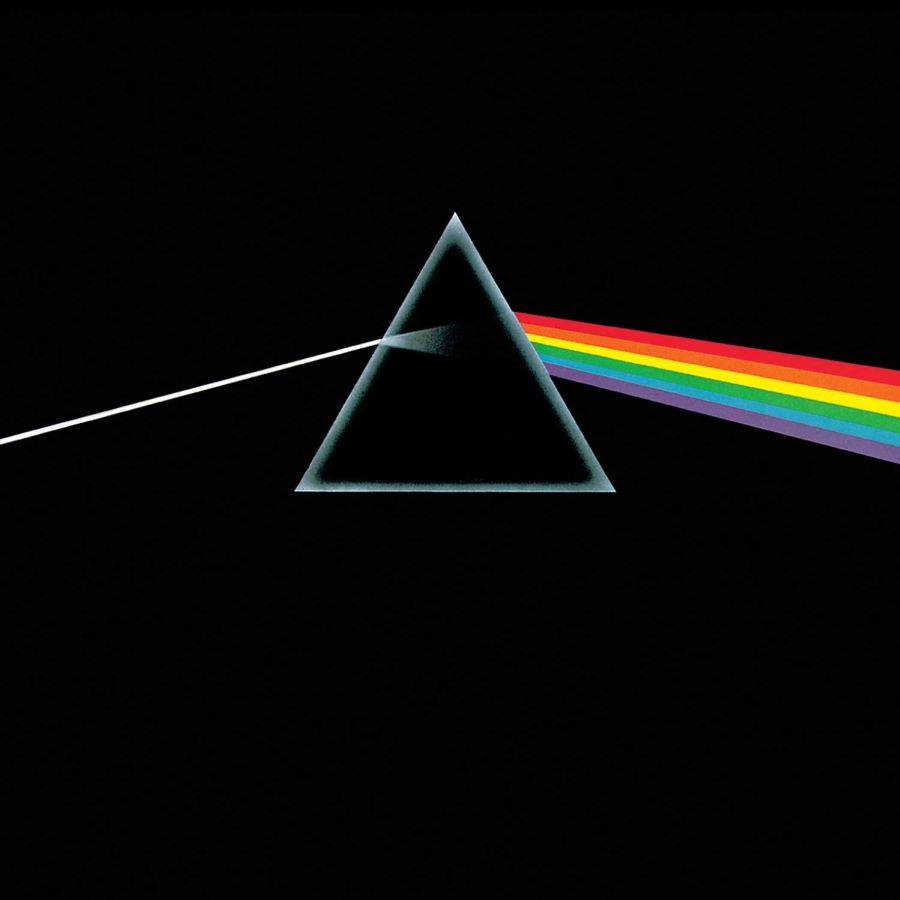
Label: EMI Records
Release date: March 1, 1973
Production: Pink Floyd
Album length: 43.09 min
Genre: Progressive Rock/Art Rock
Rating: 10/10
What on earth is there left to write about “the dark side of the moon”? It’s an extraordinary album that, more than three decades after its release, is still a one-of-a-kind worldwide music phenomenon. It revolutionized the development of both popular and experimental music and racked up fabled sales of more than 40 million copies. With “Dark Side Of The Moon”, an evergreen conceptual explosion of compositional perfectionism, the legendary prog rockers Pink Floyd suddenly morphed from a cult but obscure psychedelic attraction into world-class music stars with a clear musical direction, for whom every stadium had become too cramped. That they also became the commercially most successful band in the history of progressive rock from this album on hardly needs discussing. Far more important is that with “Dark Side Of The Moon” they finally matured into excellent composers of rounded, coherent works, so the world was at last ready to welcome with open arms the former masters of psychedelic-avant-garde experimental weirdness, who had never managed to shake the long shadow of their tragic founder Syd Barrett.
There are several answers to where the source of the incredible success of “Dark Side Of The Moon” lies, undoubtedly one of the best and most influential albums in the history of rock music. First and foremost, it’s surely the amazing harmony between the individual sonic themes, the majestic moods and an exceptionally intelligent concept that carries countless messages about life and so easily touches the deepest sides of the human soul. The foundations for “Dark Side Of The Moon” had actually been laid already on some of the sonic themes from the previous album “Meddle” (1971), which offered at least a partial answer to where the further evolution of their sound would take them. This turn toward greater accessibility finally blossomed here in numerous compositional peaks of their career, like the unforgettable masterpieces “Breathe”, “Time”, “The Great Gig In The Sky”, “Money” and “Us And Them”, every last one of them a track with a far-reaching influence on whole generations of future musicians.
The earlier psychedelic improvisational experiments, often indigestible for the wider circle of music fans, gave way to carefully built, coherent compositions, a much fuller and subtler sound and far more melodic arrangements. The saxophones of outside collaborator Dick Parry on “Money” and “Us And Them” steered their sound noticeably toward jazzy waters, while the guest female vocals of Clare Torry on “The Great Gig In The Sky” bring a captivating dose of primal soul into the dreamy atmosphere of this masterpiece and deliver one of the most majestic moments in the band’s history. A lot of the credit for the album’s success also goes to the then still young sound engineer Alan Parsons (later the head of his own hugely successful band, The Alan Parsons Project), who, using some recording techniques that were revolutionary for the time, made sure the album sounds incredibly fluid, even though the band members have tried over the years to play down his importance at all costs.
Roger Waters, bassist/singer, lyrical genius and chief architect of their socially meaningful, philosophical concepts, which with their forward-thinking nature still stir up debate today, hit the nail on the head with a brilliant concept that reflects all the beauty and misery of ordinary everyday human life. The central themes of the album are greed, conflict between people, aging and madness (the latter was undoubtedly inspired by the experience of the shattered mental state of their former buddy Syd Barrett, and it remained a theme Pink Floyd kept coming back to on their following albums). Waters brought an enviable amount of empathy to certain social phenomena and emotional states, which makes this album, with its messages, relevant for all eternity. Besides Waters, who by then had already established himself as the writer of all their lyrics, the other members of the band still had an equal say (at that point) in writing the music, too. Especially guitarist and singer David Gilmour, the audience’s pin-up darling, who with his guitar artistry and velvet voice poked into the most subtle spheres of their music, truly reached for the stars compositionally for the first time on this album. With his contribution he played the lion’s share when it comes to the emotional immortality of the individual tracks, something an eternal cynic like Waters would have had a very hard time pulling off alone. Meanwhile, keyboardist Rick Wright played a key role in two of the three best compositions on the album (“The Great Gig In The Sky” and “Us And Them”) and wowed with his layered use of some synthesizers that were revolutionary for the time. Even drummer Nick Mason contributed his own small but important compositional share at the start of the album.
The unforgettable adventure through the various emotional states of human society is opened by the short intro “Speak To Me”, one of the very rare solo compositional contributions by the good-natured drummer Mason (Waters once declared, in his typical style, that this was his gift to the unsuspecting drummer, something he later, after leaving the band, came to regret more and more). It’s a collage of different, interlinked, short spoken samples and sound effects. Each of them stands for one of the key motifs on the album and so hints at what awaits the listener further on.
“Speak To Me” flows directly into the melancholic classic “Breathe” (the full title of the track is actually “Breathe In The Air”), where the pretty boy Dave shines with his warm, velvet voice and exceptional finesse on slide guitar. The calm tempo is also dictated by the rich palette of Wright’s textures. Waters’ lyrics, which Gilmour delivers with uncommon heartfelt warmth, are a touching message to everyone who diligently does their duty by our social system every single day: take a breather for a moment, breathe deeply, slow your pace and the constant chase for bigger profits, and try to find the meaning of your existence in more important things.
Next up is the experimental “On The Run”, a rare example of their psychedelic-avant-garde past on this album and a great contrast to the otherwise melancholic beauty and poignancy of most of the tracks here. Wright, Gilmour and Waters push a peculiar kind of electronic minimalism to its peak through various psychedelic effects on VCS3 synthesizers and experiments with multi-dimensional analog sequencers. These electronic effects were undoubtedly ahead of their time. The central theme of the track is the pressure and stress caused by long journeys, which is wonderfully illustrated by assorted effects of conversations, running down a corridor, manic voices and a final explosion that depicts a plane crash. The track is soaked through and through in a peculiar claustrophobic, almost sinister mood.
That’s followed by the evergreen classic “Time”, one of the most majestic and also most shattering creations in the band’s history, and the only piece on the album that all the members worked on together. Its central beauty and power lie both in its incredible ethereal sound, which through the magical beauty of numerous ambient waves effortlessly carries the listener into the depths of their deepest emotions and forces them to look inward, and in its main message, which revolves around the mercilessness caused by the passing of time. The older we get, the faster time flies, and the more we sink into hopelessness as we remember our young years, happy times and all the missed opportunities that slipped through our fingers (another very true-to-life theme they’d return to on their following releases).
After a stormy, almost provocative intro with the blaring ring of alarm clocks and alarms (try pulling a prank some morning on one of your nearest and dearest, preferably someone who doesn’t know the track, play them this intro and watch their reaction to the unexpected morning wake-up call), the atmosphere gradually builds through various effects on bass and percussion. Suddenly, through a decisive transition, Gilmour’s vocal cuts in, going from a manic rush at the start of the choruses to calmer, protective velvet vocal waters that wrap the listener in warmth from all sides, especially once the accompaniment of majestic female vocals joins in. Meanwhile Wright takes over the vocal duties between the individual passages in splendid fashion and makes the contrast between the motifs even sharper. The central motifs of this legendary composition are built mainly on the melancholic passages of Dave’s slide guitar and Rick’s keyboards. The peak arrives after the second chorus, when the still breathtaking, dreamy guitar solo kicks in, surely one of the best in the history of the guitar pretty boy. In the closing, the central motif from “Breathe” returns once more.
Then the track tips over into the fantastic “The Great Gig In The Sky”, another esoteric masterpiece whose magic instantly hypnotizes even the stoniest, most firmly grounded person. For those who know that its message revolves around death and speculation along the lines of “what happens next”, it’s an even more shattering listening experience. The main star of this immortal creation is undoubtedly the remarkable Clare Torry, who with her passionate vocal improvisations creates an incredibly magical atmosphere. Wright mostly provides the great accompaniment with his melancholic passages on piano and Hammond organ, while Gilmour and Waters stay more in the background with their guitar lines this time, but are just as effective at building that exceptional atmosphere.
Waters hits his main compositional peak on the album with the cynical masterpiece “Money”, opened by the effects of cash registers opening and coins jingling. Roger really let loose here with socially critical lyrics about the main affliction of our capitalist system and the constant, headless chase for profit (the social theme of class division, which he’d gladly use on some future releases, too). Compositionally, it’s one of the most interesting creations in the band’s history, marked by unusual, dramatic time changes and the sudden return of individual motifs. The central funk-flavored guitar riff, which repeats several times over the accompaniment of snarling bass lines, sounds seriously witty. Tying it all together is Gilmour’s always highly expressive vocal, which voices undisguised cynicism at the incorrigible materialism of Western civilization. In time Dick Parry’s saxophone joins in, adding some very welcome jazzy pathos and at the same time announcing the energetic instrumental section. And of course it wouldn’t be complete without mentioning yet another monumental Dave guitar solo, which still inspires countless guitar hopefuls around the world today.
After the reckoning with the capitalist brood comes the reckoning with all the militaristic bullies who won’t stop rattling their weapons and whom Waters didn’t let breathe for a second. That means it’s time for the incredible esoteric masterpiece “Us And Them”, which in my pick is not just the peak of the album but one of the best creations in the history of rock music. In all its melancholic beauty it reflects the complete senselessness of all past and present wars. Its calm nature, adorned with jazzy ornaments, only amplifies the effect of the individual’s total helplessness against the deadly machinery of the war industry. While Wright creates exceptional ambient atmospheres through multi-part harmonies on keyboards, especially Hammond organ, Gilmour’s vocal is the main pillar of the whole composition. In the majestic choruses it reaches a dramatic intensity and creates a great contrast as it moves from warmth to anger. Excellent Dick Parry is here too, with jazzy passages and solos on saxophone, though further in he’s left in the background by the artistry of both Gilmour and Wright. “Us And Them” is one of those rare rock classics you simply can’t praise enough.
Then comes yet another top-notch emotional experience in the form of the excellent instrumental “Any Colour You Like”, which expresses our fears of big life decisions. After some fun synthesizer bits, a seriously witty guitar solo kicks in and goes on to sail successfully among numerous effects, Hammond organ sounds and funky bass lines. A sudden transition leads into the outstanding “Brain Damage”, the only moment on the album where Waters steps up as lead singer, and he nails it. This role, where he has to play a person whose mental state is steadily deteriorating, suits him perfectly, since the phenomenon of human madness had been one of his favorite lyrical themes ever since Syd’s fall from grace. The central, simple and pastoral acoustic guitar melody is almost characteristic of Waters’ creations (in the style of “If”). The greatest treasure of “brain damage” hides in the magical chorus, where dramatic backing female vocals come in and deliver the central message of the entire album, “I’ll see you on the dark side of the moon”. The mood of someone whose sanity is slowly slipping away, who is being overtaken by neurosis and who hears strange sounds in their head, is heightened even further by the recorded effects of Waters’ manic laughter.
Because of its central verse and the fact that it was created before its “brothers” and “sisters”, many call it simply “Dark Side Of The Moon” or see it as the central piece of this album. Interestingly, Waters was reportedly rather unsure of his singing abilities while making this album, and Gilmour even had to encourage him, especially considering that on later releases he became almost a complete vocal dictator. This track also marked the first major conflict between Waters and Wright. Wright never much liked it because of its simplicity. This dismissive attitude of his toward Waters’ compositions only grew over the years and indirectly led to his departure from the band at the end of the 70s. Finally, with a direct transition, comes the closing climax of the album, “Eclipse”. With majestic group vocal arrangements and repetitive melodies in the closing verse, it delivers the final revelation, expressing the human longing for complete freedom. It all ends with a heartbeat, which also opened the album at the start of “Speak To Me”, and so it makes for a rounded conclusion to this majestic conceptual epic.
“Dark Side Of The Moon”, for many the brightest jewel among all the Pink Floyd masterpieces, will remain one of the greatest achievements in the history of rock music for all eternity, and with its musical themes and messages it shakes the listener from head to toe again and again and sets them thinking about some of the key symbols of human existence. Millions of reviews of one kind or another, articles, theses, novels, doctoral dissertations and so on have been written, and will be written, about one of the best and most influential albums of all time, so it would be truly pointless to philosophize at length about what those who don’t (yet) have the album in their household are missing, or who happen to have spent a long time under the ice and missed the news of its existence. Pink Floyd, newly minted rock stars, carried the titanic success of “Dark Side Of The Moon” over to their following masterpieces such as “Wish You Were Here” (1975), “Animals” (1977) and “The Wall” (1979), even though Waters gradually started pushing his dictatorial politics on the other members more and more, which later led to some seriously dramatic consequences. Let this review end by saying that every new generation discovers this wonderful album anew, in its own way, and always finds something new in it, which is probably its main virtue. So tickets for an unforgettable, adventure-packed musical journey to the dark side of the moon will never sell out.
Author: Peter Dr. ProgRock Podbrežnik
Tracklist:
1. Speak To Me (1:16)
2. Breathe (2:44)
3. On The Run (3:32)
4. Time (7:06)
5. The Great Gig In The Sky (4:44)
6. Money (6:32)
7. Us And Them (7:40)
8. Any Colour You Like (3:25)
9. Brain Damage (3:50)
10. Eclipse (2:04)
Lineup:
David Gilmour – vocals, guitar, VCS3 synthesizer
Roger Waters – bass guitar, vocals (9), backing vocals, special effects
Richard Wright – keyboards, backing vocals, VCS3 synthesizer
Nick Mason – drums, percussion, special effects
Guest musicians:
Dick Parry – saxophone (6-7)
Clare Torry – vocals (5)
Leslie Duncan – backing vocals
Lisa Strike – backing vocals
Barry St. John – backing vocals
Doris Troy – backing vocals