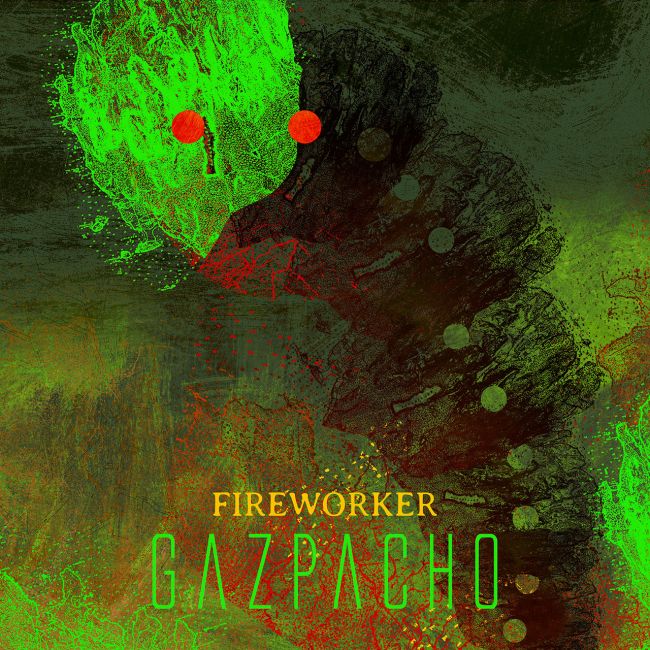
Label: Kscope Records
Release date: September 18, 2020
Production: Gazpacho
Album length: 50.25 min
Genre: Progressive Rock/Crossover-Prog
Rating: 10/10
Gazpacho isn’t just a cold Spanish soup full of potential surprises when it comes to what goes in it. The same goes for the Norwegian progressive rock band of the same name, which has been holding its own on the scene for two decades now. “Fireworker” is the title of the quintet’s new, ambitious effort. After the more than solid, high-quality predecessor “Soyuz” (2018) and the equally strong “Molok” (2015), the band had started showing signs of running a bit low on ideas. It looked like Gazpacho had reached their creative and artistic peak and simply had nothing new left to serve up. Luckily, that’s no hard rule. At least not when we’re talking about art. Never say never, because “Fireworker” drops Gazpacho right back into the era of their greatest creative freshness and, in terms of emotional weight, puts it shoulder to shoulder with their most celebrated work. Especially the records released between 2007 and 2014, when the band strung together a run of truly top-shelf albums: “Night” (2007), “Tick Tock” (2009), “Missa Atropos” (2019), “March of Ghosts” (2012) and “Demon” (2014). So a new masterpiece is here, and for many of the band’s devoted fans it will land right at the top of their favorites in the group’s discography.
The band has always been known for its self-grown, one-of-a-kind artistry and its eclecticism. In the progressive sense, their music isn’t technically complex or puzzling. Far from it. It works like an intoxicating substance that lulls you into a dream. Gazpacho are grandmasters at building majestic, predatory atmospheres, mostly staring out into the dark expanses of melancholy, but they’re just as good at conjuring mysticism and creating mysteries. The theme that takes center stage in the album’s story this time, the tale of the “fireworker,” isn’t even new for Gazpacho. They’ve always loved to philosophize and dive into human psychology. The difference is perhaps only that this time the whole album is devoted to exploring the human interior.
“Fireworker” is – like most Gazpacho albums so far – a new concept adventure, this time built on the premise that humanity is controlled by an all-knowing, infallible being that, for the sake of its own undying existence, relentlessly seeks out and exploits every possible avenue for successfully reproducing and, as a result, spreading its species.
What the concept is all about is best summed up by its creator, the band’s keyboardist Thomas Anderson: “There’s a part of our mind that’s clearly separate from consciousness. I call it the ‘fireworker’ or the lizard or just the ‘space cowboy.’ It’s an eternal, unbreakable life force that outlives every human generation, and again and again develops a new species variant that lives inside each of us. It evolves together with us, using our consciousness, and tricks us every time by controlling our actions. To reach its goals and use us for its needs, the ‘fireworker’ will block those parts of our mind where the sense of resistance and regret lives, which means we can’t stop it. The conscious part of our mind will actually ‘rationalize and legitimize’ those thoughts, so that we’re never in a position to discover the creature lurking behind the scenes of everything that happens. No matter how we perceive our own identity, fulfillment, achievements and values, we’re just the vascular system of ‘reason’ that the being exploits. It does that for as long as it needs us. If you play along, the being will reward you like a little kid and you’ll feel fantastic, but if you don’t, you’ll be harshly punished!”
So what’s Gazpacho’s big strength when it comes to the uniqueness of their musical vision? Clearly, this kind of music snares the more demanding listener, since “Fireworker” too will get stuck in their CD players for weeks on end and flat-out refuse to come out. Gazpacho make albums that keep evolving gradually across their running time, progressing artistically, giving off a totally spontaneous sense of how things unfold, and surprising you at every step with unexpected twists and turns in a finely tuned sequence of motifs and moods. Even though the band is razor-concise in every move it makes. Still, the music feels remarkably loose. You could say it ripples, or comes at you like a gentle breeze that strokes you into a near-hypnotic state, or even better, an almost transcendental experience. And this time all of that works especially well with the basic theme of the concept album.
Five tracks: two longer epics and three shorter “connecting” numbers in between. The idea and the music are brilliantly tied together in every moment, within a dazzling contemplation. Not for a second do they stray from the path of flawless dialogue with each other. The band is brilliantly tight and deeply connected in how they perceive music, and that shows in the exceptional unity of both the writing and the playing. The opener Space Cowboy is considered one of the most ambitious pieces of the group’s entire career. It lays bare who this invisible “space parasite” is in no time, while the band moves with remarkably dynamic flow through a wealth of motifs, including generous symphonic support with neo-classical touches (choir singing), cranking the drama-theater up as intense as it gets. Hourglass releases the tension and dark momentum of the opening epic suite, as the album drifts along on a wonderful blend of delicate, sweet-sounding string arrangements. The title track brings the most compact musicality gathered in one spot on the album. It has a whiff of folk rock, with a finely crafted motif that sticks in your ears, and the vividly expressive, emotionally concise and instantly recognizable vocals speak with particular intensity. After the mystical and secretive Antique, the album spills over into the second epic suite, Sapien, which delivers the most rocking, even metallized heaviness in its tuned guitar phrasing. The varied use of keyboards (Hammond organ sounds, assorted synth layers, a sound close to a mellotron,…) and piano keeps flowing, in contrast, into outbursts of dazzling, open-ringing guitar bursts that sharpen the moods by contrast and cause their sudden turns. Sapien closes the album at the peak of its drama-theater, where endless melancholy and darkness reign. The album never slips into chaos. Everything is in its place. This is fine-mechanics songwriting that reflects the remarkable maturity of the band’s members. They approach it all with concision and a refined, filigree sense of composition. Scandinavian dedication to perfectionism shines on this record in all its proverbial glory.
The vocals are outstanding. Theatrical, fitting right into the “film score” feel that runs so intensely through the band’s new album. The comparison with the tenor of Thom Yorke (Radiohead) is apt once again. The musicality of the vocal lines once more evokes a bit of Marillion in the Steve Hogarth era. Since we’ve already opened the paragraph on comparisons, with “Fireworker” Gazpacho will continue to appeal to fans of the current sound of stylistically transformed bands like Anathema and Katatonia, and on the other side Porcupine Tree and Riverside. That dark alternative-rock connotation, appealing to fans of Radiohead’s artistry, has always crept into the band’s expression too, and these days also The Pineapple Thief and even Elbow. Given the hypnosis the album builds, as well as the gloom of its rippling, trippy atmospheres, Gazpacho know how to catch the attention of post-rock fans and even of the pioneering days staked out by Talk Talk.
In short, “Fireworker” is the intersection of all the sensible comparisons listed above, and more. At the same time, it’s a self-grown swerve into a clearly separate position of musical vision, one that preserves and nurtures its own adventurous artistry of constantly searching passions. As such, “Fireworker” will reward every listener who dives into it especially deeply. Over a long time, too, because this is a record that creeps slowly into your ear. It has that listenable appeal, yet at the same time stands for a constantly graduated unfolding of events that in no way follows the verse-chorus (x2), middle-eight, plus chorus form. That’s why the motifs are incredibly hard to memorize. Despite all the musical appeal it catches. That’s exactly the charm of its eclecticism. “Fireworker” belongs among the artistic peaks released in the progressive rock field, or more precisely “crossover prog.”
Author: Aleš Podbrežnik
Track list:
1. Space Cowboy (19:41)
2. Hourglass (4:15)
3. Fireworker (4:41)
4. Antique (6:24)
5. Sapien (15:22)
Line-up:
Jan Henrik Ohme – vocals
Thomas Alexander Andersen – keyboards
Jon Arne Vilbo – guitar
Mikael Krømer – violin, mandolin
Kristian “Fido” Torp – bass guitar
Robert Johansen – drums, percussion