Label: Escape Music
Release date: April 30, 2021
Production: Touch
Album length: 60.58 min
Genre: AOR
Rating: 9.0/10
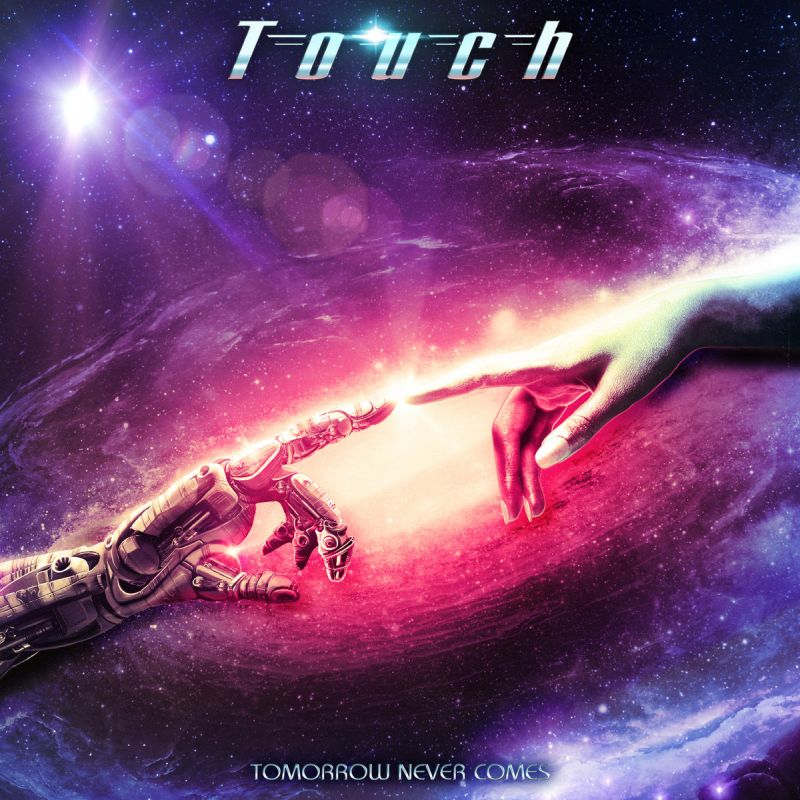
Touch. Unbelievable. A band that emerged in the late seventies as a reaction to the rising radio-friendly musicality of arena rock, popularized globally by the likes of Boston, Foreigner, Styx, Sweet, Uriah Heep, April Wine, Coney Hatch, Angel, and of course Queen (and those are just a handful). So, 41 years after their self-titled debut came out, Touch pulled off a real surprise by deciding to record and release a new album, “Tomorrow Never Comes”. The title is an allegory for waiting around for something that never happens. Or does it? Once, after 41 years. Technically, it’s their third studio album. Back in 1982, Touch recorded an album called “II”, which never saw the light of day.
The debut is now considered a timeless AOR classic and even one of the most revered studio albums of this archaic genre. Touch got generous support on American radio stations very early on, and they were regulars at the top of the Melody Maker charts in the UK. No wonder, then, that in 1980 they played as the opening band at the legendary Monsters Of Rock festival at Donnington Park in England.
The band’s driving force, keyboardist and vocalist Mark Mangold, later made a name for himself as a fascinating songwriter and co-wrote plenty of hits for other artists. Among other things, he played the lion’s share on Bolton’s excellent 1985 album “Everybody’s Crazy”. In the second half of the eighties he kicked off the AOR band Drive She Said, with whom he recorded and released a comeback album in 2016, and in 1991 he co-founded the great AOR outfit The Sign, who put out two killer albums. In recent years he’s worked regularly with various Scandinavian musicians, which is why “Tomorrow Never Comes” sounds so updated. Modernized. Last year also saw the release of the latest, and not the most successful, studio album from Mangold’s revived pre-Touch band American Tears, produced by Danish sound engineer Jacob Hansen.
So, all you fans of AOR (“Adult Oriented Rock”) and those who know the debut inside out, this time you’ll have to take a step back from your expectations, because “Tomorrow Never Comes” is no nostalgic copy of the classic, or of the debut. The crew, or rather the musicians who stayed active all along, and Mangold above all, kept in touch with what’s new, and that goes for the updated sound of “Tomorrow Never Comes”, which follows the latest findings in studio technology.
“Tomorrow Never Comes” absolutely has musical appeal. There’s no doubt about that, and it also has a few traits you wouldn’t even have expected. And more. It shows incredible ambition, so much so that, put simply, the band recorded an album that’s too long. It could easily have been 20 minutes shorter, though it’s fair to ask how much energy and opportunity will be left for a potential follow-up, even if you should never say never. The title track packs a wrecking-ball guitar phrase that immediately confirms Touch have sailed into 2021 in one piece, without looking back much at the late seventies. Opening with the title track delivers one of the expected peaks of pomp. The combination of keyboards and phrasing with a contagious vocal hook in the chorus grabs any AOR fan instantly. Swan Song makes it clear that Mangold and the crew really do come from the days when progressive rock was hugely popular. The song is more intricately arranged and has a distinctly epic, pompous feel. What does get in the way is the chorus in Try To Let Go, which tries to be as modern as possible, and the extra “Oh-Oh” shouts do more harm than good to an otherwise promising hook. That track is the definite low point of the album. As for the length, the remark was aimed at the fact that Touch could have saved at least 20 minutes of excellent music for the follow-up to “Tomorrow Never Comes”.
The bluesy waltz Scream The Sky is also a definite messenger from times 40 years gone, when rock was chasing the favor of the airwaves. Then there’s the ballad Glass (with a refreshed arrangement), which Mangold already recorded on the last American Tears album, but it fires up much better on “Tomorrow Never Comes” and fits in more convincingly with the rest of the record. A fantastic sense for musical hunger is also confirmed by the fascinating ballad, a real heartbreaker, Trippin’ Over Shadows Overall, the opening and closing stretches of “Tomorrow Never Comes” are the strongest and most striking. The choruses get under your skin with their seductiveness and instant appeal. They definitely dominate the album (Fire And Ice). So there’s a ton of musicality. Production-wise, the building blocks are contrasted with great skill, and the sound is optimized to match. The band steers deftly between modern sonic pastels and traditional sounds – especially on the keyboards, where at every turn you can hear the rustle of synthesizers with that signature eighties sound, only modernized in the production. The album’s finale also sounds triumphant and pompous, with Wanna Hear You Say and Run For Your Life. The latter, like Lil Bit Of Rock ‘N’ Roll (in the middle), is an excellent cross between old-school rock ‘n’ roll and the invasive musicality that late-seventies arena rock was raised on. The hooks get an extra boost from harmonized shouts in the repeated choruses, where fans of classic Def Leppard will occasionally feel right at home (e.g. Let It Come).
“Tomorrow Never Comes” is a work of great production and stylistic polish. An ambitiously mapped-out album that radiates the band’s burning desire to deliver their best. Sure, the eighties are far behind us, and where rock stands today in terms of development is a whole different story. But one thing remains clear. An album like “Tomorrow Never Comes” can only be made by a quartet that breathed and lived the seventies and has the classic “Touch” in its back pocket. “Tomorrow Never Comes” is crammed with songs, crammed with lavish arrangements, generous ins and outs. Heaps of fiddling, polishing and detailing. A work of extraordinary commitment, which turned out to be a bit overdone. The album takes longer to sink in than it otherwise would, especially if it were 20 minutes shorter. Still, it fully rewards every follower of AOR. An album that definitely deserves attention, and one that shouldn’t be seen as an achievement meant to outdo the timeless, evergreen debut, but as one that clearly shows there’s still plenty of high-octane fuel in the tank of this quartet to create fascinating new music. In any case, with a very unique archaic-rustic look.
Author: Aleš Podbrežnik
Track list:
1. Tomorrow Never Comes
2. Let It Come
3. Swan Song
4. Try To Let Go
5. Fire And Ice
6. Trippin’ Over Shadows
7. Frozen Ground
8. Lil Bit Of Rock N Roll
9. Glass
10. Scream At The Sky
11. Wanna Hear You Say
12. Run For Your Life
Line-up:
Craig Brooks – guitar, vocals, backing vocals
Mark Mangold – keyboards, vocals, backing vocals
Doug Howard – bass guitar, backing vocals
Glenn Kithcart – drums, backing vocals