Label: Verglas Records
Release date: October 21, 2022
Production: John Mitchell
Album length: 62.03 min.
Genre: Progressive Rock
Rating: 10/10
“The Theory of Molecular Inheritance” was the most anticipated album of 2022 for plenty of (neo-)progressive rock fans. The arrival of vocal great Damian Wilson (Headspace, Ayreon, Star One, ex-Threshold, Landmarq) opened a whole new chapter for English neo-prog champions Arena, who have already burned through four singers. The successor to Paul Manzi, who said goodbye to his bandmates in 2020 after a successful decade together, is without a doubt the highest-profile vocalist in the band’s history, so expectations ahead of the new studio album were understandably sky-high.
“The Theory of Molecular Inheritance” was supposed to ’see the light of day’ as early as October 2021, but its release got pushed back not once but twice, so it finally came out almost a year later than originally planned. Keyboard wizard Clive Nolan and drummer Mick Pointer, Arena’s creative leaders, promised well before release that the new album would deliver a complex sci-fi concept that wouldn’t trail behind the concepts of the masterpieces “The Visitor” (1998) and “Contagion” (2002) in depth or message.
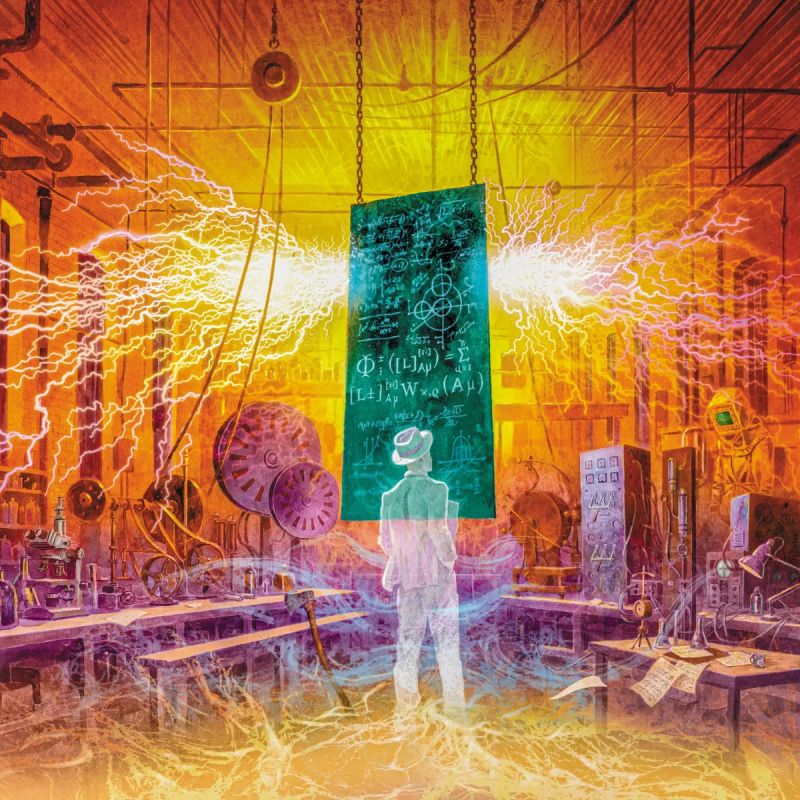
According to Clive, the concept of “The Theory of Molecular Inheritance” centers on the theory of a scientist who sets out to tame the molecules of the deceased through all sorts of experiments, so that their distinctive, specific traits can become part of a new life. Most of the songs on the album ‘talk’ about his experiments. This time Clive has really waded into fully metaphysical waters, as the album’s concept revolves around an intriguing scientific theory that matter never disappears even after death, which means it’s not all that far from the teachings of most of the world’s religions. According to this theory, after death the molecules of every dead being return to stardust. Then they drift around the world for a while, waiting to be incorporated once again into various living beings, from plants and animals to humans. Clive takes it a step further here, into the realm of science fiction, and asks ‘what if there are molecules that carry the traits of long-dead people, like, say, Ludwig van Beethoven’? Is it then possible that the famed composer’s molecules will become part of a newborn child a century or two from now, who will then show extraordinary musical talent?
Mr. Wilson found his feet in the ’new flock’ right from the start, even though his voice and vocal approach are quite different from his predecessor’s. His singing style ‘slots’ into Nolan’s and Pointer’s compositional visions like a hot knife through butter. In fact, it’s nothing unusual that Arena tried to lure him into the fold in the past, whenever they were left without a singer, but with Wilson being (over)booked with other bands and assorted side projects, it was impossible. Just how well the latest change in the band has turned out can be heard right on the excellent opener “Time Capsule”, which, thanks to its bristling guitar passages and uncompromising drum march, comes off a little prog-metal. Any fear that Arena might accidentally ‘mutate’ into a Threshold derivative after Damian’s arrival vanishes the moment Clive’s piano and synth arrangements kick in, while John Mitchell, after his initial guitar ‘strafing’, slips into his more characteristic, refined and melancholic guitar technique.
“The Equation (Science of Magic)” is an even more ‘traditional’ Arena creation than the previous track, stuffed with plenty of tempo changes, dramatic harmonies and a poetic chorus courtesy of the always superb Damian. It’s all wrapped in an extremely tense atmosphere that turns downright ominous and gloomy once Clive’s organs crash in. It’s worth noting here that Arena do sound a bit less fatalistic since Damian’s arrival than they did in the Manzi era, since the tall, bearded frontman has a ‘brighter’ and more ’velvety’ voice than his predecessor. “Twenty-One Grams” is the rough weight a human soul is supposed to have. The lyrics of this deeply melancholic song, which Damian sings in some pretty high registers, ask whether we humans are mere matter or whether there might be an immortal soul inside us. By the time the ballad “Confession” arrives, which feels tailor-made for Damian’s vocals, it’s already clear the band has pulled off another outstanding album.
The song “The Heiligenstadt Legacy” revolves around a letter Ludwig van Beethoven wrote to his brothers, Karl and Johann, on October 6, 1802. Heiligenstadt is a town near Vienna, where Ludwig retreated in despair to withdraw from the world. The lyrics deal with the composer’s immense suffering as his growing deafness made him start losing faith in his abilities and in life in general. The members of Arena, flowing seamlessly between dramatic and subdued sections that Clive’s melancholic piano ‘commands’ for most of the time, did a great job of conjuring Beethoven’s sadness and loneliness. The opening of the next track, “Field of Sinners”, is a bit reminiscent of the “The Visitor” standard “Pins and Needles”. This one ramps up an extraordinary ambient drama second by second, with Damian’s eclectic vocals, John’s guitar subtlety and Clive’s grandiose synth textures all standing out especially well.
“Pure of Heart” is laced with metal guitar phrases and mighty organ passages that combine to ratchet up the dramatic atmosphere. The epic chorus, with a Damian in great spirits and a web of branching harmonies, doesn’t arrive until about halfway through the song, but it sounds fantastic and shifts everything into much brighter ambient waters. “Under the Microscope” starts out as a lovely power ballad, then after the first transition turns into an interesting experiment with metal guitar phrases and a rhythm section to match. During the shorter instrumental sections, longtime fans will be licking their lips over Clive’s and John’s virtuoso antics and enjoying the eclectic rhythmic partnership between Mick and bassist Kylan Amos, while yet another outstanding vocal performance from Damian is (once again) the decisive factor that turns a pleasing song into a proper Arena classic.
“Integration” opens as a gorgeous ballad, with Clive’s fragile piano arrangements and Damian’s almost heavenly singing, then surprisingly shifts into a very traditional-sounding neo-prog section that, thanks to its nostalgic synth lines, recalls the early years of these neo-prog greats. After such a long time, this move is very welcome and will delight many a longtime fan, who will remember that on their first two studio efforts Arena occasionally (still) sounded like early Marillion, until they developed a completely distinctive approach to songwriting and arranging.
“Part of You” has a noticeably punchier structure and, thanks to its sharpened guitar phrases and furious drum transitions, contains quite a few prog-metal elements, but the keyboard variety, with an emphasis on orchestral-flavored arrangements, plus yet another unusually soulful vocal performance, let it build up remarkable ambient depth. The epic treat “Life Goes On” is a triumphant closer of the kind we’ve come to expect from this band over the years. This majestic feat, during which the scientist finally gets confirmation of the infinity of the human soul, doesn’t lack for inconsolable guitar soloing and a wonderfully eclectic vocal performance that peaks in a mighty chorus.
“The Theory of Molecular Inheritance” is a dream come true for every Arena fan, who had a proper long wait before finding out what the new version of this cult (neo-)prog rock band sounds like. Damian’s arrival blew a fresh wind into the band’s sails, reviving them at just the right moment and yielding a new studio masterpiece. We can only hope Damian sticks around with Arena for at least one more album, because his departures (and returns) with Threshold have become almost predictable. At the same time, it’s a realistic expectation that, thanks to his ties to Ayreon and Star One, he’ll bring this brilliant but (still) notoriously obscure band a bit more of the recognition it deserves.
Author: Peter “Dr. ProgRock” Podbrežnik
Track list:
1. Time Capsule (5:30)
2. The Equation (The Science of Magic) (6:28)
3. Twenty-One Grams (6:34)
4. Confession (2:20)
5. The Heiligenstadt Legacy (5:42)
6. Field of Sinners (6:27)
7. Pure of Heart (6:18)
8. Under the Microscope (6:51)
9. Integration (4:48)
10. Part of You (5:54)
11. Life Goes On (5:11)
Line-up:
Damian Wilson – vocals
John Mitchell – guitar, backing vocals
Clive Nolan – keyboards, backing vocals
Kylan Amos – bass
Mick Pointer – drums