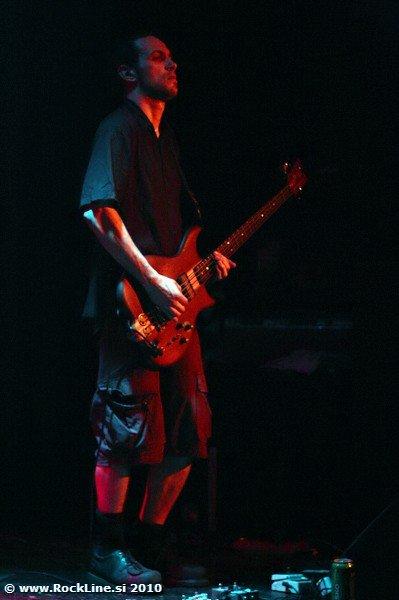
Venue: Menza pri koritu, Ljubljana
Concert date: 02.05.2010
Attendance: 60
Ticket price: €10, €12 on the day of the show
”People once believed in the god Pan,” – you could say that, looking at the twenty or so enormous bonfires lined up along the Portorož – Ljubljana road on the eve of Labor Day. More than a celebration of May 1st, the might of those tongues of fire felt like some sun-worshipping ritual.
So, the perfect atmosphere for the day of a Zu show, a band that fuses irreconcilable musical elements with fiery force into a cathartic lava (to borrow a comparison from current events around the world). What opens up on the albums as primitive – complex, hot – cold, jazz – rock – metal, spreads live in every direction of the sky, and above all into the bodies of the listeners.
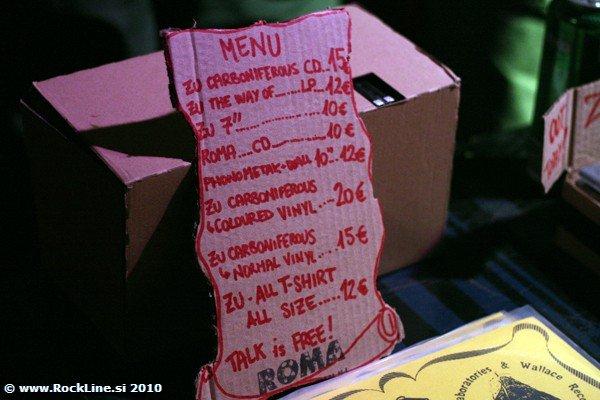
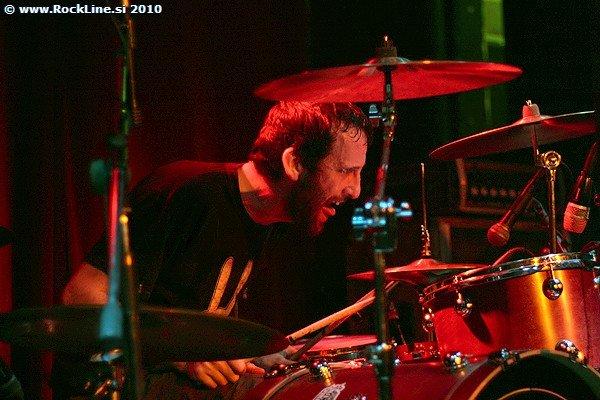
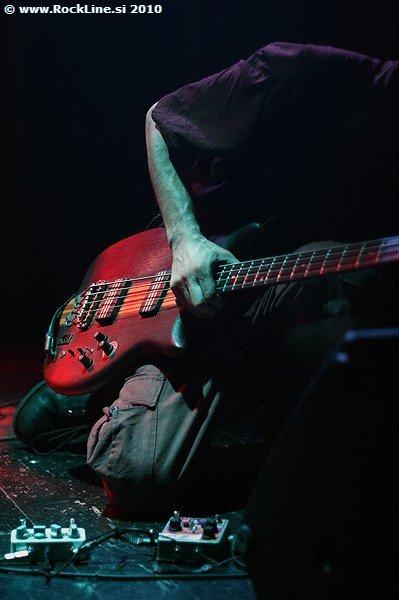
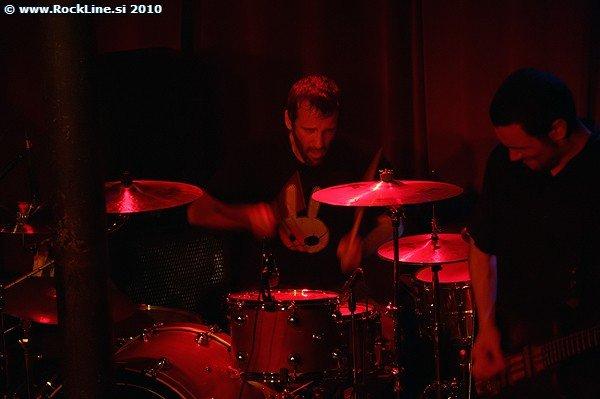
Zu have paid us a visit again after a five-year break. It took quite a while, considering the band comes from the capital of our western neighbor, nearby Rome. They were presenting their latest studio album, Carboniferious, released in early 2009 on Ipecac recordings (the label of the Faith No More frontman and his other unconventional bands, M. Patton). At the show they were already selling the LP version of the album, released just over a week earlier with a slightly altered cover design; while the CD is graced by a black-and-white picture of a mountain rising toward a gloomy sky, the artist who has worked with the band before personified the mountain on the LP and hinted at a human figure on its peak, one that seems to be quietly watching us. Carboniferious is considered the band’s most “rock”-flavored album. Yes, rock, because Zu are made up of a rhythm section, with Jacopo Battaglia on drums, Massimo Pupillo on bass and Luca T. Mai on … saxophone. Ehhhh, so drums, bass and saxophone? And people still say there’s no rock without an electric guitar (although the guitar is partly present on that album, covered among others by guest King Buzzo of Melvin (who also operates under the Ipecac label) on the song Chthonian, while Mike Patton added his vocal talents on Orc and Soulympics).
Carboniferious means coal-bearing, and it also denotes a period of the Paleozoic, the Carboniferous. If we split the word in two, we get carbon and ferous. Carbon, that is, has atomic number 6 (a meaningful number said to symbolize harmony, balance, sincerity, truth), and its two allotropes are the well-known hard diamond and brittle graphite. Ferous comes from the original meaning of fiero, proud, dignified, noble, and feroce – giving in to feelings, brave, fiery; both words later took on negative meanings: wild, untamed, terrible, dreadful.
All along, even through the distorted, squealing saxophone tones that sound like someone is skinning a wild boar alive, the instrumental trio warns and cautions us while also soothing us, using symbols drawn from rich Italian history. Even the myth of the city they come from contains elements of animality, the she-wolf (beast – belva – fera – ferous), who in her strength and courage is able to offer safety to Romulus and Remus. She even nursed them, the way mother nature feeds us, but then it’s up to us again to decide how we return to her. The mountain on the album cover, with a coniferous forest at its foot, is reminiscent of Dante’s Vices; hell and suffering are already behind us, in the forest, and as we climb the mountain we purify ourselves, which ends at the summit, where a fiery sword is still waiting for us – or perhaps our bonfires.
The Slovenian Žoambo Žoet Workestrao played before the Italian trio, but unfortunately I missed them because of assorted mishaps on the way to Metelkova. The stage setup for the much-anticipated Zu, though, took quite a long time. It felt like preparing a sacred space (which, for musicians who play with their hearts, it certainly is), from which primal truth would circulate among the audience. Well past midnight (did the band perhaps wait on purpose for the last day of April to turn into the first day of the fifth month (the sum of the day and the month gives the number 6)? Or did they want to play for us on a Saturday, a day that in some religions is equal to Sunday in the Christian tradition?) we could applaud the start of an hour-long push of suppressed collective patterns up to the surface.
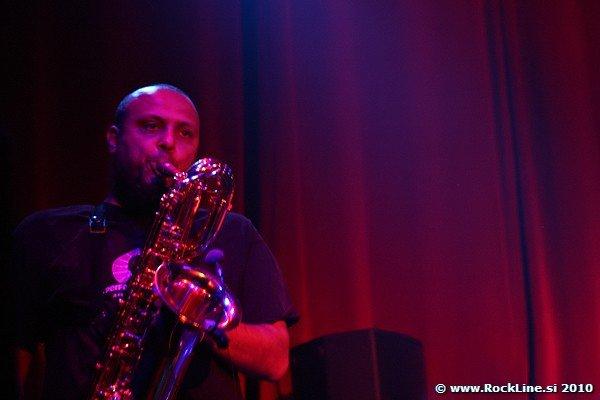
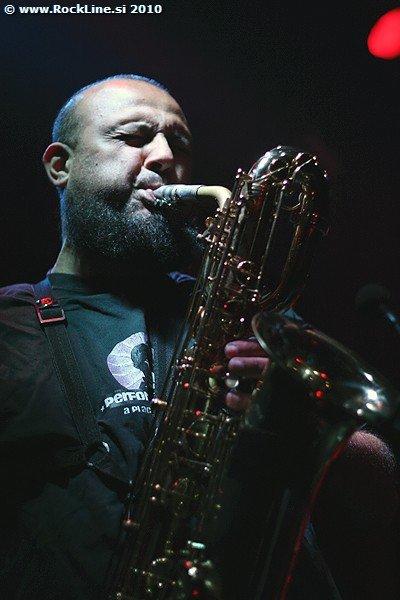
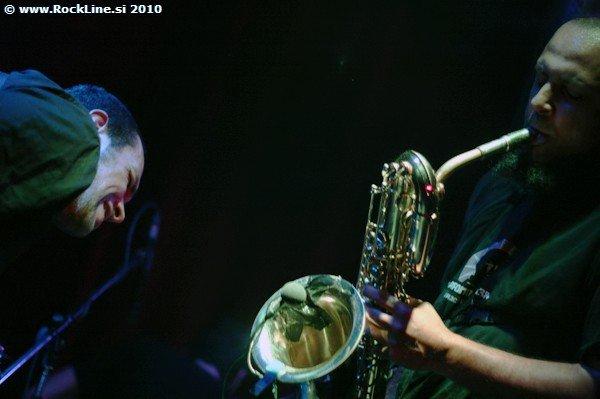
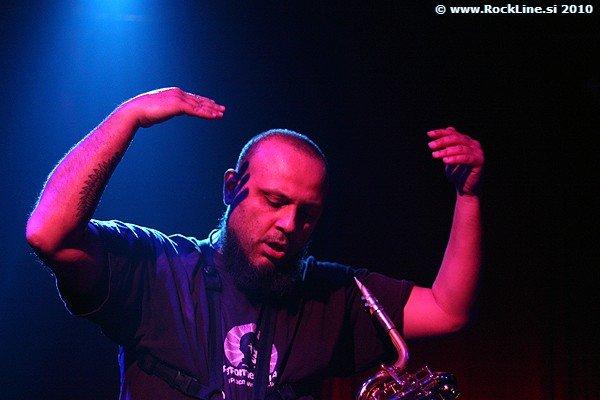
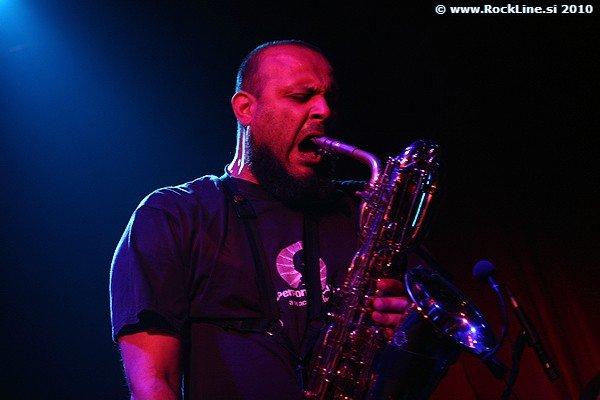
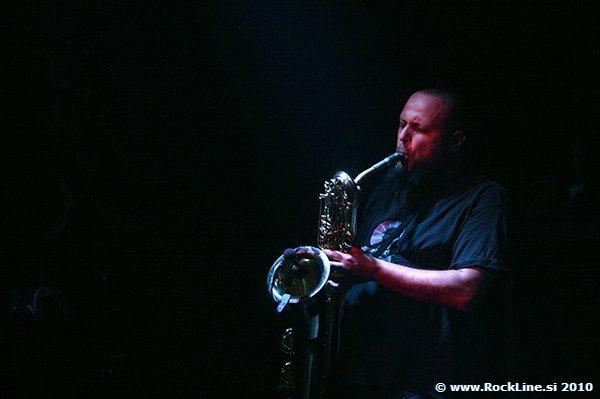
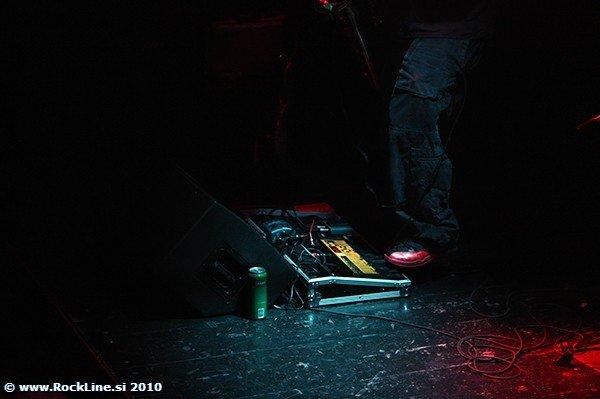
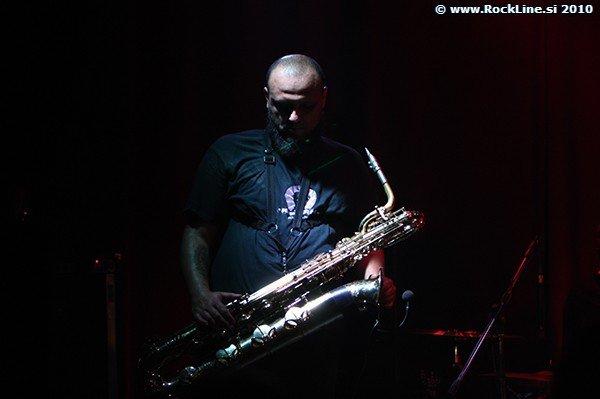
At Menza pri koritu, Luca played baritone saxophone. And not just played: he also tapped and slapped the body of this warm-sounding, sensual instrument, putting himself on par with a rhythm machine – for which he also used a little microphone on the saxophone.
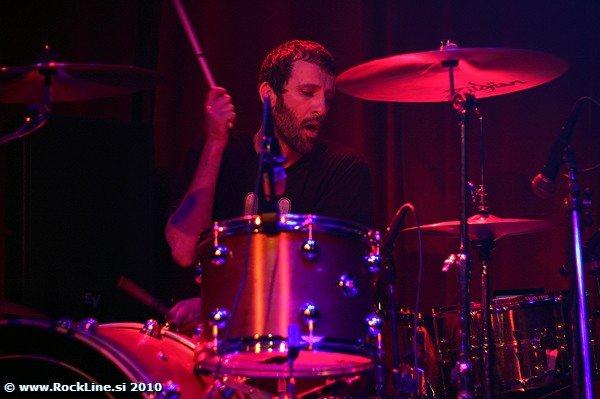
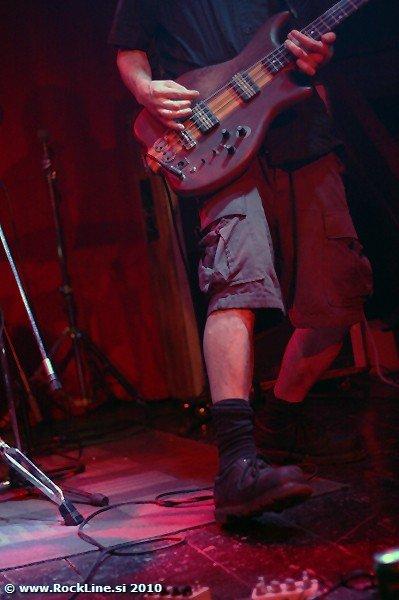
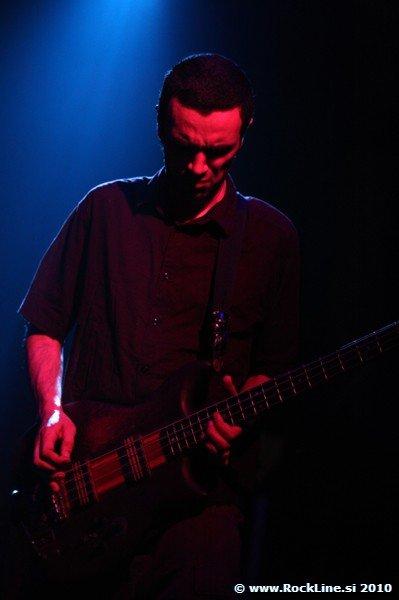
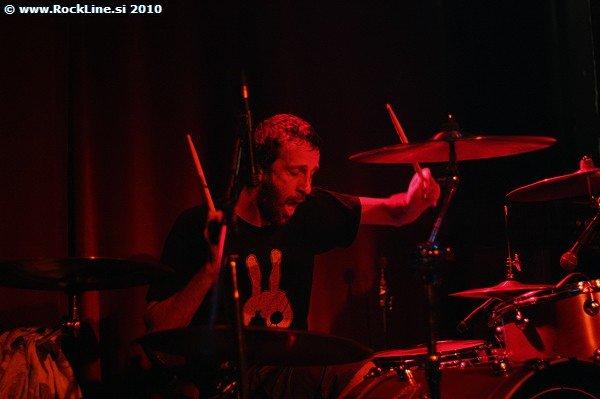
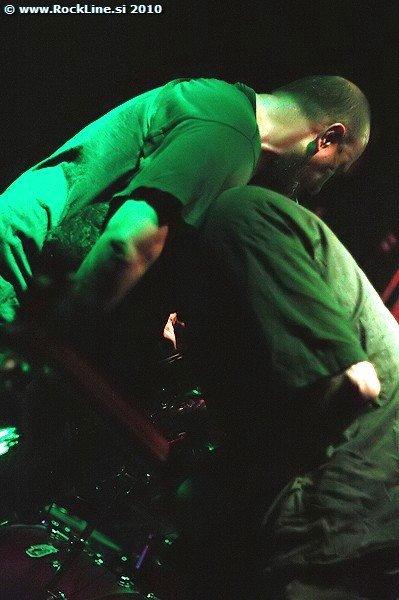
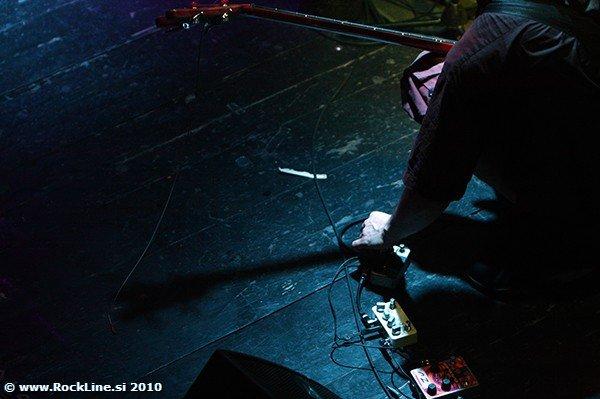
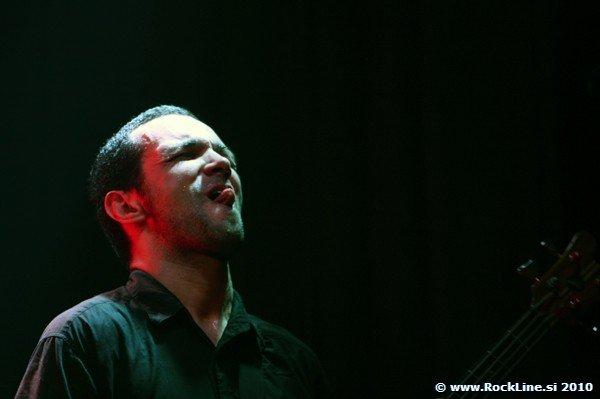
The drummer broke the tempo in unexpected places but always at just the right time, brought a-rhythm to the foreground, and also stepped back and left the stage to the sax and bass, which a few times found themselves in a duel, both in roles we’re not used to seeing, let alone hearing, them in. Massimo masterfully, almost manically distorted the sound of his bass, so that we never missed the guitars for a moment. The dry definition of “math rock” came to life. The vibrations of their unstoppable power carried into our ears, and what might seem ominous and destructive to a casual visitor turned out to be a benevolent call to return to nature.
At the start of the show the saxophonist urged the audience to respond more loudly to their music, and Jacopo tried a few more times to get the “front of the stage” going, but sadly there were too few people for the flow of enthusiasm to run smoothly from the crowd to the stage and back, which showed most of all at the end, when we got no encore, even though we made ourselves heard with applause and other sound effects, as befits our enthusiasm.
The cleansing air calmed down, the hall nearly emptied out. The bonfires turned into smoldering ash. Pan remains among us and calls to us, Zu know it, so pick up their album and see for yourselves, until their next show.
Photos: Mia Milharyčič
Photo gallery