Interview date: 05/18/2008
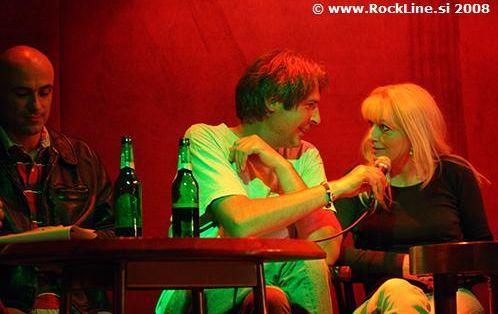
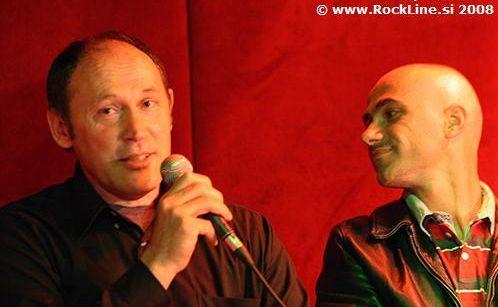
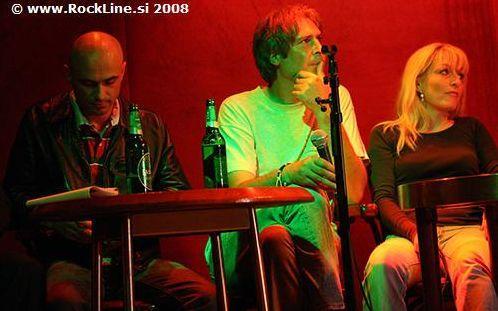
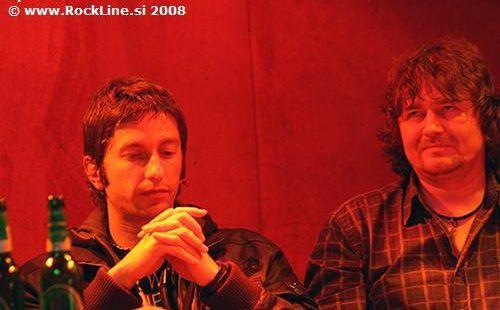
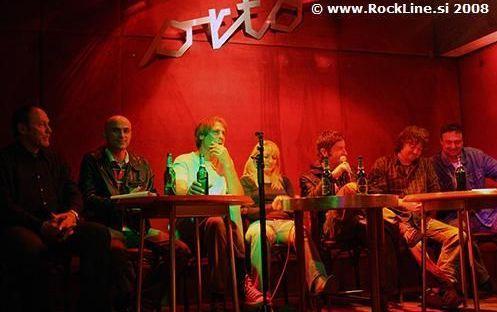
Ljubljana’s cult punks Niet are back on the scene after more than sixteen years. They celebrated their return on March 31 this year with a sold-out show at Orto bar. And Orto bar was also the setting for a reunion of sorts on Monday, May 19. Only this time the guys weren’t playing a gig, but holding a press conference ahead of Tuesday’s concert at Križanke, which they titled “Bil je maj”, and promoting the album of the same name. The whole press conference was hosted by Blaž Gregorin.
Blaž Gregorin: What made you decide to get Niet back on the scene?
Igor Dernovšek: It started with a call from Pero Lovšin in the middle of September, who suggested we play at their “reunion”. I told him we hadn’t played together in ten, twenty years, and that I didn’t even know where the other members were. He kept pushing, so I called them, and to my surprise they all said “yes”. When we got together for the first time, it felt like twenty years hadn’t passed at all. I’d actually been itching to play even earlier, when Dan D did a cover of “Lep dan za smrt”. Why shouldn’t we play our own songs again if everybody else is playing them?
BG: Right from the start you ran into a problem – you were without a frontman. How do you find someone to replace such a charismatic, almost cult frontman?
Igor: We decided to go for a whole new story with a new singer. We were thinking about who could fill Primož Habič’s shoes. Only one name kept coming up – Borut Marolt. He came to rehearsal and we realized he fit us both as a person and as a singer.
BG: And a question for the singer right away. What was the feeling like, was there any awe, and how familiar were you with the band and, in the end, with the plans? Did you know you were coming to an audition?
Borut Marolt: Yeah, I knew I was coming to an audition. Robert Likar’s call really surprised me, because I never would have expected someone from Niet to call me and ask if I’d try singing for them. The rehearsal was very relaxed. I got the feeling we clicked right away, and the following week we already had a regular rehearsal. It all happened really fast, it was January.
BG: The surprise, or rather the opening of this year’s Orto fest, followed very quickly too. The reaction, the energy in that room was incredible. What did that mean for you, did you expect that kind of response? Was it a surprise?
Robert Likar: Here’s the thing. Niet as a band hadn’t performed for a very long time. There was always some response from the audience, but never anything like what we experienced. So thanks to the crowd that came, came alive with us and relived that whole story of all twenty-five years.
BG: And after twenty-five years, a record titled “Bil je maj” has come out too. It’s a kind of chronology of your work. Why didn’t you go for the easier option and put out some sort of “The Best Of”, instead of deciding to add three new recordings and three rarities?
Robert Likar: We had to create something new to show everyone else that we can still do it the way it should be done. I think we did that in a really good light, and we’re all absolutely convinced of it. No commentary is really needed here. What matters is that it happened, that it’s happening, that it means something, and that we have a message: we’re still doing it the way it should be done.
Igor: For this chronological presentation of Niet, we picked the songs we feel were the best in our story. On top of those, we picked two more songs from that era, “Vsak dan se kaj lepega začne” and “Strah in krik”, because we felt that in this chronological overview we had to show everything Niet once were. This is the history of Niet.
BG: The recordings were also remastered, given that most fans actually know your music as something that hisses like crazy, or where the tape was so stretched out that you sounded slowed down. What does it mean to you to finally hear the material in a cleaned-up version? And what about those three extra songs, the rarities you put on the disc? Since the tracklist is chronological, why did you choose these last three? What does this bonus stand for?
Igor: The first fourteen tracks are a selection of the best Niet songs. That’s followed by a minute of silence for Primož. At the end there are four more songs as a kind of bonus tracks. “Umiranje”, “Srečna mladina”, “Zastave” and “Melanholija” are songs from our first period, and also the first songs recorded at Borut Činč’s studio. I think the biggest Niet fans also like our sharpest, most hardcore songs. When we started playing songs longer than a minute, some fans already thought we’d gone a bit too pop.
BG: What does it mean that you’ve locked yourselves in the studio again? Will you be working on new material too?
Igor: Let’s give it time. The Križanke concert is definitely our number one priority. That’s the first step we’ll take in this chapter. Only then will we see what the view ahead looks like.
BG: Given that not all of you were active in the meantime, did you do extra preparation for Križanke, or did you just sit down at your instruments and everything flowed on its own? The energy is definitely here. Is this just a “rehearsal” or is there some real chemistry?
Aleš Česnovar: I started playing bass again in January, after almost nineteen years.
Igor: Rock ‘n’ roll is eternal and stays in your blood even if you haven’t played for twenty-five years. When you find the right crew and the right challenge again, you sound the way you wanted to sound, or rather you sound better because the conditions are better. The gear is better and more people are listening to you than back then.
BG: Let’s go back to that Križanke concert. The organizer is Jani Jerant, who has also taken on the role of your manager. Besides what we’ve already seen on the various posters and flyers and heard in the media, what else can we expect at the show? Apart from a dose of Niet, of course.
Jani Jerant: When we were putting together the concept for the evening, we landed on “Bil je maj” as the common thread and tied it to the single, the record and the name of the concert. At the show you can expect everything from the young drive of Zablujena generacija to a bridge, a transition into Niet, which Jani Kovačič will take care of perfectly. I send him warm greetings, just like Zablujena generacija. I’d like to thank them for answering today’s invitation. As the organizer, the concert will show me what the future looks like. Maybe at the start I wasn’t completely sold on the whole thing. Orto opened my eyes, and I know there’s still a lot ahead for Niet.
BG: And what does the band expect from Križanke? Do you expect a lot of younger people again like at Orto, who haven’t been able to see you live yet, or will it be a mix of old fans?
Igor: We have no idea. Judging by the response we’ve been getting in recent years through websites and word of mouth, I think Križanke will be very diverse – from the very youngest to quite a bit older. It’s going to be a real mix.
BG: What happens after Križanke? You’ve got a gig announced at Rock Otočec. Will some club shows follow, because I know that for you and your music that means direct contact with the audience and gives the whole thing a certain authenticity? Do you have a smaller tour planned, or only big stages?
Jani: Križanke is the foundation. As a manager, I haven’t been working toward going wide and doing thirty shows. Križanke will speak for itself. I’ve only arranged a few bigger events. Two of them are definitely Rock Otočec on June 27 and Klumpanje, which will happen on July 5. Those three shows are set and fixed, everything else comes later. It’s up to the guys what they take on in the fall.
Igor: The summer season depends on the festivals. But the challenge going forward, if we keep getting along as well as we do now, would be to do another concert tour of smaller stages in the fall. The biggest challenge for us would be an album of original material, a product that wouldn’t be the fruit of all twenty-five years, but something that comes from what we feel right now. It all depends on how things develop.
BG: Among the journalists and musicians who reached out to me, it’s surprising what a range of fans you have. Any questions from the audience?
And the room fell silent …
BG: No questions? Let’s head to the canapés and beer, the questions will obviously come at the bar. Thanks to everyone who came. And Niet, I wish you an excellent comeback.
Niet: Thanks for coming. We’d also like to take the opportunity to thank Jonas Žnidaršič, who volunteered to introduce us again at Križanke.
Press conference transcribed from the audio recording by Lea Lesar.
Photos: Špela Macuh
Photo Gallery