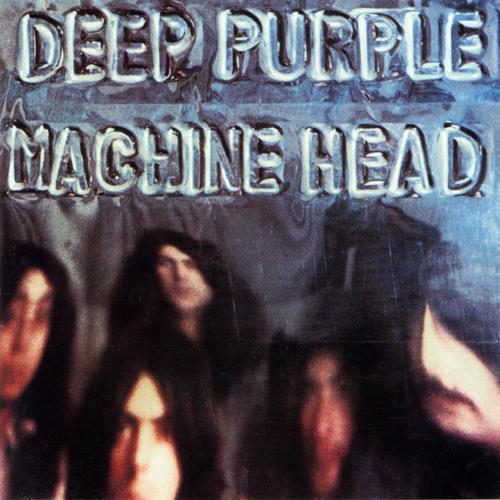
Label: EMI Records
Release date: March 25, 1972
Production: Martin Birch
Album length: 37.25 min
Genre: Heavy Rock / Hard Rock
Rating: 10/10
“Machine Head”, the sixth studio album from the legendary British heavy rockers Deep Purple, was their magnum opus, the record that saw them triumphantly seize the throne as the loudest and most technically refined hard rock/metal pioneers of the early seventies. No other Deep Purple album packed in so many classics. The band has played every single track from this monumental heavy rock masterpiece live to this day, and even the moody guitar virtuoso Ritchie Blackmore declared it, alongside “Deep Purple in Rock” (1970), his favorite studio album by this legendary English rock outfit.
Strange as it seems today, the making of “Machine Head” wasn’t smooth sailing. Thanks to its somewhat rawer production and generally punchier approach, the album sits closer to the vibe of their heaviest record “In Rock” than to its experimental predecessor “Fireball” (1971). Still, some of the songs came together dead easy, from all sorts of inspirations. The opening classic “Highway Star”, for instance, was written right on the band’s tour bus after someone asked in an interview how fast they come up with their songs, so quite a few of the “Machine Head” standards were already being played on the “Fireball” tour.
This legendary album, the one most fans would take with them to a desert island if they could only pick a single Deep Purple record, was less punishing than “In Rock” and less innovative than “Fireball”, and yet it carved itself into people’s hearts as their favorite. The real magic of “Machine Head”, recorded in the picturesque Swiss town of Montreux, where plenty of British rock giants besides Deep Purple have played over the years, was that every single composition on the record was spiced with exceptional songwriting perfectionism, just the right production balance, instantly memorable main themes and downright astonishing chemistry between the members of the legendary quintet. With emotionally intense vocal performances from singer Ian Gillan, Blackmore’s unpredictable guitar acrobatics, the fiery organ passages of keyboard wizard Jon Lord, the devastating barrages of drummer Ian Paice and the complex bass lines of bassist Roger Glover, they created the most accomplished studio album in the Mark II story, if not in their entire career.
The opening wrecking ball “Highway Star”, the first “Machine Head” track to see the light of day, is still a ferocious album opener four decades on, one that countless hard rock and metal bands keep trying, more or less unsuccessfully, to imitate. After a building intro, where Blackmore’s inventive guitar riff cuts mercilessly through the air and Gillan’s wailing cracks the windowpanes, comes the moment before the cataclysmic chorus, which lodges itself in the memory receptors of the average lover of good music in an instant. The middle section is full of fierce duels between the Hammond organ and the electric guitar, deepening the heated atmosphere of this supersonic evergreen. Ritchie’s inventive guitar phrases, along with the sensual lines in the melodramatic instrumental section, are still a real treat for the ears. Gillan’s lyrics about a fatal woman couldn’t be more typically Purple.
The tongue-in-cheek “Maybe I’m a Leo”, which refers to Gillan’s astrological sign, suddenly slows down the album’s previously cranked-up tempo, though Paice still impresses like crazy with complex, rolling drum fills. Lord’s piano provides a subtle refresher, while Blackmore serves up two heavenly guitar solos that remain pure manna for the ears of worshippers of the legendary man in black and his exceptional guitar talent. The hard rock energy-charger “Pictures Of Home” sends the album’s tempo racing again, with Blackmore firing off fiery guitar phrases like his life depended on it and Paice flattening everything in sight with wild drum fills. Gillan’s inconsolable vocals tell a story of isolation and homesickness in an incredibly heartfelt way. In time Maestro Lord takes over the lead, staging an unforgettable organ orgy, while Glover doesn’t forget to drop in a short but spirited bass solo. Ritchie’s closing guitar solo also brings some much-needed subtlety to this punchy standard.
On “Never Before”, which came out as a single and, contrary to the band’s expectations (they were convinced it would be their next big hit), flopped commercially, though it still convinced audiences that the new studio album was worth a listen, the legendary outfit wades into somewhat funkier waters. The shifts between slow and fast tempos are backed by potent guitar phrases and mighty drum swings, while Gillan’s frothing vocal approach, which peaks in the romantic chorus, tells yet another unhappy love story. This time Lord proves equally effective on the Hammond organ and the electric piano.
Next comes the legendary “Smoke On The Water”, the biggest hit of their career and by far the best-known track on “Machine Head” to this day. Steve Lukather, guitarist and singer of Toto, once expressed his disappointment in an interview that Deep Purple still aren’t in the Rock and Roll Hall of Fame. In his view they deserved a spot in that (over)rated American institution long ago, if for no other reason than that the main riff of “Smoke On The Water” is the first thing a schoolkid learns when picking up the guitar. The birth of this unforgettable rock classic comes with a pretty wild story about the key inspiration, one that’s inseparably tied to the lyrics about “smoke on the water” themselves.
On December 6, 1971, the band members attended a show by the legendary Frank Zappa at the Casino hall in the middle of Montreux and enjoyed this unforgettable musical icon from the front rows, right up until the moment a deranged concertgoer fired a flare gun at the ceiling and started a fire. After everyone was evacuated, the smoke hung over the water for a long time, and while watching the scene from a hotel window, they suddenly got the inspiration for their most beloved classic, defined above all by Blackmore’s iconoclastic guitar riff, which builds a tense, irritable atmosphere. Gillan’s singing of the super catchy chorus blends perfectly with the melodic guitar improvisation, potent drum fills and Lord’s somewhat restrained organ finesses. Lord, who felt his wings had been clipped when it came to opening the doors of his keyboard kingdom, was also the only band member who wasn’t completely in love with this minimalist classic.
Well, as a result, the keyboard legend really lets loose with mighty organ improvisations on the evergreen “Lazy”, which is a lesser-known Purple standard compared with its famous predecessor, but no less beloved a classic at gigs. Its monumental organ intro builds a playful mood that Blackmore’s inventive guitar phrases soon join. He soon stretches them into a fast-fingered blues solo. Backed by robust drum fills, an unforgettable main theme quickly takes shape. Lord’s organ passages are still the main instrumental treat here, while Gillan’s vocals, delivering somewhat darkly humorous lyrics this time, only come in during the second half of the song. By the way, the legendary singer also treats himself to a witty harmonica solo.
The fiery hard rock carousel “Space Truckin'” has become one of the most beloved live standards, and in the “golden” days it was stretched to more than twenty minutes with feature-length instrumental jams. Once again a hefty guitar phrase takes center stage, and together with rustling organ passages and rolling drum fills, through which Gillan’s astonishingly elastic voice roars, it creates the cataclysmic feeling of a space flight at the speed of light. Gillan’s furious vocal snarling, with which he hits some outrageously high notes, and Roger’s spirited bass lines together form the main melodic source of one of the punchiest Deep Purple classics.
The CD reissue of “Machine Head”, released for the 25th anniversary, includes among its bonus goodies the fantastic ballad “When A Blind Man Cries”. It would undoubtedly have deserved a place on the regular album had the time and space limits of the day allowed it, as it’s one of the most beautiful creations in the entire Deep Purple story, and the band still remembers it now and then at live shows. Gillan’s inconsolable singing, once again the spitting image of a heartbroken man, merges in an exceptionally refined, rhythmic way with the melancholy sound of Lord’s Hammond organ, while Blackmore, with a weeping guitar solo, shows off the particular subtlety that would keep wowing audiences even in the years when he was no longer a member of Deep Purple.
“Machine Head” is the golden crown atop Deep Purple’s finest studio albums and the peak of the Mark II lineup, which created the band’s most beloved classics to this day. The birds on the rooftops were chirping that it ranked among the best rock albums of all time soon after its release, and even though over the decades the Purples have played certain evergreens, led by “Smoke On The Water”, at concerts so often that they’re worn to the bone, the album as a whole remains the very picture of compositional, arrangement and virtuoso brilliance and polish. To close the review, one more anecdote about the encounter between Deep Purple and Frank Zappa, whom devoted fans in the early seventies followed around like glue. During a live performance of “Smoke On The Water”, soon after the news that Frank had broken his leg (among many other minor injuries) when a crazy, drunk fan pushed him off the stage mid-show, Gillan shouted “break a leg, Frank”, which can be heard on the later released live album “Deep Purple in Concert” (1980).
Author: Peter Podbrežnik
Track list:
1. Highway Star (6:05)
2. Maybe I’m A Leo (4:51)
3. Pictures Of Home (5:03)
4. Never Before (3:56)
5. Smoke On The Water (5:40)
6. Lazy (7:19)
7. Space Truckin’ (4:31)
Lineup:
Ian Gillan – vocals, harmonica
Ritchie Blackmore – guitar
Jon Lord – keyboards, Hammond organ
Roger Glover – bass guitar
Ian Paice – drums, percussion