Label: EMI Records
Release date: 1/13/1973
Production: Deep Purple
Album length: 34.27 min
Genre: Hard Rock / Heavy Rock
Rating: 7.0/10
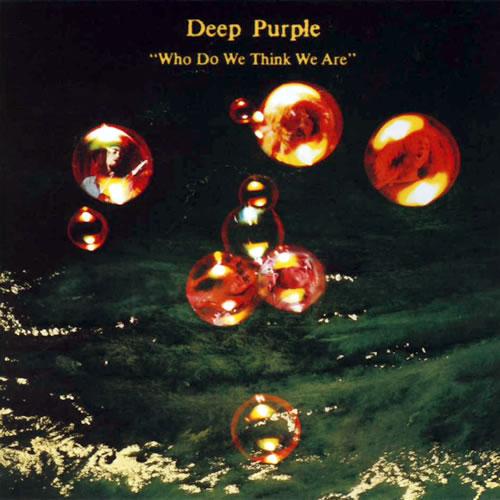
“Who Do We Think We Are” was the seventh studio album from English heavy rock giants Deep Purple and, up until “Perfect Strangers” (1984), the last record from the fans’ favorite lineup, the so-called Mark II. After a grueling world tour that peaked with the shows in Japan, where they recorded the monumental double live album “Made in Japan” (1972), the band members were literally wrung out and badly in need of a well-earned rest. But their greedy management at the time kept up the merciless pressure, demanding they get started on new material as soon as possible.
According to charismatic singer Ian Gillan, who left the band not long after the release of “Who Do We Think We Are” along with bassist Roger Glover, to the total shock of everyone who didn’t know about the backstage games, this had disastrous consequences for the mood inside the band and with it the whole creative process in the studio. That kind of pressure alone wouldn’t have been decisive for the breakup of the Mark II lineup, which under different circumstances might have stayed together for a long time, if Gillan’s squabbles with the moody guitar genius Ritchie Blackmore hadn’t grown into open hostility, to the point where the two of them eventually stopped talking to each other altogether.
The peak of Blackmore’s provocations came one day when he shoved a full plate of hot spaghetti into Gillan’s head, out of the blue. Contrary to the guitarist’s expectations, the charismatic singer didn’t much care, just wiped off his head and carried on calmly chatting with his friends, which only made the man in black even angrier. Working together was getting harder and harder for the other four members and Blackmore, who more than once announced the start of a solo career and the formation of a never-realized project called Baby Face with drummer Ian Paice and Thin Lizzy singer/bassist Phil Lynott. On the other hand, Gillan wasn’t much better either: he too acted like a prima donna, changed his look (beard and shorter hair) to stand out from the rest of the band, dodged his fellow musicians at every turn, and dragged around his ‘great and eternal love’ of the moment (until next month), who just sat there mutely the whole time, giggling stupidly away.
The bad atmosphere inside the band, outside pressure and a serious shortage of artistic inspiration made “Who Do We Think We Are”, recorded in two different locations (Rome and Frankfurt), easily the weakest effort of the Mark II lineup, one that is chronically short on classics that could even come close in quality to the material on its famous studio predecessor “Machine Head” (1972). The album title was inspired by a bad review of the cult live album “Concerto for Group and Orchestra” (1969), published by an anonymous reviewer for the music magazine Rock. In his scathing review of that record, he wrote ‘who do Deep Purple think they are’.
On “Who Do We Think We Are”, where the songwriting fatigue can be felt almost at every turn, there isn’t a single track where the listener could experience heavy rock heaven, at best a weak approximation of it. The closest to the usual high artistic Deep Purple standards is probably the opening evergreen “Woman From Tokyo”, inspired by their first concert visit to Japan. It’s by far the best-known song on the album and the only one from “Who Do We Think We Are” that they still play live today, which says a lot about what most of the members think of this studio effort, one Blackmore couldn’t stop criticizing after its release.
The intro, which soon grows into the central motif of this popular live classic, is marked by an innovative guitar riff and a rustling layer of Hammond organ. Pierced by Cupid’s arrows, Gillan sings inconsolably about a fateful Japanese woman who completely turned his head while he wandered around Tokyo. The calm psychedelic section, with suddenly dreamy vocals and gentle piano textures, nicely spices up the rather minimalist structure of this solid but not exactly earth-shattering evergreen, where the main motif returns near the end with the melodic chorus, only this time Lord finds himself at the piano.
The hard rocker “Mary Long” is a fairly solid effort too, with its satirical, fun lyrics about the famous English conservative Mary Whitehouse, whom Pink Floyd also took on later, on the album “Animals” (1977). The mocking vibe comes from a harmonious interplay of a mischievous guitar riff and full-bodied organ textures, while Gillan puts on a proper slapstick vocal performance, wondering in the lyrics when the neurotic Mary will finally lose her virginity and her stupidity. “Super Trouper”, with its punchy nature, tries to follow the successful structural formula behind the earlier heavy Purple classics, but burns out completely in the attempt, held back by a pretty botched chorus where Gillan leans on a special vocal effect. Blackmore’s uncompromising guitar passages are still inspired enough to keep the whole thing from sinking into gray mediocrity.
One of the few fun and successful creations on the album is “Smooth Dancer”, whose lyrics are, without Ritchie’s knowledge, Gillan’s dig at the often sullen, black-clad guitar virtuoso. Ironically, it’s Blackmore who this time serves up the most inspired guitar phrases on the entire album, accompanied by playful piano passages and mighty drum rolls. Gillan, especially on the chorus, allows himself plenty of cheekiness at the expense of ‘his best friend’. “Rat Bat Blue” is an average hard rocker with obvious bluesy tendencies on guitar, while Mr. Gillan hits some properly high vocal notes again after a long time. The fairly simple structure and uninteresting chorus, where a witty guitar phrase stands out the most, gets spiced up over time with successful instrumental improvisations, which goes especially for Lord, who delivers his best solo on the whole album on the organ.
“Place In Line” is a drawn-out blues rocker set to a slow tempo, which goes nowhere with its sleepy rhythms, dirty guitar riff and wailing vocals telling of the hard social status of the working class. What keeps the whole thing from coming off as below average is the mouth-watering bluesy guitar solo from the man in black, soon joined by the organ mastery of an excellent-spirited Lord this time around. The closing melodramatic confession “Our Lady” is another pretty average effort, with glammy vocal harmonies in a melodic chorus that slightly recall some of the standards of their heavy rock ‘fellow sufferers’ Uriah Heep, while strong guitar phrases and a massive layer of Hammond organ take care of the dynamic atmosphere.
The CD reissue of the album, released on its 27th anniversary, includes alternate and freshly remixed versions of the “Who Do We Think We Are” standards plus another bluesy rocker called “Painted Horse”, which is most interesting for Gillan’s high-spirited harmonica playing and Ritchie’s phenomenal guitar solo. The ‘painted horse’ is neither better nor worse in quality than the tracks that came out on the original version of the album. “First Day Jam” is a longer instrumental jam between Lord, Blackmore and Paice, while Glover had gotten lost in traffic that very day and failed to join the rest of the band in the studio.
“Who Do We Think We Are” is by far the least inspired album from the Mark II lineup of Deep Purple, a band that fell apart in a gloomy atmosphere, a by-product of management-forced studio slogging and constant Blackmore-Gillan feuding, right in the middle of enjoying their biggest commercial success, when their records were topping the charts like it was nothing. Soon after the release of this extremely average album, more or less the worst chapter in the Deep Purple story, Gillan, having failed to smoke the peace pipe with Blackmore, left and went on to a successful solo career in the following years. Much dirtier details were tied to Glover’s departure: Blackmore, who threatened to walk out immediately unless Roger was replaced, quietly hatched a plan, with the secret backing of Lord and Paice, to get rid of the disappointed bassist and replace him with Trapeze singer/bassist Glenn Hughes, who had originally been envisioned as Gillan’s replacement on lead vocals too. But those original plans, whose end result was yet another stunning sonic rebirth, changed drastically down the line with the arrival of the then almost completely unknown singer David Coverdale.
Author: Peter Podbrežnik
Tracklist:
1. Woman From Tokyo (5:48)
2. Mary Long (4:23)
3. Super Trouper (2:54)
4. Smooth Dancer (4:08)
5. Rat Bat Blue (5:23)
6. Place in Line (6:29)
7. Our Lady (5:12)
Lineup:
Ian Gillan – vocals
Ritchie Blackmore – guitar
Jon Lord – keyboards, organ
Roger Glover – bass guitar
Ian Paice – drums, percussion