Location: Jarun, Zagreb, Croatia
Concert date: June 29, 2012
Attendance: 50,000 (across the whole festival)
Ticket price: Festival pass (3 days): 45 EUR
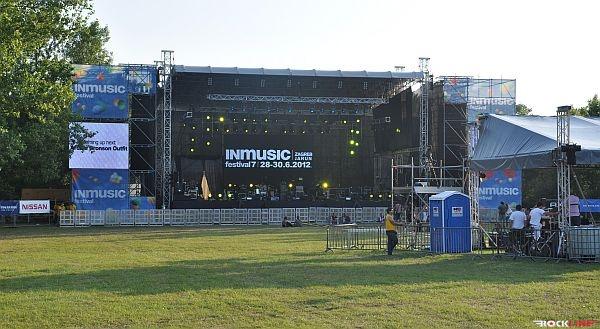
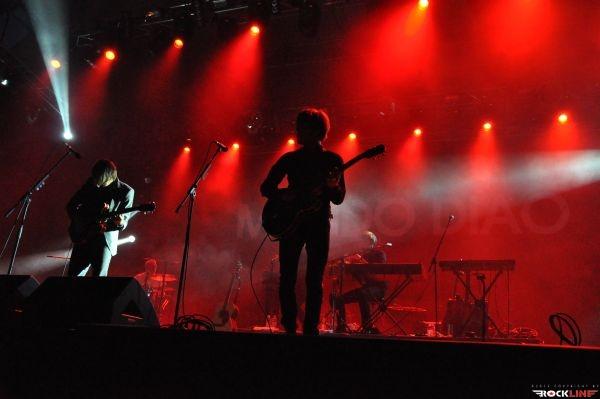
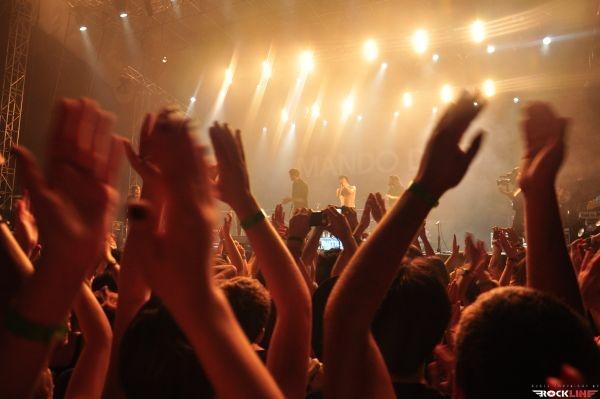
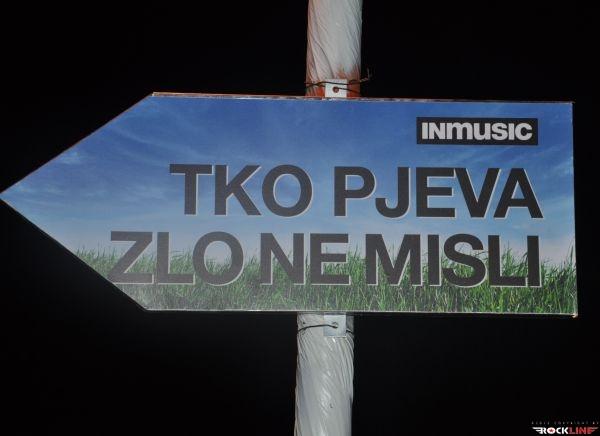
At the end of June (June 28 – 30), the now-standard INmusic Festival rolled around in Zagreb again. On the island in the middle of the idyllic Jarun lake, the seventh edition served up an interesting mix of headliners but disappointed with the rest of the lineup. I only made it to the grounds on day one, because obligations unfortunately forced me to skip the opening, so-called “day zero”, when Plan B were supposed to play, but the show was cancelled due to illness. At the last minute, the Rijeka “dropouts” Let 3 filled the slot, and by all accounts from people who were there, they were a worthy replacement for the aforementioned English musician. “Day zero” was wrapped up by an audio-visual show going by the name Gorillaz Sound System (without the project’s main man, the Blur guy Damon Albarn, of course). INmusic Festival has been running since 2006. It’s widely known for its relaxed summer feel and a broad, high-quality spread of genres. Over the years we’ve already heard names like Morrissey, Sonic Youth, The Stooges, Nick Cave and the Bad Seeds, The Prodigy, Moby, Kraftwerk, Alice in Chains, Billy Idol, Massive Attack, LCD Soundsystem, The Flaming Lips, Jamiroquai, Cypress Hill, Arcade Fire, Grinderman, but also Hot Chip, Jazzanova, Kiril Džajkovski, Yeah Yeah Yeahs, Tricky, Editors, Dimmu Borgir, Anthrax, Pendulum, Rise Against, Flogging Molly, Broken Social Scene, Audio Bullys, New Young Pony Club, Caribou, The Streets, TV on the Radio, Mastodon, Jello Biafra and Buraka Som Sistema. This year’s line-up was heavily scaled back compared to previous years, since the festival lost its main sponsor (the mobile operator “T-Mobile”), while the City of Zagreb still charges them serious money for renting the grounds (which is utter nonsense, if only from the standpoint of the city promotion the festival does). Despite those circumstances, festival tickets didn’t get much more expensive, so the organizers deserve nothing but congratulations on that front. The action centered on two big open-air stages, the “Main Stage” and the “World Stage”, while the smaller stages (“Ko to tamo pjeva”, “Tko pjeva zlo ne misli”, “Night Stage”, “Nissan Jukebox”, “Kupola Axe Party” and “Jack Party”) offered a decent supporting program with varied music during the day and took over the party baton at night.
On the first day, the “World Stage” was opened by the only Slovenian representatives at the festival, Zebra Dots (formerly London). In front of a rather small crowd they delivered a professional set and previewed some songs from their upcoming debut album, due out this fall. Just a few days earlier, the band had become a Universal Music signing. I have to admit the early hours weren’t especially kind to the performers this time, as the unbearable heat made it hard to follow the afternoon program properly. Shortly before nine, the stage was taken over by a current name of the English folk scene, the youngsters from Dry The River. The lads, who formed in London in 2009 and released their warmly received debut ‘Shallow Bed’ this March, are currently the hottest name on the English folk rock scene. The glowing reviews are no coincidence. Many see them as a smarter, more mystical version of Mumford and Sons, but to me they came across on stage as a kind of mix of Tame Impala and Fleet Foxes. They’re defined by gorgeous harmonies and deep, powerful melodies that are still simple in the folk manner. The singer’s voice is downright divine, and combined with the violin it gently caresses your eardrums. The stage show is far from any performer’s “bluff”: sincere and humble, relaxed and fun. The highlights were the opening track No Rest, the outstanding single New Ceremony and the magically monumental closer Lion’s Den. This band, who kept having a great time with festival-goers all evening after the show and were open to chatting, definitely have a bright future ahead. On Saturday, i.e. day two, a role similar to Dry The River’s the day before was taken by Hype and especially Retro Stefson. Hype are a so-far fairly unknown Croatian band formed in the fall of 2009. There are four of them. They play explosive, garage alternative rock mixed with raw metal touches. They wow with an expressive magnetism that floods and enchants you in no time. Discovery of the night. After them, Iceland’s young pride took the big main stage, Retro Stefson. The band from Reykjavík, who have released one album so far, called Montaña, won us over with technically flawless, full-blooded playing that combines different genre foundations in an unusual way. In all this toying with and switching between genre atmospheres they go so far that at times they seem like a “band searching for itself”, but they quickly disprove that hypothesis, because it’s precisely this colorful blending of different elements that turns out to be their original trump card.
I have to admit quite a few interesting bands played INmusic Festival, but because of clashes with the festival’s main names I couldn’t catch most of them. I’m mainly thinking of Reptile Youth, Archie Bronson Outfit, Fanga, Vlasta Popić, Tamikrest and Iness Mezel.
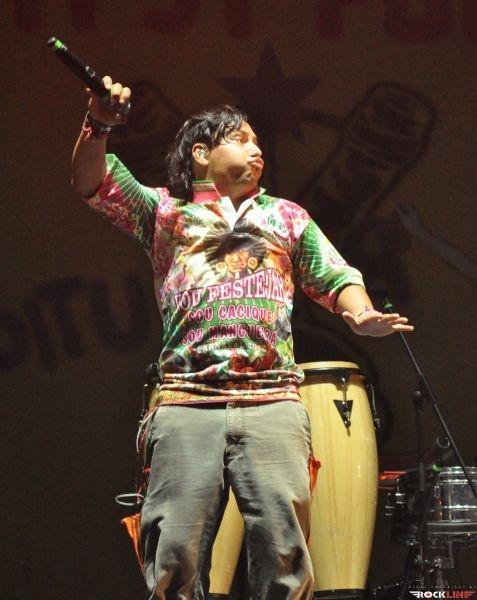
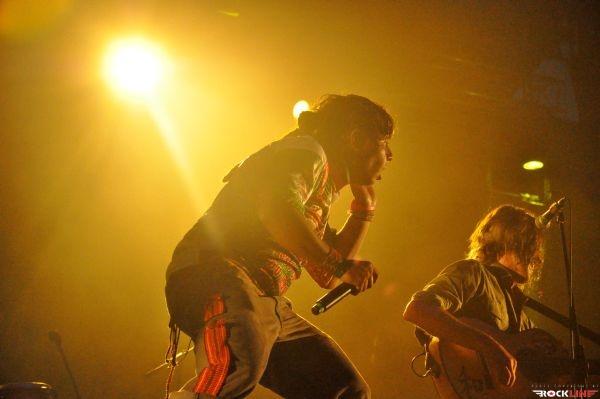
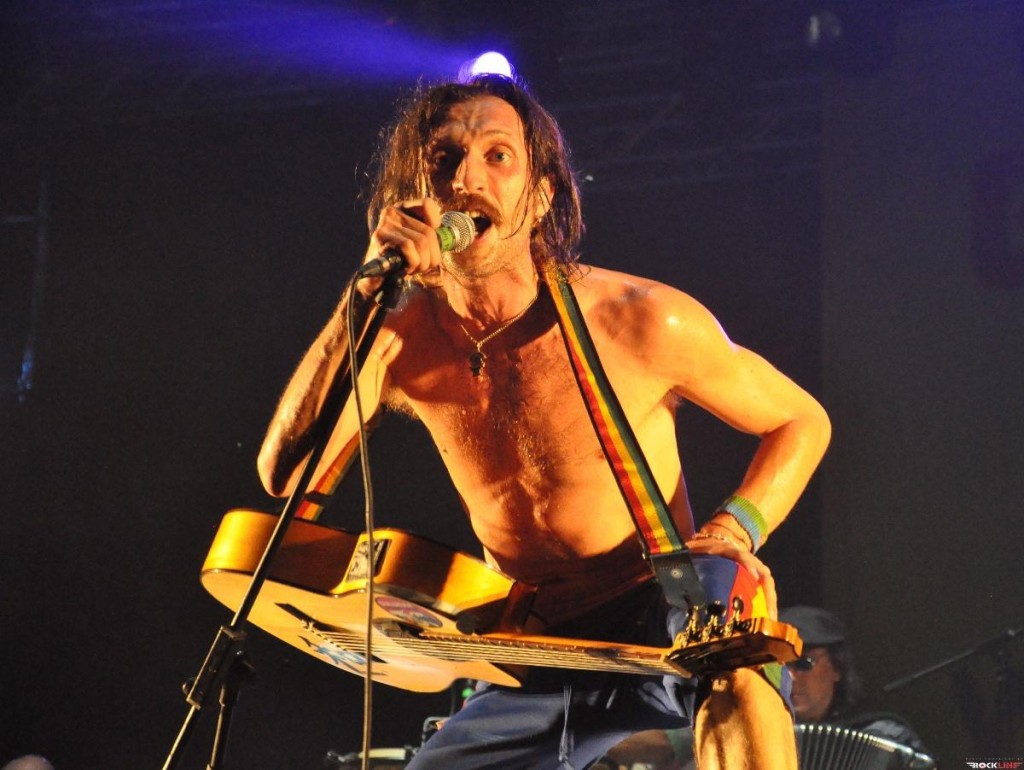
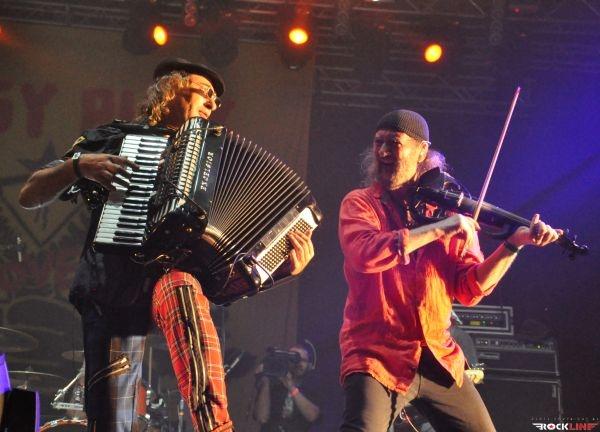
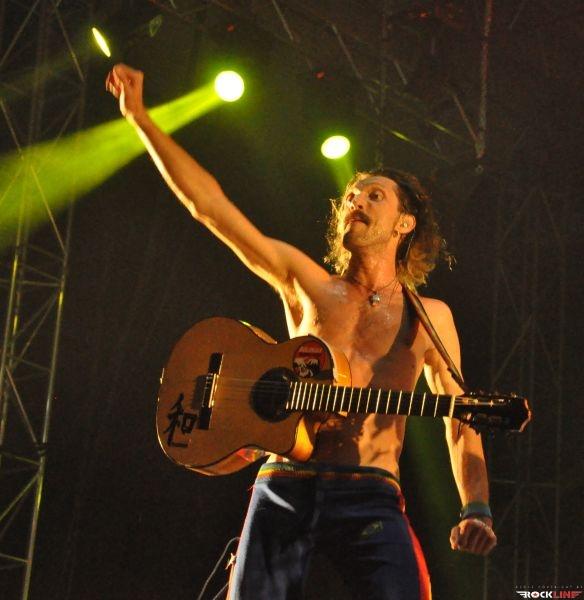
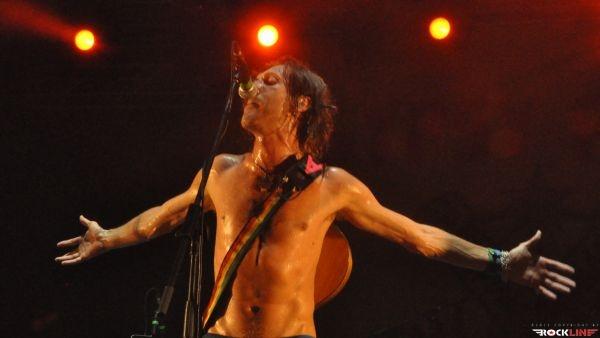
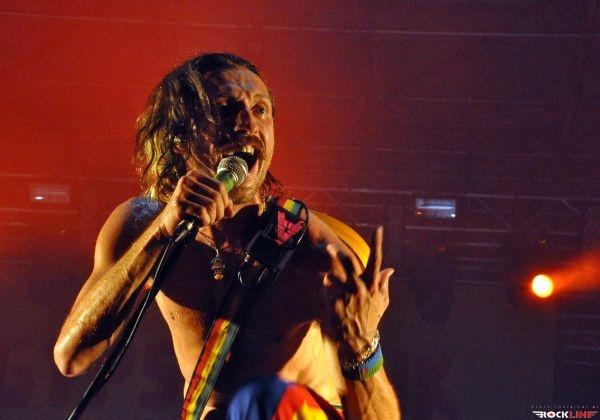
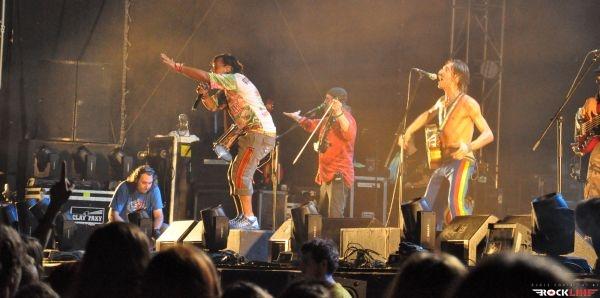
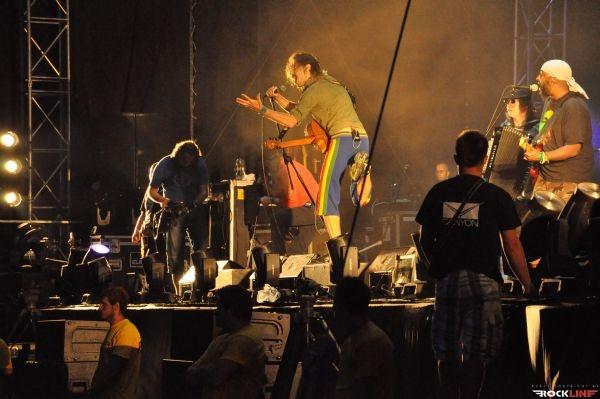
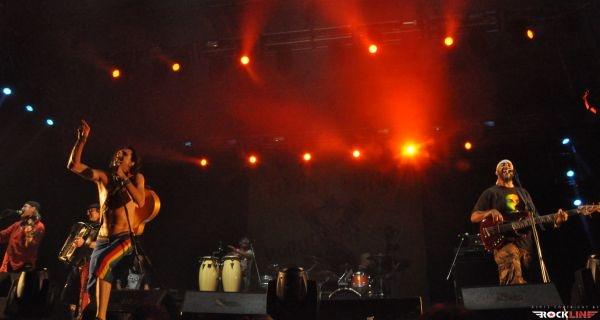
The festival’s main quartet was made up of Franz Ferdinand, New Order, Mando Diao and Gogol Bordello. On the first night, the “New York gypsies” Gogol Bordello warmed up the crowd as a prelude to New Order. The band, famous for its incredible live energy and gypsy melos, was founded in New York in 1999 by frontman Eugene Hütz. He has an extremely interesting life story and, in line with his Romani ancestors (on his father’s side he’s actually Russian, born in Boyarka, Ukraine), is marked by wandering the world and perpetual foreignness, yet at the same time all of that reflects a distinctly cosmopolitan image. That shows in their music too, which is a real little treasure chest of world ethno, punk, dub and rock heritage. Their music is most often defined with the words Gypsy punk. Hütz’s lyrics are distinguished by a wonderful storytelling technique (in the vein of Cave, Cohen, Dylan…) and the traditional gypsy musicality of the word. Lyrics that are already interesting (in English) get even juicier and livelier thanks to his Russian vocal accent. No wonder they’re considered outstanding popularizers of Romani music and culture. Gogol Bordello warmed up the Zagreb crowd very quickly. Their passionate, emotional and direct musical landscape, bombastic, singalong tunes backed by an unbelievable dose of energy and alcohol, gave the people a real little adrenaline shock, and to some extent a cultural one too. Bowing to no quasi-civilizational norms, they went wild, jumped, drank and literally flung themselves up and down the stage, and still the musical performance didn’t suffer one bit. Sweat, stink, who cares? Wild adventurism squared. Adding fuel to the fire throughout were the lively frontman Hütz and the Ecuadorian MC and keyboardist, the wild Pedro Erazo. Violinist Sergey Ryabtsev and accordionist Yuri Lemeshev also earned plenty of applause from the crowd, while what stuck with me in particular were the dub-flavored bassist of Ethiopian descent, the giant Thomas Gobena, and drummer Oliver Charles, who with his metal approach seemed like he came from another world, yet at the same time excellently led, controlled and coordinated his rampaging colleagues on stage. The songs were mostly high-tempo and played a lot with dynamics of tension and volume. A special charm came from Ryabtsev’s violin, which added that proper “Eastern” melos, gypsy temperament and magic to the modern pop base, and you couldn’t stay cool in front of it. It gets your blood pumping, even if you’re the stiffest type. They played fourteen songs, and the most lively reception went to the already-classic Start Wearing Purple, Wonderlust King and My Companjera. Also stuck in my memory were the fan-chant Immigraniada (We Comin’ Rougher), the gypsy Pala Tute and the closing Super Taranta, which is especially topical right now, as it was one of the songs played at the opening ceremony of Euro 2012. Gogol Bordello proved to be an outstanding “party band” that, unlike others so called, bets on original lyrics, melody, gypsy cosmopolitanism and good cheer.
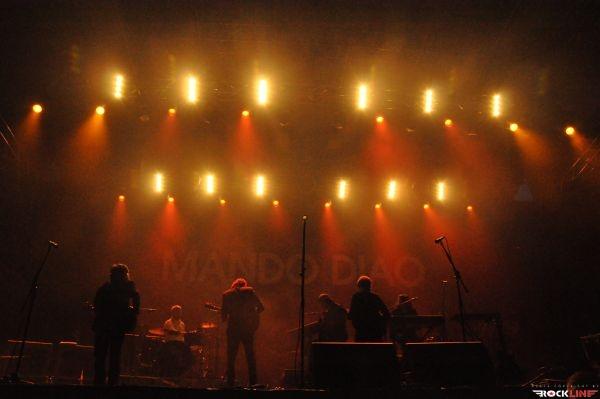
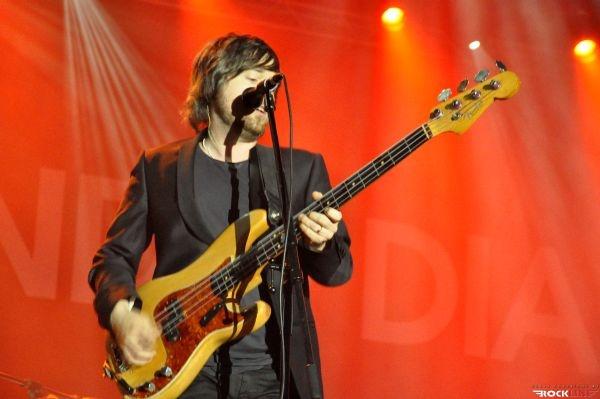
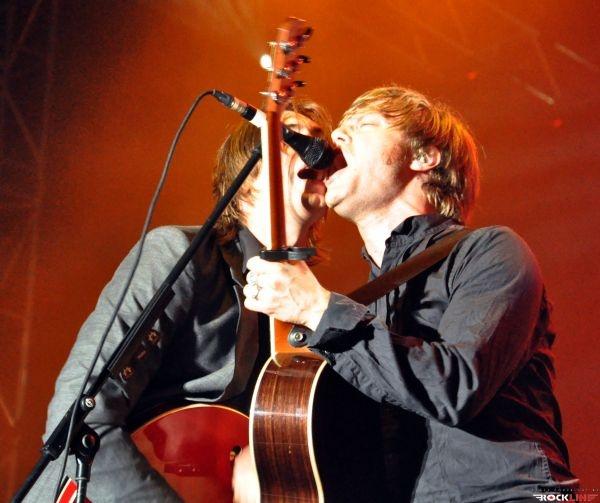
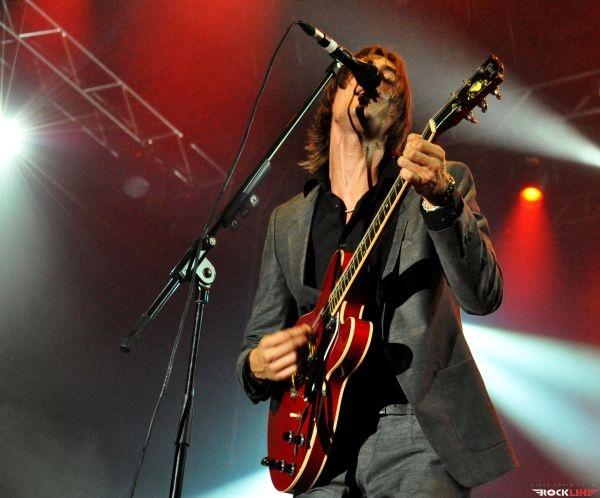
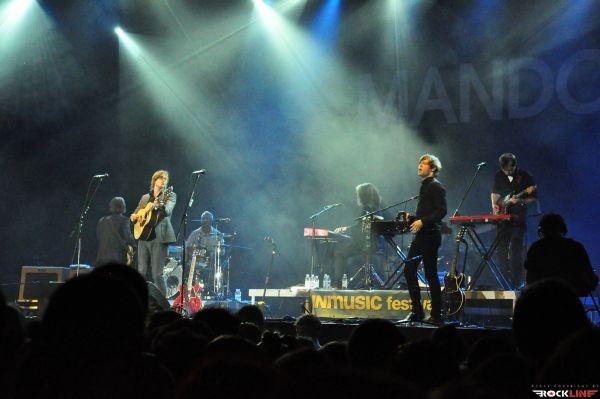
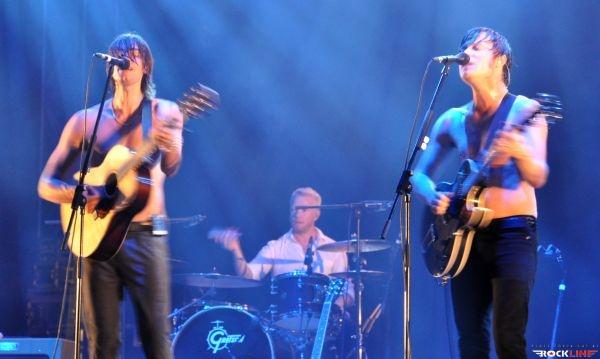
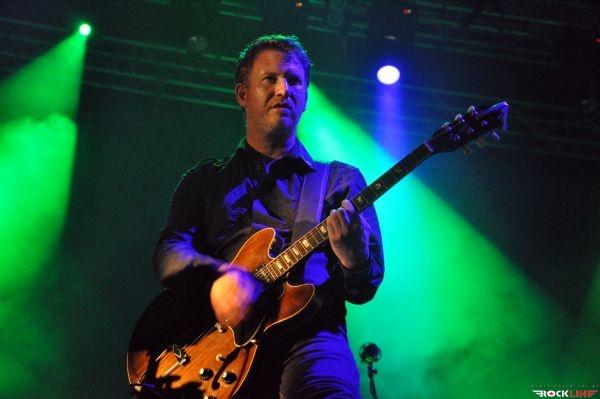
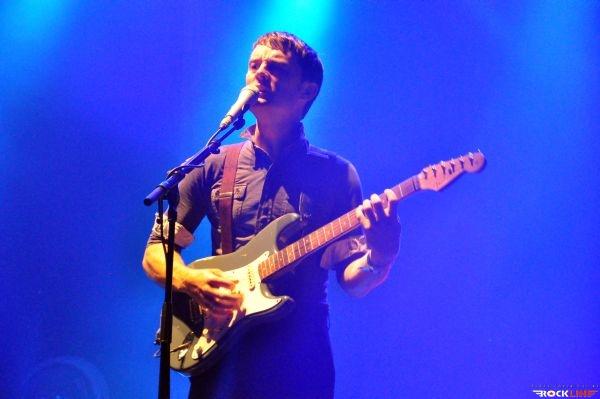
On Saturday night, Sweden’s Mando Diao had a role similar to what Gogol Bordello had on Friday. The Swedish alternative band (who get closer to the pop label with every record) formed in 1999 in Borlänge, Sweden. The band’s mastermind is frontman Björn Dixgård. It took quite a while and plenty of jamming under different names before, after co-frontman Gustaf Norén joined, the lineup settled and took on this unusual name, which was a product of Dixgård’s dreams. The band is based on the work and interplay between Dixgård and Norén, which was strongly present on the stage in Zagreb too. It’s a traditional “songwriting” partnership, first seen in history with The Beatles, where John Lennon and Paul McCartney created the entire output of that epoch-making band precisely through mutual collaboration. In England it then became something of a trademark of successful bands (The Rolling Stones, The Smiths, The Stone Roses, Oasis, Blur, The Libertines…). Mando Diao also draw heavily from this British heritage; at moments they sound like a Swedish – forty years later – Beatles tribute band with “original” songs. The influences are really strong, visible and audible, and although I joked a bit above, this is not a generic band. The guys, who started out as an alternative, garage, critically acclaimed band (debut ‘Bring ‘Em In’), are today distinguished by melodic, flowing (but not light in the sense of instant pop) modern rock music, which they mix with dance rhythms and authentic music of black roots (e.g. soul). Their recognizable “Eurovision” melodicism can be tied to one more very distinct influence and the Swedish home legacy in the form of ABBA. The guys are proud of that and in interviews have repeatedly voiced their wish to succeed those Swedish giants. So far it’s not looking bad for them. If they initially looked like a younger version of the likewise Swedish The Hives, with today’s sound they’re getting closer and closer to ABBA. In Zagreb they simply blew everyone away. A performance just as it should be, even if Norén maybe overdid the blowing at the souls of Croatian attendees at times. The guys know how to work a crowd, lift it up when needed, make it dance wildly, stir up a little sadness with a melancholic note, and also make it laugh quickly with witty remarks. The concert was planned to perfection. The seven-piece lineup worked on stage like a very well-oiled machine. What especially impressed were the perfect voices and the excellent chemistry that reigned between Dixgård and Norén throughout the whole set (the presence was at times similar to the legendary one Pete Doherty and Carl Barat created at their concerts) . They played thirteen songs in the main set and two more in the encore. The set was opened by the instrumental Dalarna, accompanied only by piano, which took us off to dreamy, authentic, magical, forest-covered Swedish landscapes. After this overture the whole band marched onto the stage in nicely tailored suits. Next came God Knows, a song about comradeship in the band and getting through individual troubles together (“Oh brother can you help me out”), whether it’s drugs (“I ain’t sleeping but I want my line”) or women (“Well I turned left just like you told me to / I get excited by the moves you do…/ Well I saw her standing all colored in red I / felt the blues just by the things she said”). Up next was the high-tempo garage Welcome Home, Luc Robitaille, which sent Zagreb into delirium. Fever pitch. It wasn’t only the teenage girls in the front rows who were soaked. The “Beatles-ish” Your Lover’s Nerve (a b-side from the second record ‘Hurricane Bar’, incidentally) cooled the fever slightly, singing about a failed romance. It was followed by the bouncy Song for Aberdeen, whose special pulse came from a pronounced drum-and-bass line mixed with hypnotic keyboards. Through a little story, the song cleverly speaks about revenge and facing its consequences (Now it’s payback / Now it’s me against the world). The concert started tipping into its second half and the songs got more and more complex in their arrangements. The melancholic All my Senses is about a relationship that went numb and later fell apart (” Thinking all day long, honey what went wrong”). It was followed by Down in the Past, which raised the temperature again and deals with the always problematic relationship between girl and guy. In the ballad You Can’t Steal My Love, Gustaf showed off with an excellent guitar solo. Mean Street whisked us off to the sixties, and anyone who played Need For Speed got a gamer’s rush of memories. Before the finale, two more songs from the debut followed. The first, the wonderful Mr. Moon, tackles growing up, while Sheepdog wows us with a primal, punchy, garage riff that’s still fresh and modern after ten years of playing. Timeless. With that song (and The Band) they also had their first breakthrough abroad. The second-to-last, Long Before Rock ‘n’ Roll, is about sex back when it was still an innocent act, before the era of wild rock’n’roll. When it hadn’t yet been defiled but was something sacred, intimate, something that bonded girls and boys far more. That’s why it wasn’t taken so much for granted. On the other hand, this way of understanding “sex” can also be read as a metaphor for a general life philosophy and relationships. Despite the temperature dropping outside, the place hit its boiling point before the closing three songs at the first beats of Gloria. The first, which closed the official part, the radio hit from the latest record ‘Give Me Fire’, Gloria, is a song about a woman who has finally become independent. An excellent pop song wrapped in red, in passion, and you could hear that coming out of the crowd’s mouths too. Many knew the whole song by heart, and all of us passionately shouted Gloria. The encore was opened by the acoustic If I Don’t Live Today, The I Might Be Here Tomorrow, which calmed the heated crowd and prepared it for the band’s biggest hit, Dance With Somebody. Its energy and dance structure are practically reserved for the big finale of a set. Stretched to a solid ten minutes with solo interludes, it let the crowd give everything, the essence of the band. The two frontmen had been shirtless for ages, the hour of the set flew by. A show that was a real surprise: you could call it “music for all generations”. Hot, danceable and professional. The guys proved that good pop rock isn’t made only in England.
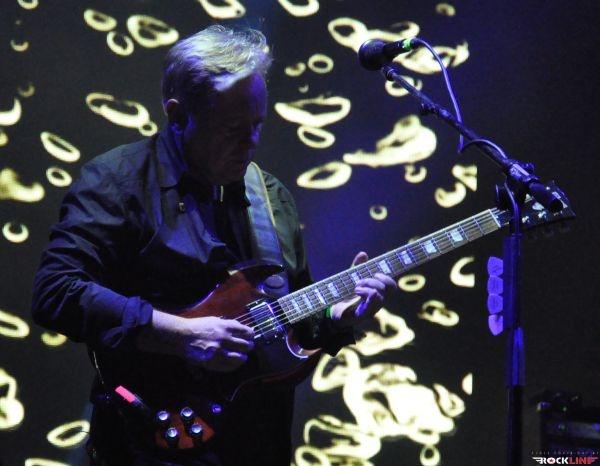
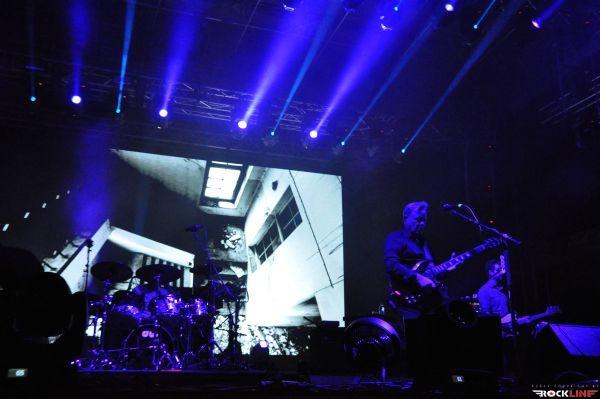
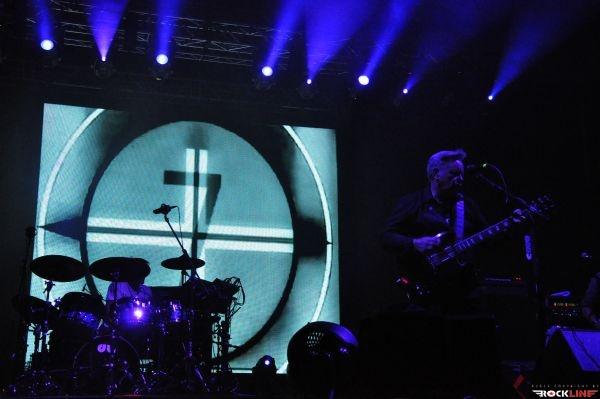
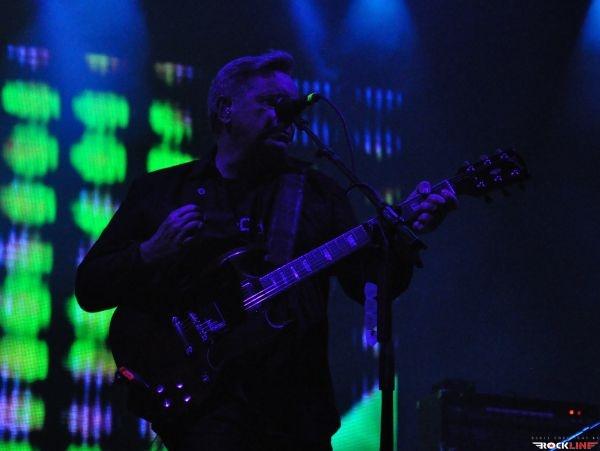
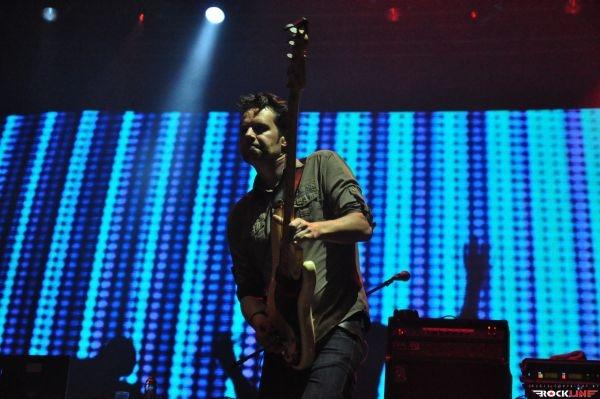
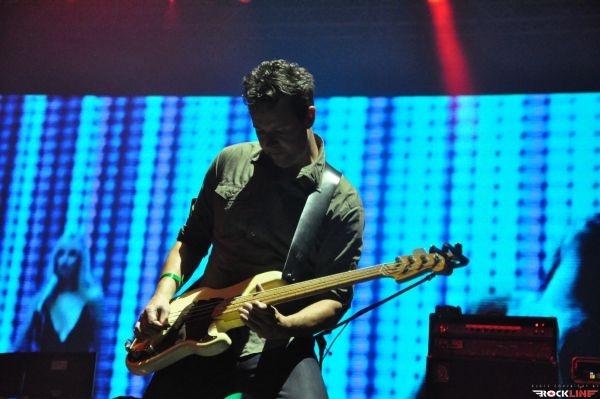
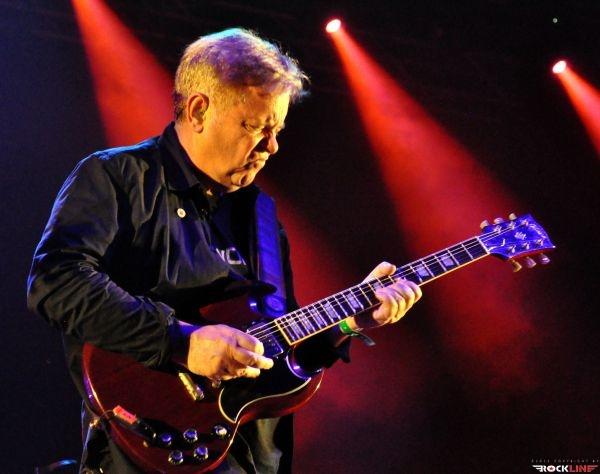
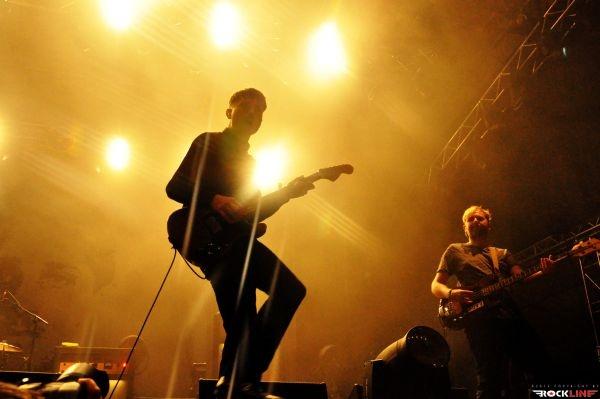
On Friday the headline slot went to the cult band New Order. On May 18, 1980, the charismatic Ian Curtis took his own life. The story of Joy Division was over. And on the eve of departure for an American tour that would most likely have brought them worldwide fame. The remaining members, bassist Peter Hook, guitarist Bernard Sumner and drummer Stephen Morris, didn’t give in to this bitter fate and founded a new lineup on the ashes of the previous band, which they named New Order. Gillian Gilbert joined them on keyboards and in less than a year and a half the band released its debut, titled “Movement” (which was obviously still very strongly under the influence of the previous band). If Joy Division, as the first name of post-punk, were distinguished by Curtis’s morbid baritone, his poetic depressive lyrics and melancholic melody, given its pulse by Hook’s distinctive bass and Morris’s drum “rhythm machine” approach, New Order were marked by a turn into more experimental dance waters, which gave birth to one of the greatest sensations in the history of popular music. They became one of the pioneers of electronic music, which, with the boom of the club scene in the eighties (which holds to this day), became hugely widespread and sought-after among young people. Their hallmark was an exceptionally successful blend of rock and dance elements. This unique synthesis is still very influential today and serves as a model for many bands and artists of all sorts of musical genres and philosophies. To date they’ve released eight full-lengths, the last in 2005. The band has been marked by two four-year hiatuses, and the latest reunion doesn’t include bassist Peter Hook due to a dispute. Still, it didn’t show in Zagreb. On bass he was worthily replaced by Tom Chapman, and after ten years Gillian Gilbert returned to the lineup (she had been replaced back then by Phil Cunnigham, who is still a band member). New Order are a band where the music is always front and center. Along with a carefully chosen accompanying visual show. The musicians are in the background. Bernard Sumner is certainly not a born frontman. Unlike the charismatic Curtis, he is the very definition of anti-presence on stage. At moments you get the feeling you’re watching a patio band, the band members look so awkward and funny on stage. Sumner never gets into the frontman role, with Gilbert you get the feeling she’s on antidepressants (that unresponsive), Morris drums “just for himself”, yet surprisingly the sound doesn’t suffer. Everything is executed sonically to perfection. Faced with this apparent mismatch between image and sound, it soon becomes clear that precisely this unusual stage presence of the musicians forms a special, happily unique show. The atmosphere was very club-like. And in the open air. Downright magical. Wherever you looked, you saw smiling faces and bodies moving to the rhythms of New Order classics. New Order more than worthily replaced the originally announced The Cranberries, and I even dare say the organizers profited from their cancellation, since they replaced them with a more interesting and higher-quality band. Truly indescribable feelings washed over us as you heard all those legendary songs.
The setlist was made up of fifteen songs and you could just as well call it a “best of”. In the main set they played fourteen and then closed with Temptation in the encore. The setlist also included two or three songs from their predecessor Joy Division, and their Love Will Tear Us Apart could be called the highlight of the night. The concert was opened by the instrumental Elegia, written as a tribute to Ian Curtis. As the name suggests, it’s a lament, but besides sorrowful and melancholic components it also contains more cheerful, more vital, life-brightened sonic shades. A complex ode to death, to life, and above all to the memory of loved ones. Elegia almost imperceptibly flowed into Crystal and the words came into play too. The song opens with the famous line “We’re like crystal, we break easy“, and is further marked by the hypnotically pronounced high notes of the bass. The band The Killers took their name from the video for this song. The crowd greeted the next song, Regret, with real enthusiasm; it’s still a little synonym for the nineties today and often turns up on various compilations of nineties music. It’s a typical four-minute “New Order-style” song built on a prominent bass sound, atmospheric keyboards and metronomic drums, while from the background the catchy opening riff of Sumner’s guitar cuts into this harmonious idyll. Regret was followed by Ceremony, the penultimate song to come from Ian Curtis’s pen and one of the first New Order recorded in the studio. A song that should definitely have been one of the highlights of the night, but people apparently didn’t take to it in its slightly altered sonic form. The response was lukewarm. It’s a classic rock composition, specific precisely for its play with tension and the extraordinary energy it unleashes. This constantly creates an ebb-and-flow effect that lifts the listener intensely, calms them again, and repeats this cyclically. Lifelike. The lyrics are among the strongest Ian Curtis ever wrote, open and complex in interpretation even though they contain only three verses. They reflect back on life so far (the eternal return of the same and the life cycle: birth – marriage – funeral) and on the frustrating social surroundings. He regrets a life decision made too hastily and the resulting loss of marital love. His wounded heart, in distress, grows ever lonelier and more confused. On one side the (almost) lost teenage love he’s married to and has a child with, on the other a new love, a new longing. The end of the song hints at suicide. Soon after this song, Ian Curtis’s life story sadly ended far too soon.
Age Of Consent, next, swept us away with a divine bass line that keeps spinning in your head for days. The song comes from the second album, called “Power, Corruption & Lies”, and is about a physical/sexual relationship that grows into something more for one of the parties (“Won’t you please let me go / These words lie inside they hurt me so / And I’m not the kind that likes to tell you / Just what I want to do / I’m not the kind that needs to tell you / Just what you want me to“). This year the song celebrates its thirtieth anniversary, and it still sounds very modern. It’s one of the first tracks that pointed toward New Order’s later, more electronically tinged future. The next song was two years older and is one of the two played that night that was written under the wing of their predecessor, Joy Division. I’m talking about Isolation. The song is built on an industrial “beat” that was very popular at the time and accompanied by high synthesizer lines. It’s another of Curtis’s very intimate songs about his life problems and states of mind. But it’s precisely the most intimate, particular themes that people identify with best, which is also how we should understand the incredible interest in his poetics. His isolation is caused by, and in an unusual way tied to, a bipolar love life, the weight of existing in an (egoistic) society and a late-discovered illness that made it all even harder (he had epilepsy). The next song Krafty embodies the sound of the eighties (even though it was made in 2004 and presented the following year as the first single from the album “Waiting for the Siren’s Call”)) and the will to live. The melody and lyrics, encouraging hope for something better, enjoyment and positive vibes, were just right for a hot June evening in Zagreb. The punchy chorus, repeated three times (“Give me one more day (one more day) / Give me another night (just another night) / I need a second chance (second chance) / This time I’ll get it right (This time I’ll get it right)“), seemed made for Zagreb’s warmed-up throats, hungry to sing. The crowd finally came alive and impatiently awaited New Order’s biggest hits. Before the definitive “best of” scenario they played “1963“ too, a song about the end of a love affair and about eternal love (“Oh, Johnny, do you miss me? / I just want to feel for you / I will always feel for you“). And then it began.
Bizarre Love Triangle. The famous 1986 song widened the smiles on the attendees’ faces even more, and Sumner briefly put down his guitar and turned into just a vocalist. A frontman who isn’t one by natural presence really looks funny, stripped down, without a guitar. But even that has its charm. That’s how we accepted him and got used to him. Bizarre Love Triangle carries on living its own legend. The slower, more experimental “live” version still keeps its famous essence. A song bursting with creativity: this whole wonderful fusion of eclectic electronic rhythms and a fantastic drum and bass line forms a unique mixture, and to this day we can say it’s more modern than 95% of the music made today. Ahead of its time. Like all of theirs, the song is very open to interpretation. The bizarre love triangle can be taken as something entirely direct (the classic story of a third party (here it could be a friend) who catches attention and breaks up a couple’s daily routine), or we can read it through all sorts of metaphorical messages (drugs, platonic love,…). The chorus has long since become a classic (Every time I see you falling / I get down on my knees and pray / I’m waiting for that final moment / You say the words that I can’t say) and embodies the second postwar generation, born in peacetime, yet restless and afraid of itself. The external dangers were past. Existential questions peeked out more than ever. Even if that wasn’t Sumner’s goal, the song grew up in the spirit of a time and still clearly reflects it today. It was followed, with a long “intro”, by the equally famous True Faith. Orthodoxy that liberates, even if only for a short while. What this thing is, we can once again interpret our own way. The lyrics are written so as to offer the most varied answers (I feel so extraordinary / Something’s got a hold on me / I get this feeling I’m in motion / A sudden sense of liberty / I don’t care ’cause I’m not there / And I don’t care if I’m here tomorrow / Again and again I’ve taken too much / Of the things that cost you too much / I used to think that the day would never come / I’d see delight in the shade of the morning sun…). The most obvious reading is of course drugs, and it’s well known anyway that the members of New Order were heavy users of psychedelics, ecstasy and cocaine. The soundscape is classic late-eighties “New Order”. Melancholy on electronic steroids. All the more so for the “live” version they performed in Zagreb. A true club dance hit. Strong “beat” and pronounced hypnotic keyboards. 586, the next song, only boosted the dance atmosphere. It served as an excellent bridge to the last four songs and gradually flowed into Perfect Kiss. Among the band’s fans the song is considered the most popular, but they didn’t play it until 2006, as it was simply too complex to perform “live”. It’s a song full of effects and samples (you can hear frog croaking, among other things), driven by Hooky’s characteristic bass. The whole grandeur of the song shows in the first fifteen seconds of the intro and only builds from there. This is where Tom Chapman stepped onto the scene in Zagreb, replacing Hooky excellently, not only with his sound but also with his presence. He wasn’t scared of the spotlight, showing that he too knows how to give the bass a nice place in the sun, one that’s so often denied it on the “pop-dance-rock-punk” scene. The lyrics are distinguished by an effortless, bright narrative line, which Sumner garnishes at the end of the first two verses with an exceptionally beautiful and powerful line: “I know, you know, we believe in a land of love”. The third verse is especially famous (When you are alone at night / You search yourself for all the things / That you believe are right / If you give it all away / You throw away your only chance to be here today / Then a fight breaks out on your street / You lose another broken heart in a land of meat / My friend, he took his final breath / Now I know the perfect kiss is the kiss of death), which, surprisingly, they never perform “live” and didn’t this time either. Many could see in the song (once again) the story of Ian Curtis, or suicidality in general, psychological instability, the (un)attainability of perfection (especially in love) and life after death. Open work through and through. Freely after Umberto Eco.
Then came the two peaks of the night: Blue Monday and Joy Division’s most famous song, “Love Will Tear Us Apart”. Blue Monday is a song that has seen countless remixes and is still considered one of the most important dance tracks in the history of electronic music. It’s the club anthem of the eighties. An anthology piece and the most influential song Sumner and his colleagues have written to date. The song is atypically structured, with a very long intro colored by the “pounding beat” of a drum machine and an effects-laden melody, and an unusual relationship (separation) between verse and chorus, which is loose, shifting, and consequently blurs the borders between them. For club standards the song is fairly calm and uninteresting at first listen. Its tone is set by an uncharacteristic monotony or dreaminess that never bores you, but with its non-aggressive and tempting sweet sound gradually hooks you and then stays in your head for a long time. The crowd of course recognized the song and it won them over. The wild jumping calmed for a moment and moved into everyone’s inner “beat”. Spiritual ravers. Unlike most other concerts, New Order didn’t leave a minute of rest. Hit after hit, (dance) step after step. Wound up. Despite the high revs, catharsis only arrived with the second-to-last song of the night: the eternal Love Will Tear Us Apart. A song that long ago transcended narrow genre frameworks and even (sadly) overshadowed the other songs by Joy Division, even the band itself. A song that defines (musical) Art. A song that unites everything best that popular music has to offer. It’s distinguished by a unique blend of a perfect pop melody, singularly combined with Curtis’s timeless and dark poetics. Poetics that so subtly capture the depth of human experience and pain that its weight knocks even the most emotionally stable people to the ground. Once you feel and grasp it, a new world opens up. An intimate confession that unites and divides people more than any other song. It unites in enjoying it, divides in its truth. It’s at once the most honest and the saddest song ever written about love relationships. A song with thousands upon thousands of covers, so why shouldn’t its creators claim it as their own too? Too often it’s forgotten that its sonic shape was given by none other than the guys from New Order. OK, of course Curtis’s voice, presence and poetics are inimitable, the energy and atmosphere of Joy Division are inimitable too, and yet: if anyone has the right to do a “cover”, it’s the guys from New Order. It may even be their duty. In the “original” it hasn’t been possible to hear it for 32 years, thanks to Curtis’s suicide. It’s a lovely tribute from the band to their angel, Ian Curtis. There’s no song that better defines the last years of his life. That very line is also written on his gravestone. Epitaph. The lyricist is gone, but they remain. New Order’s version is quite different from the familiar one. From a “power” melancholic lament it transforms into an ode to joy, a song full of wild energy. The contrast between the spoken word and the music grows even bigger (by comparison; in reality it’s a transformation). But it doesn’t distort the original creation. Anyone trying to imitate Curtis would look ridiculous, if not worse. Not even “tralala shalala” school singing would help. Form is one thing, but when it’s so marked by content, it becomes one with it. And since the content of the interpretation is inimitable, the form is inimitable too. You can’t learn this, you can only (come to) feel it. That’s why the guys reworked it in their own way. But kept a hint of a “Joy Division” touch. A song that in the original speaks of being torn between two loves, about a relationship gone cold…gets a different, dance moment through their arrangement. That’s of course no longer so deep and intimate. But somewhere in the background it still keeps that dimension. And it’s precisely because of these two combinations, the dance dimension and the unique concept and lyrics, that the crowd received even the opening part so euphorically. Everybody jumped. Wonderful feelings. Cleansing. Those over fifty who grew up with it, as well as today’s twenty-year-olds who identify with it most easily. I haven’t seen such an explosion of enthusiasm at concerts in a long time, and I see around fifty or more a year. From the opening lines (“When routine bites hard, / And ambitions are low, / And resentment rides high, / But emotions won’t grow, / And we’re changing our ways, taking different roads…“) to the final ones (“Love, love will tear us apart again. / Love, love will tear us apart again. / Love, love will tear us apart again.“) everyone sang this influential and brilliant poem by Joy Division in one voice. Let’s not forget them. Then they left the stage without pomp and, after loud chanting of “We want more”, returned to the stage with Temptation. The 1982 single stretched the dance dynamic for another ten minutes. An extremely long concert version, which in the end turns out to be even too short, so full of pleasure it is. It has two peaks, the first in the repeating chorus (“Up, down, turn around / Please don’t let me hit the ground / Tonight I think I’ll walk alone / I’ll find my soul as I go home“) and the second in the outro, when it starts listing eye colors (“Oh, you’ve got green eyes / Oh, you’ve got blue eyes
Oh, you’ve got grey eyes / And I’ve never seen anyone quite like you before / No, I’ve never met anyone quite like you before“). For that last part you wish it would never end. Let it repeat forever, let it! But sadly, everything good comes to an end. One more bow and The End. A concert with a capital C. True legends of the eighties who still give off hugely positive vibes today. We hope for a new album and for the feud with Hooky to be patched up.
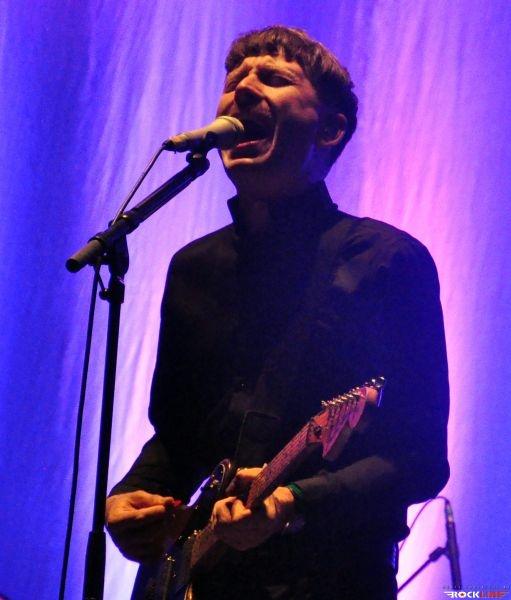
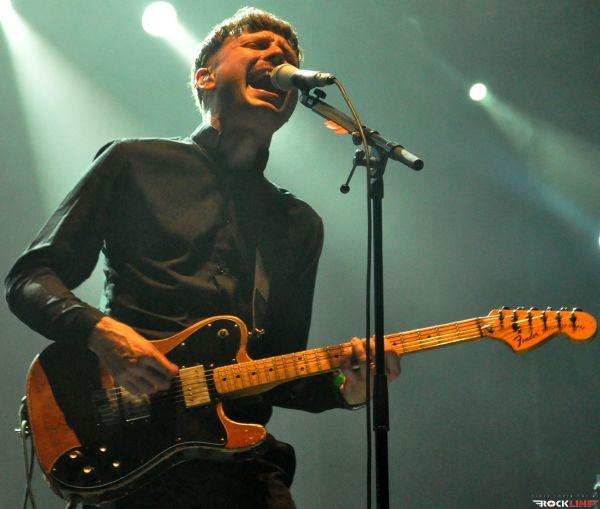
On Saturday the “headliner” role went to the Scottish indie matadors Franz Ferdinand. Today the guys are one of the leading pillars of the modern rock’n’roll scene, and not only in Scotland but around the wider world. Besides their interesting and very different personal stories (growing up in Bavaria, playing in various jazz, ethno and experimental bands, working in catering, as well as music promoter and producer, studying painting, woodworking,…), they’re also defined by the fact that they started working under the Franz Ferdinand name fairly late compared to other comparable bands. The “Strokes” were still teenagers, the “Libertines” too, while with Ferdinand, singer Alex Kapranos and guitarist Nick McCarthy had around thirty summers behind them, and drummer Paul Thompson and bassist Roberty Hardy around twenty-five. That fact means a lot, since even the first record sounded very mature, not at all teenage. From there things only escalated. The latest, third record ‘Ulysses’ straight-up delighted critics around the world precisely because of its mature and convincing musical language, which, thanks to artistic wholeness (they often take care of the visual side themselves too) and careful conceptual (on the sonic level) thoughtfulness, builds an entirely own world. Franz Ferdinand formed ten years ago in Glasgow and hit the scene the same year as The Killers (2004), somewhere between the first (The Strokes, The Libertines, Interpol, The Walkmen…) and second guitar wave of the punk-rock revival (Arctic Monkeys, The Kooks,…), which the media quickly slapped with the “indie” label (we’ll discuss the label itself another time). To date they’ve released three albums, and a fourth is on the way this fall. They’ve won many awards, including the esteemed Ivor Novello for the simply titled debut “Franz Ferdinand”. They’re known for their unique melodicism and pop-structured songs. They’re very listenable, yet have little in common with sterile contemporary pop production. Even though they quickly lodge under your skin, they’re a band you can hardly get tired of. The influences are quickly recognized, but originality doesn’t fade in the process. You can still hear the heritage of the sixties (The Beatles, The KInks…), Post-Punk and New Wave, but you can’t accuse them of lacking originality. A distinctive mix of all the listed influences, intelligent and witty lyrics, Kapranos’s deep, recognizable vocals, command of their instruments and the subtle addition of other genre ingredients (ethno, jazz, electronics)…form a unique musical image that makes the band, despite the pop form, quickly recognizable and high-quality. In Zagreb they were considered the focal point of the whole festival from the moment the line-up was announced, and most Slovenes also decided to go to Zagreb just for the night of Franz Ferdinand’s show. The biggest and loudest crowd was to be expected, and it truly came true (although attendance was lower than previous years by default). The crowd was eating out of their hands. They responded to every hint from Kapranos for interaction with the audience, sang choruses or even whole verses, and generally created an extremely positive energy, which was already present anyway after Mando Diao’s show. The alpha and omega of the performance was definitely the charming frontman Alex Kapranos, this time with a slightly changed look, now sporting a short “English” mustache (which, given its thickness and shape, already verges on a “horseshoe”) and a pompadour hairdo. The show could be briefly described as dynamic, energetic, concise and without excess baggage. The guys know exactly what they’re doing. Professional, but not cold. There wasn’t much communication with the audience, but when there was, it was effective. Kapranos’s gesticulation is minimal in the extreme, yet he has moments of sudden jumps, snappy arm raises. The band knows how to “roar” when needed; they carried the garage sound effectively onto the open-air stage, but calmer tones aren’t foreign to them either.
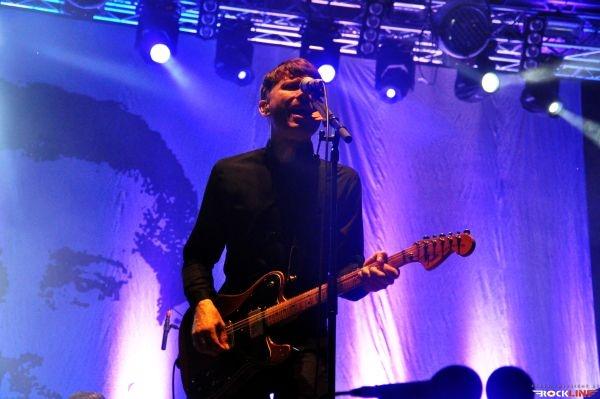
The setlist was made up of just the right balance of everything that should form the whole landscape of a fully formed band. Unlike the grizzled New Order, the setlist wasn’t a compilation of “best of” songs, but they still played most of what the crowd wanted. They played a hefty set for festival conditions (seventeen songs) and presented four new songs, among which Brief Encounters especially stood out, and I predict a very bright future for it. Of all the newer ones it stood out strongly (even though Kapranos joked that they performed it better in Brazil, and those who were there know it). The groovy Scarlet Blue also stuck in my memory, adorned with excellent keyboards and heavy guitar riffs. Definitely a future single. Less memorable were the other two novelties, Right Thoughts! Right Words! Right Action! and Trees & Animals. It has to be stressed that Franz Ferdinand still hold to their own recognizable sound, charted on the first three records, and judging by these four songs they won’t stray much from it on the new album either. Which doesn’t automatically mean stagnation. Music offers so many different ways to improve that it isn’t always tied to using current production and sound trends. From what we heard, an extremely strong album is on the way, one that will have a lot to say, especially at the lyrical level. The stage itself was dressed rather interestingly, with a backdrop hanging behind them bearing the image of Gavrilo Princip, who, as we know, was the assassin of Franz Ferdinand. A clever and meaningful move that gains even more weight and interpretive dimension in the Balkans (the assassination was carried out in Sarajevo). With such symbolism it’s hard to believe in mere empty aesthetics (though that witty gag is possible too). The set was opened with a single from the first record, the song Michael. A song that radiates incredibly sexy energy, often linked to a homosexual connotation (“Michael you’re the boy with all the leather hips / Sticky hair, sticky hips, stubble on my sticky lips / Michael you’re the only one I’d ever want / Beautiful boys on a beautiful dance-floor / Michael you’re dancing like a beautiful dance-whore…“). It’s very simple, easy to follow, and describes moments from a party in Glasgow that the Ferdinands also attended. Two guys got hot for each other and showed it in public. The ending of the song is especially bold in the concert version, since it builds up like this: “So come and dance with me, Michael / So close now. / You’re close now. / Come and dance with me. / Come all over me“. A not-too-long, rhythmically dynamic intro nicely takes care of opening the show. People got into the Franz Ferdinand atmosphere from the very first chords. Jumping, the first “mosh pit” already… The “homosexual” Michael was followed by the bouncy, danceable Do You Want To, the first single from the second album “You Could Have It So Much Better”. A true indie dance anthem, it again showered the crowd with a huge wave of energy. The song is told from a woman’s (women’s) perspective. It leans on (in)decent invitations (Well do ya? do ya do ya want to? / Want to go where I’ve never let you before?), which men usually throw at women, but in the case of stars the relationship flips.
After the new Right Thoughts! Right Words! Right Action!, another dance-driven song came fourth: No You Girls from the latest album “Tonight: Franz Ferdinand”. The meaningful (sexually connoted) wordplay at the start (“Oh, kiss me / Lick your cigarette, then kiss me / Kiss me where your eye won’t meet me / Meet me where your mind won’t kiss me“) quickly flows into male (“No you girls never know / How you make a boy feel“) and female (“You dirty boys’ll never care / No you boys never care / How the girl feels“) mutual incomprehension. That gap can only be bridged by awareness and thinking about the other. The seductive, almost dub rhythm fits excellently with the melodic, constantly repeating guitar riff. The song is one big poetic eroticism. Live, they manage to pour it beautifully out of the studio frame. Unlike the recording, the concert version is heavier and reveals a potentially raw side too. The funky bass comes through especially nicely. It was followed by Tell Her Tonight. A song that, at once very directly yet softly, hints at a guy cheating on his girl. Cheating in a hundred and one ways, with the attraction and the uncomfortable tied-down position as important components. It sounded downright gorgeous live. Subtle, yet still direct. Top-tier quality. After this track came the long-awaited Walk Away. Breathing calmed, but the pulse still rose. The wild swaying of hips turned into a wild swaying of the soul. A song for the soul. Food for an aching soul. How pride can destroy us, how spoken words (that we didn’t really mean) can cost us forever. A person usually discovers the real meaning of another, loved person when they leave. Only then do you see how much they mean to you. The lyrics are about a man who is just breaking up with his beloved (“I swapped my innocence for pride / Crushed the end within my stride / Said I’m strong, now I know that I’m a leaver“), but over the course of the lyrics he realizes he can’t live without her anyway. And that despite insisting otherwise almost to the end (“…Why don’t you walk away? No quake will split the ground / Why don’t you walk away? The sun won’t swallow the sky…I cannot turn to see those eyes, as apologies may rise / I must be strong and stay an unbeliever / And love the sound of you walking away, you walking away / Mascara bleeds into my eye / Oh, and I’m not cold, I am old, at least as old as you ar…And as you walk away, my headstone crumbles down /… As you walk away, the Hollywood winds will howl / As you walk away, the Kremlin’s fallin…“). This self-persuasion into a successful breakup quickly proves to be self-deception. The song ends with an intriguing verse (“The stab of stilettos / On a silent night / Stalin smiles and Hitler laughs / Churchill claps Mao Tse-Tung on the back“), which can mean several things: 1. that worse things than their breakup are happening (in line with the earlier metaphors, only this one is radically tragicomic), 2. that evil itself is laughing at him, since apart from catchphrases and a painful memory nothing will be left to him, 3. It can also be understood in the context of reading the song through Gavrilo Princip. It’s an excellent, moving and above all intelligent song, capable of holding at least one more reading of the lyrics through its wonderful metaphors and images. It captures the spirit, meaning and role of Gavrilo Princip, who with his attack on Franz Ferdinand set off two world wars and numerous socio-social processes that might not have happened otherwise. In 2006 at Exit, Alex Kapranos even dedicated the song to Gavrilo Princip, so the value of the hypothesis of a “double-tracked” meaning is all the greater. The weight and pain of the song are deepened even further by the musical backing of a kind of dynamic melancholy, which signals the drama of the consequences listed above. Alex sings the song with the most heartfelt voice possible. All the feelings above and decisive moments are captured in his interpretation. Your skin goose-bumps and a tear or two may well fall. Within this song Kapranos shows his stage greatness and everything the human voice is capable of. When a singer’s presence and voice become one, you know they’ve reached their moment of eternity. And experiencing that is one of the most beautiful things that can happen to a concertgoer.
After another new, fantastic song, Brief Encounters, came another classic: The Dark of the Matinée. It’s a song of shifting tempo and a memorable central instrumental dialogue between a shimmering guitar riff and a powerful drum beat. Thanks to its structure the song quickly got the crowd dancing and repeating after Kapranos the underlined part of the chorus “Find me and follow me through corridors, refectories and files / You must follow me, leave this academic factory / You will find me in the matinee / The dark of the matinee / It’s better in the matinee / The dark of the matinee is min / Yes it’s mine.” After this dance treat, a single from the first record, came the opening song of the second album,The Fallen. Musically it’s simply singalong-oriented (group concert “LaLaLa” singing and constant jumping), while on the lyrical level it touches on the question of outward faith and is addressed to Jesus (Alex Kapranos studied theology, among other things). The song alludes throughout (paraphrases) to Jesus and his deeds (“Some say you’re trouble, boy / Just because you like to destroy / All the things that bring the idiots joy / Well, what’s wrong with a little destruction?… Did I see you in a limousine / Flinging out the fish and the unleavened / Turn the rich into wine / Walk on the mean / For the fallen walk among us / Walk among us / Never judge us / Yeah we’re all…“) and pits them against modern hypocrisy (“So I’m sorry if I ever resisted / I never had a doubt you ever existed / I only have a problem when people insist on / Taking their hate and placing it on your name.“). What would Jesus do in today’s world? Whose side would he be on? What would he think about the institutional usurpation of faith? What would he say about the church’s financial conglomerate? What would he say about all the social and church excesses? What would he say about outward faith? Where would he find “believers”?…The Fallen was followed as tenth by the aforementioned novelty, Scarlet Blue, and then came the time for Can’t Stop Feeling from the latest record. A strong dance song that seems made for the club scene (dance can also solve our problems / the dance floor as the world / the abandoned guy who can’t find his way: ” …My soul starts spinning again / I can’t stop feeling… / And you leave me dancing alone / Yeah you leave me to die on the floor / You can’t feel it… / Soul boy, down and alone / And his soul is broken again / But you can’t stop moving / No, you won’t stop moving along“). Unlike the studio version, the concert performance has strong distorted guitar riffs, so the movement left and right gains in height too. Toward the end of the song they worked in a few bars of I Feel Love, bowing to the recently departed queen of disco, Donna Summer.
Slowly the time came for the highlight of the night. Take Me Out. The concert “Anthem” of the last decade, which obviously remains so at the start of this one. A real guitar treat. The energy unleashed while this song was played is indescribable. Euphoria, bursts of enthusiasm, “mosh pits” even in the back rows. Especially memorable is the moment when the song seems to break, but in reality tips over into its second, dance-crazed part. That’s the moment when the tempo calms, and only McCarthy’s bravura, bombastic guitar riff gradually starts to sound. The unusual three-part structure for a pop hit is most likely the recipe for such success (a long build-up intro, an epoch-making guitar “bridge” and a third, ecstatic part). The song stands far out from the whole string of other hits and stays in your memory. It’s so musically strong it can overshadow every other song from the concert. And on some level it does, or rather it strongly marked the rest of the show. This song alone pays off the trip to the concert and the festival. The crowds sing the chorus along with Kapranos, fully immersed (“I say don’t you know / You say you don’t know / I say, take me out!“); nothing else matters in that moment. The lyrics are simple and short, about a guy (or girl) who, lacking confidence, can’t manage anything more than a glance when trying to pick someone up (So if you’re lonely / You know I’m here waiting for you / I’m just a cross hair / I’m just a shot away from you / And if you leave here / You leave me broken, shattered, I lie / I’m just a cross hair / I’m just a shot, then we can die“). You can certainly imagine the following situation at some party or in a school setting. It’s also possible to interpret the lyrics through the assassination of the heir to the throne Franz Ferdinand (though I find that less likely). Another hit followed. Ulysses. It’s a seductive, melodic song that on a banal level is certainly about hooking up, but it’s much more than that. The references to Joyce’s Ulysses, i.e. Odysseus, are indisputable. The video also hints at many situations that could easily be attributed to the “adventures” of Stephen Dedalus. The most obvious are the references to wandering the world / the city / the imagination, which with Franz Ferdinand’s Ulysses doesn’t end like Homer’s, when he reaches home. Franz Ferdinand’s Ulysses tries to find a new way (“Well I found a new way / I found a new way.”) out of existential distress by trying drugs (“While I sit in here, a sentimental face stares / And a voice says hi, so / So what you gotta what you gotta disdain. / C’mon let’s get high“), but this “way or escape” ends sadly, as the drugs only deepen it for him (” So sinister, so sinister, / Last night was wild. / What’s a matter there, feeling kinda anxious? / That hot blood, grew cold.“). Home, which means shelter, warmth and an answer to existential troubles, thus moves even further away from him (You’re never going home. / Not Ulysses, baby… / You’re not Ulysses“). At its core, Franz Ferdinand’s Ulysses is much more like Joyce’s than Homer’s Odysseus (as he’s an ordinary man, not a hero…), but on the other hand he’s also an unfortunate specimen of the modern average man who, despite all the choice, never finds happiness. After the new Trees & Animals came the song 40 ft. The concert slowly started tipping into its final stage, only three songs left. 40 ft is a song that impresses already with its excellent intro. The concert performance is twice as long as the studio one, so all the details come to the surface. It has a wonderful “jazzy feeling” and the interaction with the audience through the repeated “LaLaLaLa” is at its peak. People let themselves go with the current Kapranos prepares for them. The lyrics are fascinatingly good and draw on yet another Greek, this time mythological story, about Icarus and Daedalus. It only serves him as inspiration, since it’s really another existential predicament. A man standing on the edge of a cliff intends to commit suicide (“As I glance once upon the foam / 40 feet beneath my feet / The coldest calm falls / Through the molten veins / Cooling all the blood to slush / That congeals around the brain“). Between life and death there are only 40 ft (“40 feet remain“). But what follows gives him pause. This radical situation gives life a different shine. Still, the ending is unclear (“Salt scales upon my drying arms / Burn my back beneath the sun / But I am cold beneath the burning rays / Looking down, looking down / Down, down again“). After the song faded, an unusual calm settled in, so joyful, relaxed, that feeling, that moment of eternity returned. This time it seized the listeners. And the next one, Outsiders, was just what the doctor ordered. The heavenly dramatic atmosphere fits excellently with yet another brilliant set of lyrics. The song describes the development of a relationship in which infatuation grows into something more. Something above infatuation. Something that marks all of us forever (“It’s bright on the outside / The bright love the dark side / I know it’s obvious / But sometimes / You just have to say it / So you don’t feel so weak / About being such a freak / Or alone… / In seventeen years / Will you still be Camille / Lee Miller, Gala or whatever / You know what I mean, yeah… / Love’ll die / Lovers fade / But you still remain there / Squeezing in your fingers / What it means for me to be… / The only difference is what might be is now what might have been“). The performance was closed by This Fire and Alex Kapranos’s deep voice. A song that can be interpreted in different ways, but certainly carries incredible anger and sadness. The chorus stayed in my head for a few more days (“This fire is out of control / I’m going to burn this city / Burn this city / If this fire is out of control / Then I / I’m out of control and I burn“). It’s a song charged with passion, and we know passion behaves just like fire. Sometimes it’s a force that lights up or revives life, and sometimes it’s a force of destruction. It all comes from the same pool, being and death. They ended the song with all four members taking positions around the drums and drumming out the ending together, working in the beat of their song Lucid Dreams as well. After finishing they left the stage quickly, without long farewells, leaving a big emptiness behind. For a moment. After a minute only enthusiasm for what we’d heard and seen followed. Franz Ferdinand are a band that marked the previous decade, and I dare say they’ll mark the next two as well.
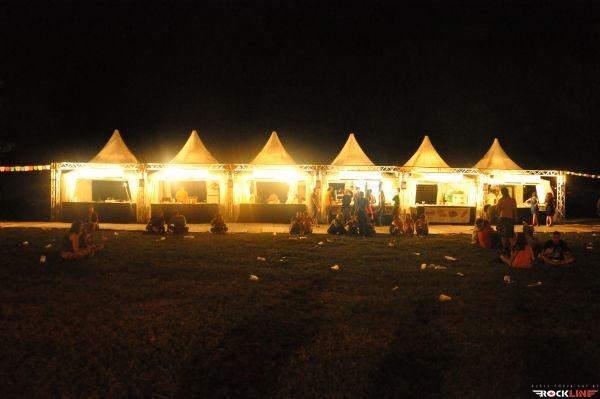
INmusic Festival thus ended positively for the seventh time. If the program wasn’t entirely so attractive this time, the headliners themselves were all the more interesting. With their perfect performances they repaid all the effort the organizers put into preparing the event over the past year. I have no serious complaints about the organization. The sound was excellent, security was fair and not uptight, and the festival’s pulse and the relationship among attendees were positive and friendly. The many “chill-out” spaces they set up also deserve praise, since that’s one of this festival’s main advantages over the others. For next year I wish them a sorted-out relationship with the city, a solid sponsor and, consequently, a bigger and better festival line-up. Zagreb proved very hospitable, Funk hostel was up to standard, and a three-hour train ride doesn’t drag on either. If Exit has the Fortress and Terraneo the sea, INmusic can boast Zagreb and its irresistible cosmopolitan appeal. We Slovenes still don’t have a comparable festival (if we set aside the genre-focused MetalCamp)…. Maybe in twenty years it’ll be different.
Setlists
Franz Ferdinand:
1.) Michael
2.) Do You Want To
3.) Right Thoughts! Right Words! Right Action!
4.) No You Girls
5.) Tell Her Tonight
6.) Walk Away
7.) Brief Encounters
8.) The Dark of the Matinée
9.) The Fallen
10.) Scarlet Blue
11.) Can’t Stop Feeling (including: “I Feel Love” by Donna Summer )
12.) Take Me Out
13.) Ulysses
14.) Trees & Animals
15.) 40′
16.) Outsiders
17.) This Fire
New Order:
1.) Elegia
2.) Crystal
3.) Regret
4.) Ceremony
5.) Age of Consent
6.) Isolation (Joy Division cover)
7.) Krafty
8.) 1963
9.) Bizarre Love Triangle
10.) True Faith
11.) 586
12.) The Perfect Kiss
13.) Blue Monday
14.) Love Will Tear Us Apart (Joy Division cover)
encore:
15.) Temptation
Mando Diao:
1.) Dalarna
2.) God Knows
3.) Welcome Home, Luc-Robitaille
4.) Your Lover’s Nerve
5.) Song For Aberdeen
6.) All My Senses
7.) Down In The Past
8.) You Can’t Steal My Love
9.) Mean Street
10.) Mr. Moon
11.) Sheepdog
12.) Long Before Rock’n’Roll
13.) Gloria
encore:
14.) If I Don’t Live Today, Then I Might Be Here Tomorrow
15.) Dance With Somebody
Gogol Bordello:
1.) Ultimate
2.) Sally
3.) Wonderlust King
4.) Tribal Connection
5.) Supertheory of Supereverything
6.) My Companjera
7.) Start Wearing Purple
8.) Immigraniada (We Comin’ Rougher)
9.) Pala Tute
10.) Break The spell
encore:
11.) Alcohol
12.) Your Country
13.) Super Taranta
Photo Gallery