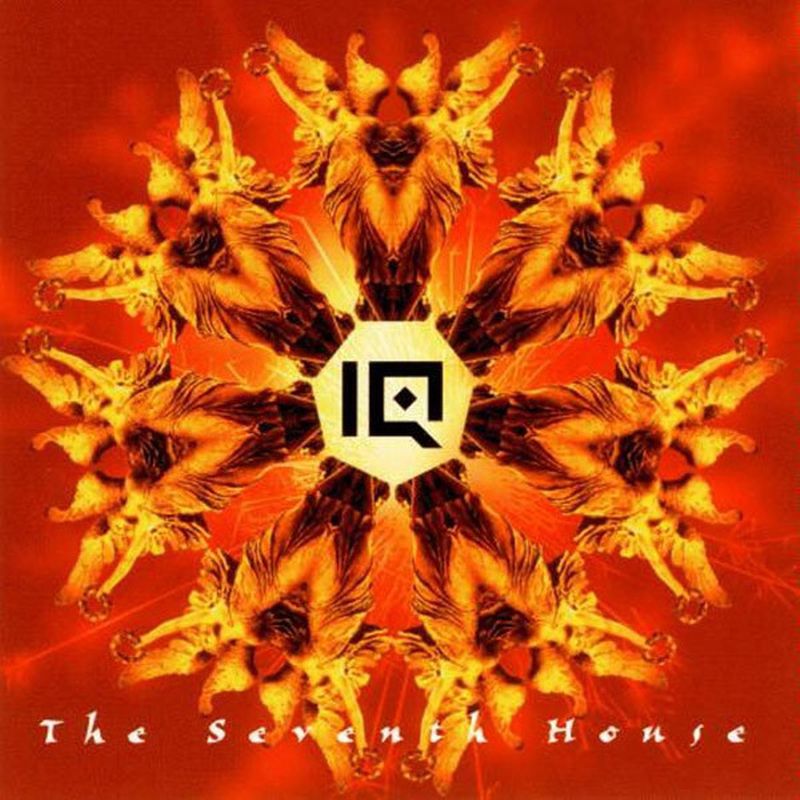
Label: Giant Electric Pea
Release date: November 2000
Production: Michael Holmes
Album length: 56.49 min
Genre: Neo-Progressive Rock
Rating: 10/10
With “The Seventh House”, the cult English neo-prog legends IQ cemented their reputation as one of the most consistently high-quality prog rock bands around, especially when it comes to everything they’ve done since the return of charismatic vocalist Peter Nicholls. His intelligent, often socially critical lyrics quickly made the band’s name a more than fitting label for who they are and what they do. With the double concept masterpiece “Subterranea” (1997), IQ finally stepped into the ranks of the most important prog rock bands of the past four decades.
Following up an album as important as “Subterranea”, which won the hearts of plenty of new fans, was no easy task, but with “The Seventh House” IQ pulled off the ‘unthinkable’. In consistency and quality of songwriting, “The Seventh House” is a fully worthy successor to its groundbreaking predecessor, and in some sonic and lyrical departments it even tops it.
There were ‘only’ six tracks on “The Seventh House”, but every one of them is a superbly arranged and played sonic adventure. Thanks to Nicholls’ vocal kinship with Peter Gabriel, it was tailor-made for all worshippers of classic Genesis too, even though by this stage of their career IQ had long since forged a recognizable sound of their own and were a rather different band than in the first half of the eighties, at the birth of the neo-prog scene.
Unlike many of their neo-prog compatriots around the turn of the century, their work was more or less distinctly dark, and so it is on “The Seventh House”, where Nicholls’ lyrics, delivered in his trademark theatrical and dramatic style, brim with social criticism and sarcasm. Some of the more ‘psychoanalytic’ lyrics on “The Seventh House” lay bare the dark corners of the human psyche and the influence of society on our actions.
Orford’s grandiose symphonic arrangements and Holmes’ mostly razor-sharp guitar passages, backed by an almost dreamlike rhythm section of bassist John Jowitt and drummer Paul Cook, create melodramatic, brooding atmospheres that suck the listener straight into the ‘stories’ of the individual tracks on “The Seventh House”.
“The Seventh House” opens with the epic treat “The Wrong Side of Weird”, which marked the next logical, more mature step in the long sonic evolution of this fine prog rock band, who, ever since Nicholls’ return, seem like nothing can stop them. IQ were masters of epic compositions with dramatic twists from the very beginning, but with this outstanding piece they hit one of the peaks of their career. Even though the influence of symphonic prog legends led by Genesis is obvious throughout, you can’t accuse a single track on “The Seventh House” of directly ‘borrowing’ arrangements from prog rock classics of the ‘antediluvian era’.
“Erosion” was a distinctly dark, socially critical piece that will still send a shiver down many a listener’s spine today. Nicholls’ vocal theatricality plays the key role in creating this incredibly intense atmosphere. He’s joined by Orford’s eclectic keyboards and Holmes’ mostly punchy guitar passages, with which he edges quite close to prog metal waters a few times. The title track, an epic-flavored masterpiece, is among the finest, most complex and most strikingly melancholic achievements in the IQ story, ratcheting up its atmospheric intensity minute by minute through countless unexpected time changes, eclectic rhythmic moves, dramatic symphonic arrangements and a brilliant vocal performance from Nicholls. The seventh house, which is tied to interpersonal relationships, is a concept well known to anyone who dabbles in astrology. It’s hard to decide which of the two super-epics on “The Seventh House” is better.
“Zero Hour”, which features a brilliant instrumental section capped off with a guitar solo, is drenched in massive layers of organ and mellotron. The result is a melancholic, brooding wall of sound that also includes a rather surprising and innovative sax passage from guest saxophonist Tony Wright. He brings in a welcome breeze of jazz and almost completely changes the mood of the piece.
“Shooting Angels”, the most accessible yet still excellent track on “The Seventh House”, opens with a wittily flavored guitar solo and waves of mellotron, and packs an epic chorus and a brilliant sax passage in the closing section. The closing epic adventure “Guiding Light”, which is really a love ballad turned into a complex symphonic prog epic with an intricate and punchy middle section, quickly became a fan-favorite IQ live standard, which was not in the least surprising. With this neo-prog classic, IQ simply couldn’t have asked for a better closer to the album.
Around the turn of the century, when the prog rock scene was largely defined by idealistic and slightly naive ‘happy campers’ like Spock’s Beard, The Flower Kings and Pendragon, IQ served up fairly dark, dystopian visions of the near future on “The Seventh House”, visions that sadly came true fast over the following twenty years. Helped by Holmes’ excellent production, IQ, without betraying their original artistic vision, managed to stride very convincingly into the 21st century and go head to head with the younger prog hopefuls who were then popping up on the scene ‘like mushrooms after rain’. After “Subterranea”, “The Seventh House” was yet another flawless masterpiece that, with its quality, surprised none of the longtime fans of this fine band with its enviable artistic intelligence quotient.
Author: Peter “Dr. ProgRock” Podbrežnik
Track list:
1. The Wrong Side Of Weird (12:24)
2. Erosion (5:43)
3. The Seventh House (14:23)
4. Zero Hour (6:57)
5. Shooting Angels (7:24)
6. Guiding Light (9:58)
Lineup:
Peter Nicholls – vocals, backing vocals
Mike Holmes – guitar, guitar synthesizers, keyboards
Martin Orford – keyboards, flute, backing vocals
John Jowitt – bass guitar, bass pedals, backing vocals
Paul Cook – drums, percussion
Guest musician:
Tony Wright – saxophone on tracks 4 and 5