Author: Aleš Podbrežnik
Photos: Aleš Podbrežnik
Location: Cerkno / Stari plac / Slovenia
Concert date: May 19, 2016
Attendance: 150
Ticket price: €37.00
The year has turned, and right on schedule, the twenty-first Jazz Cerkno festival is here. It’s the first one without Boštjan Cvek, the man who laid the cornerstone of this festival, including shaping its distinctiveness and recognizability when it comes to the music on offer. Thursday through Saturday. As always, three acts a night on the main stage at Stari plac, safely covered by a tent, because May is once again moody and unpredictable weather-wise. Then there’s the varied side program that gratefully spices up this renowned Cerkno event every year. For some jazz connoisseurs it’s already a true annual ritual they simply can’t miss.
Thursday was modestly attended. The rainy weather probably played a part, maybe even the midweek date, but still. The view at the first day’s venue was somewhat spoiled by a giant crew of photographers shooting the performers from the front row, while the actual audience, the people who paid for their tickets, was barely a handful.
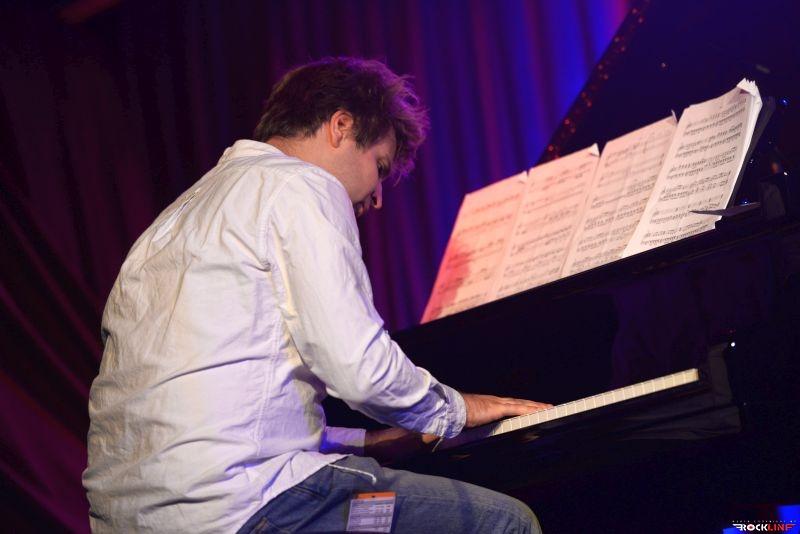
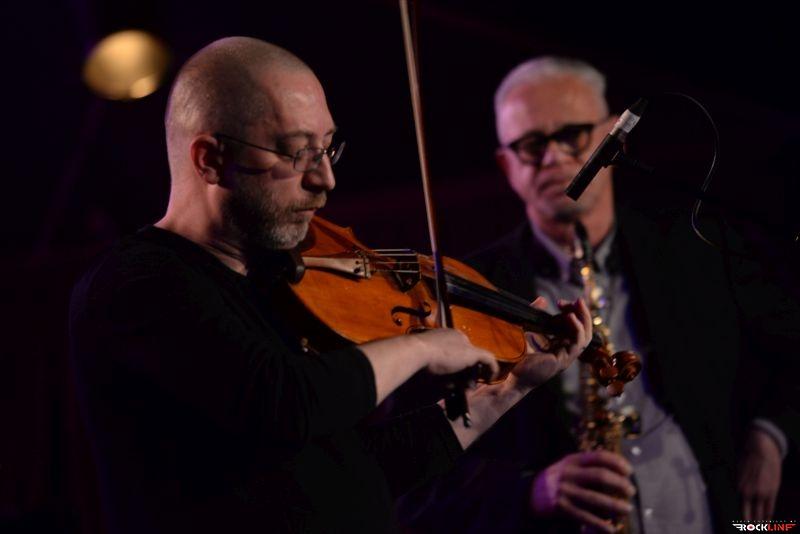
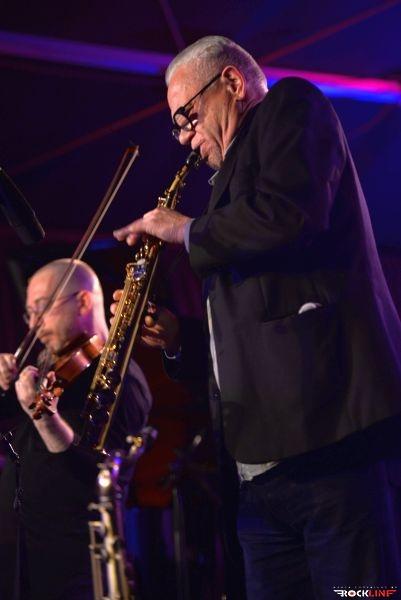
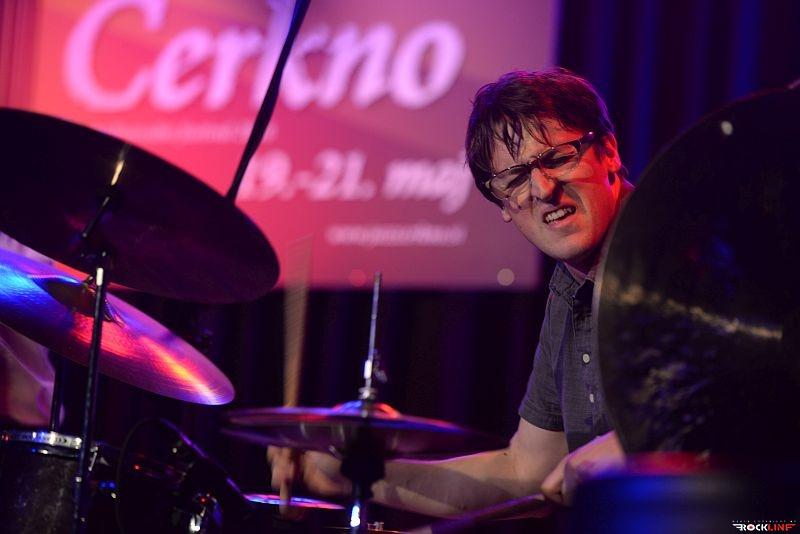
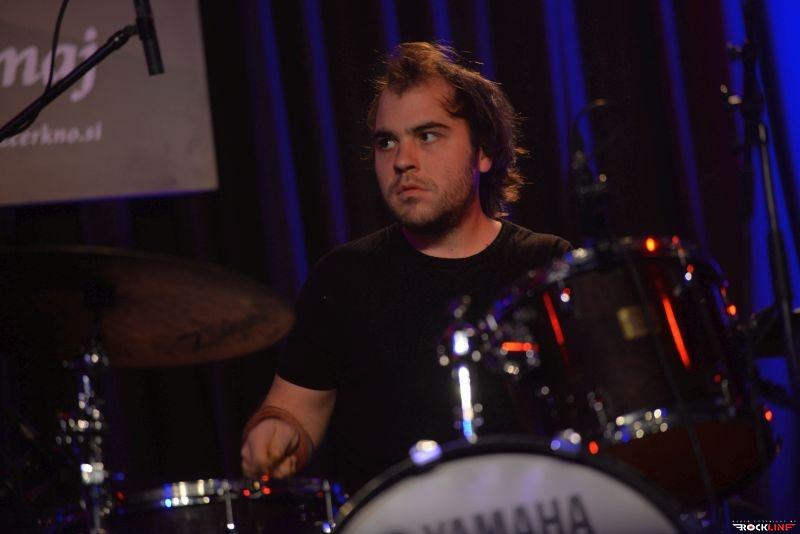
The first day’s program started late, since the mass in the neighboring church had to finish first. Once peace and quiet finally settled over the Stari plac neighborhood (both in heaven and on earth), Grencso Open Collective finally took the stage. They’re a Hungarian quintet led by saxophonist Istvan Grencso. For a good hour the crew presented the music of their great idol Gyorgy Szabadosz, a musician who, once upon a time, popularized the free jazz approach to playing jazz in Hungary. The quintet naturally gave Szabadosz’s compositions an airing in their own way. Double bass, viola, Istvan’s saxophones , piano and of course the timekeeper – drums. Istvan left his bandmates tons of room to stretch out thoroughly and show off their strengths. Along the way the guys at times raced to the edge of adventurous musical provocation, becoming a tougher bone to gnaw on even for the ear snail, with plenty of »quirky« moves that, in the manner of the unexpected, pulled a bag of surprises out of the attentive listeners while entertaining them at the same time. At times the quintet practically »fell apart by ear«, then pulled itself together again and came back to the starting points of the leading motifs. Especially satisfying was the passing around of solo seasoning among the triad of sax, viola and double bass, while the piano filled in the background and the drums kept the rhythmic framework. In those passages the guys swapped every trick in the book, yet kept an incredible tightness, a »sense of listenability«, a traceability of mutual awareness, while in their moves and oddness they needled and kept listeners busy. The first hour flew by in the blink of an eye. They’re jazz oddballs also because they cunningly infused their approach to their free jazz alloy with a folk veil of the Eastern European plains and Gypsy melos. Remarkably peculiar and tantalizing.
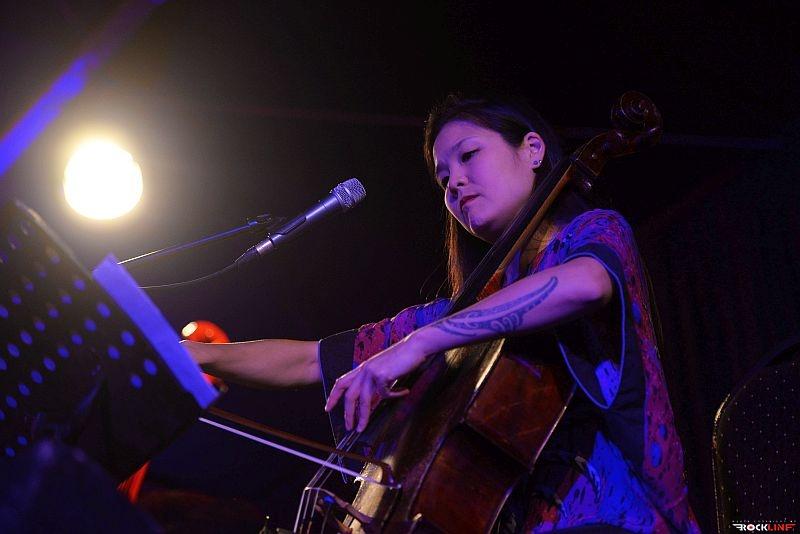
Second on stage was the extravagant Slovenian musician Maja Osojnik, a musically multifaceted artist who honed and built up her skills in Vienna, where she also lives. She’s an absolute original, and for the Cerkno show she gathered an exceptionally rich backdrop of sound around her, a sextet called All.The.Terms.We.Are. Before Cerkno, the group had logged just one shared gig to date. With the crew, Maja presented her current studio album, released last year, titled »Let Them Grow«. For most of the set the group strung together dark faces and gray phrases that thickened the space of a musical landscape built on lower tonalities. The cherry on top was Maja’s low female voice, which, in the parts without vocal excesses, fleetingly recalled Tanita Tikaram, and the instrumentation of the accompanying musicians certainly evoked associations of possible appeal for alt-rock fans too. And the musicians radiated those seeds throughout their set. Simple but quirky phrases, aimed also at longer repetitions of motifs, created an experience that took you to the edge of the rational, toward the »extra-mental«, beyond the conscious. Hypnotic. The instruments opened up space for one another with incredible contemplation, while the sextet delivered an experience of astonishing concision, that is, full-blooded concentration from everyone involved, who couldn’t afford even the slightest slip in the whole story. This showed mostly in the stage communication, the waiting, the watching of what the others onstage are doing. Those are moments when you wait to jump in with your instrument at the right time, in the right spot, and in the performance they demand no special technical skill whatsoever, but a full measure of extreme precision and softness, even fine mechanics. In other words, supple responsiveness. In every moment of the musical story. During the show, attention was grabbed especially by cellist Audrey Chen, who in vocal dialogue with Maja coaxed out the most unusual sounds the human body can produce. On that score alone the concert turned out remarkably attractive. The group’s vibe was hypnotic, highly experimental, with seeds of the avant-garde, but in a spirit of serenity and calm that was cut across by sudden bursts of fierce sonic racket and vocal excesses. All in the strict artistic focus of musical uniqueness and one-of-a-kind. An unusual musical body of a format that, let’s hope, finds its way back to our parts soon.
The Rempis Percussion Quartet, the third act, closed out the first day of the festival. The distinctive thing about this Chicago »free jazz« quartet is that it’s built on two drum sets. Dave Rempis is the saxophonist who takes on the authority role in the musical story, but thanks to being backed by two complementary yet contrastingly varied approaches to drumming, built on combining daring turns of polyrhythm and even incorporating ethnic rhythms from South America and Africa, the quartet is special for the rhythm itself too. Rempis repeatedly charged headlong by ear with his unforeseen solo sax escapades, which seemed to have neither end nor edge, shaking out volleys from an endless sea of tonalities, as if he wanted to smash the solid rhythmic milieu deliberately and at any cost, while the background of the sound picture was deftly filled with the thickened groove of the double bass by the Norwegian bassist who has been based in Chicago for years, Ingebrikt Haker Flaten. Three of the players know each other very well, also from working together in the lineup Vandermark 5. Extraordinary dynamics and an energetic show, whirlwind and unbridled throughout, in the expression of freedom-loving and boundless forms of jazz liberty. A real bone to gnaw on right at the close of the festival’s first day.
Photo Gallery