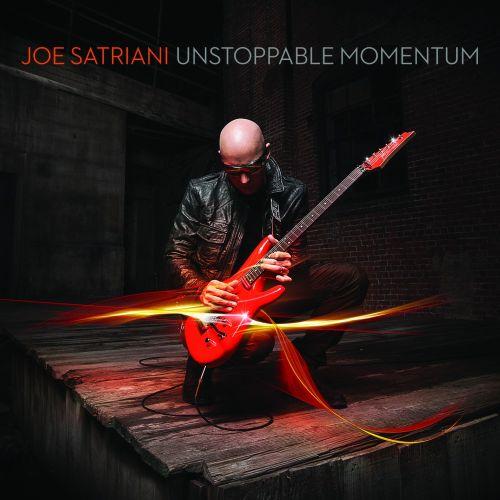
Label: Epic Records
Release date: 07.05.2013
Production: Mike Fraser & Joe Satriani
Album length: 45.03 min
Genre: Instrumental Rock / Art Rock
Rating: 9.0 / 10
In the new millennium, Joe Satriani has found remarkable consistency in his studio releases. Especially after he finally accepted that he’s simply a lousy singer. Satriani has always put most of his attention on nailing a gripping lead melody. No “miraculous” adventures in musical experimentation, no solo acrobatics that would send the compact structure of the arrangements falling apart. For Satch, that would honestly be outrageous, almost blasphemous.
The new album is no different. But Satriani, as an artist, arranger and co-producer, keeps growing and maturing. From album to album. If you think he’s said everything he has to say, think again. Sure, in this game he’s become well-defined, you could even say predictable. But that’s just the trademark of this highly respected artist. It always was and always will be. Still, the man has kept that huge streak of curiosity that never lets him rest. Add inspiration that’s nowhere near running dry at 56, and you’ve got the engine that keeps driving Satch onward through the musical universe.
For the new album, Satriani carried over the best of what “Black Swans and Wormhole Wizards” (2010) had to say. The chemistry with Mike Keneally clearly grew even stronger on the last tour, and Satriani decided to keep this genius multi-instrumentalist by his side for the new album too. To build the sound of the new studio effort, he also called up Chris Chaney, a guy who’s regarded as a proper rock bassist. He’s played in Jane’s Addiction, with Slash, for Alanis Morissette, and with Motley Crüe’s Tommy Lee and his Methods Of Mayhem. And as the fourth member of the crew, in a somewhat surprising move, the always overbooked Vinnie Colaiuta stepped in for Jeff Campitelli. Sting apparently spared him a few minutes to “catch some fresh air” and pour his rhythmic versatility into a new Satriani album as well. In short: the company on this record is outstanding. The rhythm section digs in with the full sonic density of a remarkable organic kick, all the way through the album.
On “Unstoppable Momentum,” Satriani got exactly what he wanted. He’s delivered yet another album where both his playing and the production leave you feeling like a full band is playing on it. Since Satch knew how good the previous album was, he kept Mike Frasier at the production helm. That carried over the organic nature and the symbiotic relationship between the building blocks of the sound from the last record into the new one. What hits your ear first on the new album is how the chemistry between Keneally and Satriani has deepened. If not sooner, you’ll feel it in the goofily playful Three Sheets To The Wind, while the peak of the two musicians’ expressive dialogue comes with the Jumpin’ In and Jumpin’ Out sequence. Keneally was already an important element on the previous album, adding an extra spice of “progressive loosening-up” to the arrangements, and on the new one Satriani has given Keneally even more room to express himself. That doesn’t mean Keneally is now going “nuts” solo on the keys the way a Derek Sherinian might. No. The man delivers his superiority through exquisite subtlety and the brilliance of the moves he picks when creating the right figures, so that everything ties together extremely effectively with the unmistakable Ibanez sound of Satriani’s school of guitar. Even when Keneally is stuck holding down a simple backdrop for Satch’s guitar language to dive into, which is most often when he’s generating synth soundscapes to hold the atmosphere, the maestro still carves out enough space in those figures for a stream of juicy ornaments. Usually in the transitional sections (e.g. the outro of Can’t Go Back). He builds on the form of Satriani’s basic ideas with fantastic feel. The spots where this Keneally–Satch dialogue is especially gripping and carefully tuned in its search for the right balance are the opening title track, which is deliberately placed there because of how irresistible the production aesthetics of that dialogue are, and The Weight Of The World, set in the second half of the album.
For the new album, Satch has once again prepared ten hair-splittingly defined songs (plus a prelude) that are incredibly easy on the ears of the average listener! And clearly varied in expression, too. That’s why the album is atmospherically diverse and develops with real dynamics. Can’t Go Back comes rhythmically right up to the standard of Flying In A Blue Dream, and the relaxed ride of its basic guitar phrase even draws some meaningful atmospheric parallels with that Satch classic. In A Door Into Summer, the man stomps harder on the distortion pedal and the song rests on a bed of proper metal riffing, while, in a tightly packed burst, tangible melodies once again keep up that familiar hairdo of optimism from lively guitar playing.
Lies And Truths is considered the darkest moment on the album, yet it also feels the most dynamic. The loosest, with the biggest dose of jazz-rock fusion. And even into this song Satch “wisely” slipped an exceptionally melodic passage that relieves the improvisational density of the rest of the track.
The first (title) track and the last one, A Celebration, which rolls along at a brisk but easygoing trot, work as Yin and Yang. They close the circle of the album’s character and variety. Of its message. The first offers Satriani’s eternal drive to find the perfect balance between melodic polish and the progressive, adventurous attitude of musical exploration, while the simple, unpretentious stance of the closing A Celebration announces this artist’s constantly positive character.
“Unstoppable Momentum” is another outstanding manifesto of the symbiosis between instinct and Satriani’s textbook. The new album deepens the organic quality Satriani has been chasing in the sound of the last few albums, and does it more noticeably than ever. Once again it delivers the great trademark manner of this master. A contagiously melodic principle which, in harmony with a cheeky dose of bravura improvisation, holds an effective middle ground, the guitar language’s attractive stroll along the barely perceptible dividing line between those two principles.
author: Aleš Podbrežnik