Author: Aleš Podbrežnik
Location: Vienna / Stadthalle / Austria
Concert date: June 28, 2011
Attendance: 4
Ticket price: €61.40 (floor)
There’s been a lot of talk about the incredible pairing of two bands who decided to join forces and hit the road together. Musically, in mission, in the standards they embody, they’re carved from entirely different worlds. Judas Priest and Whitesnake. You’re probably rolling your eyes and shaking your heads by now. But those are the facts.
Judas Priest had been cooking up this tour for a long time. They wanted to wrap up their career with it. Sum it all up in the best possible way. There come years of wisdom when all you can do is hand out sage advice and nothing more. You made your name 30 years ago and you’ve been resting on your laurels for 15. Eventually the time comes when you say, “Enough.” and you’re entirely entitled to it. What’s more, you were entitled to it years ago. Judas Priest titled the tour fittingly: “Epitaph”.
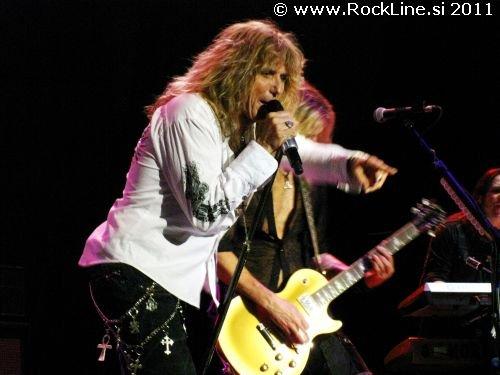
On the other side there’s Whitesnake, commanded of course by none other than David Coverdale. Unlike Judas Priest, at least in outward activity and the language of diplomacy, they flat-out refuse to admit it’s time to think about retirement. Coverdale and his far younger buddies in the Whitesnake crew released a fresh studio album this year that sounds really good and is worth checking out in full. They called it “Forevermore”, hinting that as far as David Coverdale is concerned, this thing can never end.
Alibis for the grand gestures of both bands in 2011 aside, the two of them share quite a few similarities today. The first is the form of both vocalists, which is knocking on the door to say the shelf life of their vocal cords is running out. If that similarity has been bringing them together for some five years, the second is of somewhat more recent vintage. Lineup changes. When K. K. Downing leaves the band, the man who co-built the foundations of modern heavy metal with Judas Priest, that’s a very pressing problem. Never mind that the planet is crawling with kids who shred guitar so nobly that they carry the whole Judas Priest discography in their little finger. K.K.’s figure on stage is irreplaceable. He has to be there, otherwise there’s no definition of the “heavy metal duo”, even if you somehow keep the definition of Judas Priest without Downing after waking up from the nightmare several times and get over his departure. On the flip side, Coverdale, since the new Whitesnake reunion a few years back, simply sticks with a lineup of rock “brutes” rather than distinguished blues men. Hence the considerably harder new sound of the band, which, in the performances of the older anthems, no longer embodies the real charisma and juice of golden-era Whitesnake and the core Moody/Marsden axis. Yes. We can say that the rock giant (Whitesnake) and the metal giant (Judas Priest) have each chipped a tooth or two by 2011.
At the last minute, just a month earlier, it was officially confirmed that another pioneering band in the encyclopedia of rock culture was joining both on the European leg of the tour. Thin Lizzy, built on the foundation of twin-guitar harmony, which classic heavy metal soon took over, led by the N.W.O.B.H.M. movement in the early eighties. The grotesque part is that, given how things went after the watershed date for Thin Lizzy, 04.01.1986, today Thin Lizzy without Phil Lynott have a really hard time justifying their name. With a “tribute to” prefix it would pass without a peep.
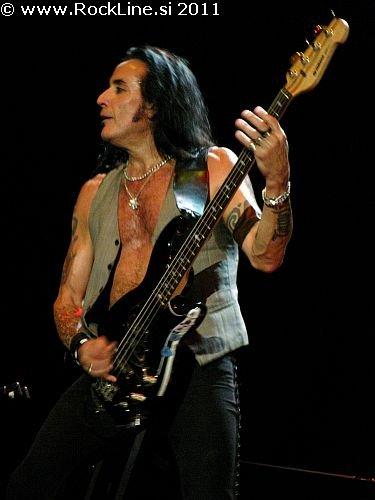
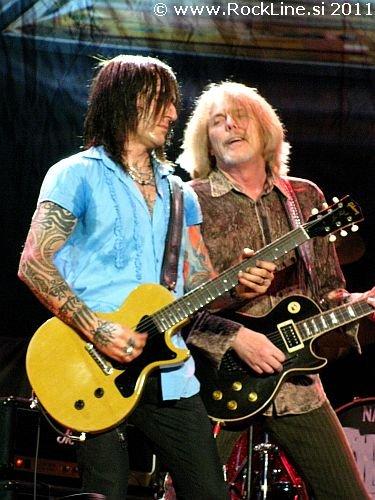
Thin Lizzy got back together in a revamped lineup a year ago. Even the closest thing to classic Lizzy you can get once Phil Lynott is gone and neither Brian Robertson nor the (late) Gary Mooore showed any interest whatsoever in reactivating their involvement with the band. Scott Gorham managed to convince original drummer Brian Downey, and there’s one more welcome addition in keyboardist Darrel Wharton. Some of you may know Wharton from the splendid AOR outfit Dare. Here Lizzy has an element of glam-shock clowning and fun, a man who comes and goes. Marco Mendoza on bass. The singer’s spot went to Almighty vocalist Ricky Warwick. Alongside Scott Gorham, Vivian Cmpbell was supposed to be on stage, but he skipped the Thin Lizzy tour because of his commitments to Def Leppard. His boots for this tour were filled by Richard Fortus from the current incarnation of Axl Rose’s Guns N’ Roses.
A lineup patched together like that of course didn’t leave a bad impression. With a pick of classics like that, it simply can’t. In half an hour they properly warmed up the well-packed floor of Vienna’s Stadthalle with marches, opened by Are You Ready and then built on one after another by Waiting For An Alibi, Jailbait, Don’t Believe A Word, Whiseky In A Jar, The Boys Are Back In Town and the closing Rosalie, Bob Seager’s song.
Everything runs nicely oiled. Warwick successfully upholds John Sykes’s legacy, a manly, mid-pitched, mildly nasal register with a hint of macho play; Gorham, whose ripening charm reminds one more and more of Donald Sutherland; and then the young, big-nosed, short-statured powerhouse Fortus in well-rehearsed combos. The most active party-starter in the Thin Lizzx crew is Marco Mendoza, next to whom Lizzy wouldn’t need stage lighting, since the band is saved by Marco’s “million dollar smile” and the gleam of his polished porcelain teeth. An active, dynamic, high-quality execution all around. The sound? Decent, but not perfect. You couldn’t hear Wharton at all. For fans of the band who can live with the irreplaceability of the stamp, charisma, character and work of Phil Lynott, today’s Thin Lizzy are simply a must-see.
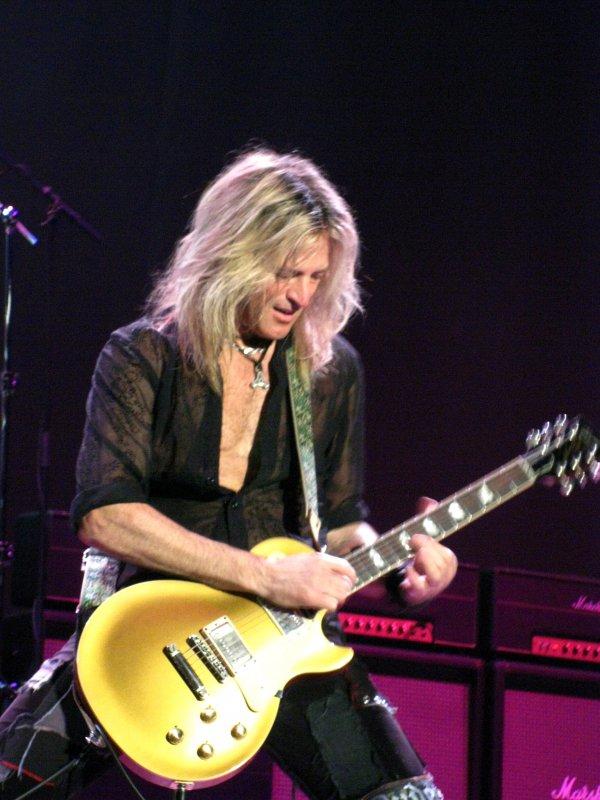
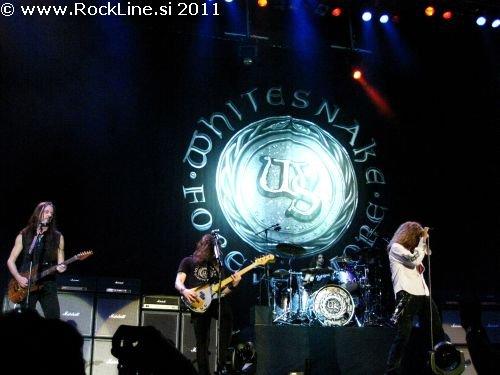
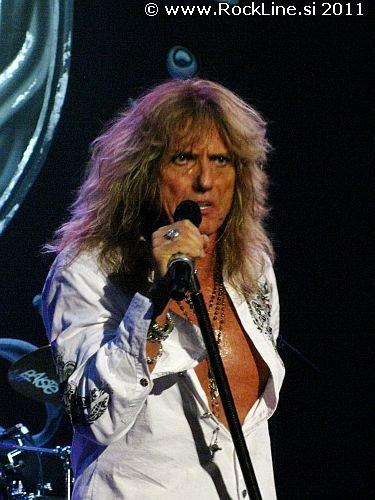
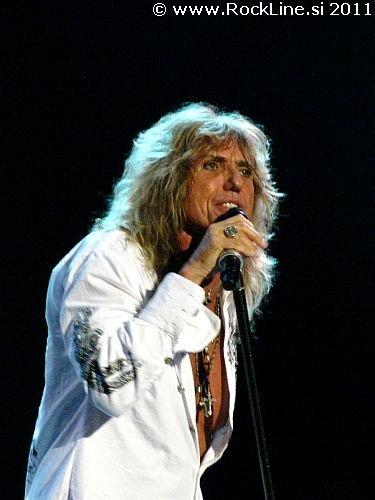
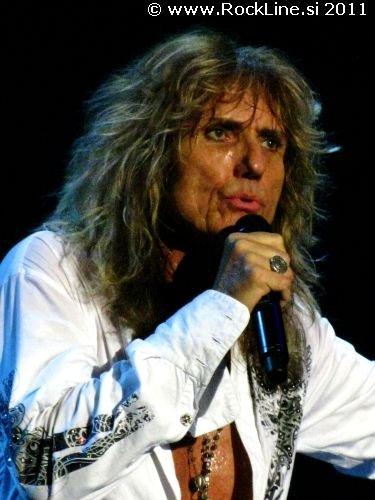
Exactly at eight in the evening Whitesnake took the stage. An hour and twenty minutes. A repertoire built from songs off the new album and the mega-hits that can’t be left out of the set. No point wasting words, since they repeat from one Whitesnake show to the next over the past near-decade. Coverdale has money, he has the name. So he buys the best musicians. And they really do play flawlessly. The guitar choppers Reb Beach and Doug Aldirch take a hefty chunk of minutes in the middle of Forevermore, stretching out the running time while Coverdale rests his vocal cords in the back, and for Love Will Set You Free Brian Tichy is already waiting for his solo drum weave. Of course the solo spots bring a full measure of fun, especially Tichy’s bare-handed drumming. Bravura escapades all over the place.
The sound was very decent too. Whitesnake, who thoroughly revamped the lineup in 2010 with Tichy, bassist Michael Devin and keyboardist Michael Ruedy, weathered the storms, especially in the execution of the absolutely obligatory classics, which in the opening stretch were Give Me All Your Love Love Ain’t No Stranger and Is This Love. The whole supporting crew backs Coverdale up on vocals, and he also gets plenty of help from the mixing desk, which shows in the cranked-up echo effect and even an occasional pre-recorded backing track (matrix) that includes those long-forgotten “giant” screams. The shortened Slide It In suddenly flowing into Fool For Your Lovin’ is a strange move on the band’s part and not exactly a kind gesture toward the classic, let alone the congregation. But that’s how it goes these days. There’s the more imposing moment of the new album, the new Forevermore with its classic acoustic intro, and the catchy Love Will Set You Free, which works great live. The concert’s peak came with Here I Go Again and one of the finest pieces of Whitesnake’s career, Still Of The Night, which help you quickly forget the woes of David Coverdale’s worn-down voice. When David resorts to a vocal interpretation with added throatiness, in his overdoing it he occasionally just rasps. The guys play great; admittedly they’re decidedly too rough for Fool For Your Lovin’, but you have to make peace with that.
Quite likely this tour with Judas Priest will be followed by a headline tour of the band’s own, where Whitesnake will present a broader repertoire and pay tribute to the new record “Forevermore”. Let’s wait a month or so and we’ll see what the newly booked tours bring us for 2012.
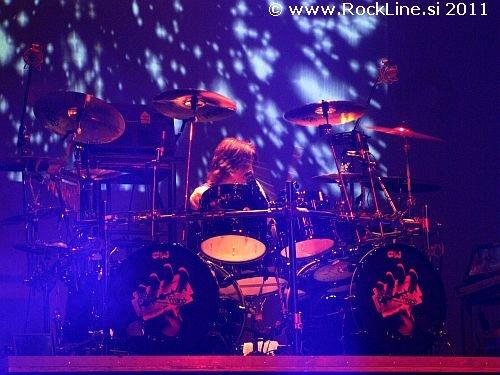
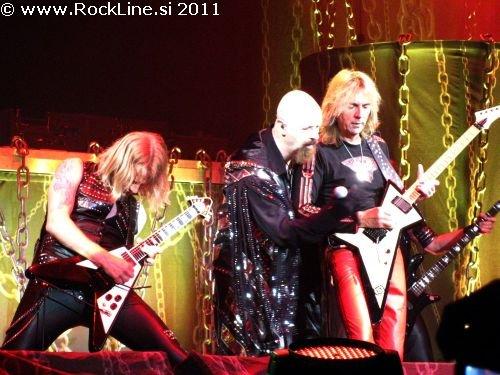
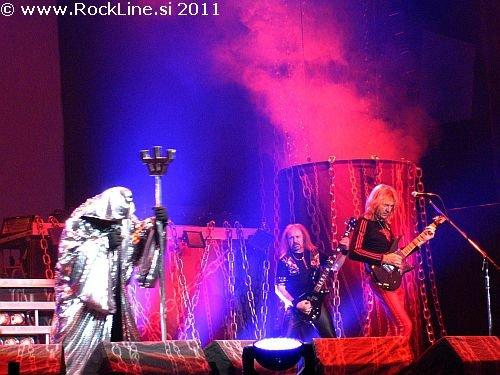
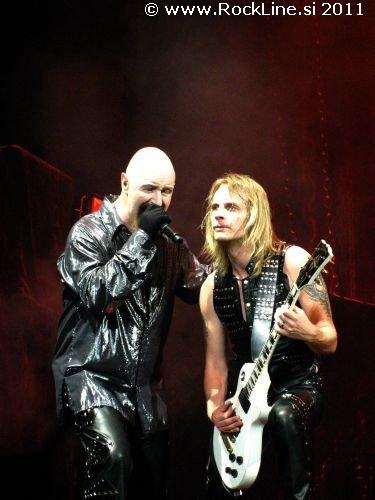
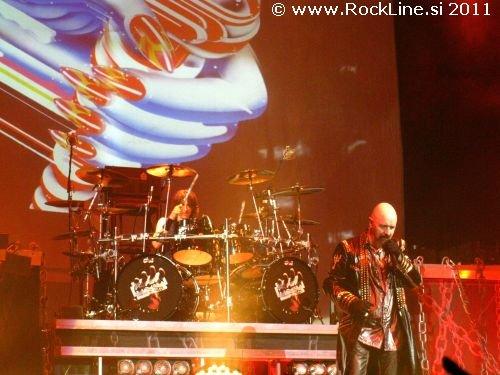
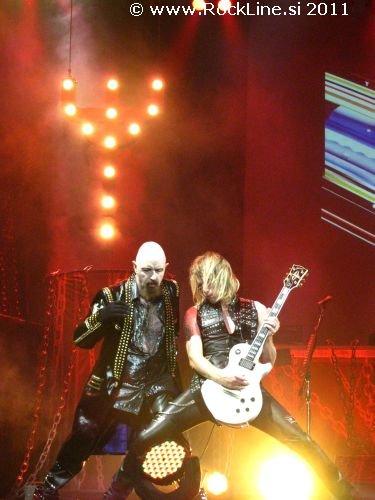
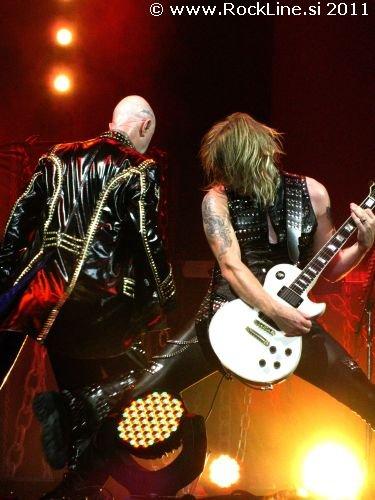
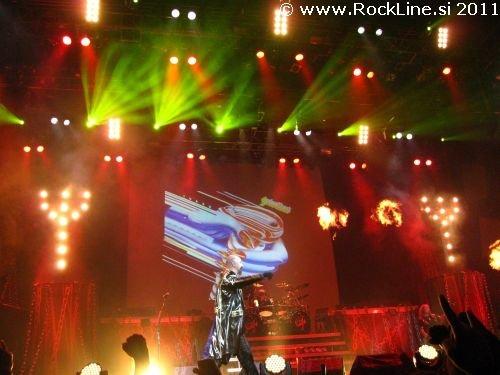
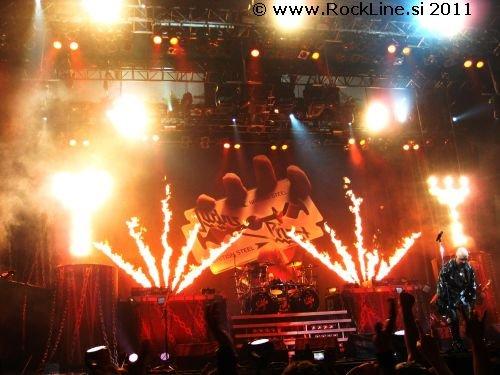
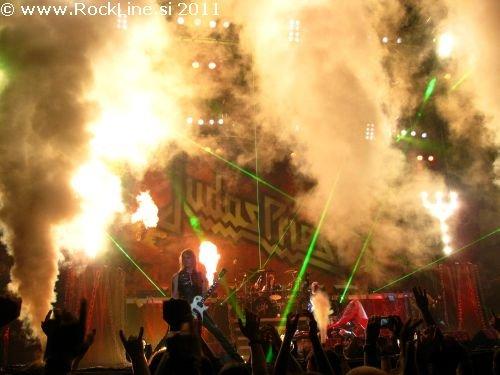
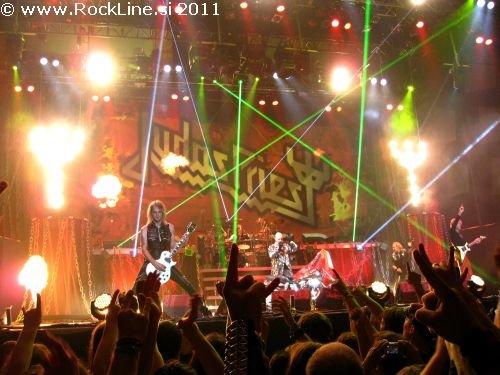
And finally, the evening’s main attraction. The metal titans, fathers of the metal bible. Judas Priest. They really went all out. A spacious stage with huge backdrops and a huge projection screen. As always. Travis’s drums raised up, with stairs leading to them, the platform widened so the other band members can stand on it too. Left and right on the stage, huge Judas Priest crosses spring up.
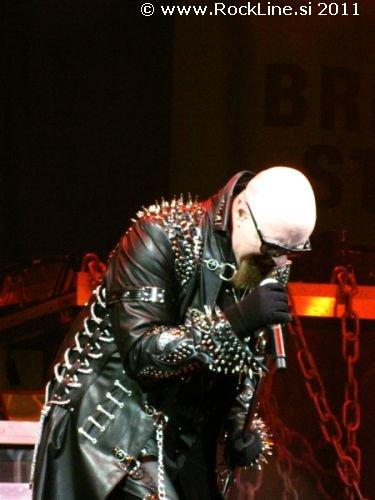
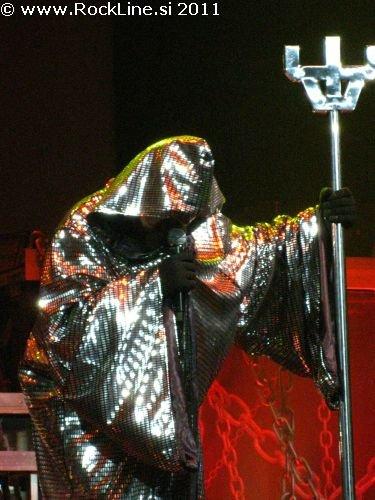
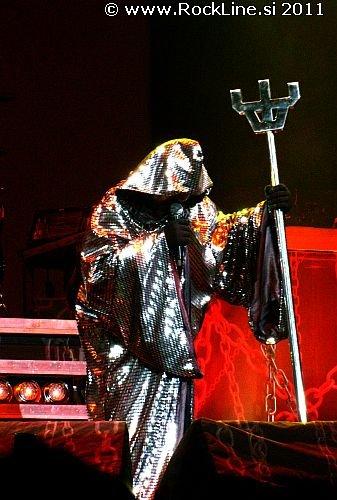
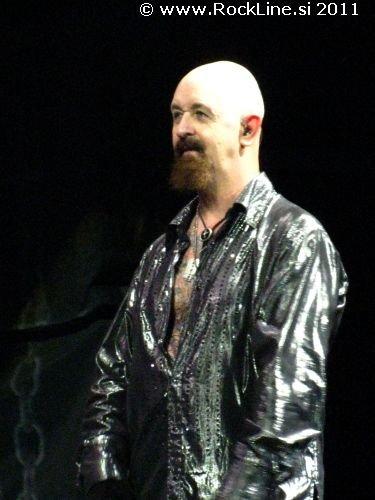
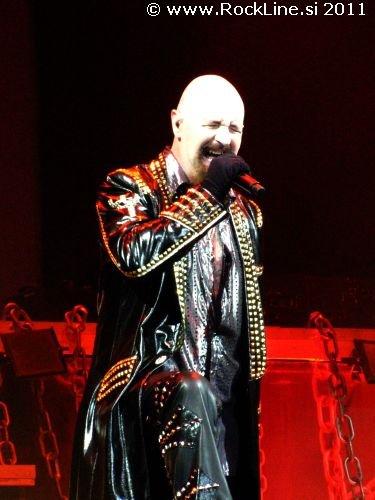
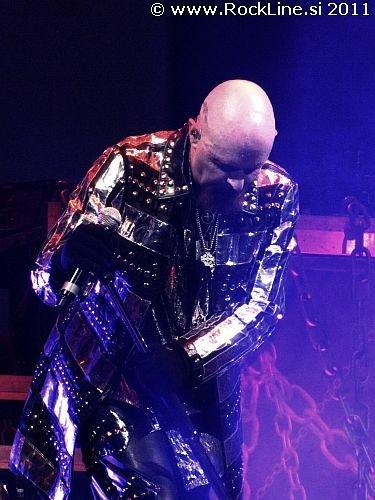
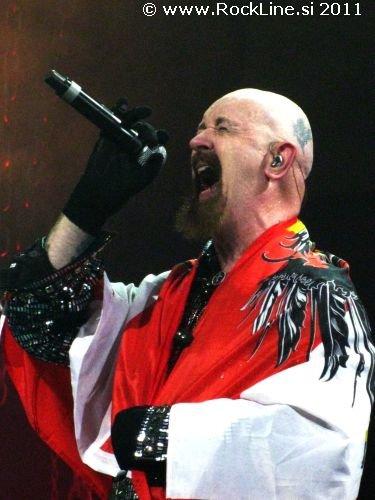
Monitors completely hidden. Left and right in front of the curtain and beside the projection screen, enormous chains. Priest hit the stage with the Battle Hymn intro at 9:45 p.m. But this intro doesn’t flow into One Shot At Glory, sadly not. And this time it doesn’t matter. “Are You Rady for some Judas Priest heavy metal style!” Rapid Fire and the shooting from every angle begins. The sound is optimal from the first second, especially at the back of the floor. Excellent sonic characteristics. You barely turn your head and we’re already in Metal Gods. People lose their minds. Most are here tonight for Priest, and they’d put together an extraordinary set drawn from literally every record of the “Halford” era. With real historical “gems”. Of course Rob Halford got most of the audience’s attention thanks to his standard stage garb, a combination of steel metal messiah and steel angel in one. Costume changes as if on an assembly line. The “Metal God” came across completely self-assured this time. Really? Vocal wear aside, of course. The summer shows in Europe in June 2008 got confirmation, with the new experience of Vienna’s Stadthalle, that Rob must indeed have been sick back then. If you know Rob’s approach on the studio album “Made In Metal” (2010), that’s a good cue to get a feel for how Halford managed his singing range on stage at Vienna’s Stadthalle too.
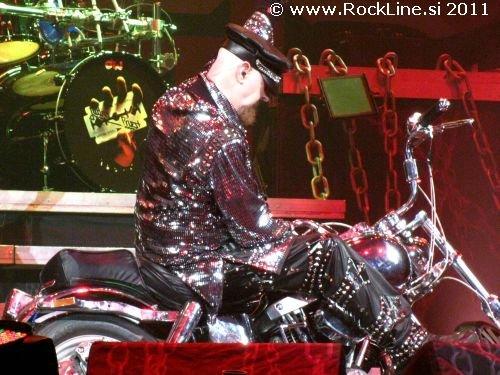
He noticeably avoided the higher and highest registers but sounded completely self-assured in the lower and mid ranges. In June 2008 he couldn’t get even those together decently. This time he wisely conserved his voice and only here and there let out a scream, summoning up for the congregation those moments of old glory and greatness, the vocal excellence and uniqueness that embody the timeless figure of Judas Priest and Rob himself. Yes. At moments it was clear that screams had been added on the backing track, which didn’t escape even the deafest person during Painkiller (in the closing stretch of the show). But without any sense of pretension. Where it didn’t work, it didn’t work, and Rob dutifully stuck with it and defied it lower down. Otherwise Rob made no secret of feeling great. He kept in touch with the crowd the whole time, many times planting himself like a statue or a bust on the left and right of the stage, motionless, staring straight ahead and into the crowd. For Hell Bent For Leather he of course rode onto the stage on a motorbike, dismounted, and draped himself in the Austrian flag, in which he sang the second encore. Of course the hall couldn’t stay indifferent to the gesture. During the breaks Rob took those present through the history of Judas Priest. He introduced nearly every song by recapping the background of how it came about. Fantastic. With these addresses alone Rob hooked the audience with his extraordinary charisma. Between Hell Bent For Leather and You’ve Got Another Thing Coming, Rob’s standard “Shout Oh Yeah!” bit didn’t go missing, as he forced the audience into some vehement vocal-cord stretching when we sailed into the closing chorus of that song. In short. Halford did his best for 2011. Regardless of the fact that he can no longer pull off vocal miracles, his presence in Judas Priest is simply irreplaceable. So much for Rob.
The Hill-Travis rhythm pairing is indestructible. While the quiet Ian, always working from the background, is the best Ian — standard, extremely reliable, the backbone of Judas Priest — Scott put a spell on those present with his exceptional drumming technique and know-how, which enriched all the Priest classics and gave them a completely refreshed look in which they come across as extra furious and uncompromisingly snarling. The drum sound was fantastic and Scott on his own reigned over the stage, earning a few thunderous ovations in the lightning-fast transitional parts and especially in the overture to Painkiller.
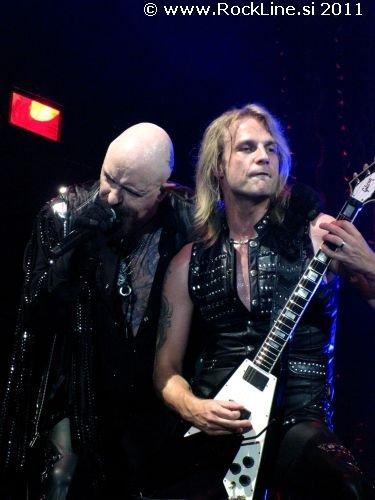
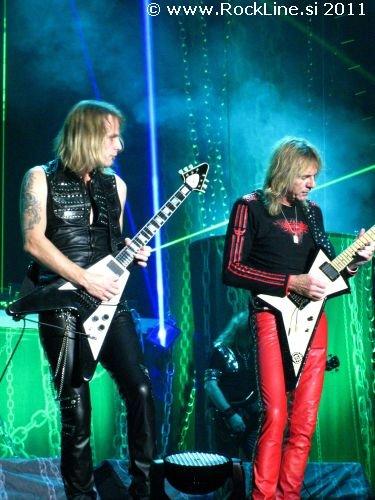
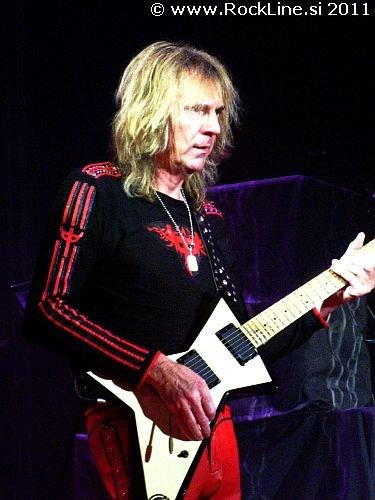
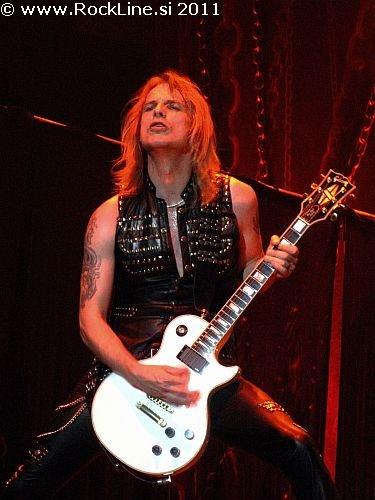
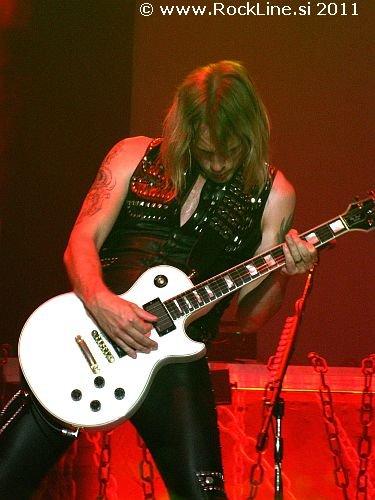
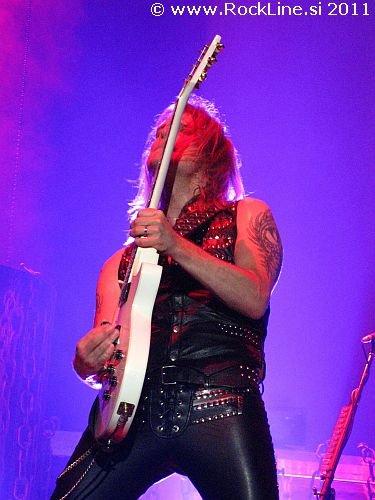
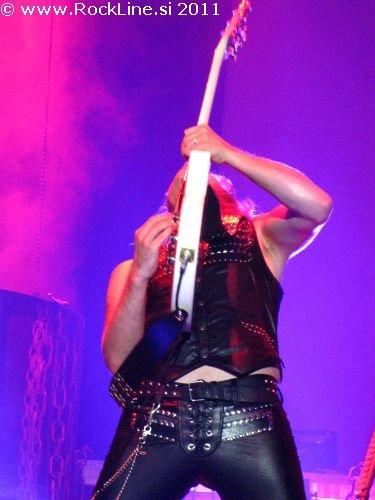
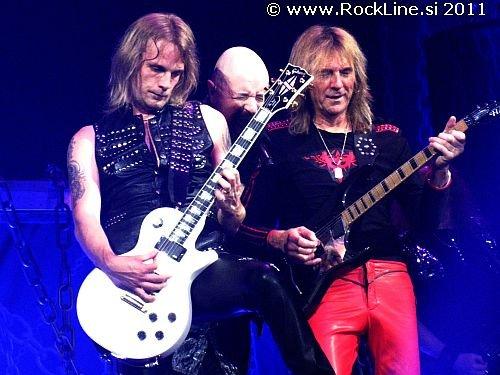
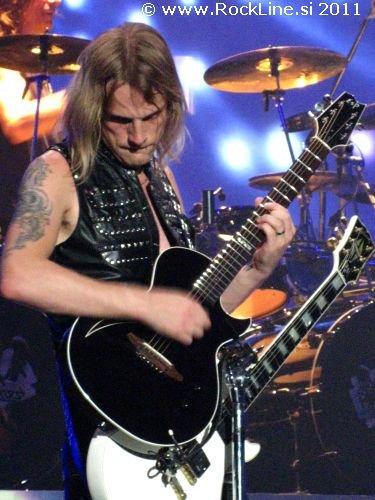
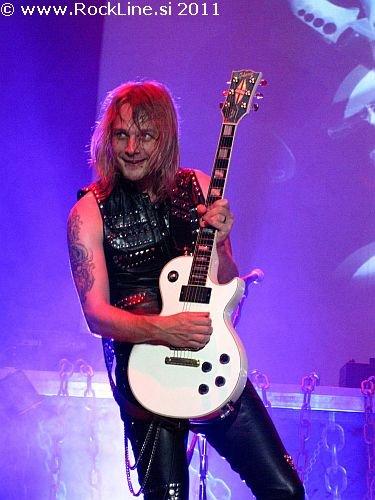
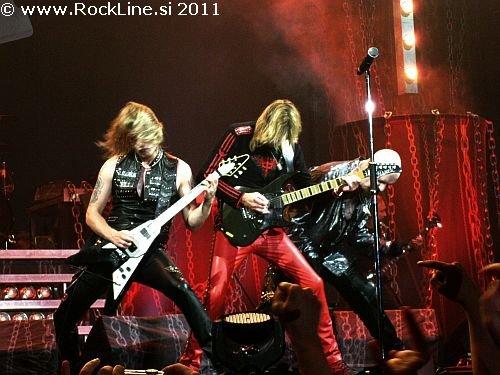
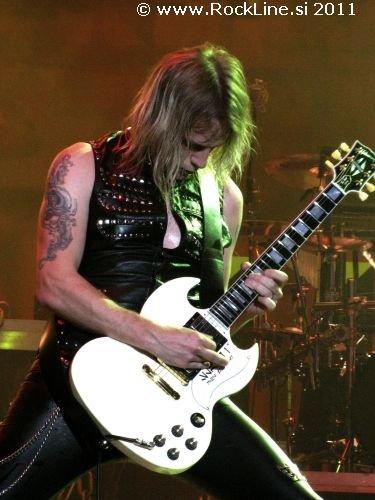
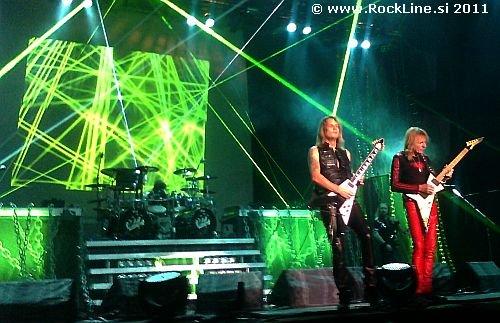
The key point stirring tempers this time was of course the guitar work. Glenn Tipton wasn’t keeping company with K.K. But someone else was. He looked very much like K.K. Just considerably rejuvenated. Richie Faulkner. A totally unknown name, who drew attention as part of the backing band of singer Lauren Harris, daughter of Steve Harris, bassist of the famous Iron Maiden. Faulkner took over K.K. Downing’s basic role. He took over his stage getup, even his hairdo. He took over his guitar gear, ringed with the same brands and types of guitars K.K. used. And he justified this place of honor with a bravura stage execution and a style of playing that also recalled K.K. Downing in his stage movement. It’s precisely his excellent command of the Judas Priest repertoire that earned Faulkner so many winning points that the Judas Priest show kept the whole pedigree of its former classic-era greatness with K.K. in the lineup. Faulkner is a truly excellent guitarist. In some of K.K.’s original solos he actually came within an inch, and where he didn’t step exactly into his predecessor’s shoes, he shaped them tastefully and in keeping with the essence of the classic Priest repertoire. Tipton and company can trust Faulkner 100%. Priest treated Richie extremely decently. They accepted him as one of their own. Not a single member showed him even a speck of superiority. In numbers like Hell Bent For Leather and Breaking The Law, Faulkner and Tipton of course didn’t forget to do their “plucking” shoulder to shoulder. That’s also one of those metal standards that Priest were the first on the planet to present. Excellent playing from both guitarists. Exceptional dynamics, exceptional feel. To be honest, we’d have preferred to see K.K. in Faulkner’s place in any case, but it’s clear that in the given situation, with the “newborn golfer” who chose early retirement, Priest have optimized things with Faulkner and can now keep rolling on with plenty of flexibility, completely relaxed and unburdened.
Judas Priest surprised with a few exceptional picks. The first was Never Satisfied from the debut studio album “Rocka Rolla” (1974), and even before it Starbreaker (“Sin Afer Sin”, 1977), while one of the set’s highlights was the performance of the mini-epic from the album “Ram It Down” (1988), Blood Red Skies.
The garnish of fantastic creations Heading Out To The Highway, The Sentinel, Night Crawler, Beyond The Realms Of Death and Turbo Lover managed, with little effort, to hold the crowd hypnotized in the singular Judas Priest world that unfolded before us over a good two hours. Plenty of pyro, salvos of smoke, especially at the start and end of the show, an entire Breaking The Law that Halford handed over to the crowd. Three encores.
All in all an excellent experience, worth every euro invested in a ticket. You have to accept the fact that the band isn’t dewy-eyed young anymore. Even so, with brilliant playing they still handle the giant stage construction and set, with all its generous seasoning of laser lights and pyrotechnic eruptions, with ease.
The question is how many shows the band has left. Every one Priest play today could also be the last. And despite hard weighing of whether Priest can still be Priest on stage after K.K. Downing’s departure, or whether they can justify their name after K.K. left, the fact speaks in favor of Priest being able to carry on without K.K. The Vienna show confirmed it all. It was more than excellent. A shock-show therapy of theater! Full of effects, unique Priest magic, the unique metal bible of the band! We don’t know what will happen with Priest in the future. Will they really call it quits? Will they still gather some energy and extend their career for a new studio album? The tour before the band’s announced retirement is worth every visit, especially for those who have never seen Judas Priest on stage in their lives. It’s quite likely that after the “Epitaph” tour, there will never be another. Given what Judas Priest have given and brought us with their music over the years, they long ago earned and bloodily deserved their rest, with the highest honors. Whether or not this is the last RockLine concert report from a Judas Priest show, I can say only one thing. “Thank you, gods of metal!”
photos: Jože Hvala, Aleš Podbrežnik (bottom far-right photo of Judas Priest)
Setlist
THIN LIZZY:
1. Are You Ready
2. Waiting For An Alibi
3. Jailbreak
4. Don’t Believe A Word
5. Whiskey in the Jar
6. Cowboy Song
7. The Boys Are Back In Town
8. Rosalie
WHITESNAKE:
1. Best Years
2. Give Me All Your Love
3. Love Ain’t No Stranger
4. Is This Love
5. Steal Your Heart Away
6. Forevermore
7. Guitar solo (Doug Aldrich/Reb Beach)
8. Love Will Set You Free
9. Drum Solo (Brian Tichy)
10. Slide It In
11. Fool For Your Lovin’
12. Here I Go Again
13. Still Of The Night
JUDAS PRIEST:
1. Battle Hymn (intro)
2. Rapid Fire
3. Metal Gods
4. Heading Out To The Highway
5. Judas Rising
6. Starbreaker
7. Victim Of Changes
8. Never Satisfied
9. Diamonds & Rust
10. Dawn Of Creation (intro)
11. Prophecy
12. Night Crawler
13. Turbo Lover
14. Beyond The Realms Of Death
15. The Sentinel
16. Blood Red Skies
17. The Green Manalishi (With The Two-Pronged Crown)
18. Breaking The Law
19. Painkiller
—encore I.—
20. The Hellion
21. Electric Eye
—encore II.—
22. Hell Bent For Leather
23. You’ve Got Another Thing Comin’
—encore III.—
24. Living After Midnight
Photo Gallery