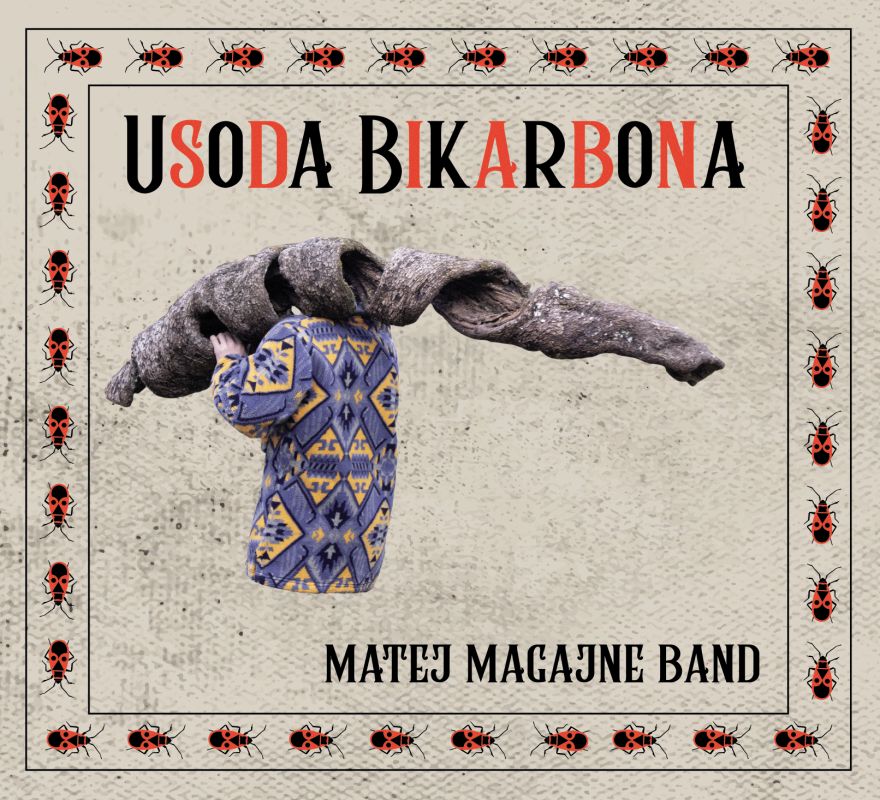
Self-released
Release date: 3/3/2021
Production: Dejan Lapanja
Album length: 43.04 min
Genre: Blues Rock/Jazz Rock Fusion
Rating: 8.0/10
Matej Magajne Band is a quartet that’s been around for two and a half years. Its founder, as you already read up top, is Matej Magajne. He’s one of the most interesting Slovenian rock, blues rock and also jazz and rock fusion guitarists, with one of the most distinctive approaches to guitar playing. As a permanent member of Feedback, Salamandra Salamandra, Poltrona Express and Bakalina velika, Matej has already shown an exceptional musical arsenal in his playing. What always gets you is his incredible sensuality, the feel that goes with every freely “bent,” freely given and struck, “pulled” note. The musical landscape his guitar paints in colorful organic hues works like a magnet that pulls the listener in and never lets go of its magical playfulness.
A guitarist this expressive needs very good people around him. Good? Make that downright excellent. Matej is joined by three musicians who have known him well for years, mostly through past collaborations. Drummer Gašper Peršl is a top-notch jazz drummer, so it’s no surprise he works with the biggest names on the Slovenian music scene, like Vlado Kreslin. Bassist Andrej Klavžar is Matej’s close partner in the Tolmin-based jazz and blues rock fusionists Feedback, and keyboardist Žiga Kovačič, who recently found a home in Idrci Divje jezero, teams up with Matej in Poltrona Express as well. In short, all four are instrumentalists at heart. Why do I point that out? Because “Usoda Bikarbona,” the debut from Matej Magajne Band, is also, and first and foremost, a vocal album.
“Usoda Bikarbona” is thus an album that goes looking for more compactness, more form. The playful, lucid instrumental looseness of the musicians’ back-and-forth is definitely still clear and present, but even so, this time things often bow to the logic of vocal delivery. The vocals are handled by Matej Magajne, and you can really tell he rarely steps into this role. You hear it mostly in the phrasing, where (because of the occasional thicket of words) the singing sometimes comes across as a sermon, or spoken word. The opener Kako je možno flags this right away. The lyrics carry deep messages and call for reconciliation, for finding a new connection with Mother Nature, for inner peace and even spirituality, but it’s immediately clear that the vocal delivery follows the logic of musicians who’ve spent years working as strict instrumentalists, which makes the vocals the weaker side of the album. Partly because Magajne is first and foremost not a vocalist, and partly because getting real musicality out of singing in Slovenian is a longer road than it is in, say, English. Hitting the right phrasing in Slovenian is simply harder. Then again, the Slovenian language of course gives this album an extra element of distinctiveness. Using it automatically sneaks a touch of pop and cabaret into the music. That move is kind of logical, since the band was looking for an artistic detour, a break from the bands, projects and activities the quartet’s members are otherwise known for. So bringing in vocals this time makes sense and is a welcome ingredient, since the musicians wanted to “unstick” themselves from their usual creative standards. It’s just not necessarily brilliantly executed.
The quartet makes no secret of its affinity for discovering the fauna of Slovenian true bugs. The front and back of the album sleeve are dotted with the firebug (Pyrrhocoris apterus), which, as a xylophage, likes to hang around in rotting wood, and which brings an element of lucidity and playfulness to the 43 minutes of music, which is very good. The track Pijača is really the moment that shows the essence of the band’s musical artistry all in one place. It’s got everything. Playful delivery of the lyrics. Even Matej’s theatrical moment of preaching in the style of “Father Celestin” isn’t missing. In the second half the track moves into blues rock and jazz rock fusion territory, where Matej shines with a brilliant solo. Yes. The whole thing pulls toward Feedback. Then there’s the fourth track, Kovanje, which could easily have been recorded for any Feedback album, especially when it comes to the brilliant, entertaining interplay of solo improvisations between guitar and Hammond organ. Lively and exuberant. Tablature follows in much the same spirit, though the band added vocals to it. In this one the group develops an especially fascinating musicality from about two and a half minutes in, with piercing solo spots teeming out of the Hammond organ and Matej’s guitar in turn, while Gašper Peršl stretches out much more on the transitional parts. It’s one of the most interesting and successful tracks on the whole record, especially once the instrumental section kicks in, because by stringing together its lead motifs the band manages to develop that rare ingredient among Slovenian rock musicians. That is mystique. Na kavču is basically a blues rocker, salted with twisting improvised tunes that make for a top-notch dialogue between guitar and keyboards and call up associations with the British “white blues boom” of the second half of the sixties. Križana gora chases a folk rock sentiment. The varied course of events on the album will be especially exciting for more demanding listeners.
The sound is extremely pleasing. Warm, alive, organic, analog. In all its honest glory. Recorded “in one take” and without any later kitschy polishing. Honest and truthful like few releases in 2021. In that sense it even feels retro-nostalgic. It takes you straight to the vibe of the seventies. Easily.
The quartet is a band of excellent musicians who found plenty of joyful fun in making this record together in their new lineup. Too bad the Covid-19 pandemic caught up with them, so we’ll have to wait before we can catch the crew on stage somewhere. One thing, though: the vocals. There’s still room to grow there, and it’ll need polishing and refining on future releases so the musical substance flows even better and gets more compact (coherent). Otherwise, “Usoda bikarbona” offers a full-blooded bag of the musical substance that defines the players described in the first paragraph of this review, which means there’s no messing around here, and it’s a quality musical achievement all around.
Author: Aleš Podbrežnik
Track list:
1. Kako je možno
2. Vodovje
3. Pijača
4. Kovanje
5. Tablature
6. Kaj bo zraslo?
7. Na kavču
8. Križana gora
Line-up:
Matej Magajne – guitar, vocals
Žiga Kovačič – keyboards
Andrej Klavžar – bass guitar
Gašper Peršl – drums