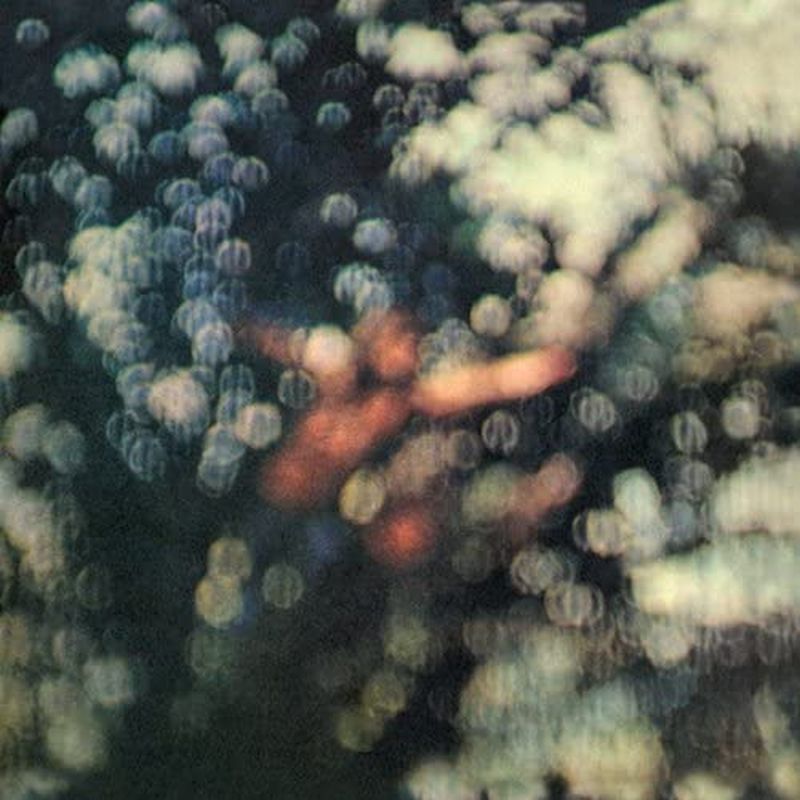
Label: EMI Records
Release date: 2. 6. 1972
Production: Pink Floyd
Album length: 40.08 min
Genre: Progressive Rock/Psychadelic Rock
Rating: 8.0/10
“Obsured by Clouds” is one of those Pink Floyd albums that doesn’t come up all that often when people list the best moments in the career of this legendary band. That’s fair to a degree, since it’s “only” a film soundtrack, but it’s also a little unjust, because the record doesn’t have a single bad moment and pretty much every track serves up plenty of listening pleasure. The album had the bad luck of landing right after the groundbreaking masterpiece “Meddle” (1971), where they first found their signature sound, and right before the monumental “Dark Side of the Moon” (1973). “Obscured by Clouds” doesn’t reach the artistic depth of those two, and a few of the tracks even feel slightly unfinished, but that only holds if you measure it against the usual, extremely demanding Pink Floyd prog rock standards.
It contains the score for the film “La Valle”, directed by the acclaimed Swiss filmmaker Barbet Schroeder. Pink Floyd were by no means newcomers to film music by then, having already worked with Schroeder on the film “More” (1969), while their successful forays into the movie business also include the soundtracks for “The Committee” (1968) and “Zabriskie Point” (1970). Like most film scores, “Obscured by Clouds” (some early versions of the album came out under the title “The Valley”, the English translation of the film’s name) carries a concept that most of the tracks tie into.
The story, or rather the screenplay, of the film follows Viviane, the wife of a French ambassador, who sets off to visit New Guinea. She’s gone there to scout out the local fashion boutiques. Hoping to get her hands on rare bird feathers to enrich her fashion collection, she joins a research expedition heading into the heart of the jungle to find a mysterious, lost valley. Midway through the journey, Viviane increasingly sheds the shackles of “civilization” and grows enthusiastic about living in touch with nature. In time, the explorers discover an unexplored region, where they’re surrounded by mysterious mud people, members of a tribe not yet touched by civilization. The expedition members befriend them, and Viviane, whose spiritual values have by then changed quite a bit, decides in the end that she’d rather stay with them than go back to “civilization”.
The individual tracks tell the story of Viviane’s journey and its key events through music, while the mood of the album keeps swinging between childlike playfulness and incurable melancholy and nostalgia, the kind that only Pink Floyd are capable of conjuring up. As usual, most of the lyrics were written by bassist and vocalist Roger Waters, though none of them relate directly to the film.
It’s worth mentioning that the band members also used some instruments on the album that counted as cutting-edge technology at the time. A nice example of this tinkering with keyboard textures that were revolutionary for the era is the title instrumental. The opening track boasts an inventive use of electronic drums and EMS VCS3 synthesizers. Rick Wright coaxes a monotone, repetitive texture out of them, soon joined by slide guitar accompaniment from Dave Gilmour. It’s all backed by an electronically tinged rhythm line courtesy of Nick Mason. The end result is a mysterious, slightly futuristic atmosphere that’s somewhat reminiscent of the work of the krautrock bands of the day, led by Can. This track, which along with “Childhood’s End” was the only song from the album they ever played live, often opened their concerts in 1973.
The next instrumental, “When You’re In”, is another relatively atypical but interesting piece, a hard rocker built on punchy guitar phrases and the velvety sound of the Hammond organ. A good idea is only slightly spoiled by the sudden, rushed ending of the track, which makes it feel a bit unfinished. On the excellent “Burning Bridges”, Pink Floyd build a successful bridge between the dreamy psychedelia of their early years and the art rock melancholy they first discovered on “Meddle”. Wright spins a romantic melody on the Hammond organ, while Gilmour’s trademark “weeping” slide guitar licks take care of the melancholic bits. Their splendid trading of vocal parts is another of the main charms of this great track. Its melody returns later on the instrumental “Mudmen”, just in a slightly altered time signature.
The rowdy “The Gold It is In the…”, where Gilmour once again rules on slide guitar and vocals, is another hard rocker, this time with a more than obvious blues foundation. The gorgeous acoustic ballad “Wot’s…Uh the Deal” is Gilmour’s next “star” moment, where the legendary guitarist charms with a wonderful melody and superb singing. David only remembered this song again many years later, when it became part of his live shows in 2006 (he performed it alongside Rick Wright).
The track “Childhood’s End” was inspired by the novel of the same name by Arthur C. Clarke. Its lyrics tell of the last days of Jan Rodricks, the last man on Earth, and of the price humanity had to pay in the closing pages of the book. Gilmour shines again with a combination of heart-wrenching slides and an excellent vocal performance, with spirited Hammond organ work keeping him good company. An interesting tidbit about it is that, right up until the album “A Momentary Lapse of Reason” (1987), it was the last Pink Floyd song written entirely by Dave Gilmour alone, meaning he wrote both the music and the lyrics.
Waters’ creation “Free Four”, which also came out as a single, was the first Pink Floyd song to get any real airplay on American radio stations. It’s also the first song in the band’s history whose lyrics refer directly to the death of Eric Fletcher Waters, Roger’s father, a theme Roger would keep coming back to throughout most of his musical career. The song is based on a fairly simple rock’n’roll motif with handclaps along the way and easygoing guitar phrases, which eventually drift into somewhat heavier waters. Mr. Waters shines with a characteristically somewhat cynical vocal performance and thick bass lines.
The excellent ballad “Stay” is another chance for Rick Wright to shine with sensitive piano playing and melancholic singing, while Waters’ bass and Gilmour’s playful use of the wah-wah pedal accompany him. The closing ambient instrumental “Absolutely Curtains” is steeped in incredible atmosphere thanks to Wright’s wizardry on the VCS3 synthesizer, electric piano and Hammond organ, as well as Mason’s witty use of cymbals. At the end you can hear the cheerful singing of the African Mapuga tribe, which also appears in the film.
“Obscured by Clouds” admittedly isn’t among the best achievements in the story of this legendary band, most of which went down in rock history in golden letters, but it’s still a very interesting, if not excellent, soundtrack. The Pink Floyd collective was brimming with great ideas in this period, which shows most in the variety of the tracks, and their signature sound had already been born by then. In the flood of masterpieces Pink Floyd churned out in the seventies like on a conveyor belt, the only fairly reliable gauge of this album’s quality is that it’s a noticeably better effort than “More” and that several of its tracks served as the groundwork for the sonic identity of “Dark Side of the Moon”.
Author: Peter “Dr. ProgRock” Podbrežnik
Track list:
1. Obscured By Clouds
2. When You’re In
3. Burning Bridges
4. The Gold It’s In The …
5. Wots … Uh The Deal
6. Mudmen
7. Childhood’s End
8. Free Four
9. Stay
10. Absolutely Curtains
Lineup:
David Gilmour – guitar, vocals, VCS3
Nick Mason – drums, percussion
Roger Waters – bass guitar, vocals, VCS3
Richard Wright – keyboards, vocals, VCS3, Hammond organ