Venue: Teatro Palamostre, Udine, Italy
Concert date: 24.06.2006
Attendance: 350
Ticket price: €15.00
Gilad Atzmon & The Orient House Ensemble: 21.05
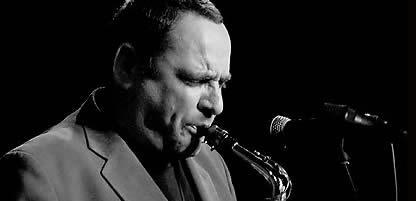
There were fewer people than the day before at Fripp, and the show started almost exactly at 21.00. We were treated to a very particular take on jazz. Israeli saxophonist Gilad Atzmon brought along his band The Orient House Ensemble, made up of accordion, violin, piano, vocals, double bass and, of course, drums. They kicked off with a ton of energy, I’d even say furious, with the track Liberating The American People, and kept that spirit going through the whole set, which showcased their current studio album “musiK”. Atzmon made it clear right away that he’s a stylistic oddball with his own jazz perspective, serving up a witty blend of Eastern-Oriental folk elements and Gypsy touches woven into a classic jazz form. No doubt about it. On stage Atzmon came across like a soldier. He glared darkly from under his brow, eyed his bandmates grimly, and he seemed to be blowing into his alto sax almost foaming at the mouth during the solos. The violin and accordion teamed up on the harmonies of impressive motifs full of Arabic scales. The guys showed incredible tightness, stringing together different motifs and solos and switching moods in a flash, without losing the thread for even a moment. At the end of the song Atzmon said it was dedicated to the liberation of the people of the USA from Bush’s yoke. He thought on his feet, telling the Italian audience that, for example, Italians had just gotten rid of Berlusconi, so now it was time to free the Americans from Bush. Next came a song dedicated to the “BBS triangle” (Bush, Blair, Sharon), as Atzmon introduced it, called Re-arranging The Twentieth Century. The track created an image of its own title. The start was sleepy and lazy, and we swayed along to a slow rhythm carried by the piano, until a “French” accordion crept in and led an extraordinary solo turn, soft and sensual, in the true spirit of total melancholy, soon joined by the violin. Then the band suddenly cut the track short with outbursts of disharmony and wove in a wild motif of tearing down the gentle melody they’d built, only to come back twisting a Gershwin motif taken from It Ain’t Necessarily So. They threw in typical Oriental inserts too, and the whole experience in the hall was something special. The musicians dazzled with their precision, since it turned out to be an extremely complex composition and everything in it worked without a single slip. In short, the song illustrates the realization that the current state of mind carried by our “unfortunate” 21st century has to change. That’s why Gershwin is woven in (Americans as the embodiment of all of today’s woes), along with those destructive, disharmonic breaks that herald the end of one era and the birth of another through a complete transformation. After that the guys tackled their own version of the legendary song Lily Marlene (Norbert Schultz), which the vocalist sang in Spanish, along with their track And She Is Happy. So the show itself was loaded with a high degree of cynicism from start to finish. Atzmon played alto sax, soprano sax and clarinet during the concert. During the other musicians’ solos, Atzmon strolled from player to player like an officer carefully inspecting his platoon. He proved to be a man with a great sense of humor. At the end he said that this gig in Udine would be their last ever. After six years together he plans to disband The Orient House Ensemble, and each member will turn to new projects. The international lineup, which includes an Iraqi (vocals) and an Afghan (violin), among others, the ones the Americans and Russians haven’t wiped out yet (Atzmon had everyone in mind there too), wrapped up their set at 22:20. Maybe the mixing of politics into music, a result of the Israeli’s rage, is a bit bothersome, but if you set that aside, like I said, it was a special kind of experience, full of unexpected surprises and unpredictability, and the initially fairly reserved crowd greeted it at the end with thunderous enthusiasm.
The Soft Machine Legacy: 22.45
What? Did I just hear a variation on Soft Machine? Soft Machine? They were undisputed musical innovators of their time. They started out as a psychedelic pop band led by Kevin Ayers and Robert Wyatt. Over the years the band morphed into an experimental jazz rock outfit in its classic period of the early seventies, and later mellowed out its image with a more mainstream-friendly, contemporary-flavored sound. What’s left of the old Soft Machine is today most legitimately united in The Soft Machine Legacy. Sadly, former Soft Machine member Elton Dean, who played with The Soft Machine Legacy, passed away three months ago, so The Soft Machine Legacy are left with “just” three former Soft Machine members: drummer John Marshall, bassist Hugh Hopper and guitarist John Etheridge. Joining them as Elton Dean’s replacement is Theo Travis, who inherited Elton Dean’s original alto sax, which he also played at the Udine gig. The band opened the show with the new track Ash. A short introductory “tuning” section, certainly with a heavily drenched reverb effect on Etheridge’s guitar, was a good finger warm-up. Travis fires up the melody on the “saxello” and the concert is off and running.
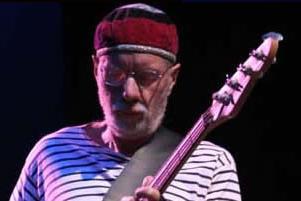
Sure, they look old. But as has been proven countless times: old, and getting better and better on concert stages. Etheridge on Yamaha’s version of a Gibson ES 335, Hooper on a four-string Peavey bass, Marshall on a classic Sonor drum kit, they dug in with commitment, and you could feel how much fun they were having up there. Etheridge handled all the contact with the audience and sort of led the band’s performance. The Soft Machine Legacy are much more jazz than Soft Machine ever were, even in their most jazz-leaning period. Of course they still sail within recognizable jazz rock waters, but there wasn’t a whiff of any Soft Machine Canterbury flavor, since there are no flutes and no keyboards, for instance. The guys quickly developed an excellent version of the jazz-rock interplay, burning with fluidity, speed and damn fine precision. They were incredibly convincing, since, as already said, they were visibly enjoying themselves on stage. Only saxophonist Travis kept a bit of distance from the audience, looking out at the crowd for the first time only once the band had finished its set. As if he still felt a little awkward and uneasy standing in Elton Dean’s spot. He absolutely didn’t disappoint us though, showing off all his excellence and musical perfection and convincing us he’s the right man for The Soft Machine Legacy. Etheridge and Travis of course relied on sheet music, since both faced a sea of notes strung together in the most possible and impossible combinations. Next came Seven For Lee, written by the late Elton Dean, and then the majestic 1212, which didn’t hide the band’s exploratory spirit, with Hopper playing with a pedal that coaxed a kind of jet-compressed sound out of his bass, trailing behind every note he struck. Guitar and sax were interwoven in superb communication, which was nothing less than first-rate jazz rock fusion. Here they proved that four is absolutely enough and nobody else is needed. The track was intense and the energy grew with every round. The guys kept on enjoying showing off their hand skills. And then, when everything already seems perfect and you’re right on the edge of nirvana, a string snaps. Not on Etheridge, but on Hopper’s bass, and not just any string, the third one. The man was really going for it. During the break Etheridge praised his colleague, saying it was the first time in his career that Hopper had “hit it” a touch too hard and torn a string. While Hopper was busy swapping the string, deeply absorbed, the guys of course didn’t sit idle, and Etheridge launched into a short guitar solo. It was followed by yet another completely new song titled Strange Comfort. The band radiated an incredible level of inspiration and freshness. Top-class jazz rock fusion, sudden switches, rhythm changes; you could see these men have a huge amount of mileage behind them. And then came what we’d been eagerly waiting for and what lured us to Teatro Palamostre in the first place. The legendary Soft Machine songs. They started with As If, then moved into Kings And Queens (“Fourth”, 1971), which was one of the highlights of the concert, especially after the crowd got roaring too. Now the psychedelia crept onto the stage, and the experimentally dreamy classic was a bigger departure from the repertoire played until then. It hit its atmospheric peak in the outro, when the guys played the closing motif ever softer, until absolute silence flooded the stage. But that wasn’t all. Now John Marshall exploded and went nuts on the drums. The song: Two Down. Etheridge joined in on the madness and after barely three minutes switched to a “rock riff” that Travis’s sax amplified. Another new song! Big Creese. A great track that once again underlined how creative the masters are in their mature years, how untamed, and how hungry and thirsty for playing live. Probably their best new song when it comes to chasing the ideal jazz rock fusion mix, and certainly the “heaviest” of the lot, which meant we were nearing the likely end of the show. And so it was. An explosive finish and a classic ending. On the final hit Etheridge leaps high in the air, like some N.W.O.B.H.M. metalhead in spandex and Puma sneakers from the mid-eighties, and that’s the end of the concert.
But the guys are back for one more song. They delighted all the true Soft Machine fans with a performance of Facelift, taken from one of the most revered Soft Machine records, “Third” (1970). The excellence of the performance took your breath away and only proved how damn true the saying about aging wine is. Show over at 00.15.
In the end there’s nothing to say but: absolute magic. Maybe a tiny minus for not playing a few more songs, but still. The Soft Machine Legacy prove they’re very much the legitimate heirs to the Soft Machine legacy, even though Etheridge, Hopper and Marshall as Soft Machine members never actually appeared together in the lineup on a single Soft Machine studio album. When you see them together, and now with Travis in Dean’s role, you can’t hide your approval and joy that the Soft Machine classics still ring out on stages across Europe today. On top of that, the guys write new material themselves, which shows that after all these long years in the music business they’ve by no means run out of creative energy and adventurous spirit. They definitely haven’t played their last note yet.
Setlist
1. Ash
2. Seven For Lee
3. 1212
4. Guitar Solo
5. Strange Comfort
6. As If
7. Kings And Queens
8. Two Down
9. Big Creese
—encore—
10. Facelift
Photo gallery