“Atom Heart Mother”, Pink Floyd’s fifth studio album overall, is considered one of the most overlooked records of their entire career, even though with it the band put out something completely different from its predecessor »Ummagumma« (1969, RockLine review), and with it they reached the final stage of their evolution in the psychedelic era. Once again the album features one long composition, created »as a group«, followed by four shorter pieces where each of the four members of the quartet steps up – as an individual – as the main composer. It’s an album that to this day is better known for its wacky cover than for the music itself.
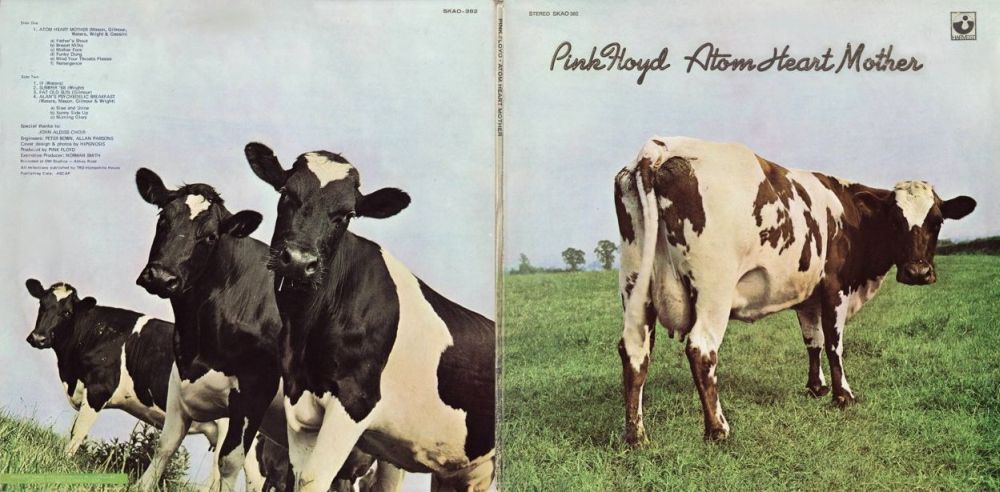
The album came out on October 2, 1970 on EMI Records and hit No. 1 on the band’s home chart in Britain and No. 55 in the US, where it eventually went gold, too. It was recorded at Abbey Road studio. It came with a cover that at first glance makes you think you’re looking at a children’s picture book about farm animals – just a photograph, with no band name and no album title. There are no photos of the band members either. Flip the cover over or open up the gatefold sleeve of the vinyl, and all you get is even more heads of cattle. Ron Geesin also received a writing credit on the album, having played an important role in composing the nearly 24-minute suite.
This is the story of an album where, looking at its cover – from left to right – the first thing to jump out at you is the rear end of a dairy cow, and on which the sounds of morning cutlery clattering in Mason’s kitchen mix with the smell of fried bacon, sizzling sunny-side-up eggs and whatever else ended up in the frying pan of one of the band’s roadies. An album that stands as a brilliant closing manifesto of artistry from the band’s psychedelic era, and an album that neither Gilmour nor Waters has ever – and this still holds today – had much good to say about. And despite all that, the band’s first album to make it all the way to No. 1 on the British album chart.
To get a real sense of how the album »Atom Heart Mother« (RockLine review) came about, we have to dig back into the second half of the sixties once again. After the album »A Saucerful of Secrets« (1968, RockLine review), the band contributed the music for the art film »More« (1969, RockLine review). So Pink Floyd already had some experience writing music for film. And so it happened that one fine day they got another offer to write a film score.
Those of you who happen to own the fascinating box set »The Early Years 1965-1972« know that one of its discs, titled Devi/Ation, is devoted to the album “Atom Heart Mother” and to part of the soundtrack for the film »Zabriskie Point«, which was the starting point for what later became the suite, i.e. the album’s title track. This document is in fact the earliest recording of a version of the Atom Heart Mother suite, as well as early film footage of it being performed.
Although Pink Floyd went on to record even better albums – let’s be honest, it was only with »Meddle« (1971, RockLine review) that they finally staked out their sound and style –, the musical adventure of »Atom Heart Mother« still belongs to their era of unbridled musical experimentation, when the band would »throw« countless tiny fragments into one pile and try to stitch them together into a whole as boldly as they possibly could. In November 1969 Pink Floyd traveled to Rome, where they hooked up with Michelangelo Antonioni to record music for the film »Zabriskie Point«. That soundtrack also features music contributed by, among others, Grateful Dead. Waters recalls that working with Antonioni was utterly unbearable, as the director was never happy with anything. Ever. He stayed dissatisfied even after the band went back and »fixed« the recordings according to his suggestions and wishes. Things went so far that Antonioni started jealously panicking that the music might overshadow his film. Working with Antonioni turned out to be mission impossible, and after two weeks Pink Floyd left Rome. They ended up contributing three tracks to the film of this “eternally unsatisfied director”, but quite a bit of other material came out of Rome as well. These were separate musical pieces on which the band later started building the title suite. So Pink Floyd’s trip to Rome wasn’t a total waste after all. The central motif written there – the one that became the focal point on which the band began building the new work – is a Gilmour phrase that Pink Floyd recognized at the time as really catchy, while mockingly dubbing it, thanks to what it reminded them of, “the theme for a dreadful western”. Officially, though, it was publicly referred to as “Theme from an Imaginary Western«. By the way, it was also there in Rome that the song The Violent Sequence was written, which was renamed Us And Them when it landed on the album »The Dark Side Of the Moon« (1973, RockLine review).
In one of his interviews from the time, Roger Waters teased the public with hints that the band was about to record the soundtrack for an animated film called »Rollo« – supposedly inspired by The Beatles’ »Yellow Submarine« and telling the story of a boy who loses his compass in outer space –, but that’s as far as it went. Instead, the band headed to Abbey Road studio to record their new music. EMI Records had just equipped itself with new technological monsters – eight-track recorders, model »EMI TG12345«, running inch-wide tape – and laid down the law to the band: no edits. In other words, they weren’t allowed to record the composition in separate sections. So the band had to play it in one piece, which meant that Roger Waters and Nick Mason laid down the bass and drums mostly on the first take.
The band first performed the new composition – at least going by the available accounts and records – on January 17, 1970 in Hull. With each subsequent performance the piece kept growing, getting longer and longer, in step with the endless stream of new ideas Pink Floyd kept working into it. Although they’d been road-testing it on stage for weeks, the band knew and felt that something was missing. That something was an orchestra.
This is where Ron Geesin enters the story – a Scottish poet, composer, producer and classically trained pianist, born in Ayrshire, who also played the banjo. In the sixties he recorded music for commercials in his basement studio in Notting Hill. Geesin was introduced to Floyd’s Nick Mason by Rolling Stones tour manager Sam Jonas Cutler. Up to that point Geesin didn’t know Pink Floyd’s music at all, and when he finally got around to hearing it, he was anything but impressed. He described it as »astral wandering«. Geesin was far more into operatic works than most of the rock’n’roll of the day. So one fine day he invited Mason, Gilmour and Rick Wright to a performance of Wagner’s Parsifal. He later commented on the occasion: »The most noteworthy observation of the whole thing was that all three of them fell asleep during the performance«. Despite their clashing musical tastes, Geesin was actually the best possible choice at that moment. He and Waters had previously composed music together for the science documentary The Body. That work was marked by a combination of conventional instruments and sounds produced by the human body: breathing, talking, farting … Atom Heart Mother (the suite) offered a similar fusion of standard and extraordinary sounds.
Many years later Geesin said that Pink Floyd showed up with a pretty vague vision of what they actually wanted: »As I remember, Dave (David Gilmour – ed.) told me about some theme he’d written. Then Rick Wright came over to my studio. Together we ran through a few phrases for the vocal section. Pink Floyd then went off on a US tour and left me alone to get on with it in the meantime.« Geesin wrote the music at his home in Notting Hill, in the sweltering peak of the summer of 1970. As it turned out, the Scottish musician played a vital role in the upcoming new studio album by Pink Floyd.
The early seventies, and even a little before, turned out to be a time of challenges for classically trained musicians and composers, as every long-haired rock band out there was after brass and woodwinds for their music. It started with The Beatles. They were followed by Barclay James Harvest, The Moody Blues, The Nice and Deep Purple with their album “Concerto For Group and Orchestra” (1969, RockLine review). Pink Floyd joined them on the scene with a similar idea.
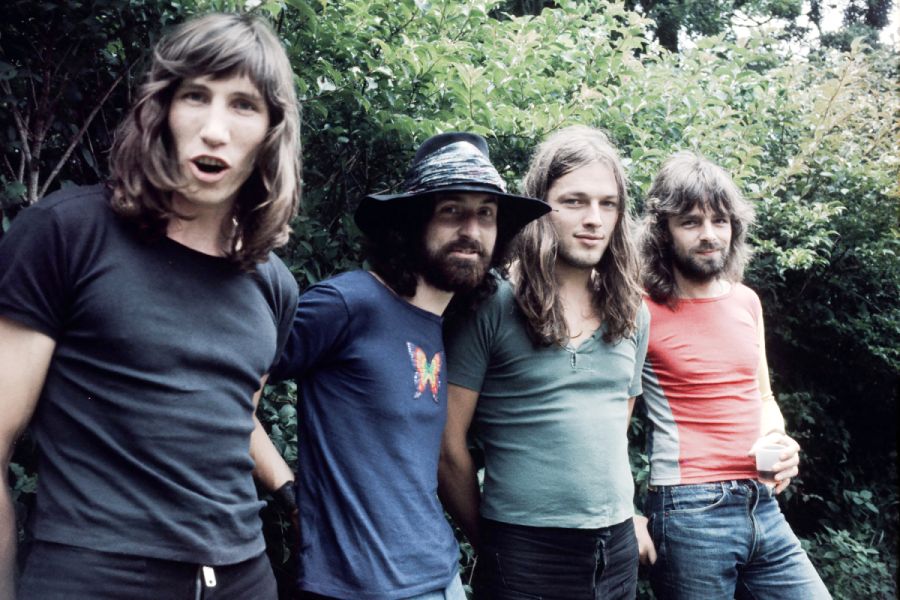
Ron Geesin had also worked successfully with the New Philharmonic Orchestra, recording commercials with them. In fact, the orchestra’s members held him in high regard. But when he turned up at Abbey Road studio in June 1970, where EMI had sent its own EMI Pops Orchestra for the session, the players looked down their noses at him like some lost hippie and made the recording as hard as they possibly could. They simply didn’t recognize his authority. Geesin later said: “An experienced conductor would have taken it in his stride, as something perfectly routine, just part of the job of getting an orchestra to respect the pecking order. But I was a total novice. I wasn’t a conductor. Whenever I explained something to the players or asked them something, they’d shoot back: ‘You explain it to us. We don’t get it.’ One horn player in particular had a real mouth on him.” When Geesin threatened to deck him if he didn’t shut his trap, the label people asked Geesin to leave, and that was the end of him.
Geesin was replaced by conductor John Alldis, a choirmaster highly respected in music circles. The “rebellious studio legionnaires” quickly got along with him, while Alldis’s choir contributed wordless choral singing. In places it came across as deliberately dissonant, and at times it produced almost eerie chants.
When Roger Waters described the first part of the Atom Heart Mother suite as “dragging”, the label wasn’t entirely off the mark. But then, at around the three-minute mark, Gilmour’s slide guitar enters the piece for the first time and, together with Icelandic cellist Hafliði Hallgrímsson, adds a striking contrast. It’s just one of the moments in the suite that hint at where the band was headed next, not only with “Meddle” but also with “The Dark Side of the Moon”. Even though the suite was actually pieced together while the band was still deep in its era of psychedelic rock experimentation, working with an orchestra forced Pink Floyd to become considerably more disciplined than they had been on its predecessor “Ummagumma” (1969). That meant the various sections of the gigantic, nearly 24-minute suite were now more concretely detailed and more fully worked out in terms of motifs. In the fifth part of the suite, titled Mind Your Throats Please, you can hear Mason’s distorted vocal shout: “Silence in the studio”. The shout is backed by a piano played through a Leslie speaker. Pink Floyd later used a similar trick on the epic Echoes (“Meddle”, 1971).
So Geesin had written the music for the orchestra, and when he heard the whole thing live, he said that under Alldis’s baton it all came out too soft and not aggressive enough, and that it wasn’t what he’d had in mind. Still, he concluded that the album was a very good compromise all round. On June 27, 1970, Pink Floyd appeared at the Bath Festival Of Blues And Progressive Music, joined by Alldis’s choir and a brass band going by the full name of The Philip Jones Brass Ensemble. That same festival also featured Led Zeppelin, who, just like Pink Floyd, released their album “III” in October of the same year – a similar RockLine article marking that album’s 50th anniversary is available HERE. Anyway, Pink Floyd and their whole entourage of accompanying musicians didn’t take the stage until dusk was falling, and Roger Waters introduced the new suite to the crowd as “The Amazing Pudding”.
At the end of July, Pink Floyd headed back to Abbey Road studio, where they started recording material for the B-side of the new album. The kind of creative freedom EMI Records gave them back then is impossible to imagine today. For the first time in their career, Pink Floyd took on the role of producers themselves, and if anyone from EMI so much as poked their head into the studio to snoop around, they were sent packing on the spot. One of the band’s studio assistants at the time, a deft hand at manipulating tape by the name of Alan Parsons – who later engineered “The Dark Side Of The Moon” and later still became famous for a string of evergreen art pop rock hits with his Alan Parsons Project – remembers an incident when a label rep showed up at the door. “Pink Floyd had a general dislike of the people who worked at the record company,” Parsons said, going on: “one day a guy from the label’s A&R staff turned up at the studio. ‘Come on in. We’ll play you a bit of our album,’ Roger and Ron Geesin told him.” The A&R visit had been announced in advance, and Parsons continues: “Before the guy got to the studio, Ron and Roger hid the mixing desk under the table and put on an old reel with a recording at 78 rpm. They played it through the studio’s speakers. The A&R man rolled his eyes in bewilderment and got out of there as fast as he could. Every one of us barely managed to keep a straight face.”
Nick Mason once said that Pink Floyd never throw away a new musical idea. Geesin recalls that the album’s remaining four tracks grew out of bits and pieces that were “lying scattered around the studio”. Anyone who knows the album will know that its B-side holds quite a few fascinating, excellent ideas that are nothing to sniff at. The song If shows Waters’s softer side. A remarkably perceptive lyric, sung with real tenderness in lines like: “… If I were alone, I would cry …”, “… if I were a good man, I’d understand the spaces between friends …” A confession that wakes you up. Like a wake-up call. Waters, who handled the band’s public relations and was gradually taking on more and more of the role of the band’s main driving force, put his sophisticated side on display here. Summer ’68 is Rick Wright’s work and tells of a one-night stand with a groupie, with a brass section joining his organ and distinctive vocals. Wright once joked: “Back then there were groupies everywhere. They’d come and look after you. Take care of you. They were like part of your personal luggage … And then they’d leave you with a dose of gonorrhea.”
The one who struggled most to come up with his song for the album was Gilmour, who was supposedly locked in Abbey Road studio until he’d written it. The lovely, fragile, psychedelically pastoral Fat Old Sun, which winks at you as morning breaks, puts the guitarist’s leisurely birdwatching, his personal flashes of thought at the smell of freshly mown lawns and similar associations front and center. Gilmour later said of it: “It’s a song that has remained ‘fantastically overlooked!’ In 2001 I wanted to get it onto the Echoes compilation, but my efforts were in vain.”
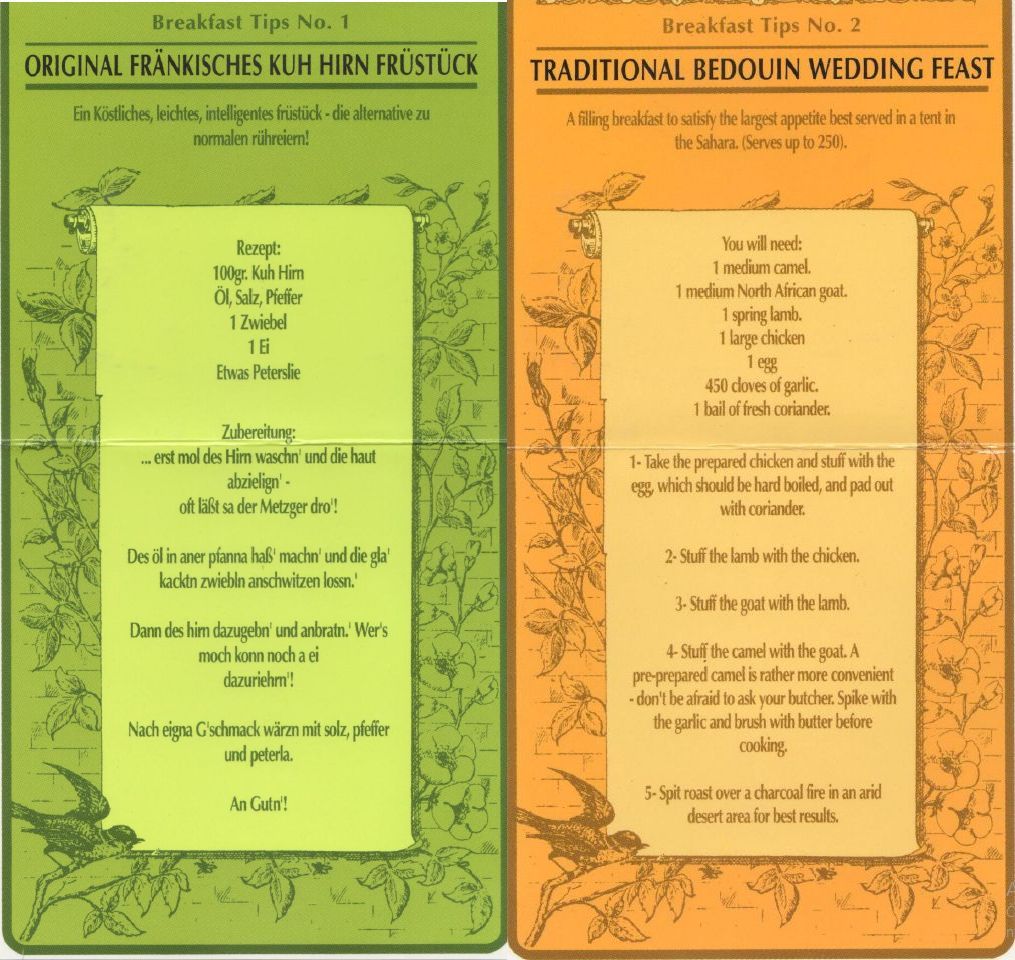
The album closes with the famous Alan’s Psychedelic Breakfast. A winding, snaking instrumental built around the morning goings-on in Mason’s kitchen, with all the resulting racket courtesy of the band’s tech, or roadie, Alan Styles. The track leans heavily on quadraphonic sound, which brilliantly conveys the spatial depth of the collision between conventional instruments and the room sounds Alan Styles set off while frying eggs and making toast. Alan Parsons recalls: “The first cut went ‘egg flies’. That was followed by a second with ‘hop?!?’ and the egg landed on the floor.” Alan’s Psychedelic Breakfast is Nick Mason’s “baby”, and he says the thing that still excites him most about it are the extra sound effects. The band got the inspiration for the track when they started improvising on a rhythmic pattern taken from water dripping from a tap.
Around that time, Pink Floyd had a special visitor. A very distinguished one. In the room next door, their former member Syd Barrett was recording his second solo studio album, with David Gilmour and Rick Wright also taking part. Every so often Barrett would pop into the room where Pink Floyd were recording, but each time he’d wrap up his fleeting visit very quickly, if not in a flash, and head back to his own recording room.
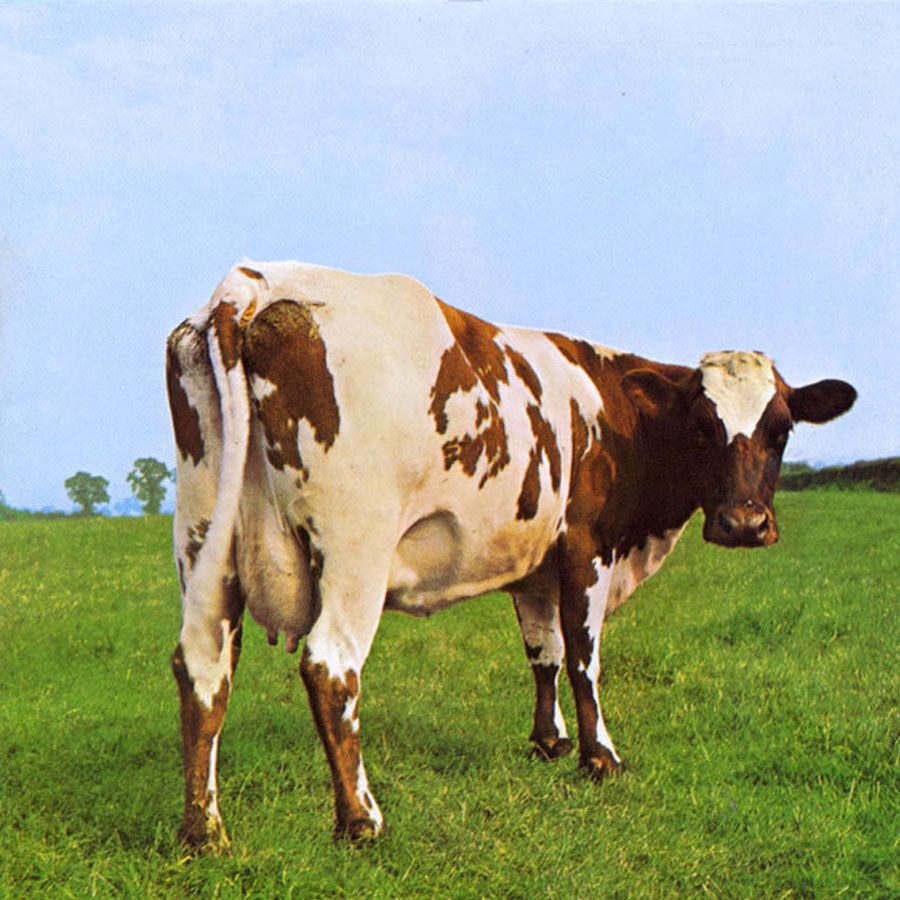
“Atom Heart Mother” is the album that, in David Gilmour’s estimation, stands as the band’s most fragmented studio work, born out of a heap of small ideas that cropped up from all over the place and that the band then stitched together into a whole. Gilmour, for his part, never showed much enthusiasm for the album’s content. Even today, the band’s fans probably aren’t entirely sure what the band was trying to say with a cinematic, psychedelic, prog rock suite, pastoral folk ballads and the sizzle of bacon and fried eggs. Hand on heart, the band themselves weren’t entirely sure either. The same kind of vagueness marked the album cover too. For its design, the band once again turned to the Hipgnosis agency. Its founder Storm Thorgerson and Aubrey ‘Po’ Powell therefore had no idea what they were actually supposed to create. And so, among their ideas, a cow turned up – which they pitched more as a joke than in earnest, but the band absolutely loved it.
The album still didn’t have a title, though. The original idea, “The Amazing Pudding”, somehow just didn’t stick anymore. The inspiration for the real title finally arrived on July 16, 1970, when Pink Floyd played a concert for DJ John Peel’s BBC show. That recording has since found a home on the release “Devi/Ation”. Also present at the BBC’s Paris Cinema studio, from which the broadcaster aired the concert, was its producer Jeff Griffin, who recalls: “Peely (John Peel’s nickname, ed.) was just reading the Evening Standard. Roger Waters was squinting at it over his shoulder. While flipping through the paper, Peely said: ‘Come on, guys! Surely you know by now what this new piece of yours is going to be called? I bet you can find something clever in this paper.’ Ron Geesin, who was also there, got Waters to leaf through the paper, suggesting: ‘Your title’s in there!’ And it was. As Waters turned the pages, he stopped at the headline ‘Atom Heart Mother Named’, above a story about Constance Landell, a 56-year-old woman who had been fitted with a radioactive plutonium pacemaker. ‘That’s it,’ Waters shouted. Atom Heart Mother.” But since this title had absolutely nothing to do with the music on the album either, according to Jeff Griffin everyone just cracked up at the suggestion. When they asked Waters “Why?”, he simply shot back: “Why not?”
Two days later, Pink Floyd, joined by the Alldis choir and the Philip Jones Brass Ensemble, showed up as headliners of a festival in London’s Hyde Park (admission was free), where the gathered crowd was warmed up by The Third Ear Band and Kevin Ayers’ Whole Wide World. Ron Geesin, co-author of the famous suite, left the concert teary-eyed and grumbling, remarking: “The brass section’s performance was dreadful.” Geesin really is a co-author of the suite, but he had no say whatsoever in how it was realized. Pink Floyd’s manager Steve O’Rourke kindly explained to Geesin that he should really try to accept the “eternal torsion” between the market principle and the principle of art. While composing, Geesin labeled the scenes (sections) of the suite with letters from A to Q. As he put it: “I had to do that to get a sense of where the whole thing was heading. But we all agreed that it was one single piece.” And yet …
Steve O’Rourke told Geesin that, in line with the contract with the American label Capitol Records, which handled the release of Pink Floyd’s albums across the pond (the USA), he would have to chop the suite up as quickly as possible into several separately titled parts. Why collect royalties just once when you can collect them six times? Crafty. The title of the suite’s first part, Father’s Shout, comes from Geesin’s inspiration drawn from one of his American jazz heroes, Earl ‘Fatha’ Hines. The titles of the other five parts were contributed by the band members, who simply looked to the album cover for inspiration.
The whole thing turned out to be a very shrewd move. The album came out on October 2, 1970, and hit number one on home turf, that is, the British albums chart. In the USA it reached number 55. It got approving reviews, and after its release director Stanley Kubrick approached the band asking whether he could use parts of the suite in his dystopian sci-fi drama “The Hitchhiker’s Guide to the Galaxy”. Pink Floyd turned him down, since he wanted to rearrange parts of the original for the film. Anyone who knows the film knows that the “Atom Heart Mother” cover flashes by for a moment in one shot.
To this day, Ron Geesin has mixed feelings about his best-known work. The next big thing he took on was the score for John Schlesinger’s film “Sunday Bloody Sunday”. Since then, he has created sound and video installations and composed and recorded works that rank as pioneering electronic music. Geesin says: “I’d like to stand up and shout in front of everyone: Hey, look, everybody! I’ve made more than 2000 works, and I know some of them are a lot better than the Atom Heart Mother suite, but none of you has ever heard them.”
Between 1970 and 1971, the Atom Heart Mother suite held a fixed spot in the band’s live set, until it was replaced by their next epic creation: Echoes from the album “Meddle” (1971). The band had always been critical of the suite. Waters later called it “a load of rubbish”, and Gilmour “an absolute disaster”. The other songs on the album rarely got played live. Waters only started performing his song If more often on the tour supporting his solo album “Radio C.H.A.O.S.”, while Gilmour didn’t add Fat Old Sun to his tour setlists until 2006. But hearts softened with time. In 2008, David Gilmour joined Ron Geesin as a special guest at the Chelsea Festival, where the suite was performed live again with cellist Caroline Dale, a chamber orchestra, wind players from the Royal College Of Music and the Italian Pink Floyd tribute band Mun Floyd. Geesin managed to resist the temptation to tinker in any way with the arrangements and structure of the piece before the performance. He said: “The suite is a clearly formatted piece in itself. So it’s not a good idea to ‘play around’ with it too much, because it can fall apart quickly.”
However much Pink Floyd turned their noses up at their own work, “Atom Heart Mother” marked a decisive evolutionary step towards “Meddle” and then “The Dark Side of The Moon”. On “Atom Heart Mother”, Pink Floyd finally settled accounts with their psychedelic rock period. The record marks the closing phase of their psychedelic-progressive rock and experimental era. It’s only with “Meddle” that Pink Floyd truly laid the foundations of their signature style and sound. “Atom Heart Mother” is a kind of celebration of the era in which Pink Floyd experimented without limits and indulged in free-spirited artsy moves that mostly managed to throw listeners completely off track, while this “reckless”, free-spirited, unburdened creativity surprised even the band members themselves, as their wild imagination back then often caught them totally off guard. At the time of its release, “Atom Heart Mother” was a contemporary work by an art rock band that stands in a class of its own. On a pedestal of its own, both in the band’s career and in rock itself. In the eyes of EMI and its staff, who of course were mainly in charge of the money, it was considered a “godforsaken curse” of a record. A record with no big hits, at a time when the band wasn’t raking in cash yet, without a shred of potential for even a crumb of commercial success. But that success wasn’t so far off anymore.Even more than the cow – a member of the black-and-white, Holstein-Friesian cattle breed – staring blankly in bewilderment from the cover, it’s the music of “Atom Heart Mother” that surprises, challenges and leaves the listener confused. And it still holds true today that all the “weirdness” of the music on “Atom Heart Mother” never sounded this good, and never better.
You can read the RockLine review of “Atom Heart Mother”, contributed to RockLine on March 18, 2008 by Peter “Dr. ProgRock” Podbrežnik, HERE!
The story of ‘Lulubelle III’ and the album cover!
Still, the album won its popularity first and foremost thanks to its cover, not the music itself. So it’s worth lingering a little on the story behind how it came about. Storm Thorgerson, who designed album covers at the Hipgnosis agency, once said that in the summer of 1970 Pink Floyd came to him and told him they wanted a cover that would be non-psychedelic. As is well known, Hipgnosis had already designed the covers for the previous Pink Floyd albums “A Saucerful Of Secrets” (cosmic swirl motifs) and “Ummagumma” (an endless series of images within an image), which are clear heralds of rock’s psychedelic era. By 1970, it was obviously time for a change. Thorgerson continues: “They wanted me to come up with an image for an album cover they themselves had no idea about, for an album that had neither a chosen title nor a concept. I’d never been in a situation like that before.” The idea for the cover came from Storm’s friend John Blake, who otherwise made conceptual art. You can hardly get more non-psychedelic than the “cow” image they chose.
One day, Hipgnosis headed out to Hertfordshire – idyllic rural countryside – to Potters Bar, a spot dotted with pastures and fields. There, their photographers immortalized a “Friesian” that her owner had named Lulubelle III, along with a bunch of the rest of her herd. Back in London, they presented the band with three different covers. The first featured the cow, the second a woman standing in a doorway, and the third an upside-down swimmer diving headfirst into the water. When Roger Waters saw the cow, he burst out laughing. And with that, the cover was decided.
But the hardest task was yet to come for Hipgnosis. How do you convince EMI Records to sign off on a cover like that? “EMI Records’ art department hated us,” Thorgerson recalls. When they saw nothing but a cow on the cover, with no band name and no album title, they hated them even more. “They accused us of trying to destroy the company. But Pink Floyd stood up for us all the way,” Thorgerson continues. But when it came to how the album would sell in the shops, nobody had a problem with either the cow or the fact that the cover had neither the band’s name nor the album title. Instead of bankrupting EMI, “Atom Heart Mother” took the top spot on the UK albums chart. In France and the Netherlands, the album climbed to number 5 on the local charts.
The Hipgnosis crew were wise folks, since they never threw good album cover ideas in the trash. So the image of the woman standing in a doorway was later used for the cover of the album “Asmoto Running Band” (1971) by Principal Edwards Magic Theatre. Its producer was none other than Nick Mason. And the upside-down swimmer diving headfirst into the water found its place almost 11 years later on the cover of the Def Leppard record “High’N’Dry”. Storm Thorgerson himself once hinted that the cow cover was his favorite. Because it comes across as so genuinely “cow-like”.
So Who Was Alan, and What Was in His Psychedelic Breakfast?
To wrap things up, let’s pause for a moment on the story behind Alan’s Psychedelic Breakfast. That is, the story of a roadie who spends his mornings with a menu that regularly features marmalade and fried bacon. When Pink Floyd released “Atom Heart Mother”, hardly anyone outside the band’s circle of insiders actually knew who the Alan of Alan’s Psychedelic Breakfast was. All a listener could dig up was that there’s this guy with the gift of the gab and an accent from somewhere in the east of England, and that he likes a big breakfast – one that makes short work of the marmalade, cornflakes and porridge, while the toast crisps up in the oven and the sound of bacon and fried eggs spitting in hot oil gets etched into your cerebellum forever.
That breakfast glutton was roadie Alan Styles. You can spot him on the back cover of Pink Floyd’s “Ummagumma” (1969). In the photo on the back of that album – on your left, that is – you’ll see a long-haired guy, with another Pink Floyd roadie, Pete Watts, keeping him company on his left. Despite his hippie look, Alan Styles was a good ten years older than the rest of the Pink Floyd road crew. He joined Pink Floyd after his first marriage fell apart. He was a musician too: he played piano and harmonica, and blew trumpet and sax in a big band. Alan Styles joined Pink Floyd’s technical crew in the mid-sixties, and people often mistook him for a member of the band. Nick Mason once said: “He was really charismatic. A man of great character who eventually became such a big star that we didn’t even dare ask him whether he could help us set up the stage anymore.” Styles left Pink Floyd in the early seventies – so not long after that psychedelic breakfast session – when he met a girl on an American tour, with whom he later had a daughter and a son. He moved to the US, where he spent the next 30 years living on a boat converted into a home, moored off the coast of the Californian seaside town of Sausalito, just outside San Francisco. Alan Styles had a heart attack in 1990, but even after that he kept living on his moored houseboat. He died of pneumonia in 2011.
Author: Aleš Podbrežnik