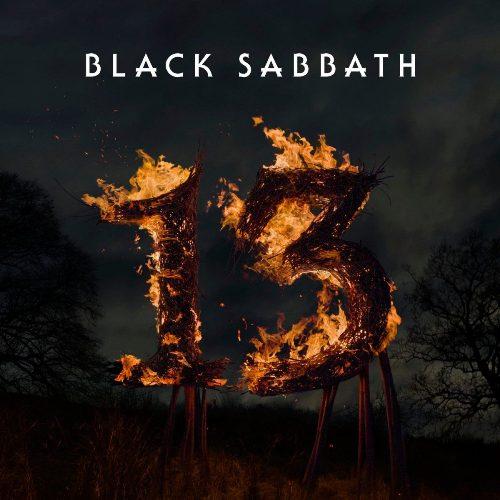
Label: Vertigo Records / Universal Music Group
Release date: July 1, 2013
Production: Rick Rubin
Album length: 53.18 min
Genre: Heavy Metal
Rating: 9.0 / 10
The legendary old guard of heavy metal, Black Sabbath, have risen from the dead with a new studio album in an (almost) classic lineup. It’s fittingly titled “13”, given their gloomy reputation. It looked like they’d be stuck in a premature grave forever, which is pretty much where the many whims of their notorious (original) singer Ozzy Osbourne had put them. Over the past decade he’d rather devoted himself to an increasingly feeble solo career and a reality show about the most dysfunctional heavy metal family ever, one that’s insulting to brain cells. Of course, Ozzy wasn’t the only one to blame for the delay. The rest of the band also ran into plenty of trouble over the past decade, which is no surprise at all for a group that most people still believe is haunted by some almost sinister curse.
The pioneers of heavy metal started sketching out the first seeds of “13” shortly after the live album “Reunion” (1998), recorded in the original lineup with drummer Bill Ward. “13” is, by the way, their first studio album with Ozzy since “Never Say Die!” (1978), their first with bassist Geezer Butler in the lineup since “Cross Purposes” (1994), and the first Black Sabbath studio effort of any kind since “Forbidden” (1995). Ward, long known for his unpredictability, recently decided, over some absurd bureaucratic wrangling about signing a contract, not to take part in the classic lineup’s reunion. So American Brad Wilk (Rage Against the Machine, Audioslave) stepped in as guest drummer, which, as expected, irked plenty of old-school fans who’d wished for a full studio return of the classic lineup.
The remaining three patriarchs of heavy metal, led by guitar god Tony Iommi, the only member who has played in every incarnation of the band, have spent the last few years diligently honing new studio material, with famed producer Rick Rubin (Metallica, AC/DC, The Mars Volta and a whole bunch of others) behind the board. Rubin made sure Iommi’s distorted guitar tone is front and center in the mix, which is somewhat akin to the practice of the ‘golden’ seventies. “13” is a stylistic return to the standards of classic Ozzy-era Black Sabbath, with the one ‘flaw’, of course, that Ward is missing on drums. Wilk did a decent job on “13”, but plenty of people will miss the aforementioned drumming legend and his distinctive style. That shortcoming is the main reason “13” doesn’t sit at the very creative peak. Still, it’s a very good album, one that ranks among Sabbath’s best and is certainly the best thing they’ve made with Ozzy since “Technical Ecstasy” (1976). That alone is reason enough to call “13” one of the bigger studio surprises of 2013 and one of the most exciting ‘comeback’ albums of the year, right alongside David Bowie’s “The Next Day”. Rubin’s production may be a touch too ‘polished’ for the classic seventies Sabbath sound, but that will only sting the hardest-core sonic purists.
Old cat Butler, with a little help from Ozzy, made sure the lyrics on “13” are pretty typical, ‘Sabbath-style’ fare. That means they’re more or less post-apocalyptic, in the spirit of our times (the zeitgeist), while the occult has been dropped in their ‘golden years’, since all three are probably fed up after all these decades with the countless baseless links to assorted Satanist societies. Only two lyrics on “13” are a bit ‘blasphemous’. One is “God Is Dead?”, and even that one is packed with question marks courtesy of Nietzsche’s famous philosophizing. The other is “Damaged Soul”, which mentions the prince of darkness. Most of the remaining lyrics, such as “Dear Father”, a critique of church hypocrisy, are full of sharp social barbs aimed at organized religions, the terror of science and other bringers of death.
The opener “End of the Beginning”, the album’s second single, is a veritable leap into a time machine. It packs all the sonic ingredients that made Black Sabbath famous in the early seventies: Iommi’s punchy, mighty guitar phrasing, slow, rolling rhythmic moves that help build a distinctly dark atmosphere, and Ozzy’s wry-yet-chilling vocal approach. That last one may be the most pleasant surprise of the whole album, because there’s not a trace of the motor-atrophied zombie who spent the last decade as little more than a puppet of his witch wife. That zombie made his last few solo albums in a corporate, MTV-blessed manner, as faceless, plastic, assembly-line products. Ozzy once again sounds like that slightly naive, confused young man from the early seventies who stumbled by chance into a gloomy, post-apocalyptic world and can’t find the way out.
“God Is Dead?”, which was also released as the album’s first single, is steeped in a dark, post-apocalyptic, almost morbid atmosphere, the kind that prevails through most of the album. The mood is set by Iommi’s brutal and utterly distinctive guitar riff, which runs from start to finish and wraps the whole thing in pitch black. Ozzy’s vocals, as they should, sound paranoid and wicked, especially in the “God Is Dead” chorus. After a fairly repetitive but atmospherically powerful central motif comes a shift into a sarcastically tinged section, where you can also hear some guitar and bass improvisation.
“Loner” is the first spot on the album where some subtler moments surface amid the hellish guitar phrasing and Ozzy’s fury, and it could easily have slotted onto any of their first seven studio records. Just for kicks, the lyrics even include Ozzy’s traditional “All right now”, while maestro Iommi also impresses with a short but juicy solo. The somewhat psychedelic and lyrically totally post-apocalyptic “Zeitgeist” has a dreamy, ‘spacey’ atmosphere in the style of Bowie’s evergreen “Space Oddity”, plus subtle acoustic guitar chords. It instantly recalls the “Paranoid” classic “Planet Caravan”, which will surely delight all the eternal romantics. On “Age of Reason”, Mr. Iommi once again shines with scorching yet witty guitar phrases. It wows in all its brutal grandeur and, with its sudden subtle guitar arrangements in the background, recalls a bit of a “Sabotage”-era piece. Especially interesting is the sudden tempo change in the middle section, where Wilk also does well with massive drum fills.
“Live Forever”, dominated by slow, rolling rhythms, sonically echoes the unforgettable “Master of Reality” standard “Children of the Grave”. Ozzy’s black-shrouded fatalism, which poses the eternal question of the afterlife, fits the gloomy and dramatic mood perfectly. “Damaged Soul” is one of the most fun experiments on “13”. With its many bluesy improvisations on guitar and harmonica, it recalls their beginnings, or some forgotten piece from the self-titled Black Sabbath debut. The lyrics couldn’t be more Sabbath-style, with the protagonist torn between God and the devil. Even though, like most pieces on the album, it runs almost eight minutes, it doesn’t sound boring or drawn-out for a second. The closing track on the regular edition of the album, “Dear Father”, is a sharp reckoning with the Catholic Church’s pedophile hypocrisy. Amid bristling guitar phrases and melodic bass lines it holds a series of subtle arrangements, and Ozzy’s vocals haven’t sounded this harrowing and sincere in the role of ‘victim’ in a very long time. The song ends exactly where it all began in 1970, with a thunderstorm and the tolling of a church bell heralding the intro to “Black Sabbath”, so the circle is closed. They couldn’t have picked a better ending for the regular part of the album.
The special edition of “13” with the bonus disc has goodies, as all three bonus tracks are fully on par in quality with the regular material. “Methademic” opens with a subtle acoustic intro, then very quickly morphs into one of the heaviest and, surprisingly, fastest-paced Black Sabbath creations with Ozzy. Black Sabbath rarely sounded this ‘sped-up’ in the seventies, which makes it especially interesting, while the lyrics touch on a theme Ozzy knows very well: the abuse of all manner of intoxicating substances. No less interesting is the furious and gloomy “Peace Of Mind”, which boasts a surprising, melodic twist in the middle. “Pariah” is the incarnation of all the best Sabbath sonic ingredients and would surely rank among the best songs on the regular version of the album.
On “13”, Black Sabbath sound like they just rose from the grave, invented a time machine and went back to the seventies, when their final resting place was freshly dug. Everyone who had long written off the ‘metal grandpas’ will now have to admit they haven’t sounded this good in ages. For guys who, age-wise, could be playing chess in the park outside a retirement home and who long ago achieved everything they could in their musical careers, that’s a truly magnificent achievement. After more than three decades they’ve made an album that in many ways marks a return of the classic ‘doom & gloom’ sound, yet is completely different from all the Ozzy albums of the seventies. At the same time, one of the few bands you can credit with inventing a whole new musical genre has also given a good lesson to plenty of self-proclaimed successors, modern bands with little serious connection, musically, to the genuine, heartfelt heavy metal that was made in far more romantic times. Even if this turns out to be their last studio album, which, given that Tony Iommi has been seriously ill for some time, sadly seems fairly likely, they’ve said goodbye in the best possible way, in the style of true rock legends, and so closed the unfinished circle.
author: Peter Podbrežnik
Track list:
1. End of the Beginning
2. God Is Dead?
3. Loner
4. Zeitgeist
5. Age of Reason
6. Live Forever
7. Damaged Soul
8. Dear Father
Lineup:
Ozzy Osbourne – vocals
Tony Iommi – guitar
Geezer Butler – bass
Guest musician:
Brad Wilk – drums, percussion