Label: Vertigo Records
Release date: November 1, 1987
Production: Jeff Glixman, Vic Coppersmith-Heaven & Chris Tsangarides
Album length: 42.42 min
Genre: Heavy Metal
Rating: 8.5 / 10
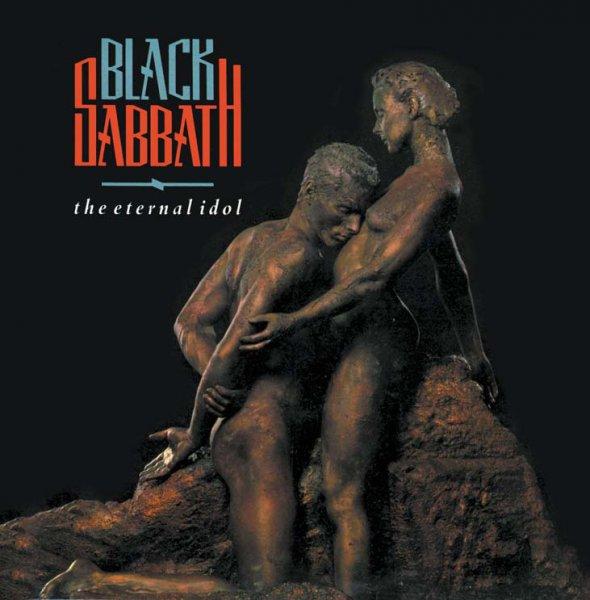
“The Eternal Idol” ranks among the most overlooked Black Sabbath albums, which is true of most of what they did with the great singer Tony Martin, the man who bailed out legendary guitarist Tony Iommi and company more than once when they landed in the middle of a creative and existential crisis, in the mid-eighties and again in the early nineties. After the ill-fated “Seventh Star” (1986) tour, which ended with the sorry exit of celebrated singer Glenn Hughes (ex-Trapeze, Deep Purple), Iommi set out to build the new Black Sabbath around American vocalist Ray Gillen, bassist Dave Spitz, drummer Eric Singer and keyboardist Geoff Nicholls. Gillen, with whom they recorded a few demos for the new studio project “The Eternal Idol”, and Spitz didn’t last long in the band.
They were replaced by Tony Martin, whose vocal approach, which recalled a former member, the legendary Ronnie James Dio, made him an excellent choice, and by old hand Bob Daisley (ex-Widowmaker, Rainbow, Ozzy Osbourne, Uriah Heep, Gary Moore), who also helped Iommi write some of the new songs. Even so, Iommi pulled an unforgivable move when he credited the bass lines in the album booklet to Spitz, who had long since left the band. That’s surely the main reason why Daisley, officially because of his commitments to Gary Moore, didn’t want to be part of the new Black Sabbath when it came time for the “The Eternal Idol” tour. Eric Singer also bailed before the album came out, so some of the drum parts were recorded with an old acquaintance, Bev Bevan (ELO), who once again became the live drummer for the tour.
Even though the band was falling apart on Iommi during the recording of the album, “The Eternal Idol” ended up sounding much better than you’d expect under those circumstances, especially with the Gillen material having to be re-recorded from scratch. Tony Martin, with his vocal charisma and authority, which blended perfectly with the mystical and enigmatic lyrics, brought a top-notch vocal pathos and commitment that had been missing since the end of the Dio era, and he deserves most of the credit for putting Black Sabbath back on the right track with “The Eternal Idol”. Martin brought the fresh energy the new Black Sabbath desperately needed, and he was completely heart and soul in it.
Keyboardist Nicholls deserves special praise too: his synths come even more to the fore than on “Seventh Star” and give individual songs an even stronger stamp of mystique and epic grandeur. You can hear it already on the opening energy catalyst “The Shining”, which Black Sabbath made a promo video for and which was partly inspired by the chilling novel of the same name from the pen of famed writer Stephen King, as well as by the film of the same name starring Jack Nicholson. The mysterious intro, where Iommi’s trademark guitar phrases and mystical keyboard veils make for a killer combination, gives way to a punchy section with uncompromising passages and peaks in an epic chorus. The latter deepens the mysterious, dark and mighty atmosphere that marked most of the best Martin-era Black Sabbath songs.
“Ancient Warrior” is another great and overlooked track, with a slight oriental flavor thanks to its pentatonic scales, where the keyboard veils make a superb backdrop for the traditionally searing guitar phrases and Martin’s passionate vocal authority. “Hard Life to Love”, a song that can still win over any Rainbow and Whitesnake fan today, has a somewhat dirtier, hard-rocking approach that comes off surprisingly youthful for Black Sabbath, while Singer’s galloping drums give Martin’s vocal passion a gorgeous foundation. One of the most vivid moments on “The Eternal Idol” is undoubtedly the explosive “Glory Ride”, one of the highlights of the Martin-era Black Sabbath, where Iommi and company, giving their all on both the instrumental and vocal front, managed to craft an epic, rousing chorus that classic heavy metal fans can still drool over today. It also doesn’t lack one of Iommi’s best solos on “The Eternal Idol”, which, as usual, are a chapter in themselves.
“Born to Lose” goes for a faster tempo, matched by Martin’s somewhat more agitated vocal, while Iommi’s guitar variations carry this solid but unexciting hard rock number off in a completely different direction. Nicholls’ intro to “Nightmare” sounds like something out of a horror movie, and what follows is a classic hard rocker at a slower pace that suits Martin’s heartfelt singing down to the ground. The short, mystical-troubadour instrumental “Scarlet Pimpernel” is built on Iommi’s acoustic guitar and synth veils, and it’s a bit reminiscent of similar instrumental excursions from the “golden era” (the first half of the seventies).
The energy bomb “Lost Forever” runs at a quickened pace and is one of those “The Eternal Idol” songs that were key to “rejuvenating” the Black Sabbath sound. The title track, which also closes the album, is the one that most recalls the classic “doom & gloom” Black Sabbath, steeped in a fatalistic, gloomy mood and rolling rhythms, while Martin moves between subtle and fired-up vocals with remarkable feel, delivering an apocalyptic lyric. Not exactly a cheerful way to end an album, but you wouldn’t expect anything else from Black Sabbath.
“The Eternal Idol” was another major sonic rebirth for Black Sabbath and the start of their next evolutionary phase, with both Tonys in the lead roles. It also marked the beginning of a trilogy of Black Sabbath albums that often gets overlooked (“The Eternal Idol”, “Headless Cross” and “Tyr”) from the late eighties and early nineties, where each new record built on the one before it. On the following Black Sabbath records, Martin also began to establish himself as a songwriter and lyricist, even though his status in the band was constantly under threat, since over the next few years Iommi increasingly yearned to lure Dio back into the fold, which he did (temporarily) in 1991. Then Martin had to jump back in, in the thankless role of a sort of “Dio’s stand-in”, and given his modest nature, he didn’t lose much sleep over it.
author: Peter Podbrežnik
Track list:
1 The Shining (6:00)
2. Ancient Warrior (5:28)
3. Hard Life to Love (5:00)
4. Glory Ride (4:49)
5. Born to Lose (3:43)
6. Nightmare (5:19)
7. Scarlet Pimpernel (Instrumental) (2:05)
8. Lost Forever (4:03)
9. Eternal Idol (6:33)
Lineup:
Tony Martin – vocals
Tony Iommi – guitar
Bob Daisley – bass guitar
Eric Singer – drums
Geoff Nicholls – keyboards
Guest musician:
Bev Bevan – percussion