Label: Vertigo Records
Release date: 25.09.1972
Production: Black Sabbath & Patrick Meehan
Album length: 42.38 min
Genre: Heavy Metal
Rating: 9.5 / 10
Despite its uninspired title, Black Sabbath’s fourth album is one of the best things they ever did. It’s a real leap in maturity, where they started experimenting much more widely with their uncompromising ‘doom & gloom’ heavy metal pioneering, bashfully at first but in ever bigger doses, working orchestral elements in through piano and Mellotron. The original title was supposed to be “Snowblind”, a warning about how cocaine abuse was increasingly wrecking the health and state of mind of the band members, but Vertigo pushed back and at the last minute they had to settle on a far more prosaic name.
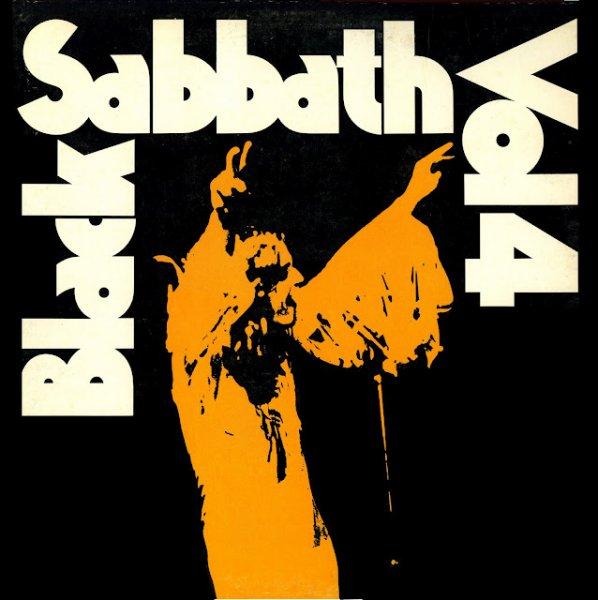
“Snowblind” did stay on as the title of the most beloved “Volume 4” classic, and this album was hardly short on that kind of standard, with “Wheels Of Confusion”, “Changes”, “Tomorrow’s Dream” and “Supernaut” all on board. Rather unfortunately, again at the label’s urging, they went with the now-iconic cover of a monochrome, stylized Ozzy, who at the time was more of a mascot than the central star of these Birmingham heavy rock legends, in whose original lineup a relative democracy always ruled when it came to the creative process. It was drug abuse, cocaine above all, which they first ran into in Los Angeles, that caused the first cracks between the band members, and it was a close call that drummer Bill Ward didn’t get fired during the recording of “Cornucopia”. The guys were so wasted and stoned before and during the studio sessions that it’s a flat-out miracle they ended up making such a superb album, one that long ago earned its status as a heavy rock classic.
The complex opening suite “Wheels of Confusion”, complemented by the closing instrumental section “The Straightener”, is, as its main title says, confusion incarnate, with Iommi’s choppy guitar phrases and Ozzy’s vocals, totally spooked by an overdose of intoxicating substances. It’s all sliced up by chaotic time changes on Ward’s drums and Geezer’s bristling bass lines, which only crank up its psychedelic-tinged ambient aura. The closing instrumental part “The Straightener” set new heavy metal standards with intricate guitar harmonies and dynamic drum transitions, and shows plainly why Black Sabbath were the most important heavy metal pioneers.
The hard-hitting “Tomorrow’s Dream” is a far more direct number with a full-bodied guitar riff only Iommi could conjure up, while the grooving bass lines nicely back Ozzy’s drunken singing, in which you can make out a good measure of mischievous glee. The biggest surprise of the whole album, though, is “Changes”, a totally atypical love ballad on which Ozzy, over gentle piano and the orchestral wash of the Mellotron, shows for the first time in his career that his voice has some feel for lyrical sensitivity too, something he’d go on to show several more times in his solo career. The lyrics are about losing a loved one, which is what was happening to drummer Ward at the time, who was in the middle of a grueling divorce. Thirty years later Ozzy re-released it as a vocal duet with his daughter Kelly, with slightly altered lyrics, and reaped tremendous success with it. You could say it’s the first Black Sabbath piece of a gentler nature, one into which the notorious singer dared to put his usually hidden emotional side, and a sort of first herald of his later solo career. In 1993 he also re-recorded it solo. Interestingly, Black Sabbath have only played “Changes” live twice so far, first on the 1973 tour and then only in 1995 with Tony Martin on vocals.
The unusual experiment “FX” is a short but still interesting avant-garde-tinged instrumental with dissonant improvising on guitar and percussion. “Supernaut” is another heavy rock classic with a dynamic, bluesy-spiced main motif that a mighty guitar phrase grinds right through, one of the best of Iommi’s career, while merciless drum hooks break it up. Ozzy is in his classic paranoid vocal mode this time, meaning he sounds like someone you really wouldn’t want to mess with. There’s no shortage of a witty Iommi solo either, totally typical of this legendary guitar virtuoso. Although Ward was battling a host of personal problems in this period, his work on drums and percussion across the whole album is simply fantastic. “Supernaut” already drew plenty of praise at the time of release, including from such musical authorities as the legendary, sadly long-gone American composer, arranger, guitarist and singer Frank Zappa and the equally late and legendary Led Zeppelin drummer John Bonham.
The previously mentioned “Snowblind” is the most beloved and recognizable Sabbath standard on “Volume 4” among heavy rock fans. It came about as a kind of answer, or counterweight, to the “Master of Reality” (1971) standard “Sweet Leaf”, on which they were still celebrating soft drugs, marijuana first and foremost. This time the band was slowly starting to realize how deep they’d sunk into the world of deadly cocaine intoxication, after discovering the harder stuff in California. A mighty guitar riff tears through the air, keeping company with rolling drum transitions and a variable, melodic bass line. Iommi’s mouth-watering solo and the wild drum fills in the background are backed by the Mellotron wash, which deepens the overall dramatic ambience. Ozzy’s vocal, pitched at nervous-wreck level, is in excellent harmony with the eye-opening lyrics about the blinding nature of white powder.
“Cornucopia”, another beloved Sabbath evergreen, is a pure doom metal prototype with its slow, rolling rhythm and suffocatingly dark guitar phrase. This was the song because of which Ward nearly left the band, since he simply couldn’t, or wouldn’t, play this Sabbath standard the way the other three wanted. Frankly, given his health and emotional state at the time, that was no surprise, as the drumming is quite complex and demanding, with a string of unexpected time changes. The instrumental “Laguna Sunrise” is a complete contrast: with its gentle acoustic guitar arrangements and the orchestral wash of the Mellotron in the background, it’s one of the most optimistic pieces of their career, especially in its unusually uplifting ambience.
“St. Vitus Dance” is another interesting number with an almost trademark hard-hitting Sabbath motif, where a thunderous guitar phrase, grooving bass lines and Ozzy’s animalistic singing take the lead, yet it keeps surprising with sudden turns into an almost danceable rhythm. The closing, experimental-tinged suite “Under The Sun/Every Day Comes And Goes” is the complete triumph of dark ‘doom & gloom’ Sabbath and in many ways yet another pioneering heavy metal standard. In the first part the apocalyptic atmosphere is marked by Ozzy’s ominous vocal outbursts, a dark guitar phrase and broken, slow, rolling rhythms. Gradually the composition gets a sudden ‘acceleration’, with a witty guitar solo taking center stage. Especially impressive is Iommi’s cunning variation across his unpredictable offering of inventive guitar phrases, which comes through loud and clear in the closing, almost epic instrumental part.
On their fourth studio outing, Black Sabbath hit a new level of maturity and made yet another classic heavy rock gem that, on top of the usual ‘doom & gloom’ punch and ‘chasing the devil’s tail’, positively brims with unbridled experimentation. The infusion of orchestral elements and the first clear display of subtler sonic touches were key to “Volume 4” enjoying its status as one of the most interesting and accomplished Sabbath albums. At this stage of their career, with drugs having nearly destroyed them while they fought their way to the top of the most respected rock acts of their day, Geezer Butler noticeably cut back the usual dose of occultism in the lyrics and preferred to spend more time on social issues, which was yet another herald of the important changes then happening in their increasingly complex musical approach.
by: Peter Podbrežnik
Tracklist:
1. Wheels of Confusion / The Straightener
2. Tomorrow’s Dream
3. Changes
4. FX
5. Supernaut
6. Snowblind
7. Laguna Sunrise
8. Cornucopia
9. St. Vitus Dance
10. Under the Sun / Every Day Comes and Goes
Lineup:
Ozzy Osbourne – vocals
Tony Iommi – guitar, piano, Mellotron
Geezer Butler – bass, Mellotron
Bill Ward – drums, percussion