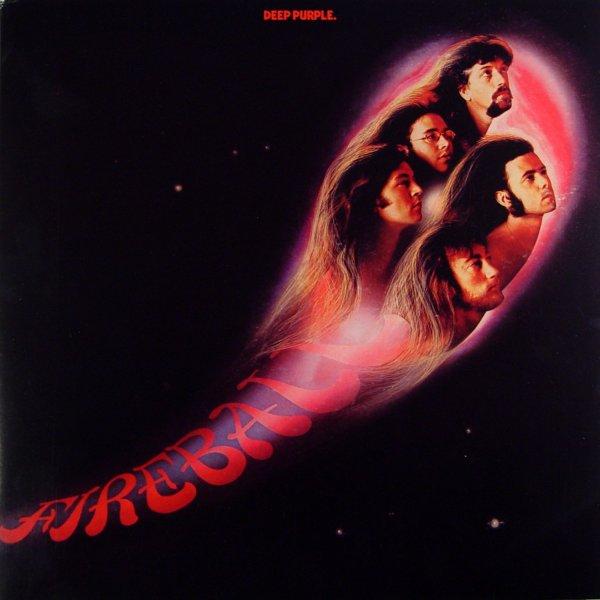
Label: Harvest Records
Release date: July 9, 1971
Production: Martin Birch
Album length: 40.30 min
Rating: 9.0/10
Genre: Hard Rock / Heavy Rock
The legendary English hard rock giants Deep Purple were smack in the middle of their biggest artistic and commercial bloom when their fifth studio album »Fireball« came out, with their dream of seizing the throne as the loudest heavy rock band around fast becoming reality. Their previous studio masterpiece »In Rock« (1970) had finally brought them worldwide recognition, so the lineup most fans still love best today (Mark II) decided to carry on with the predecessor’s winning sonic formula on »Fireball« and build on it with a few adventurous stunts, which made it crystal clear that Deep Purple were still burning with a desire for maximum songwriting perfectionism and constant sonic evolution.
»Fireball«, which featured quite a few Purple classics that are still beloved today, repeated the huge success of its famous predecessor, even though these days the only Mark II member who recognizes it as a masterpiece is singer Ian Gillan, who left some of the best vocal performances of his entire career on it. The others didn’t share his enthusiasm, especially guitar virtuoso Ritchie Blackmore, who was most bothered by the changed, far more polished and less raw production compared to the predecessor. The moody, unpredictable Blackmore, who liked to spend his free time scaring his bandmates at night (with an axe in hand, if need be), was a fiery advocate of heavier sonic shades in the traditional Deep Purple sound, and during the »Fireball« sessions he clashed with Gillan for the first time. That would only escalate over the following months and eventually grow into open hostility.
By far the best-known classic on the British version of the album, where »Demon’s Eye« sat in third place instead of the big hit »Strange Kind Of Woman«, was the title track and opener, which at its core is a wound-up hard rocker in the best Purple manner. After a short ‘windy’ intro, Paice’s drumming stampede kicks in alongside Glover’s snarling bass lines, creating a hyperactive rhythmic base for Blackmore’s mighty guitar passages and Lord’s wild organ meanders, while Gillan shines on vocals with his usual deeply felt emotional outpourings and his traditionally generous vocal range. Interestingly, this classic, which also came out as a single, has no guitar solo, contrary to Ritchie’s usual practice. The lyrics are typically ‘Purple-esque’, telling the story of a romantic adventure starring an enigmatic woman from outer space.
»No No No« is an interesting hard rock energy-charger, where a temperamental guitar riff rules over Gillan’s furious vocal performance, while Glover weaves teasing bass lines and Lord lets loose with unpredictable organ experiments. Despite its pretty basic hard rock foundation, this somewhat overlooked Purple standard packs in plenty of interesting tempo changes and unpredictable swaps of instrumental motifs, with Blackmore’s tasty guitar solo among them. At the first opportunity, Lord throws down the gauntlet with a monumental Hammond solo, which is far from the end of their duel that runs through most of the album.
The evergreen »Demon’s Eye«, which appears only on the British version of »Fireball« in place of »Strange Kind Of Woman«, is a mid-tempo number marked by an enigmatic atmosphere. This standard, soaked in mysterious ambient magic, is defined by a resolute guitar phrase with repeating rhythmic patterns, while Gillan’s vocal, stretchy as bubble gum and saturated with a wild mix of emotions, rules over it all with authority. The main chorus, as it tells yet another unusual love story, sounds cheeky and only adds to the overall air of mystery, while Blackmore is once again incredible, both in dishing out teasing guitar phrases and in crafting the closing solo.
The bizarre country experiment »Anyone’s Daughter« is a third-rate song that started out as a pure joke and still has no business being on the album today. It wasn’t even originally meant to make the »Fireball« track list, but the man in black, who to this day is its only fan, got into a serious row with Gillan and started threatening all sorts of things if it didn’t end up on the album. Blackmore’s hillbilly excursion into the cowboy saloon is still by far the worst thing ever cut, not just by the Mark II lineup but in the entire Deep Purple career, and it seriously endangers »Fireball«’s status as one of the classic Purple masterpieces. With its sleepy piano backing and classic country guitar chords forming a mind-numbing melody, you could much more easily picture some cowboy ‘whiner’ like Bob Dylan or Johnny Cash on vocals. The fact that even all the bonus material on the »Fireball« CD reissue is light years better than this barnyard-manure-stinking effort, unbelievable as it sounds, says it all about its quality.
The bad taste is fixed in an instant by the splendid classic »The Mule«, which remains one of the most interesting Mark II experiments when it comes to effectively fusing complex instrumental nuances with slightly psychedelic-tinged vocals. Lord’s sacredly spiced organ solo deepens the dramatic mood, while Blackmore answers in kind with a distinctly refined guitar orgy, not to be outdone in the solo muscle-flexing department. The lyrics are quite atypical for Deep Purple, containing traces of occultism, while the experimental structure proves that somewhere deep beneath the hard rock surface, a trace of prog rock adventurousness was still smoldering.
The complex standard »Fools«, which successfully crosses prog rock subtlety with hard rock uncompromisingness, is still a criminally overlooked achievement. It starts out as a tender ballad with a simple, pastoral-tinged melody, and that lasts until a ruffled guitar riff barges in and the properly riled-up Gillan starts ‘flinging himself around’ once more amid emotionally deepened vocal outpourings. The intricate instrumental section in the middle features varied percussion work and a gloomy keyboard sound, slowly ratcheting up the tense atmosphere, which hits spectacular proportions when the other two instrumentalists join the shared sonic collage.
The temperamental hard rock evergreen »No One Came« makes for an excellent finale, where all the classic Mark II ingredients shine at full force once again, led by Gillan’s vocal bark, Blackmore’s untamed guitar riff, Lord’s rustling organ flights, Paice’s massive drum rolls and Glover’s melodic bass lines. The upbeat atmosphere and cheeky lyrics are backed up by funk-tinged rhythmic nuances. Blackmore indulges himself again with a lengthy guitar solo and, in passing, pulls the ever-in-great-form Lord into a solo duel, who conjures up an unforgettable organ masterpiece. Gillan’s sensual vocal moaning over the lost situation adds an extra dose of playfulness to the song’s overall atmosphere. The psychedelic ending is completely unexpected and hits like a bolt from the blue.
On the »Fireball« CD reissue, which came out for the album’s 25th anniversary and is stuffed with plenty of bonus goodies, the standout is the big hit »Strange Kind Of Woman«, which was released as a single and originally appeared only on the American and Japanese versions of the record. According to Gillan, the lyrics tell the story of a prostitute (the song’s original title was »Prostitute«) and a downright wicked woman one of his acquaintances once had dealings with. Its simple structure, built on an easy run of guitar phrases, a boogie rhythm and a quick-grabbing, mischievous chorus, instantly won over crowds of music lovers all over the world, forever cementing the ‘strange kind of woman’ among the immortal rock evergreens. It’s still a real shame today that this big hit didn’t come out on all the original versions of the album instead of »Anyone’s Daughter«. The latter could also have been replaced by the funk-tinged B-side of the single called »I’m Alone«, which, thanks to its cheeky rhythms and upbeat vibe, is a seriously fun piece.
The experimental masterpiece »Fireball« is in many ways an even more interesting studio record than its famous predecessor, and it would’ve overshadowed it in every respect if it didn’t have just one single flaw, going by the name »Anyone’s Daughter«. Deep Purple were on a dazzling rise in the early seventies, with masterpieces dropping one after another, so at the time Black Sabbath and Led Zeppelin were the only serious rivals for the heavy rock throne. The man in black, an eternal perfectionist whose eccentric pastimes often overshadowed his brilliant guitar technique, meanwhile made no secret of his dissatisfaction with »Fireball« and was already hatching plans to create the ultimate hard rock album with the most obedient and manageable bandmates he could get.
Author: Peter Podbrežnik
Track list:
1. Fireball (3:26)
2. No No No (6:54)
3. Demon’s Eye (5:21)
4. Anyone’s Daughter (4:43)
5. The Mule (5:22)
6. Fools (8:20)
7. No One Came (6:26)
Lineup:
Ian Gillan – vocals
Ritchie Blackmore – guitar
Jon Lord – organ, keyboards
Roger Glover – bass guitar
Ian Paice – drums