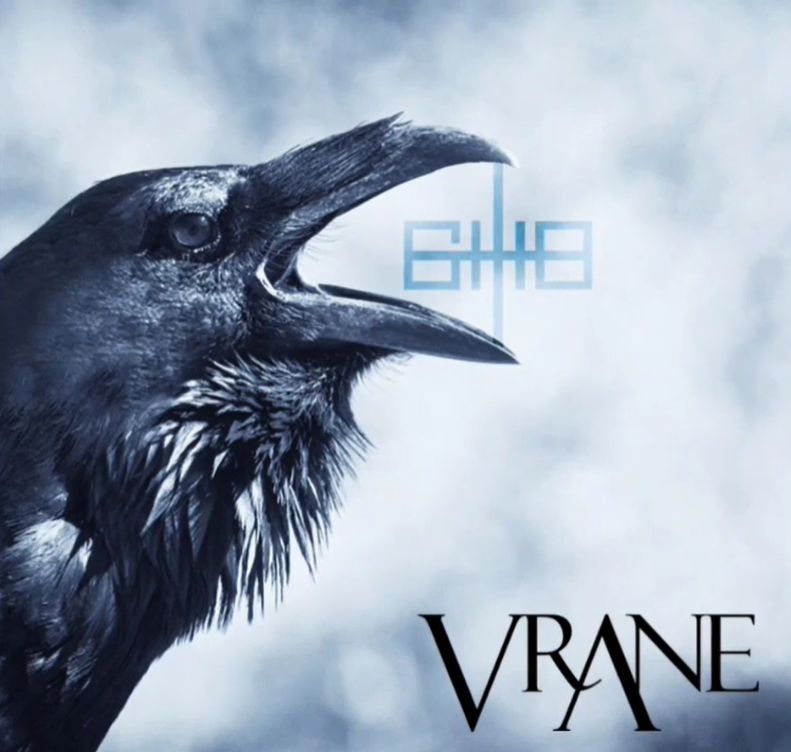
Label: Nostromo Records
Release date: July 1, 2020
Production: Grega Habič
Album length: 37.48 min
Genre: Art Rock
Rating: 9.5/10
Grega Habič needs no special introduction. He’s one of the most colorful and musically well-rounded guitar aces in Slovenia, a guy whose chops can take on even the biggest icons of six-string mastery without breaking a sweat. From Paul Gilbert to Steve Vai and everything in between. Enough said. Especially when you remember that Grega comes from Jesenice and not Los Angeles. Aces like that aren’t made in Slovenia (anymore), or they long ago threw up their hands and walked off into ‘bankruptcy’. But Grega isn’t giving up. He keeps creating and recording. He records on his own. Independent and completely free.
In recent years Grega Habič has been steering more and more toward catching that onstage moment in the studio too. That means his albums, historically ruled by a “one man” setup, increasingly flirt with elements of group work. “Vrane” goes into that territory more decisively than anything else in the musician’s career so far, but Grega doesn’t go about it radically, since the album keeps a nice bagful of the recognizable instrumental artistic shenanigans that marked his earlier studio exploits.
On “Vrane”, Grega has opened a whole bunch of doors to different genre and cross-genre starting points. The compositions are entered by artistic challenges that flirt crystal-clearly with elements of pop, R & B, soul, funk, blues and even cabaret chanson. That Grega was heading toward new artistic territory was already hinted at by last year’s single in Serbo-Croatian, the song “Ljubav nije stih”, with Blažka Udir on vocals, who had already worked with Grega on the 2018 album “Songs Of Breathing Freely” (the song “Breathing Freely”). The band also shot a really entertaining video for it.
In the run-up to recording “Vrane”, Grega managed to get the excellent singer Nina Bauman on board. She’s no slouch as the lead voice of probably the finest art pop rock outfit in Slovenia, Panda, where only the best get in. This time Grega left the bass guitar entirely to Klemen Gasar. Gasar is one of those ‘biblical rock ‘n’ roll riders’ who have seen and survived every era of Slovenian rock and metal. As part of the Game Over lineup he was also there when one of the first thrash metal records in Slovenia was made (“Tilt”, 1990). Gasar is all over the album this time, has completely free hands, and so he properly lets loose, which gives the songs a special flavor. Because Gasar is just a special kind of bassist. Together with a few guests, familiar names from Grega Habič’s past collaborations, that covers the organic part of the album. The programmed part falls to freshly clicked-in drums once again (Grega has usually used QBase). Sadly, the man doesn’t have a label like Nika behind him, the way Siddharta do, so our genius from Jesenice is simply condemned to a low-budget D.I.Y. approach.
Grega has balanced “Vrane” skillfully. He opens and closes it with instrumentals, while the middle is weighted with vocal numbers, ‘cut’ right down the center by the instrumental Krivine. Nina is a singer of unsuspected talents and exceptional penetrating power, with a phenomenal, deeply internalized soul and R & B sensuality that can be fiercely passionate as well as subtle and gentle. Her vocal has landed in a musical environment that loves to flirt, and often, with a bigger haul of decibels of distorted sound. That in no way diminishes the expressive reach of the vocal, if anything it intensifies it, which means the singer melted extremely well into the charisma of Habič’s arranging and composing, which constantly keeps at least a pinch of darkness.
The song “Nad nama” sounds like the band made it with a ‘heavy hangover’ after a week of boozing at some wedding in the middle of southern Serbia. It’s steeped in light arrangement and a melancholy you could cut with a knife. Yet this flirtation with ‘southern’ melos, under Grega’s direction and with Nina’s vocal approach, gets a distinctly artistic specificity, reaching, at the culmination of all its building blocks, a measure of eclecticism. After the introductory instrumental catalyst Trnje, which is bristling and underpinned by the scary thunder of double bass drum pedals, comes a subtle intro transition, decorated with strolls through harmonics, into the spiked hard rock/heavy metal ‘ditty’ “Roke, duša in srce”, which immediately takes the listener to the very point of fiery, theatrical “beauty and the beast” combining. A punchy, musically ravenous track, bombastically puffed up also thanks to symphonic elements that feed the drama-theater development.
What makes Grega’s playing so special? Often it’s tonal progressions resting on jazz chords, the kind we’re used to hearing sharpened up metal-style in production. This art-pose form communicates in an incredibly conciliatory dialogue with excursions into a generous dose of motivic musicality, or, on the other hand, effectively soaks up the challenge of trying things out in other genre spheres. With Habič this simply flows, and that’s the guarantee of the homegrown artistic eclecticism his music carries on its back.
Grega actually surprised a lot on this album, because he showed off an exceptional bagful of sophisticated guitar moves that were traceable on his past studio work, but added in pinches. Now he’s broadened that reach stylistically. Having already ‘covered’ “Nad nama” above, in the second half of the album we run into a sequence of three softer-hued tracks that demand finesse and softness. Put plainly, they put “feeling” above “wanking”, which was Grega’s basic artistic challenge going into the recording of this album. In the excellent “Cinična” the solo even internalizes some of Lukather’s filigree sensuality of bending and placing notes (mid-eight passage). That’s followed by the mystical “Plima”, which feels like a “half-written demo” by Matej Brodar. In the verse the guitar colors the track more shyly, while the leading roles are taken on by Gasar’s distinctly kinetic bass funking and Nina’s contrasting delicacy, and then after the chorus a phenomenally cast bridge sneaks into the track, played in the glow of neoclassicism on acoustic guitar, which gives the song a special artistic character. Given the sophisticated blending of the composition’s building blocks, this tender, yearning song counts as one of the most likable on the album. The most predictability comes from the chorus motif of “Upam da veš”, which has already been used on the historical map of the Slovenian pop song. In a different context, of course. In another story, the band Panda could have used this song in their arrangement solutions too.
Grega wouldn’t be Grega if he hadn’t saved two stormy progressive metal, or let’s rather say art-jazz-metal, instrumental tracks for the end. Both are dark. Especially Pussy, where Grega shows his rascal side grappling with a series of unsolvable riddles tied to the wonder called woman (follow the sampled sighs of ecstasy), with this instrumental played in a glow of experimentation that faintly, in traces, calls to mind Steve Vai’s tricks from the “Sex & Religion” era. Ad Infinitum is a daring closing prog metal instrumental onslaught that wraps up the album, and Grega, amid a pleiad of colorful, dizzying carousel of “guitar perversions”, blows himself up into prime factors one more time as a farewell. In the style of the world’s greatest aces of guitar ‘shred’. What fascinates most through all this is that blurred, invisible thin line Grega so brilliantly leaps across between jazz-figured motifs and an incredible musical payoff.
That said, this time the vocal tracks take on at least as much expressive power and reach as the instrumental ones. Even more. They’re even more interesting to listen to because they’re more boldly detailed. When you listen to Grega Habič’s playing in these songs, where he had to engage especially in sophisticated adapting, there’s a pile of ‘soft’ guitar ornaments woven in that he usually hadn’t used in the past. This is exactly what adds to the even greater appeal of this otherwise artistically daring and excellent piece of work.
So. “Vrane” hints at a potential, gradual stylistic transition for Grega Habič. Or maybe not. But it does open up a new sphere of possible starting points for the next steps in his artistic maturing. It’ll be interesting to watch which ones he reaches for and where he swings with them. Because the main goal of “Vrane” has been achieved. Grega hasn’t sacrificed a speck of his unique artistic originality. If anything, he’s broadened the vividness of his guitar genius with new moves and ideas, successfully weaving into his style a flirtation with genre labels he’d steered clear of until now. The fusion worked and the ‘patient’ has kept all the eclectic nature of the unique musical rhetoric that only Habič’s creative mind brings. Clearly “Vrane” is the start of a new artistic path for Grega Habič Band. And the first measured steps down that path are more than thrilling.
Author: Aleš Podbrežnik
Tracklist:
1. Trnje
2. Roke, duša in srce
3. Nad nama
4. Vrane
5. Krivine
6. Cinična
7. Plima
8. Upam, da veš
9. Pussy
10. Ad Infinitum
Lineup:
Grega Habič – guitar, keyboards, drums
Klemen Gasar – bass guitar
Nina Bauman – vocals
Guest musicians:
Jovan Jovanović – bass guitar on track 7
Robert Humar – keyboards on track 6
Mitja Svetina – guitar on track 3
Blaž Soklič – drums on track 9