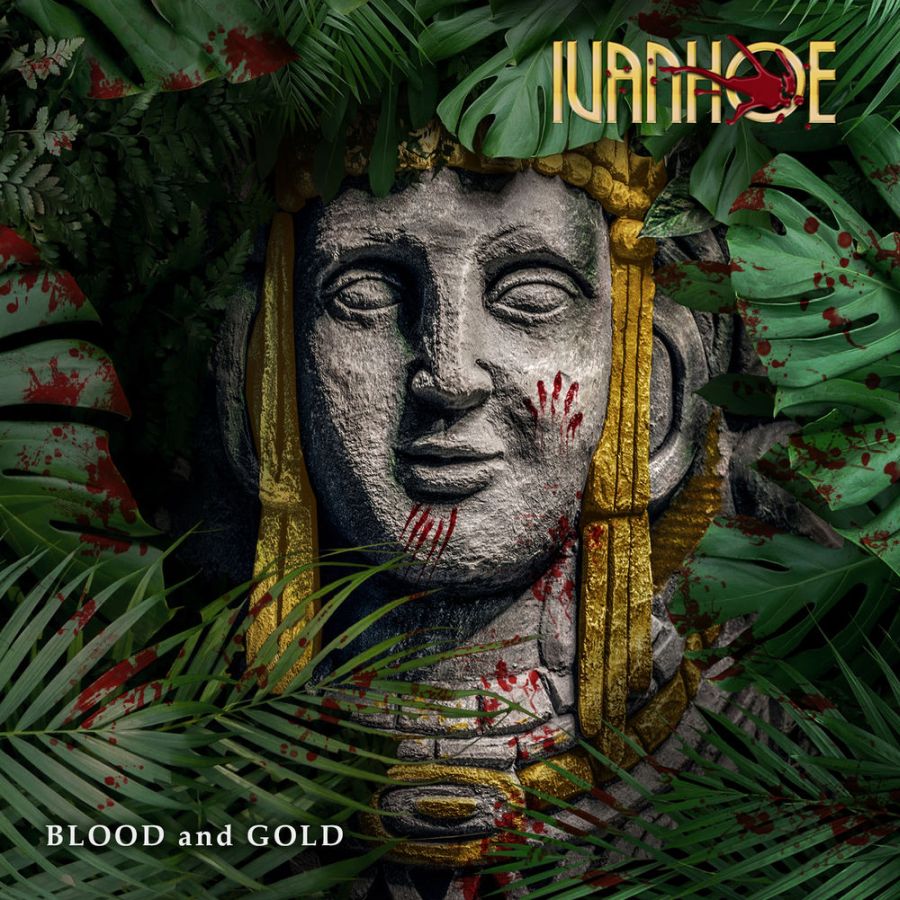
Label: Massacre Records
Release date: March 20, 2020
Production: Giovanni Soulas
Album length: 38.37 min
Genre: Progressive Metal
Rating: 8.5/10
Ivanhoe are a German progressive metal outfit with a funny name – which isn’t really the point – who put out a new studio album in the middle of this March. Their eighth. They’re a long-lived band that goes all the way back to the second half of the eighties, though it took them ages to get to a studio debut, which finally arrived in 1994. Going by when the band was born, you can guess right away that Ivanhoe play very traditional progressive metal, the kind that’s actually older than Dream Theater, even if stylistically they’re definitely worth a listen for anyone who follows those prog metal titans too.
On “Blood And Gold”, Ivanhoe stay true to their sound and style, as traditional as ever. The new album keeps up their artistic consistency, and considering that the previous record, “7 Days”, came out five years ago, these songs clearly went through a long process of polishing and arranging, so they’re richly detailed and finely crafted. They’re also very varied from one to the next when it comes to lead phrases and motifs, which gives the album a high level of dynamics and plenty of swings in mood. They’re incredibly musical in their moves, almost surprisingly catchy for prog metal as they develop, and the supposedly thin line between traditional heavy metal elements and technical complexity often gets blurred, or the weight tips in favor of one genre or the other. The opening stretch of the album, represented by the especially hard-charging Midnight Bite, carries decidedly more classic metal DNA, while Broken Mirror, which follows, with its thrilling crossfire of soloing between keyboards and guitar inside a mid-eight passage, slowly puts things in their place, closer to what we call progressive metal. It’s not entirely clear what the band wanted to achieve with the two-minute dreamy lament Fe Infinita, featuring a female-male vocal duet, because the satisfying early momentum of the album fizzles out with it! Unless we take it as a prelude to the next track, the title song, which is one of the best things on the new Ivanhoe release and really a track that lays out, in one spot, the style and sound the band has stood behind for many years.
The guitar work can even be compared to the rigid American forms of early heavy metal. You can’t help thinking of the early stuff by Crimson Glory, Queensryche and the first three Fates Warning albums. The vocal charisma of singer Alexander Koch, which shares something with Bruce Dickinson’s (Iron Maiden) approach, keeps up the pomp and bombast the compositions build (e.g. the chorus of Martyrium). Ivanhoe don’t do “happy little tunes”, and they can get pretty dark. The songs grow out of minor keys, while the band reaches a high level of predatory musicality and, with it, tense theatrical drama, which is great. That makes this a form of progressive metal that will appeal to fans of classic heavy metal elements and later power metal. But so that it doesn’t all feel so black and white, especially in the last third of the album the band allows itself a few bold creative detours toward the wide-open spaces of musical experimentation. First it surprises with the inclusion of the first cover they’ve ever recorded for any of their albums. That’s If I Never Sing Another Song from 1977, written by Don Black and originally belonging to British singer Matt Munro. The arrangement for the Ivanhoe version was contributed by former guitarist Achim Welsch. Given the sharp contrast with the band’s usual style, it would have been better to stick it right at the tail end. The most interesting part of the album is its finish, with Shadow Play and Perfect Tragedy. On the first, the band took its biggest trip into the fields of arrangement experiments, as a saxophone joins the framework of motifs and brings a neat contrast in one of the most progressive-minded tracks on the record. It’s also where we get the highest dose of “exploring” melodies mixed with breaks in rhythmic structure. The second, closing track of the new album counts – just like the title track – as one of the high points of the release. It serves up a mix of beautifully balanced experimentation and musical catchiness, with generous leaps in the way the moods turn. So the album ends on one of its strongest compositions.
The songs do carry plenty of seeds for cranking up the experimental, challenging side of prog metal, but the band sticks dutifully to the formula of tight arranging and keeping up the gloomy pomp. It’s also surprising that the album runs under 40 minutes, which is pretty shocking for the genre.
So Ivanhoe haven’t changed all that much. Albums come out painfully slowly, but the style stays recognizable and unmistakably theirs. Germany was kind of a stepmother to the first era of progressive metal (the turn of the eighties into the nineties). The only solid, coherent act from Germany putting out albums since the nineties is Vanden Plas, and even they you can immediately call an unjustly overlooked band. Everything else that smells of traditional prog metal, much like Ivanhoe, is more or less just scraping by. Sure, the new album shows an archaic face of progressive metal, the kind the new-era German bands ran over with their fusion of extreme metal elements, even jazz, and unimaginable technical polish (among others Obscura, Alkaloid, Panzerballet), but Ivanhoe remain a band tailor-made for all fans of the traditional elements of prog metal, where the border with heavy metal likes to get blurred again and again.
Author: Aleš Podbrežnik
Track list:
1. Midnight Bite (04:03)
2. Broken Mirror (03:51)
3. Fe infinita (02:14)
4. Blood and Gold (05:30)
5. Martyrium (04:51)
6. If I Never Sing Another Song (03:55)
7. Solace (04:11)
8. Shadow Play (04:44)
9. Perfect Tragedy (05:14)
Line-up:
Alexander Koch – vocals
Richie Seibel – keyboards
Chuck Schuler – guitar
Giovanni Soulas – bass
Bernd Heining – drums
Guest musicians:
Mathias Biehl – drums
Yvonne Luithlen – vocal duet on track no. 3
Andreas Musch – saxophone on track no. 8