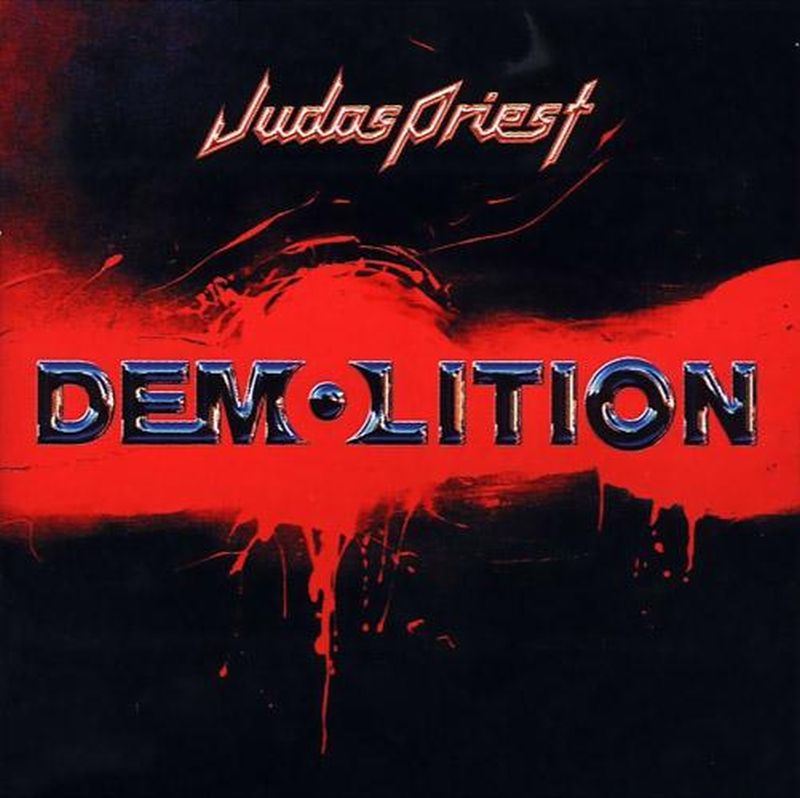
Label: SPV/Steamhammer
Release date: July 16, 2001
Production: Glenn Tipton
Album length: 70.44 min
Genre: Heavy Metal
Rating: 7.5/10
“Demolition” is one of the most controversial albums to hit the metal scene in 2001. Controversial because the result didn’t match what the public was expecting. But that’s the problem of everyone who was still hoping for a new “Painkiller” (1990) or “Defenders Of The Faith” (1984), me included. Apart from “Turbo” (1986), “Demolition” is only the second album of its kind from the band so far, one that got through a whole pile of brazen musical experiments in one piece. It’s a new story all its own, and it fuses the spirit of the band’s past and present in a fantastic way, with Judas Priest spiking the whole thing with a healthy dose of futuristic sounds. “Demolition” is another excellent album from the band: different in every way, challenging, fresh and completely its own thing. Those who know me will say my brain has gone properly sour, because right after this album came out I was so shocked that I didn’t even want to hear it. But that was a product of my own head, my problem. Judas Priest have proven once again that they couldn’t care less about trends and that they always freely, without any limits, serve up albums that are really something special, both in sound and in style, while staying true to their basic steel stance that carried them among the heavyweights of metal.
The album opens with Machine Man, actually the only track of the faster variety, since “Demolition” mostly serves up mid-tempo songs. What hits you right away in Machine Man is the production. The track opens with a drum intro, nothing new for Priest, since that’s how classics like Painkiller or Sinner kick off too. The double bass pedal, still audible at the start, later gets run over by venomous guitar riffing that sounds downright nasty. The sharp, steely, hissing guitar sound isn’t pushed to the front; Ripper’s vocals are at the center, and, interestingly, so is Scott’s snare drive, which sounds very “flat” and monotonous thanks to the trimmed-down lows and can get boring, because it honestly comes across like a stamping machine. The rhythm in this song really is the same all the way through. But there’s plenty of room in the mix for Ian Hill’s rattling bass. That booming, deep bass tone grinds away at full force and stays clearly audible throughout the production, which brings a great contrast to the songs, especially the mid-tempo ones.
“Demolition” doesn’t have a sound as extreme as “Jugulator” (1997). On the new album Judas Priest flirted with the seventies and eighties again and added modern, groovy sounds of fresh design. Those of you who know Glenn Tipton’s solo album “Baptism Of Fire” can already start guessing what we’re about to talk about. “Demolition” was also produced by Glenn Tipton, the man who is obviously the band’s biggest expert in the modern “twisting” of ossified riff forms and in inventing exciting new soundscapes that are almost, well, not quite “Mansonesque.”
The songs written together by K.K. Downing and Glenn Tipton contain the most classic Judas Priest elements, in the sense that those elements dominate in them. These are One On One, Hell Is Home, Close To You, Bloodsuckers and Lost And Found. One On One, for example, a heavyweight boxer of a song, is basically a classically built tune, but its sonic makeover offers a thrilling set of new age sounds, and that definitely doesn’t sit well with “Halford era” fans. And there’s plenty of this makeup all over the record, sometimes a bit more, sometimes a bit less, but there’s just no avoiding it altogether. In Between is an extremely interesting cross between the old “classic” sound and new-agey touches. Alongside it, similarly interesting experiments are Jekyll And Hyde, Devil Digger, Subterfuge, Cyberface and the closing Metal Messiah, which are especially groovy compared to the rest of the material.
Still, the band’s classic moves shine through every single song on the album. So “Demolition” once again offers far more melody than “Jugulator” did. The dynamics of the record keep rolling in waves, because the songs are mixed in style with real taste. After the groovy In Between comes, for example, a pure “eighties riffing” attack with Feed On Me, but lo and behold, even its instrumental middle section carries a bit of trying out something new.
Compared to “Jugulator,” “Ripper” delivers even more singing. Varied singing. With his help, bringing the desired moods to life in the songs worked out completely. “Ripper” is right where he needs to be in the verses throughout. Verses and music complement each other perfectly. In the band’s expression they actually achieve a double effect, each one amplifying the other. So forget about Halford’s style, even though “Ripper” is fully capable of conjuring it without any trouble. And he does conjure it, but only where it’s truly needed to achieve a certain atmosphere (the choruses of Metal Messiah and Bloodskuckers, the extra screams in Hell Is Home). What “Ripper” delivers is strictly his own personal expression, which was also the wish of the other band members, to free “Ripper” from the shackles that might otherwise tie him to the shadow of his predecessor. “Ripper” is the singer of Judas Priest on “Demolition” too, and every pathetic outburst and wailing for Halford is just a waste of time and energy, and honestly plain blindness that only narrows your mind’s openness to anything new.
But we know what kind of dough Judas Priest are made of. They’ve never looked back, so don’t expect any classics in the 100% sense of the word on “Demolition.” The closest thing to it is the fantastic ballad Lost And Found, which really does bring the seventies Judas Priest back to life, though not in sound, since even when there’s bare acoustics in it, it’s steeled in a modern, lively way. So it’s not hard to guess that the songs wear many faces. In them, as on the album as a whole, the solos and the triple harmonies have lost their primacy; modern Judas Priest build their new image purely on creating a massive atmosphere, which they achieve through expressive riffing with a honed, live compressor sound, through a groovy bass line, through Ripper’s varied singing that stays at the center the whole time, and through Scott’s contrasting drum attacks. All of these basic ingredients are seasoned superbly with modern, warped sonic inserts, without which the special atmosphere that “Demolition” conjures up is impossible to imagine.
Oops, one more heads-up. In Europe “Demolition” also exists as a black digipack edition with two bonus tracks, a sticker with the logo and a band guitar pick. The two bonus tracks are a proper revived banger, Rapid Fire, with a “Ripper” screaming his lungs out, and Green Manalishi (With The Two Pronged Crown), which Judas Priest grind out at a slower tempo than we’re used to from their other officially released versions of the song. Enjoy Ripper’s uncompromising screaming!
“Demolition” is a record of extreme contrasts in sonic depth, flowing artfully through all the elements of polished, fresh approaches and a new, damn lively production. Judas Priest stay on the right path, and “Demolition” confirms it. It’s a blend of tradition and fresh new creative ideas. That’s why Judas Priest sound youthful, shocking, exciting and provocative this time too, which has always been their basic motive.
Author: Aleš Podbrežnik
Track list:
1. Machine Man
2. One On One
3. Hell Is Home
4. Jekyll And Hyde
5. Close To You
6. Devil Digger
7. Bloodsuckers
8. In Between
9. Feed On Me
10. Subterfuge
11. Lost And Found
12. Cyberface
13. Metal Messiah
Lineup:
Tim “Ripper” Owens – vocals
Glenn Tipton – guitar
K.K. Downing – guitar
Ian Hill – bass
Scott Travis – drums