Label: Cherry Red Records
Release date: 2/26/2021
Production: Lee Kerslake
Album length: 38.22 min
Genre: Hard Rock
Rating: 8.0/10
Lee Kerslake is a name every fan of good, proper rock music knows, not least for his work with Ozzy Osbourne and Uriah Heep. His debut »Eleventeen« came out at the start of this year. Sadly, posthumously. Kerslake suffered serious health problems for many years. Back in 2007 they forced him to leave Uriah Heep, and his condition only got worse over the years. Lee Kerslake was famous as a brilliant rock drummer, easily ranked alongside legends like John Bohnam, Bill Ward or Cozy Powell, among others. And that’s not all. Kerslake was also a fascinating singer, though he never seriously tried to cash in on that talent. Without the drummer’s distinctive vocal shading, so audible in the harmonies of the legendary band, the multi-vocal harmonies on every Uriah Heep album Kerslake played on would never have had such a grip. And the incredible thing is, on »Eleventeen« those feelings come back. Nostalgia included.
Kerslake and his Uriah Heep, Toe Fat and The Gods comrade Ken Hensley left us one after the other. Last year, a month and a half apart. Ken Hensley managed to finish his last album »My Book of Answers« to the point where it feels coherent from head to toe. »Eleventeen«, Kerslake’s debut, if you’re »splitting hairs«, doesn’t leave quite the same impression: the closing Mom, for instance, runs out of a bit of »steam« – the instrumental feels unfinished and by itself announces that it misses Lee’s vocal. That’s why the track is parked at the tail end of the album. Taken as a whole, »Eleventeen« is still a quality record. The ultimate work of a legendary drummer, with which he said goodbye to the music world in more than a dignified way. I’d rather it had gone differently and this album hadn’t been needed, but that’s how things go. Such is life.
It’s true. The song Take Nothing For Granted would have no trouble finding a spot on any of the Uriah Heep albums released between 1982 and 1998. Although digging through official sources, you can’t clearly work out who exactly plays which instrument on the album – all that’s clear is that Lee Kerslake drums and sings on it – it’s obvious that Uriah Heep guitarist Mick Box had a hand in the record. The arrangements lean heavily on organic, fat guitar phrasing, classically intertwined with chocolatey Hammond lines. The opening Celia Sienna, which shyly opens the album with an acoustic, easygoing folky sound and showcases Lee’s sensual, distinctive vocal, doesn’t foreshadow this yet, but the track right after it, the aforementioned Nothing For Granted, puts things in their proper rock place. Where Do We Go From Here deepens that moment. Add the layered multi-vocal harmonies and an atmospheric crescendo in the chorus, and you’ve got a truly fascinating approximation of classic Uriah Heep. But not everything is so »Heep-like«. Lee wrote You May Be By Yourself (But You’re Never Alone) after watching his old Ozzy Osbourne and Uriah Heep comrade and brother-in-arms Bob Daisley and his loving, caring fatherly bond with his little daughter. There’s quite a sugary overdose here, and the rock core established by the previous two tracks fades. A textbook example of “dad rock”. But Lee wasn’t just a very emotional guy, he was also known as a contagious joker. That side of his character comes out in the tongue-in-cheek Port And a Brandy, driven by a cabaret honky-tonk march, in which Lee lays out the lavish menu of his favorite pub while a pack of tipsy coyotes hums away carelessly in the background. Then there’s the cover of Carole King’s You’ve Got A Friend, a fully acoustic number, before the album blazes up in properly rockin’ fashion again in Home is Where the Heart Is, where the drummer’s vocal talent fascinates once more.
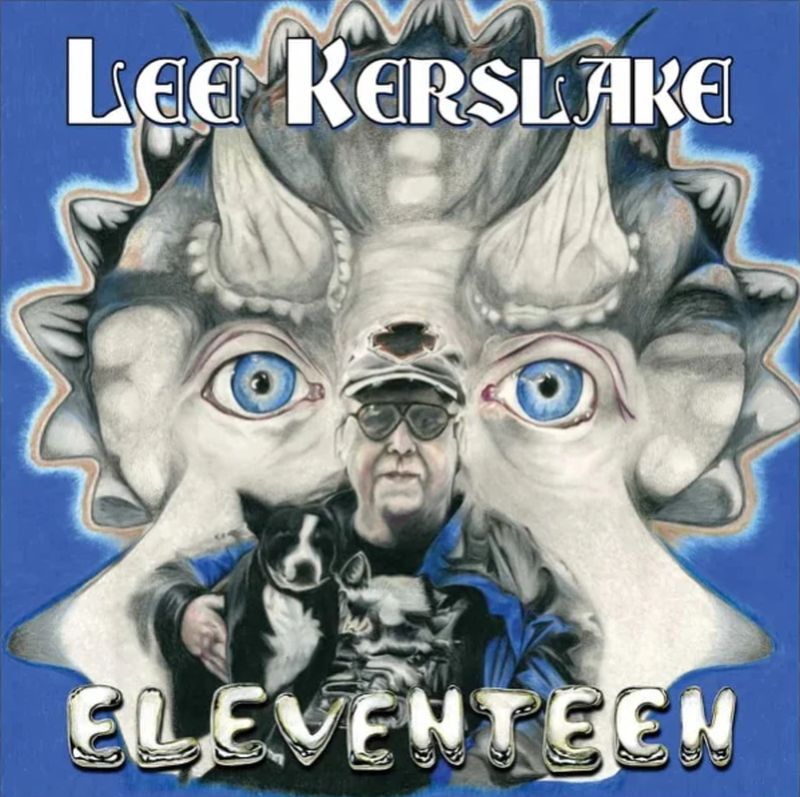
The album is missing at least one more track like Nothing For Granted, Where Do We Go From Here and, just before the end, Home is Where the Heart Is, to really win you over in a more old-school rock ‘n’ roll manner. With the closing instrumental Mom, which sounds like the end-credits music for some very nostalgic film, the listener also gets the feeling that the track was finished after the fact and was originally meant to be a vocal number. But the old lady with the scythe sadly called Lee to her side too soon. So there’s a little bit of artistic headroom hidden in this record that would surely have been used if Lee were still with us. Even though this is primarily a discussion about a Lee Kerslake album – that is, a singer-songwriter album – you do miss another track or two that would tease in a more »Heep-like« way. And his bandmates could have given Kerslake’s final work a slightly less cheap-looking cover. Uriah Heep fans will find plenty of symbolism in it, though. Lee’s blue eyes are exactly the ones they stuck on the “creature” on the cover of the Uriah Heep album “Innoncent Victim” (1977).
All in all, “Eleventeen” is a very fine last statement from a legendary drummer who was a one-of-a-kind original in the rock universe. Easy Livin’ would never have become such a magnificent rock classic and rock evergreen without his unique »galloping stampede«. Lee was one and only. Irreplaceable. A singular gem of rock’n’roll and a star who now burns and shines bright in the sky. Forever. Glory.
Author: Aleš Podbrežnik
Track list:
1. Celia Sienna
2. Take Nothing For Granted
3. Where Do We Go From Here
4. You May Be By Yourself (But You’re Never Alone)
5. Port And A Brandy
6. You’ve Got A Friend
7. Home Is Where The Heart Is
8. Mom (Instrumental)
Line-up:
Lee Kerslake – vocals, drums
Guest musicians:
Jake Libretto, Thomas Jacobson, Jo Kelly, Shane Cauldfield, Simon Goodchild, Mick Box