Label: Bloodfish Music
Release date: September 14, 2006
Production: Gabriel Moffat
Album length: 54.08 min
Genre: Progressive Rock
Rating: 9.0/10
Phideaux Xavier is a hyperactive American multi-instrumentalist, singer, composer and TV director who once described his musical approach as ‘psychedelic progressive gothic rock’. He counts early Genesis, Pink Floyd, JethroTull, Van Der Graaf Generator and David Bowie among his main influences. Some people wrongly assume that the music he releases under the name Phideaux is a band rather than a solo project with a loyal studio and live band, and it truly never runs short of psychedelic rock influences. Still, within the vast sonic collage you can also pick up plenty of other, varied genre influences, especially elements of symphonic prog rock and new wave.
Most Phideaux albums also share a concept, with mostly intelligent, socially perceptive lyrics, which is especially rare and commendable for an American artist and has contributed significantly to Xavier’s profile. Phideaux had already put himself on the map with earlier albums, but he only entered the collective consciousness of most modern prog rock fans with his fifth album, “The Great Leap,” on which he reached a new level of artistic development.
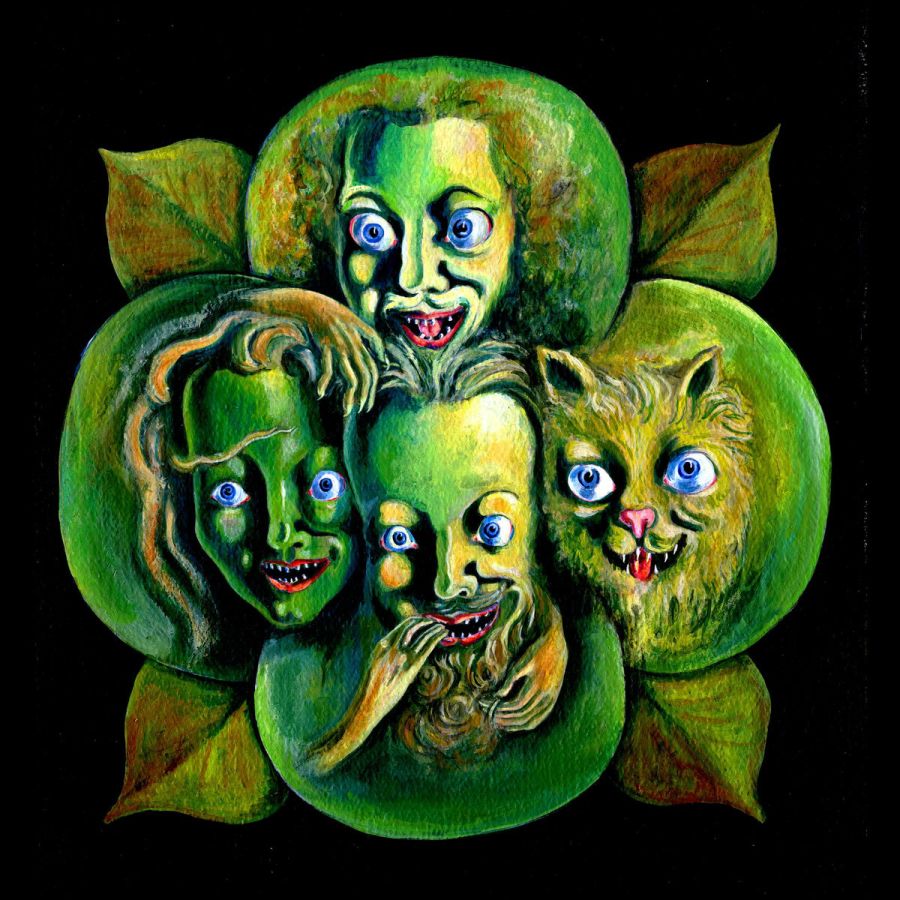
“The Great Leap,” released in the same year as its predecessor “313” (2006), was the first part of Xavier’s ambitious conceptual trilogy about the rule of ‘Big Brother’ and a general ecological crisis in the middle of a dystopian society. The second part of the saga was the album “Doomsday Afternoon” (2007, RockLine review), while the third and final part will be called “Infernal” (no official release date yet). Most of the lyrics on “The Great Leap,” which sports a great cover, are laced with sarcasm and poke fun at a modern society that has traded freedom for security under the wing of neoliberal slavery and serfdom to money, while still selfishly trashing the planet wherever it pleases. Xavier decided that each of the three parts of the saga would have a different stylistic and arrangement approach.
“The Great Leap,” which he wrote together with drummer Rich Hutchins, was designed to be the structurally most compact and accessible part of the saga. Only two tracks on the album go past the six-minute mark, and stylistically it’s in places even closer to pop rock than to the psychedelic-spiced symphonic prog that Phideaux likes to cultivate most on his projects. So “The Great Leap” isn’t the most ambitious part of the trilogy when it comes to complexity and arrangement variety, but it makes up for that with plenty of other virtues.
The compositional and lyrical mastermind, who’s usually also the keyboardist and auxiliary guitarist, surprisingly played bass and most of the guitars on the album this time, plus electric sitar. Most of the keyboards were handled by Arian Shierbaum, who shone on Hammond organ, minimoog, Wurlitzer piano and clavinet. Female vocal lines, which play an important role on most Phideaux releases, were once again part of the mix, while occasional string and woodwind arrangements on “The Great Leap” lent an ambient grandeur.
Phideaux is lucky that his mostly sarcastic, psychedelic voice, which at times bears a slight, minimal resemblance to Roger Waters (Pink Floyd) and occasionally even Alice Cooper (in the lower register), is distinctive and charismatic enough to make him instantly recognizable and set his solo project clearly apart from similar prog acts. Once again he had an entire army of quality instrumental sidemen at his side, led by guitarist and producer Gabriel Moffat, Xavier’s longtime collaborator. Xavier’s band, by the way, is made up of people he’s known for most of his life, who are also his friends.
The album is fairly vocal-driven, and most tracks, alongside their varied atmospheres, carry a strong melodic stamp, making for a highly accessible listening experience. “The Great Leap” opens with “Wake Up,” which features an almost alternative-rock guitar phrase, but once Xavier’s sarcastic singing and the refined, witty instrumental touches kick in, it quickly melts into psychedelic-symphonic color. “You And Me Against A World Of Pain,” which doesn’t lack psychedelia and space rock influences, rests on pastoral acoustic guitar chords, with splendid vocal harmonies and occasional string arrangements as its main highlights.
Thanks to its black-humored lyrics and psychedelic pulse, where the influence of The Beatles and Syd Barrett-era Pink Floyd is impossible to miss, “The Waiting” has an almost traditionally English charm, which is rather, rather unusual for an American musician. “Abducted,” one of the best moments on “The Great Leap,” offers a good ambient contrast with its dark atmosphere, while the lyrics are full of sarcasm aimed at the notorious social system and general apathy. The mocking chorus is excellently pulled off this time, while digital samples over synth textures and epic vocal harmonies add a touch of grandeur to the overall ambient resignation.
The no less ambitious “Rainboy” has a pastoral intro and Beach Boys-style vocal harmonies, then its nature changes completely as elements of folk, symphonic prog and even prog metal trade places, with angry guitar passages and furious drum marches. The energetic “I Was Thinking” is carried on the wings of gorgeous orchestral-acoustic arrangements, while Xavier impresses with his chameleon-like vocal approach on “Long And Lonely Way,” where vocal sarcasm about human egoism once again reigns. It’s an acoustic-leaning number with psychedelic and folk shades, while the modern production and dirty electric guitar sound remind you that this ‘antique-minded’ track was made in the 21st century.
“They Hunt You Down,” which will hit home with many a Pink Floyd fan, is another interesting folk ballad with elements of psychedelia, symphonic prog and pop rock, on which Xavier once again wows with his vocal versatility. The female vocal harmonies and woodwind arrangements come off especially well this time. On “Tannis Root,” another ambient-rich number, Xavier also cynically grumbles about the hunting of (endangered) animals, while this time the short instrumental section with a keyboard solo spree and the variety of vocal harmonies are particularly fascinating.
“One Star,” true to its title and lyrics poking fun at instant fame, is a fun pop/alt/psychedelic rocker with mighty layers of Hammond organ. Xavier takes a somewhat more punk-flavored approach to the singing this time, with some vocoder thrown in, which is admittedly a touch overdone. “Last” is a pleasant acoustic ballad with a by no means saccharine love lyric, making it one of the few moments on the album without any trace of sarcasm.
“The Great Leap” wasn’t a great leap forward in terms of sonic evolution, but it was definitely a leap forward for Phideaux Xavier when it comes to developing ambitious conceptual ideas, in which he was light-years ahead of most other contemporary American prog acts, and which makes him so interesting to anyone who loves musical intellectuals. Compared with future Phideaux projects, “The Great Leap” was actually a ‘lightweight’, as it had no multi-part symphonic prog epic, but on the other hand it was highly accessible to all fans of psychedelic rock, folk and pop, for whom it makes a pretty good entry point into the rest of Xavier’s discography.
Author: Peter “Dr. ProgRock” Podbrežnik
Track list:
1. Wake Up (4:03)
2. You And Me Against A World Of Pain (5:35)
3. The Waiting (3:33)
4. Abducted (6:10)
5. Rainboy (6:15)
6. I Was Thinking (4:24)
7. Long And Lonely Way (4:18)
8. They Hunt You Down (3:54)
9. Tannisroot (4:52)
10. One Star (5:14)
11. Last (5:50)
Lineup:
Ariel Farber – vocals, violin
Valerie Gracious – vocals
Molly Ruttan – vocals
Linda Ruttan – vocals
Phideaux Xavier – vocals, electric sitar, guitars, Nord Electro 2, Fender Rhodes, autoharp, bass guitar
Gabriel Moffat – guitar, woodwind arrangements on track no. 2
Richard Hutchins – drums, percussion
Guest musicians:
Arlan Shierbaum – Hammond organ, Wurlitzer piano, clavinet, MiniMoog, piano, synthesizer
Probyn Gregory – theremin, trumpet, trombone, French horn, flugelhorn, woodwind arrangements on track no. 2
Biker Helfrostt – flute, recorder, zurna
Stefanie Fife – cello
Scott Brannon – dulcimer
Joe Pusiteri – snare drum
Derek Leininger – Fx