

Today marks exactly 10 years since we lost not just one of the most colorful singers in rock and metal, but a musician whose voice and vocal technique shaped the future face of metal right down to its roots. Whole hordes of young singers in the genre started looking up to him, following in his footsteps and imitating him.
RONNIE JAMES DIO (1942 – 2010) – from horned elf to rock legend!
Ronnie James Dio (July 10, 1942 – May 16, 2010) was an American rock and heavy metal singer and songwriter. Among others, he fronted Elf, Rainbow, Black Sabbath, Heaven & Hell and his own band Dio. Ronnie James Dio was considered one of the most powerful and distinctive voices that defined heavy metal. The consistency and power of his solid, charismatic voice, backed by his trademark gestures on stage, defined and introduced Ronnie’s signature move – the “devil horns”. They’ve been firmly anchored in metal culture ever since.
Before his death, Ronnie teamed up again with his former Black Sabbath bandmates (the lineup from the “Mob Rules” era). Under the name Heaven And Hell, Ronnie James Dio, Tony Iommi, Geezer Butler and Vinny Appice released their only studio album, “The Devil You Know”, on April 28, 2009. The band was already talking about a new studio album, but Ronnie’s untimely death got there first. On May 16, 2010, the vocal icon lost his final battle with stomach cancer, carving his name in gold among the legends of rock forever.
| CHILDHOOD, SCHOOL AND FIRST STEPS IN MUSIC |
Ronnie James Dio was born Ronald James Padavona in Portsmouth, New Hampshire, USA. He was the only child of an Italian-American family. Ronnie grew up in Portsmouth until the family moved to Cortland (New York). His parents raised him in the Roman Catholic faith.
Ronnie got into music by picking up the trumpet and the French horn. Already as a boy he recorded a few singles with various rockabilly acts. When Ronnie started high school, he joined a band called The Vegas Kings, where he played bass. When the band got its act together and, thanks to his popularity with the crowd, moved him up to lead singer, it also changed its name to Ronnie & The Rumblers, and soon after to Ronnie And The Red Caps. The first seven-inch vinyl single by Ronnie And The Redcaps came out in 1958 on Reb Records. The A-side carries the song ‘Lover’, with Billy DeWolfe still on lead vocals, although Ronnie’s backing vocals can clearly be heard in the background. The B-side carries ‘Conquest’, an instrumental in the style of The Ventures, with Ronnie on trumpet.
Ronnie James Dio graduated from Cortland High School (Cortland City School) in 1960, and in 2004 he was inducted into the Cortland City School Hall of Fame! His hometown paid him a special tribute on November 15, 1988, naming one of its streets after him (Dio Way) as a mark of respect.
During a Heaven And Hell show at the Darien Lake Performing Arts Center in Darien (New York State), near Buffalo, on September 19, 2007, Dio told the crowd during one of the breaks that he had attended the University at Buffalo, where he enrolled in pharmacy. The university later confirmed this, adding that Ronnie was a student there in the 1960/61 academic year but never finished his studies. That same year, after all, he founded one of his first bands.
Ronnie was offered a scholarship to study music at the Juilliard School of Music, but turned it down because he was into rock music. Despite the sheer power Ronnie James Dio unleashed with his vocals on stage throughout his career, he always claimed he never practiced to achieve that specific quality he’ll forever be admired, respected and recognized for. He always put it down to proper breathing technique, a skill he picked up back in his childhood when he was learning to play the trumpet and the French horn.
| EARLY MUSIC CAREER |
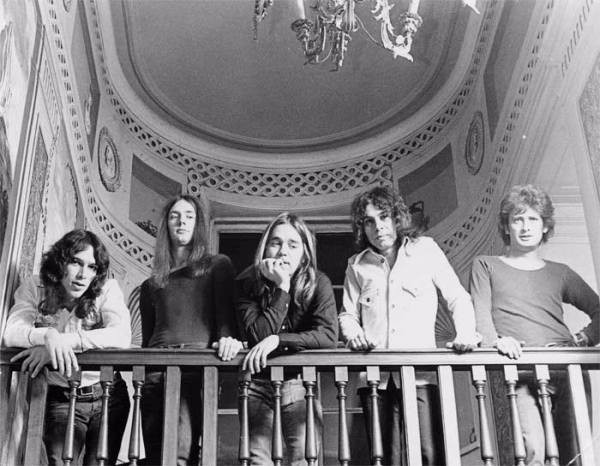
Ronnie’s career kicked off in 1957, when a few musicians from Cortland (New York) formed The Vegas Kings. The band quickly changed its name to Ronnie and the Rumblers. The lineup was: Ronald James Padavona on bass, singer Billy DeWolfe, guitarist Nick Pantas, drummer Tom Rogers and saxophonist Jack Musci.
In 1958 the band changed its name once again, along with a few lineup changes. From then on they were Ronnie and the Redcaps. At this point Ronnie started singing, taking over from Billy DeWolfe, who had left the band. Saxophonist Musci also left, and the band brought in guitarist Dick Botoff. Ronnie And The Redcaps released two seven-inch vinyl records. The first, out on Reb Records, featured the songs “Lover” and “Conquest” (with DeWolfe on vocals on Lover). The second, out on Seneca (S 178-102, USA), has “An Angel Is Missing” on the A-side and “What’d I Say” on the B-side. Ronnie sings all the lead vocals on both songs.
In 1961 the band changed its name yet again. This time they called themselves Ronnie Dio and The Prophets. The Prophets stuck together for quite a while, releasing a few singles and one studio album. Some sources claim Ronnie wrote these songs himself, while others, Ronnie included, insisted that the band as a whole had a hand in writing them.
Ronald James Padavona took the name “Dio” from a mobster known as Johnny Dio. He first used it in 1961, after the band released its second single for Seneca Records. Up until 1967, Ronnie Dio And The Prophets put out a few more singles.
Ronnie Dio and the Prophets split in 1967, after guitarist Nick Pantas formed a new band called Electric Elves. They later shortened the name to Elf. And so it happened that in 1969 Elf opened for Deep Purple.
| RAINBOW |
At that gig, Deep Purple guitarist Ritchie Blackmore took good note of Ronnie James Dio’s vocal performance, and when he left Deep Purple, he invited Ronnie and the other Elf members to form Blackmore’s new band, Rainbow. Rainbow released their debut studio album in 1975, and Ronnie went on to record three more albums with them. He parted ways with Rainbow over creative differences about rock music, as Blackmore wanted to steer Rainbow in a more commercial direction.
In 1974 Ronnie James Dio sang on the British single Love Is All, which ended up on Deep Purple bassist Roger Glover’s concept album “The Butterfly Ball and the Grasshopper’s Feast”. On that album Ronnie also sang on “Homeward” and “Sitting in a Dream”, where he’s joined by two other Deep Purple members, Glenn Hughes and David Coverdale.
| BLACK SABBATH |

After leaving Rainbow, Ronnie joined Black Sabbath, replacing Ozzy Osbourne. In 1980 Black Sabbath released the hugely successful “Heaven And Hell”, which put the band right back at the center of the rock map. It was followed in 1981 by the somewhat less successful “Mob Rules”, which was still a hit. After that came the live album “Live Evil”.
During his time with Black Sabbath, Ronnie popularized the “devil horns” gesture. As Ronnie told it, his grandmother used the gesture as a ritual to protect herself from the curse of the “evil eye”, a superstition that’s very common among southern Italians. The horns (Italian “Corna”) were used to ward off curses or, the other way around, to put a hex on someone, which they called “Malocchio” (“the evil eye”). Ronnie liked to point out that in Black Sabbath he didn’t want to copy Ozzy Osbourne, who used the peace sign, so he came up with something new.
Ronnie James Dio wasn’t the first to use the horns, though. The band Coven used the sign on all their studio albums, and on stage as early as 1968. Parliament-Funkadelic also flashed it regularly, on plenty of promo photos and album covers as well as on stage in the seventies. But any way you slice it, Ronnie James Dio is the one who brought the sign into mainstream metal culture and made it popular among rock and metal fans.
In 1992 Ronnie James Dio briefly returned to Black Sabbath and recorded the album “Dehumanizer” with them. The album was a nice success for the band, climbing to No. 40 on the UK albums chart, while in the US it reached No. 44 on the Billboard 200.
| DIO (for a detailed band bio, “scroll” with your mouse to the bottom of this article!) |
In 1980, Ronnie James Dio sang on “To Live for the King” and “Mask of the Great Deceiver,” two tracks from “Seeds of Change,” the solo studio album by Kansas guitarist Kerry Livgren. Because of Ronnie’s history with Rainbow and Black Sabbath, his appearance on the album sparked plenty of outrage and controversy among the legions of Livgren’s fans, raised and brought up in the true spirit of the Roman Catholic faith. Many of those Roman Catholic faithful would later see Dio and Black Sabbath as nothing less than the very seed of Satan. Dio later said in an interview that he never considered Livgren’s record a Christian album, and that he lent his voice to it purely because he wanted to help out and do Kerry a favor.
In 1982, disagreements broke out in Black Sabbath over the sound production and overall shape of the live album “Live Evil.” The upshot was that Ronnie James Dio and drummer Vinnie Appice left Black Sabbath and formed the band Dio.
Over the course of their career, Dio recorded ten studio albums, and the first four are still the best loved and most highly regarded: “Holy Diver” (1983), “The Last in Line” (1984), “Sacred Heart” (1985) and “Dream Evil” (1987). These were followed by “Lock up the Wolves” (1990), “Strange Highways” (1994), “Angry Machines” (1996), “Magica” (2000), “Killing the Dragon” (2002) and “Master of the Moon” (2004). On top of that, Dio put out 4 live albums: “Intermission” (1986), “Inferno: The Last In Live” (1998), “Evil Or Divine – Live In New York City” (2005) and “Holy Diver – Live” (2005). Over the years, the Dio lineup saw a revolving door of members with serious musical pedigree. Right up to 2010, these musicians kept Ronnie company in Dio for longer or shorter stretches: Vivian Campbell – guitar (1982-1986), Vinny Appice – drums (1982-1989, 1993-1999), Jimmy Bain – bass (1982-1989, 1999-2004), Claude Schnell – keyboards (1984-1989) , Craig Goldy – guitar (1986-1989, 1999-2001, 2004-2005, 2006-2010), Rowan Robertson – guitar (1989-1991), Teddy Cook – bass (1989-1991), Simon Wright – drums (1989-1991, 1999-2010), Jens Johansson – keyboards (1989-1991), Tracy G – guitar (1993-1999), Jeff Pilson – bass (1993-1997, 2004-2005), Scott Warren – keyboards (1993-2010), Larry Dennison – bass (1997-1999), Doug Aldrich – guitar (2001-2004, 2005-2006), Rudy Sarzo – bass (2004-2010), Chuck Garric – bass (2000-2001).
In 1997, Ronnie James Dio turned up on Pat Boone’s release “In a Metal Mood: No More Mr. Nice Guy,” an album of famous heavy metal songs played big band style. You can hear Ronnie on backing vocals on Boone’s cover of Holy Diver.
In 2000, Century Media Records released a double compilation CD titled “Holy Dio: Tribute to Ronnie James Dio”. A whole bunch of well-known power metal bands contributed covers of Dio originals to it.
Tenacious D wrote a song called Dio and put it on their self-titled studio debut, “Tenacious D.” Ronnie gave the move his blessing, and Tenacious D later appeared in the video for the Dio song Push from the album “Killing The Dragon.” Ronnie later also showed up in the movie “Tenacious D in The Pick of Destiny,” playing himself. In one snippet of an interview filmed with Ronnie at the time, he joked, with a healthy dose of humor, that he had his doubts whether Tenacious D were really worthy of having “the torch passed” to them. The lyrics of the song Dio, you see, suggest that Dio should pass the torch to Tenacious D.
In 2005, Ronnie played the role of Dr. X on “Operation: Mindcrime II,” the concept album by Seattle art metallers Queensrÿche, officially released at the beginning of April 2006. Ronnie also appeared at some of Queensrÿche’s shows across the US, acting and singing the part of Dr. X on stage, while singer Pamela Moore played and sang the role of Sister Mary. That moment is captured on the DVD “Mindcrime at the Moore.”
Throughout September 2005, Dio also toured Siberia and eastern Russia. The tour kicked off in the city of Khabarovsk.
Dio were finally laid to rest with Ronnie’s death on May 16, 2010. Some new recordings (songs) that Ronnie had been working on for the next Dio album remain in the studio. The question, though, is whether there’s enough of that material, and whether it’s good enough, for it to perhaps come out one day as a posthumous Dio studio album. The unreleased but freshly recorded song Electra, written for the new Dio album, also titled Electra, makes a strong case for a release, since it’s a real classic Dio treat.
| HEAVEN AND HELL |

In October 2006, it was officially confirmed that Ronnie James Dio had rejoined Black Sabbath. Alongside Ronnie, the lineup featured guitarist Tony Iommi, bassist Geezer Butler and Vinnie Appice. They decided to hit the road, but under the name Heaven And Hell rather than Black Sabbath, as everyone had expected. The name Heaven And Hell fit perfectly, since it refers to the title of the first Black Sabbath album Ronnie James Dio sang on. Heaven And Hell’s official explanation for not using the Black Sabbath name was that Ozzy Osbourne was still a member of Black Sabbath, since the lineup of Ozzy Osbourne, Tony Iommi, Geezer Butler and Bill Ward had never officially called it quits. Original Black Sabbath drummer Bill Ward was initially part of the Heaven And Hell project too, but later turned the offer down. By 2008, Heaven And Hell had played 98 shows. In 2009, Heaven And Hell also released a studio album titled “The Devil You Know.” A follow-up was planned for 2010.
| PRIVATE LIFE |
Ronnie James Dio first got married in mid-1960. His first wife was Loretta Berardi (born 1941). Together they adopted a son, Dan Padavona (born July 1968), who today works as a meteorologist at the National Weather Service in Binghamton (New York).
After Ronnie divorced Loretta Berardi, he married Wendy Galaxiola (born 1947), who also became his manager. In the eighties, Wendy managed the bands Rough Cutt and Hellion as well. Ronnie stayed married to Wendy until his death.
| Stomach Cancer and Death |
On November 25, 2009, Wendy officially announced that Ronnie James Dio had been diagnosed with stomach cancer. The official statement read: “Ronnie has been diagnosed with the early stages of stomach cancer. We started treatment immediately at the Mayo Clinic. After Ronnie ‘kills the dragon,’ he’ll be back on stage, where he belongs, doing what he loves most: performing music for his fans. Long live rock and roll, long live Ronnie James Dio. Thank you to all the friends and fans who sent Ronnie their good wishes and in that way gave him strength and courage.”
On March 14, 2010, Wendy posted an update on her husband’s health, which read: “Ronnie’s seventh chemotherapy session is behind us, along with a new CAT scan and a new endoscopy, and the results are good. The main tumor has shrunk considerably, and from now on we’ll be going to Houston, where the cancer clinic in Texas is, every three weeks instead of every two weeks as before.”
On May 4, 2010, Heaven And Hell officially announced they were canceling their entire summer tour due to Ronnie James Dio’s health.
Ronnie James Dio passed away at 7:45 a.m. on May 16, 2010.
On Ronnie James Dio’s official website, Wendy wrote the following:”Today my heart is broken, Ronnie passed away at 7:45 a.m., May 16, 2010. Many, many friends and family were able to say their goodbyes before he peacefully passed away. We truly appreciate all the love and support you have shown us. Please give us a few days of privacy to deal with this terrible loss. Know that Ronnie loved you all very much and that his music will live forever”.
| LEGACY |
Ronnie James Dio’s career spanned six decades, from 1957 to 2010. Over that time, and especially in the 21st century, Ronnie picked up a whole string of honors and awards for his work.
He was inducted into the Cortland City Hall of Fame in 2004, and the city of Cortland also paid tribute to him by naming one of its streets after him (“Dio Way”). As part of its annual “Roll Of Honour” ceremony, the renowned British rock music magazine Classic Rock Magazine gave Ronnie the “Metal Guru Award” for 2006. On January 17, 2007, Ronnie James Dio was inducted into the Guitar Center’s Rock Walk of Fame in Hollywood (California, USA). In April 2010, Ronnie was named “Best Metal Singer” at the Revolver Golden Gods Awards for his work on the Heaven And Hell album “The Devil You Know.” That made him the oldest ever winner of the award, at 67 years old. He accepted the award in person, and it turned out to be Ronnie James Dio’s last official public appearance, less than a month before his death.
A memorial service was announced for 14:00 on May 30, 2010, at The Hall Of Liberty, located at Forest Lawn Hollywood Hills cemetery in Los Angeles (California, USA).
translated and edited by: Aleš Podbrežnik (May 2012)
Detailed biography of DIO:
DIO were an American heavy metal band led by singer Ronnie James Dio. Ronnie James Dio founded the band after leaving Black Sabbath in 1982. In an interview included on a special edition reissue of the Dio debut “Holy Diver”, Ronnie insisted he never set out to start a solo career. What he always wanted was to form a new band together with drummer Vinny Appice, who had walked out of Black Sabbath at the same time as Ronnie. From a commercial standpoint, the name Dio was a stroke of genius, since by the time the band was formed it was already well established and instantly recognizable among music fans. Dio means “God” in Italian.
The band released ten studio albums and went through plenty of lineup changes, with Ronnie James Dio the only constant member, sticking with it from the very beginning right up to the end of the band, which came with Ronnie’s death on May 16, 2010.

| THE BEGINNINGS AND “HOLY DIVER” (1982-1984) |
In 1982, friction broke out among the members of Black Sabbath. This time the bone of contention was a clash of views over the sound of the live album “Live Evil”, which the band was planning to release. The falling-out ended with Ronnie James Dio and Vinny Appice leaving Black Sabbath. The duo still wanted to play in a band, so in October of that same year they formed a new one and named it Dio. In May 1983 the band released its studio debut, “Holy Diver”. It features two hit singles, “Rainbow in the Dark” and “Holy Diver”. The latter got a big popularity boost mainly thanks to heavy rotation on MTV, which was already up and running at the time. Guitar duties went to Vivian Campbell, an Irish guitarist who came out of the ranks of N.W.O.B.H.M. band Sweet Savage. The keyboards on the album were played entirely by Ronnie James Dio and bassist Jimmy Bain, who had once been part of the Rainbow lineup with Ronnie — the band of former Deep Purple guitarist Ritchie Blackmore. For keyboards at live shows throughout 1884, the band enlisted the help of Claude Schnell. Ronnie also had this to say about Dio’s early days:
“It was a really great time to be in a band. For us it was ideal. Everything fell into place for us like a perfect puzzle. Team spirit was sky-high, and the attitude, the drive and the commitment to making music at rehearsals were simply incredible. That’s why what we achieved in the studio was exceptional too. Every one of us in the band wanted this to be a truly great record. We really believed in what we were creating on that album and we couldn’t wait for it to come out so people could hear it.”
| FROM “THE LAST IN LINE” TO “DREAM EVIL” (1984-1989) |
For the recording of the new album “The Last In Line”, the lineup grew from a four-piece into a five-piece, with Claude Schnell becoming Dio’s permanent keyboard player. The second studio album, “The Last in Line”, came out on July 2, 1984. The band held together in this formation for the third studio album too, “Sacred Heart”, released on August 15, 1985.
In 1985 Ronnie James Dio also wrote the song “Stars” for the Hear ‘n Aid project, with Vivian Campbell contributing guitar. Campbell was growing more and more unhappy with Dio’s musical direction. In 1987 he got an offer to join Whitesnake. Campbell still appears on the live EP “Intermission”, since he had toured with Dio in 1986. Either way, that EP also features a new studio track, “Time To Burn”, which introduced Craig Goldy to the crowds as the band’s new guitarist.
On July 21, 1987, the band’s fourth studio album, “Dream Evil”, was released. After the album came out, Craig Goldy left the band to focus on his own projects. In June 1989 the band officially confirmed it had taken on an 18-year-old kid by the name of Rowan Robertson as guitarist, but that couldn’t stem the major changes that followed. At the end of 1989, Claude Schnell, Jimmy Bain and Vinny Appice all left the band.
| CHANGES (1990-1999) |
The gap left by the departure of Schnell, Bain and Appice was filled by bassist Teddy Cook, keyboardist Jens Johansson and former AC/DC drummer Simon Wright. The revamped band released “Lock up the Wolves” in the spring of 1990. On the tour that followed, Ronnie James Dio got the chance to meet up with his old Black Sabbath bandmate Geezer Butler. That meeting led to a short-lived Black Sabbath reunion in the exact lineup from the “Mob Rules” era (1981). That lineup released “Dehumanizer” in 1992, after which Ronnie James Dio decided to fire Dio back up. Just like the first time around, he brought his buddy Vinny Appice along with him. At the end of 1994 the lineup was rounded out by guitarist Tracy G, keyboardist Scott Warren, who came over from American band Warrant, and bassist Jeff Pilson from Dokken. The fantasy and mystical imagery in the lyrics gave way to themes from everyday life. The band also changed its musical direction, bending it to the production trends of the day. That’s why some Dio fans see the era of the studio albums “Strange Highways” (1994) and “Angry Machines” (1996), plus the live “Inferno – Last In Live” (1998), as the weakest stretch of Dio’s career. Opinions were split, though, and plenty of fans welcomed the band’s new sound and songwriting direction, a decisive break from the “outdated” approaches of the eighties. Because management was so disappointed with the dismal sales of “Angry Machines”, the band decided to go back to its early creative style. As a result, guitarist Tracy G left the band and Craig Goldy came back to take his place.
| THE COMEBACK (2000-2004) |
Craig Goldy’s return gave the band’s creativity a shot in the arm, and in 2000 it released a new studio album, “Magica”. This was the band’s eighth studio album. Many fans file “Magica” under “comeback album”, since a week after its US release it hit a great No. 13 on Billboard’s independent albums chart. Alongside Craig Goldy, drummer Simon Wright and bassist Jimmy Bain also returned to the lineup for “Magica”, although Bain was replaced for the European tour by L.A. Guns bassist Chuck Garric. The concept album “Magica” showed Dio steering its sound back toward the old style that had already proven to be the band’s most successful. The new songs were also beefed up with heavier use of keyboards. Over the course of the following tour, though, tensions grew between Craig Goldy on one side and Ronnie James Dio and Jimmy Bain on the other. Goldy had to sideline the band far too often because he was dealing with family obligations. So Craig Goldy left Dio in January 2002 and was replaced by Doug Aldrich. Jimmy Bain brought him into the band after the two had met while recording a Metallica tribute album. Since Aldrich arrived at Dio late, he didn’t really get to contribute any ideas to the band’s new studio album. The bulk of the ninth studio effort, “Killing The Dragon”, was therefore written by Ronnie James Dio and Jimmy Bain. “Killing The Dragon” came out in 2002 on Spitfire Records, and the metal community gave it a great reception, pushing it into the top 200 of the US Billboard chart. Aldrich stayed in the band until April 2003, and then, just like Vivian Campbell before him, he joined Whitesnake. Craig Goldy returned to Dio once more to take Aldrich’s spot. Soon after, bassist Jimmy Bain left Dio.
| “MASTER OF THE MOON” AND THE END OF THE BAND (2004-2010) |
Dio released their tenth (and final) studio album, “Master of the Moon”, on SPV Records. The album came out in Europe on August 30, 2004, and in the US on July 7, 2004, through Sanctuary Records. Multi-instrumentalist Jeff Pilson (ex-Dokken) took over bass duties again on the album, but because of his commitments to Foreigner he had to say goodbye to Dio once he’d finished his work in the studio. Stepping into his shoes in Dio was Rudy Sarzo, who among other things had once been part of Ozzy Osbourne’s band.
In 2005 the live album “Evil or Divine – Live In New York City” came out, featuring the same concert recording the band had already put out on the DVD of the same name in 2003. Ronnie James Dio commented that he had no say whatsoever in this release, since he had already ended his contract with the label that put out the live album. In 2005 Dio toured South America, Japan and Europe. Their fall tour was called “An Evening With Dio”. The set was split into two parts. The first was a regular set, while the second was a complete performance of the band’s 1983 studio debut, “Holy Diver”. The band wanted to film one of these shows on the Russian leg of the tour and release it later on DVD. The concert that actually ended up on DVD, however, came from the band’s show in London (UK). The audio version, the double live CD “Holy Diver – Live”, came out in April 2006.
In 2007 it was officially announced that Black Sabbath would reunite with Ronnie James Dio and work under the name Heaven and Hell. That’s exactly what happened, and Heaven And Hell released the album “The Devil You Know” in 2009. Among other things, Ronnie James Dio said this about the album:
“It sounds great. It’s a real cross-section of everything we’ve done, from the “Heaven And Hell” album through “Mob Rules” all the way to “Dehumanizer”. I think there’s a lot of “Dehumanizer” in this album, but other things as well. It really sums up everything this band has always stood for.”
Ronnie James Dio’s commitments with “Heaven and Hell” meant that Dio had to push back recording the follow-up to “Master Of The Moon”, which already had a name: “Magica II.” The three-year break was briefly interrupted by a European tour with 10 dates in May and June 2008. It was also officially announced that the band would play a new 22-date European tour in November and December 2009, kicking off in Great Britain and wrapping up in Germany. For these shows Doug Aldrich rejoined the band, once again stepping in for Craig Goldy on guitar. Dio also planned to release a new single, “Electra”, timed to coincide with the start of the announced European tour. It would have been the first new studio material in 5 years. For 2010 the band was also planning to record a new studio album, maybe even two.
On November 18, 2009, the band officially cancelled the entire tour, as Ronnie James Dio had to be hospitalized immediately. He had been diagnosed with stomach cancer and started treatment right away.
On February 19, 2010, the band’s official website announced that Dio would release the “Tournado Box Set” in a strictly limited edition. The package contains the album “Killing the Dragon”, the DVD “Evil or Divine” (available in PAL format only), and DVD bonus material with interviews, a photo gallery and never-before-released behind-the-scenes footage. The package also included the promo video for Push from the album “Killing the Dragon”, exclusive Dio cards and a bonus CD single, “Electra”, which was later to appear on the upcoming new studio album “Magica II”.
Ronnie James Dio died of stomach cancer on May 16, 2010, at 7:45 a.m. That same day, the band Dio officially ceased to exist.
translated and edited by: Aleš Podbrežnik (May 2012)
full feature marking the 10th anniversary of Dio’s death edited by: Primož Novak
