Label: Anthem (original release) / UMe/Mercury and Anthem Records (reissue)
Release date: 9/9/1982 (original release) / 4/28/2023 (40th anniversary reissue)
Production: Rush & Terry Brown
Album length: 43.12 min
Genre: Progressive Rock / Art Rock
Rating: 10/10
Looking back from almost a full 41 years later, “Signals” is the logical follow-up to “Moving Pictures” (1981) and a fresh ‘makeover’ of its sound. Just a year after the band’s commercial breakthrough, Rush’s sound got draped in an experimental curtain of primitive Oberheim and Roland synthesizers. Pushing the keyboards this far up in the sound and the arrangements split the band’s followers into two camps for good. The sonic transition at the start of the eighties had worked out fine: on “Permanent Waves” and “Moving Pictures” Rush had already won themselves some expressive room for obvious sonic mimicry and worked in elements of trendy new wave structures. Still, for many fans in 1982, the band’s ninth studio album was simply the last straw. For lovers of the band’s seventies sound and expressive vistas, it got hard to swallow that on “Signals” the guitar once again had to give up some extra space in this new phase of artistic transition, and draw the ‘short straw’ in the production’s sonic picture yet again. On “Permanent Waves” and “Moving Pictures” they’d already had to keep their cool about that.
The eighties simply brought a new era, and Rush didn’t want to sit it out. They had to, and wanted to, cash in on all their talents and push their sound forward evolutionarily. The fundamental change on “Signals” comes from Geddy Lee, who dressed practically every song in the sound of the cutting edge of synthesizing at the time. “Signals” carries that signature integration of the (now) vintage sound of what were then state-of-the-art synths. The sonic picture hits sharp contrasts and still stays organic. The solid, voluminous bass line remains front and center, and on their third Rush album in a row Geddy’s vocals completely give up the ‘screeching’ maneuvers that were typical of Rush albums in the seventies.
It’s exactly this clearly defined sound, with synth curtains placed almost on equal footing with the guitar phrases, that gives “Signals” an atmospheric upgrade over all previous Rush albums. One of the most beautiful songs not just on this album but in the entire Rush discography, Subdivisions, which opens the record, is a first-rate artistic move in the further evolution of the sound that “Signals” brings. In the rich synth curtain the guitar phrases can definitely still be heard, but they’re subordinate in the production. Right from the opening Subdivisions. Even before the guitar solos, these synth maneuvers grab the attention. Interestingly, the guitar solos only come in the outros of the songs (The Analog Kid, Chemistry). For the first time, Geddy’s clean, melodic vocals, which had long since forgotten the frenetic screaming of Rush albums from the seventies, are put to optimal use alongside the synth curtains, and as such add the finishing touch to the impressive, lavish atmosphere. His voice even magnifies (amplifies) that atmosphere.
Chemistry, the lyrically central song on “Signals”, widens the artistic reach. In it, Rush worked in a ‘reggae feint’ (the pre-chorus). That ‘reggae trick’ gets cranked up even further in Digital Man. This trio’s joy of experimenting also dragged a lot of ill will into the studio this time, from producer Terry Brown, who was by no means fond of the band’s urge to explore the limits of their own sound. Rush therefore showed him the door. This flirtation with reggae has an immediate artistic link to Vital Signs, which closes “Moving Pictures”. There, too, ‘reggae’ clings to the arrangement, and Rush symbolically hinted at where they’d be heading artistically on the next album. “Signals”, that is. The sonic ‘softening’, with its artistic leaning toward radio frequencies, is rounded out on the album by The Weapon, and the band’s sophistication is also expressively backed up by New World Man and Digital Man. Losing It is certainly the album’s oddball. Here the guys added a violin to the sound, which deepens the moments of mystique and melancholy, or paints them in a distinctive light.
The beginning and the end of the album are its most intense moments. The closing Countdown combines the trio’s intellect in an incredibly well-struck balance. The contributions of all three musicians are brilliantly calibrated. Within the album’s most demanding composition, they cleverly co-create rolling waves of shifting moods and contrast them dynamically. That also comes from the crafty weaving together of leading motifs, which, given the band’s ‘eccentric’ artistry, keep drawing out the most appealing attribute of exploring Rush’s music, over and over. Eclecticism. In Countdown, which keeps the most of the progressive stance inherited from older Rush albums, Rush bring back some of the missed guitar ‘chopping’, even though with “Signals” Geddy, Neil and Alex had finally ‘buried’ the spirit of the seventies albums’ sonic essence.
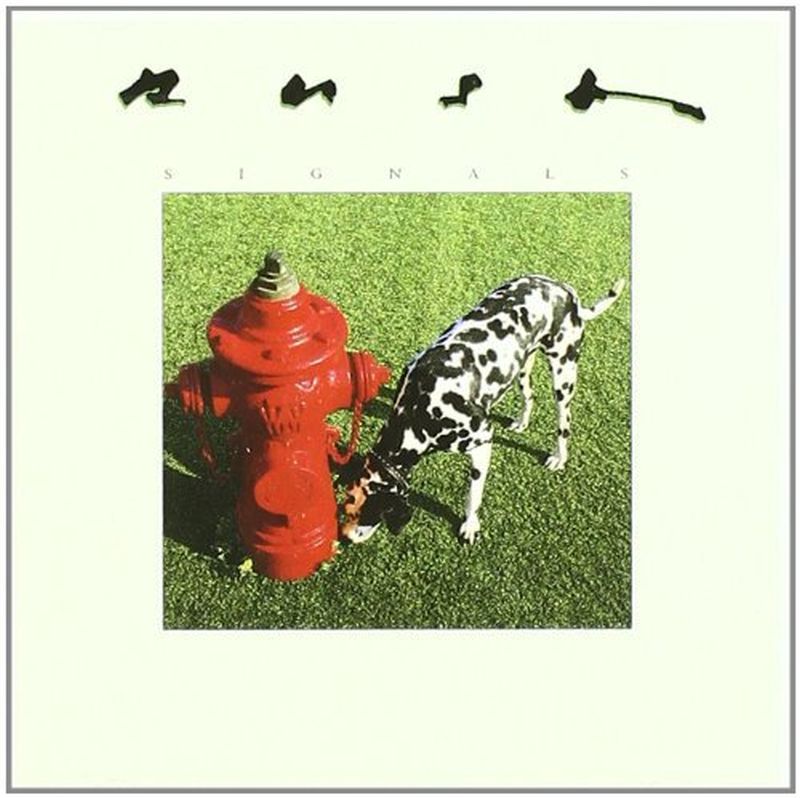
Neil Peart once again proved the sparkle of his mind and strung together some seriously deep personal confessions in lyrics that Geddy and Alex masterfully brought to life again while hunting for the most fitting melodies. Subdivisions stays relevant in 2023, when thinking for yourself gets persecuted and often filed under ‘conspiracy theories’ (the line “Conform, or be cast out!”). It’s a sophisticated way of putting across a bare rebellious stance, and the unease of being forced by the system to accept things you feel deep down are seriously wrong. The Analog Kid’s lyrics reach for the wish to feel primal nature and experience its authenticity, in Chemistry the guiding idea is ‘the signals we use to seek contact with each other’, and Peart even touches on the field of human physiology (the exclaimed lines: “….Electricity, Biology…”). The album cover with the Dalmatian sniffing a fire hydrant (most likely generously sprinkled with dog (signal) secretions) fits the message of that song best of all. The Weapon is an answer to the Cold War, New World Man to humanity’s growing vulnerability, as it mistakenly looks for control and safety in science, and Losing It tells of the transience of human life, in which dreams stay unfulfilled…. In short: the language of rebellion, delivered with the most splendid sophistication. Facts that were already relevant in 1982, and themes Rush kept returning to later. Themes that, in terms of relevance in 2023, are crying out to the heavens.
It’s precisely these colorful sonic collages and sonic contrasts, clearly built from the thick melodic bass, Geddy’s distinctive vocals and the rich curtain of synths, that keep wowing as they ‘hang out’ together on “Signals” (in strikingly compatible combinations). These are really the three basic building blocks that make the album’s atmosphere and artistic reach so special and unique, and so the album itself. The element of surprise (shock) in Rush’s artistry! In the occasional ‘deliberate search’ for combining the ‘incompatible’. So on Signals Rush once again move within artistic bounds of a brilliant dose of witty, conciliatory experimentation, holding on to one of the essential trademarks of their expression. And more. With this new achievement, they progressively perfect it.
On release, “Signals” marked one of the milestones in the band’s career. Its successors flirted with further touches of sonic sophistication and the aesthetics of pop music at the time, which many fans, comparing the band’s whole discography, still value most today. Approaches, in other words, that on the flip side decisively split the band’s fan base.
“Signals” is the last Rush album of which we can say unequivocally that, despite the band’s new sonic directions, it still carries a fully organic (natural), live sound. That ‘traditional rock sound’ born in the studio. The further ‘sonic ironing’ through the eighties, brought by the albums released between 1984 and 1987, completely overshadowed this last symbolic moment of nostalgia for “when rock was still young”. “Signals” can thus be seen as a kind of ‘middle’ album. It manages to keep the spirit of rock tradition in just the right balance while adding the trendy novelties of the time, which the music industry naturally favored. ‘New wave’ is entering the era of its full ‘bloom’, and further development of synthesizers would add fuel to the fire (synth-pop would be born), electronic drums would arrive, and a real ‘revolution’ in studio production approaches would follow. In 1982, pop was just about to enter its most fruitful artistic period. All of this of course affected the evolution of Rush’s sound too, and they made another big artistic leap just two years later, when the album “Grace Under Preassure” (1984) came out. But that’s a new story.
Author: Aleš Podbrežnik
Track list:
Side A:
1. Subdivisions (5:32)
2. The Analog Kid (4:46)
3. Chemistry (4:56)
4. Digital Man (6:20)
Side B:
5. The Weapon (Part II of Fear) (6:22)
6. New World Man (3:41)
7. Losing It (4:51)
8. Countdown (5:49)
Lineup:
Alex Lifeson – electric and acoustic guitars, Taurus bass pedals
Geddy Lee – bass guitars, synthesizers (Minimoog, Oberheim, Roland Jupiter-8), vocals
Neil Peart – drums, percussion
Guest musician:
Ben Mink – violin on track no. 7