Author: Sandi Sadar Šoba
Location: Grad Tuštanj pri Moravčah, Zg. Tuštanj
Interview date: July 5, 2013
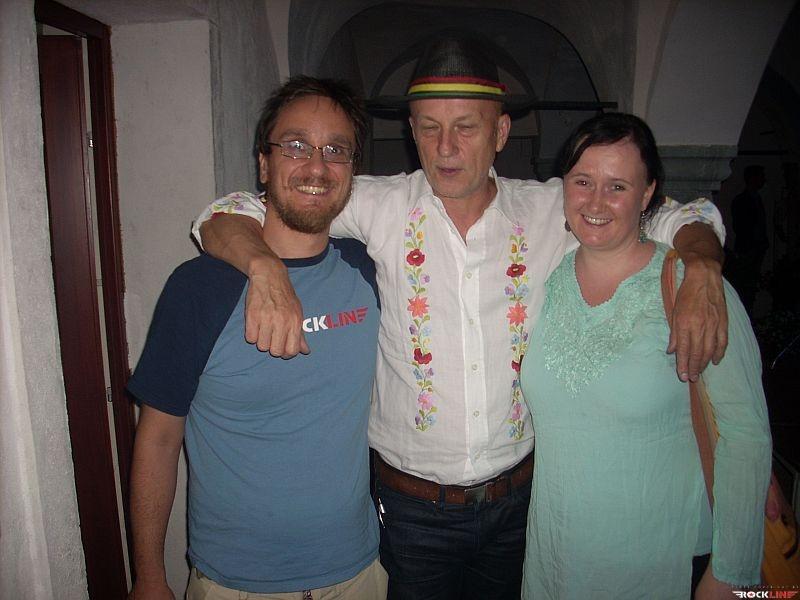
There’s something magical in the words, the melody, and the spellbinding beauty of songs that have become part of our identity, our national consciousness, our folklore. Some of those songs were infused with Prekmurje melos by a man of rare penetrating force and deep sentiment, with a feel for beauty and for the people around him. I’m talking about the »Beltinci Bob Dylan«, as some try to label him, the gentleman with that black guitar, the hat and the instantly recognizable raspy voice, the great Vlado Kreslin himself. There are few people I could hold in such deep respect, almost awe, but you recognize a person by the first handshake. After a handshake and a look deep into the eyes, I knew, together with my better half, already after the concert at SiTi Teater, that Vlado Kreslin is more than just the man on an album cover, more than that familiar face from TV – he’s a human being with a capital H, and the kind of people you can only wish to meet a little more often. It so happened that something »clicked« between us, and after the first contact by email came a phone call and then a personal invitation to Friday’s concert near Moravče. Before that, though, a face-to-face at Vlado’s home high above the gray of Ljubljana. Not far away, near the Sava, Rock Otočec was getting underway, and from behind the door, up a staircase decorated with countless photos of Vlado’s kids and of musicians, artists, writers, people who add that nobler shade to our nation, there he was at the top of the stairs. Vlado. Deep in the last preparations for the show, but with a sincere smile. »Just a bit more and I’m done, OK?« We’ll wait downstairs. I don’t expect much, since I know Vlado doesn’t like interviews. Journalists recreate what was said, he once told us. I’d agree with that, since the heralds of the seventh power often do a hell of a lot of injustice and twist what was said. So I wouldn’t have been surprised if he hadn’t made time for an interview, and it was already a lot that he opened his door to my wife and me and invited us along to Grad Tuštanj. »Do you know where that is? I’ve never been there myself, but we’ll find it.« His assistant Marjan loads an amp, a guitar and an accordion into the car, and Vlado checks that the glasses, books and other essential props are all there. »Everything’s here!« and off we go.
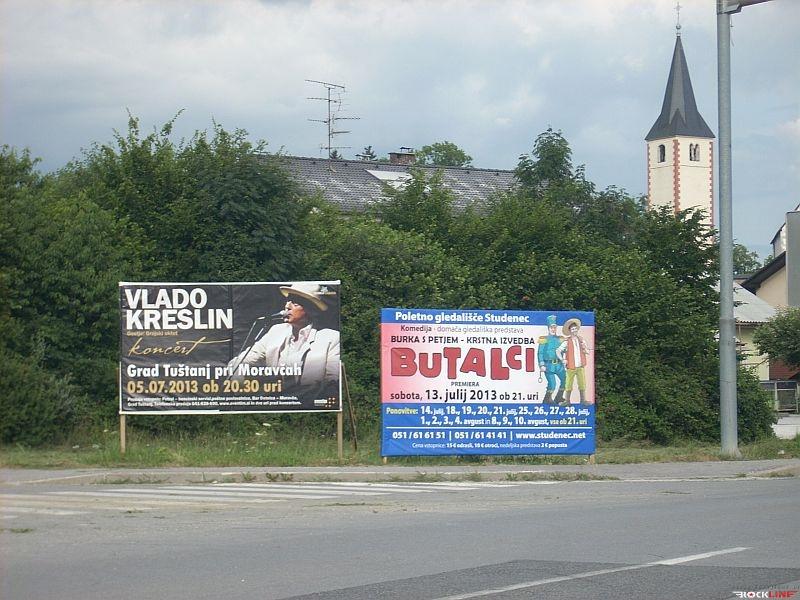
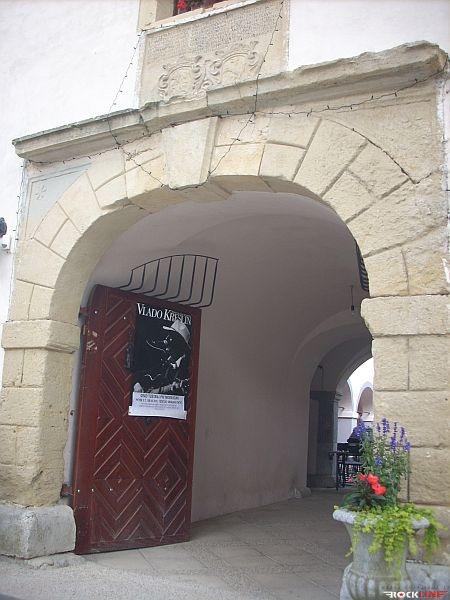
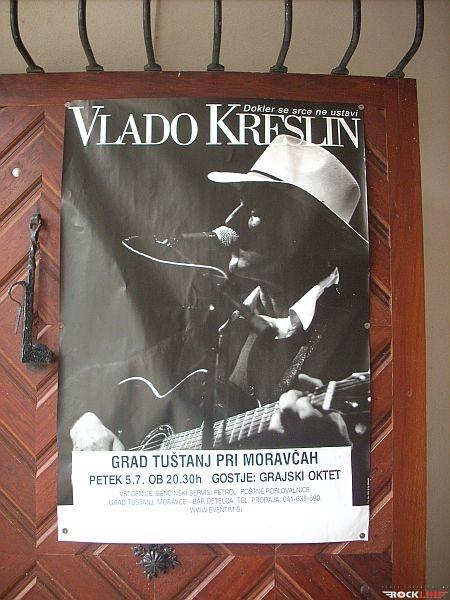
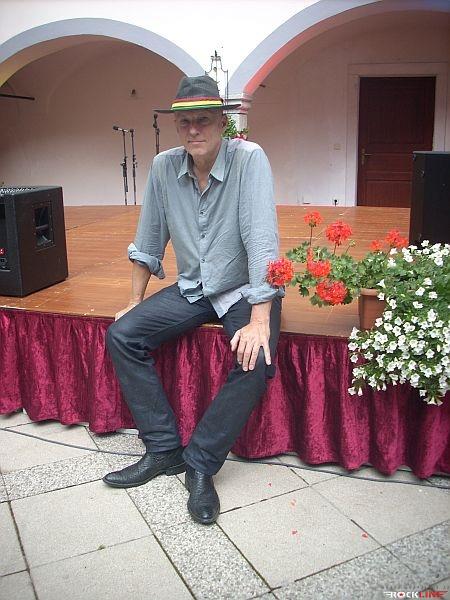
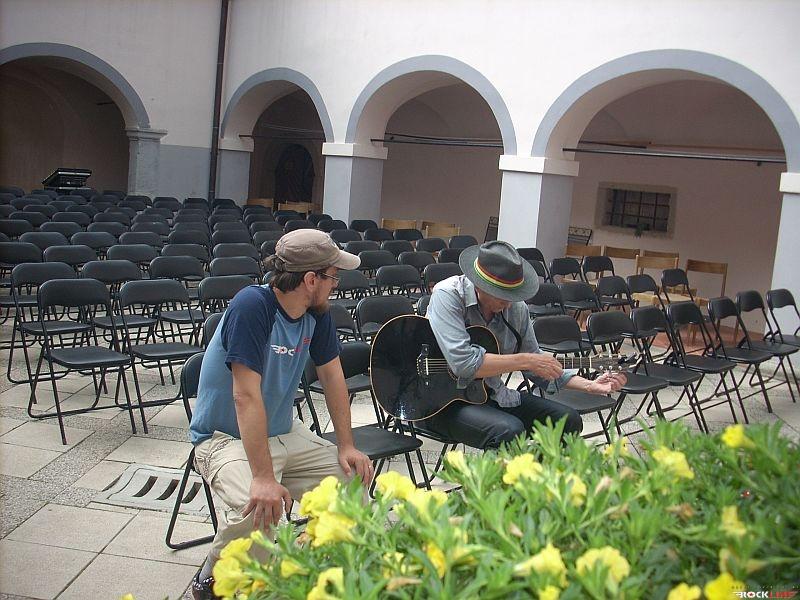
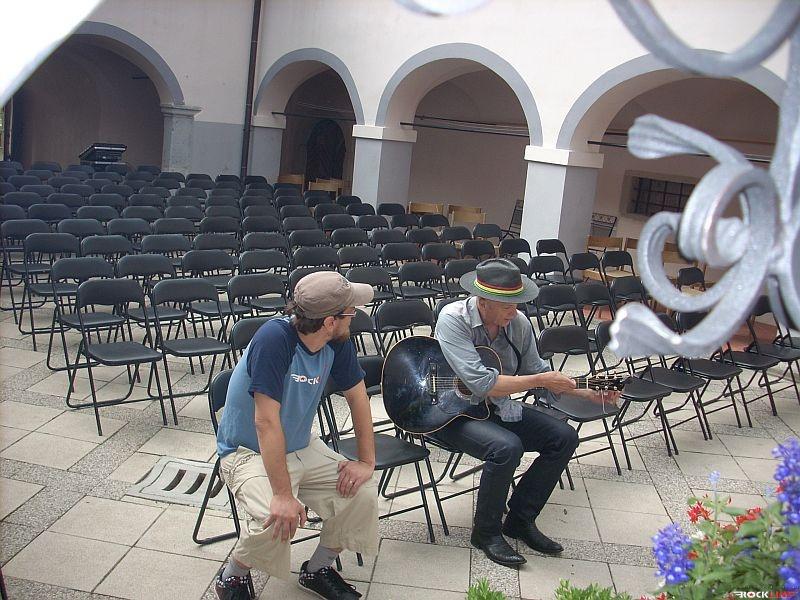
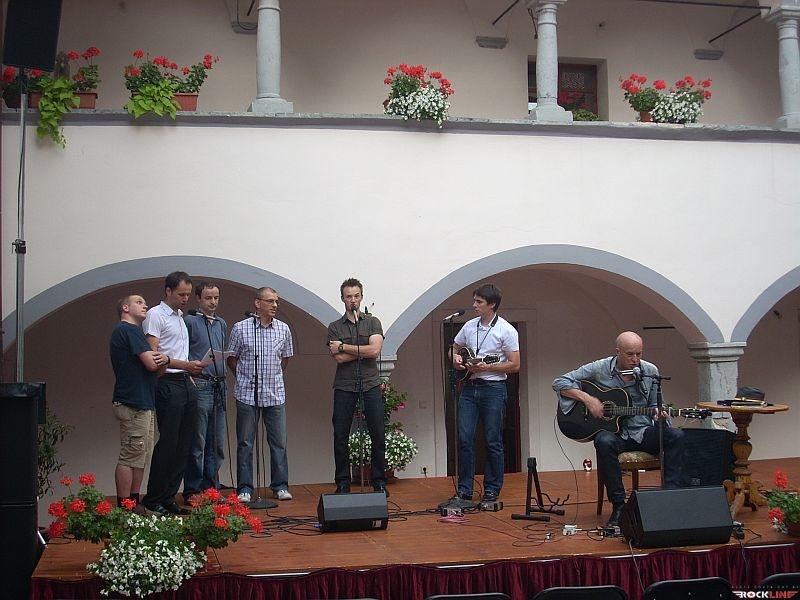
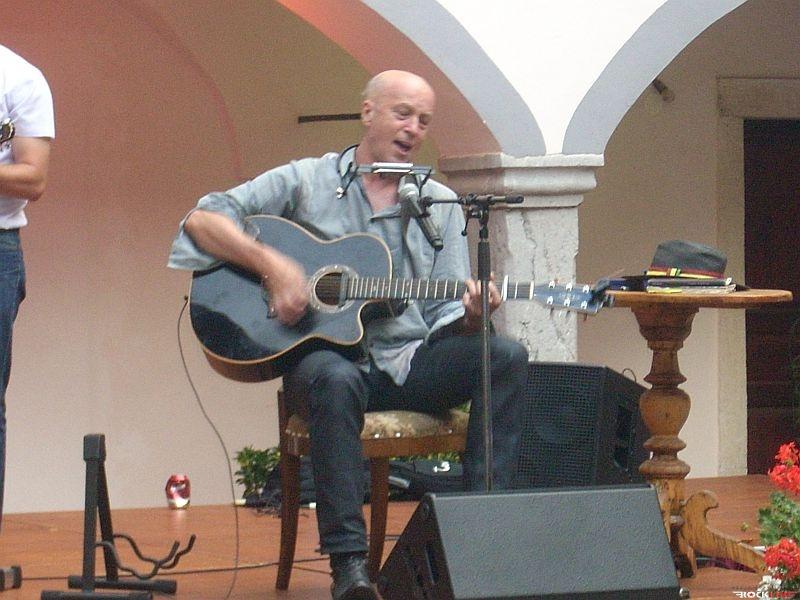
We soon leave Ljubljana behind, along with a fair amount of road chaos and rural countryside, and kill time looking at posters and chatting. »The video for Bejli grm will be ready soon. The video is outstanding, I had to go over the last mixes today. Naberšnik is the man, he’s really got a feeling for the image …« Vlado announces. Those celluloid dreams will help immortalize the first full-blooded duet between the two Kreslins – father Milan and son Vlado. That’s also part of why the record Čarobnice exists, collecting and offering, almost a decade after Kreslinčice, a portion of the treasures from the inexhaustible treasury of ideas and tunes that Vlado so confidently and tirelessly weaves, writes and pours into our ever-hungry ears. Bob Dylan drifts out of the speakers while Vlado, feet up on the dashboard, chews over the last details before the show. »You should’ve seen how it was yesterday at Lent. Damn, so many people, and the air was just right …« he comments on the previous day’s events. No time for rest. The gigs just keep coming, since Čarobnice deserves proper promotion, and on top of that Vlado treats the audience to readings from his Pojezije and tales of mishaps, anecdotal gems from his tours with Beltinška banda. Most of those people are gone now, but passing and departure are part of the circle of life. The memory of the people who touched Vlado with their warmth, their smiles and their music is still alive, though. We almost take a wrong turn, but Marjan spots the Grad Tuštanj sign just in time and we head for the venue along a winding, romantic village road. Soon we roll onto the gravel in front of the castle gates, where the lord of the castle, his wife and the organizers come to greet us. An arched courtyard, chairs under the open sky between the arcades, and across from them a stage where the final preparations were underway for the event of the month, if not the year, in these parts. A chair, a table where Vlado will plonk down his hat, and just speakers off to the side.
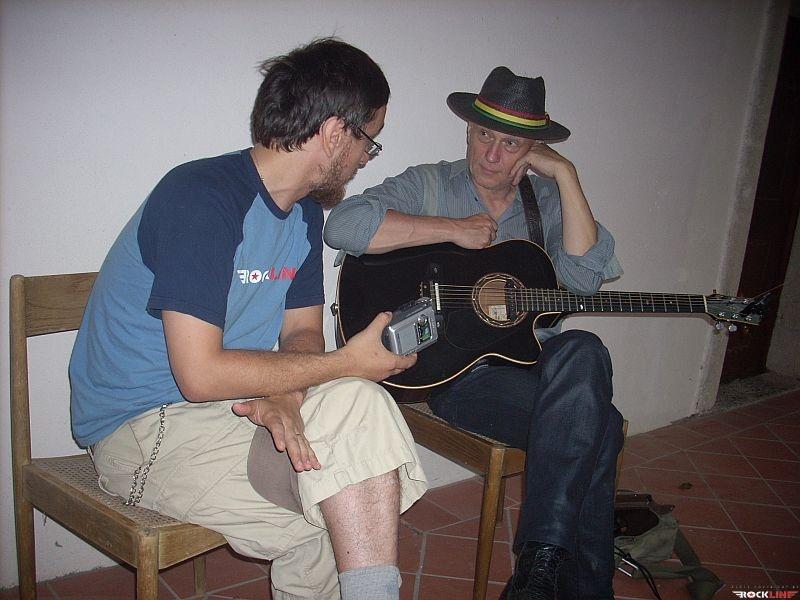
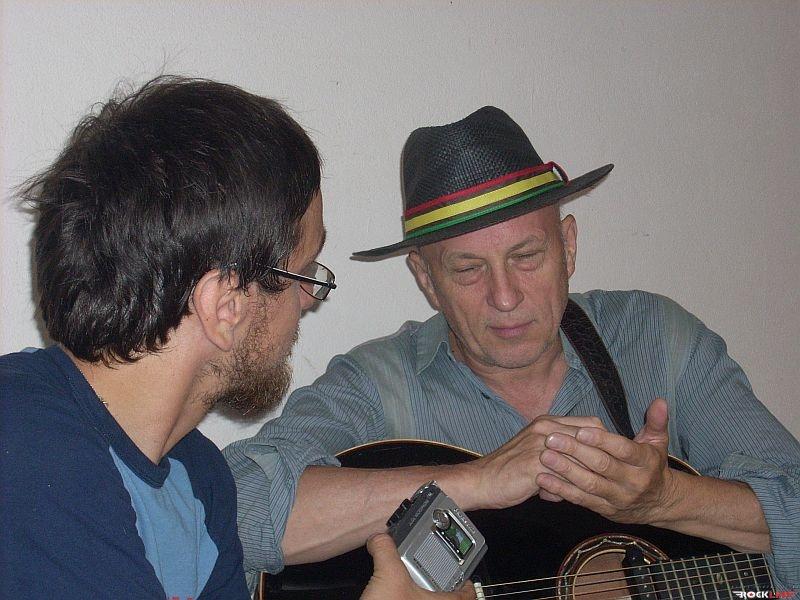
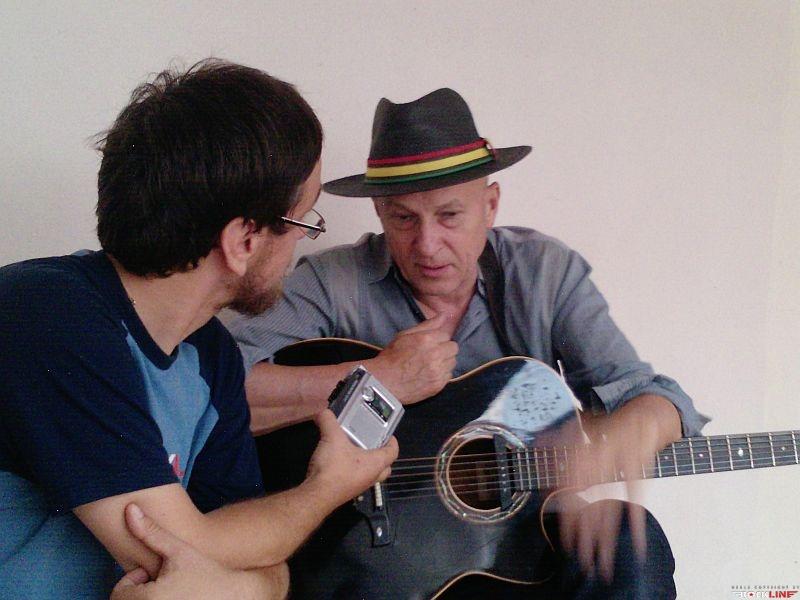
Vlado picks up his black electro-acoustic guitar and starts noodling blues licks. The majors and minors sound slightly out of tune, so he checks the strings. Damn, another change is needed. The fourth string has to be replaced, which the maestro does himself, personally. »Is that the notorious black guitar you sing about?« I ask. »No way! That one is over 70 years old and it’s at home. My father takes it out now and then and plays something on it. This guitar has its own sound, though …« And already new chords slip out of the sound hole, melodic slides, and without an amp Vlado sings the bars of Abel in Kajn. So minimalist, and enough if a person has something honest to say. No masks, no cosmetics, no overproduced junk. »Would you have time for a chat maybe now?« I try, at a not exactly perfect moment. »We’ll see. I still have to rehearse with the choir. Then we’ll see …« Not happening, I think, but that’s secondary to me. Clouds had begun to thicken in the sky, and out of the leaden masses a stream of God’s tears suddenly poured, rain that thoroughly washed the venue. We sit down. Worried eyes turn skyward, but the hope that the concert will go on doesn’t die. It’s all temporary, everything will be fine, the organizer adds, noting that nobody had mentioned rain in this part of Slovenia the day before. The earth needs something to drink too, and Vlado waits with his guitar for the show to continue. To break the monotony, I suggest we just surrender to the moment, forget about form and recorders, and pass the time with a slightly more personal chat. »Fine,« he says, and at the sight of the analog marvel of technology I’m lugging along he adds: »Old school! Those are the best …«
Rockline: Like I said earlier, Vlado, it’s a great honor and pleasure that you took the time for RockLine, so we can talk a bit about Čarobnice, which came out not long ago. Almost ten years after Kreslinčice, here’s a sort of sequel. Is Čarobnice an intentional follow-up? Did you have that in mind, or was the red thread behind the creation of Čarobnice something else entirely?
Vlado: Of course it’s a kind of sequel, but really the whole thing started completely differently. I had a track with my father and I said it would be nice to release it. But where do I release it, since I don’t have 15 new songs right away to put out a new album, and then I remembered that we hadn’t done a compilation in ages, a collection where we could put oddball out-of-series versions of songs, like Texarcana with Bambi Molesters or Malena with Idoli at Cankarjev dom … For those kinds of covers and performances, live ones, that you can’t put on a regular album where you put new songs, that format was just really right for me this time. I don’t rack my brain anymore over whether it’s a concept or not. We put it out and it’s on record, right? Otherwise you can forget them somewhere in a drawer and … Earlier you reminded me of Politični song in English, which I’d forgotten we even had … That was my guiding idea – to document them, wrap them up together, and have them look like they belong together somewhere.
Rockline: This year you’re marking forty years of making music. Your musical path has been very varied over that time. I assume it was all the product of inspiration in the moment, which radiates from you as a soul and as a person. From the first steps with the band Apollo, when you sat behind the drums purely by chance, and things developed from there. How would you boil those 40 years down into a kind of red thread, a ball of yarn, with which Vlado Kreslin shaped himself into the musician and the soul you are?
Vlado: I don’t know. Things happened very instinctively. All I remember is that all my classmates in elementary and high school knew me for drumming on desks, singing and … For myself, I’d say I was always like that. You know how it is, when you’re doodling, calculating something, thinking, you doodle at school, right? I doodled too, and one thing always stayed the same – I always drew a band. The drummer in the middle, the guitarist on one side, keyboardist, bassist … And always only that, because back then my mind was always on the Stones and the Beatles … (laughs) I drew only that, all the time. Whatever I did in life, the only thing that ever interested me was what I drew – having a band. The other stuff – finishing high school, going off to work, doing various jobs – was secondary, because the thought in the back of my mind was always that I’d have a band. In those 20 or 30 years of employment, when you had to do something else, I then decided to commit professionally to this personal mission of mine. Before that, things were always under the radar …
Rockline: This time for the soul …
Vlado: That’s what interested me.
Rockline: My wife and I were talking just today that there must be something to it, that you carry a musical gene that has been passed down through generations of the Kreslin family. I already know your father was a musician in body and soul, and still is, but I’m wondering whether it was inherited earlier along that bloodline. Were your ancestors musically active before him?
Vlado: It wasn’t as prominent as it might look now. I did see my father’s guitar in the corner, and how he’d strum on it every now and then. He used to tell me he played actively in a jazz band. All those tunes … There’s surely something to it. My mom sang her folk songs with that folk group of hers, with which she also danced in Beltinci. The tradition among those old locals is very strong. I remember going to festivals with her, we went, of course, to Ptuj, Bled, Ljubljana, Opatija, Zagreb, they were all caravanserais, since two buses would go for three or four days. That’s how it was back then, and in parallel I was growing up, soaking it all up like cotton wool. It’s also true that we had a tavern at home, where my father was the son of the innkeeper, the master of the house. Unfortunately not for long, because his father died soon after and a stepfather came along and things went a bit dramatically to the left, or the wrong direction, or whatever. I grew up in that tavern for quite a while – I’m talking about somewhere around 1964 or ’65 – and there was always live music there. These were proper taverns – with a bowling alley, a real theater hall, a billiard table and a back room where a band played. And that band was the later Beltinška banda – the Kocipri brothers, a musical family from Beltinci … That probably had to settle somewhere too, and it found a place in me.
Rockline: Considering that you grew up practically in the same house where Beltinška banda started out and played its gigs – growing up with a feel for Prekmurje melos is one thing, but you yourself resisted it over time. At SiTi Teater I loved that story of yours about how at the beginning you really want to make music you can’t dance to, and then you find that over the years dancing keeps coming back. Besides Apollo, you sailed into country waters, progressive rock waters, then came Martin Krpan, which my generation knows you best for, and now you’re returning to the original foundations you sprouted from.
Vlado: It’s probably also worth considering that you make the kind of music that fits the lineup you have, how you are in the studio and live, and my goal is to record music that can more or less be played live. Often, well, we have a couple of tracks like that in the archive that are very hard to play. Sometimes I’m really sorry they’re hard to perform, but OK, everybody probably has that, right?
Rockline: I didn’t have that feeling on your latest album Drevored, since the tracks are very natural and playable …
Vlado: I’m talking about the Martin Krpan days and stuff from before.
Rockline: Are we talking about overproduction?
Vlado: No, they’re pretty complicated. In the studio things sound just fine like that, but live they don’t. It’s a matter of arrangement. With Martin Krpan we had a song in which God and the devil talk to each other – what was it again? (he hums the guitar and sings part of a verse from Za ljudi »I made this world of beauty / I created it for people / so that it would offer me sacrifices, / so that it would honor me.«) Za ljudi! The elegant goat-bearded one, the clawed seducer, / and that eternal voice of truth that thunders from the sky! That was from the record Bogovi in ovce. So hard and metal, we did polish it back then, but … What I mean is that your own context, your way of thinking, where you are at that time, and the band and people you hang out with and have around you, make up the final picture of you. Everything else is foreign!
Rockline: Of course! It’s evolution. While writing the review of Drevored I said »the homeland shapes a person, but in the end a person also shapes himself«. Drevored, the record that put the final note of independence on things, was one of the perfect peaks. The collaboration with Gal Gjurin proved very fruitful. Was that the second record with Gal?
Vlado: The first was Cesta.
Rockline: The symbiosis you can feel is incredible. I assume you and Gal intend to keep collaborating?
Vlado: Of course! I hope so!
Rockline: Is more material in the works, given that certain things were said and written down with Drevored? Čarobnice, despite its archival nature, now needs to be promoted. But what about new material? Is it already taking shape?
Vlado: Right now, you mean? Not really. There’s a bit of a lull now and I’m busy with some other things – a book and a film, so … But you never know! Sometimes it happens that you give birth to two songs in one week, sometimes nothing for two years.
Rockline: That’s exactly what I noticed – from 1991 on, your records came almost every year, then every two, then every five … Do you feel the time has come for a more thorough and stricter filtering of material, inspiration and lyrics?
Vlado: You just get more self-critical over the years. I’m very self-critical anyway, and in that sense I’m not so self-confident. I’ve said one or two things before and I don’t like repeating myself. When you’re older, you think things over three times, and when you’re young, you just jump. You walk into the studio and WOOOOOOOW. As long as it sounds and it’s loud. Wow! Now you think things through more and put them out gradually.
Rockline: Čarobnice came out as a triple record. I get the feeling a more intensive selection wasn’t possible. You put together all the stuff that had piled up in those years and released it in archival form. How long did the whole thing take, from that first idea to the final result?
Vlado: Collectively? I came up with the thing sometime in January or February.
Rockline: And then you let things breathe, right?
Vlado: Yeah! When I had this track that was the trigger for the whole thing – the song Tisti bejli grm. Then I remembered all these interesting things and realized – right, we’ve got this and that. Gal and I sat down in the studio and thought: »Don’t we still have that concert from the year before last? Wait! Let’s go listen to it!« and we listen … »That’s awesome! Listen how that sounds! That’s excellent! Not bad! First league! Let’s mix it!« and so we mixed it. And then there’s one more concert from last year. »What’s up here? There’s still time with the Krka choir! Awesome!« and that’s how things build up. Those four or five concerts had to be read through, listened through, and all of a sudden there was so much, wow …
Rockline: Do you record practically every concert?
Vlado: No. At Cankarjev dom we’ve been recording in recent years. It used to be all so expensive, and even now we sometimes record and the multitrack dies. That tech is always the Achilles’ heel. We more or less record the bigger concerts, but today it’s not good to put everything on a record, and what you put on a record is whatever’s a bit different. Čarobnice was like that … Aha! They’re bringing wine! (he cheers at the arrival of the crew hauling snacks and drinks backstage, ed.) A little wine! I’m almost sorry I didn’t bring your Chianti … (laughs) You know what? If Čarobnice is conceptually similar to Kreslinčice – Kreslinčice 2? We’re not at the mechanic’s! Godfather 2! That wasn’t going to work! Then my daughter Čarna walked by and I said: »Hey, Čarna! The record will be called Čarnice!« »No! No! No!« she started protesting! »Then it’ll be Čarobnice!« Then they also took the cover photo, which is contrasty and black, and I look like some kind of wizard in it. Like I’m performing black magic … That’s how I managed to name the record instinctively … A matter of inspiration … Sometimes it’s like that …
Rockline: When my wife and I were at SiTi Teater, we didn’t even know yet that a record called Čarobnice was in the works and that it would come out.
Vlado: Right. We hadn’t announced it back then …
Rockline: It was pure coincidence, since we ourselves had pointed out the magic of the moment, of the songs, the magic …
Vlado: I wasn’t talking about it yet at that time.
Nataša: Back then you said you were recording a record and that it was about to come out. »I’m recording a record, my father and I are just in the studio …«
Vlado: And three weeks later Čarobnice came out, exactly!
Rockline: Coincidence …
Nataša: Magical music, right?
Rockline: Of the duets that ended up on the record, which one are you proudest of and would single out as the peak of the record? Besides the one with your father …
Vlado: They’re all different and it’s hard for me to compare them. They’re all different. Each carries its own note, its own story, its own piece of reality. If you’re driving through Istria and you hear Šajeta singing in proper Istrian dialect at a gas station, that’s wow for you, because he sings so beautifully there. I love it! If you hear Šerbedžija singing Namesto koga roža cveti, that’s insane. If Allan Taylor sings in Slovenian: »Daleč je moj rojstni kraj« (with an American accent, ed.) that’s awesome too, and it’s even better when Mary Coughlan sings Dekle moje in Slovenian in the middle of Zagreb! And then I can say from the stage: »Now you understand me, and before you didn’t!« Those are the little treats, and every song has some story of its own behind it.
Rockline: This year you’ll turn sixty.
Vlado: Yeah.
Rockline: Maybe for your birthday you can do a special concert event, like before, and we’ll get to enjoy those special duets live again?
Vlado: It’ll be at Cankarjev dom! The dates of our Cankarjev dom shows were always around my birthday (Vlado was born on November 29, 1953, ed.). The first concert at Cankarjev dom was on the 29th, but that’s not always possible, so one time the concert is on the 28th, another time on December 3rd, and this year, sadly, it will again be in December – the 3rd or 4th, somewhere around there … Maybe we’ll light a candle then and get a bit tipsy. As for guests – they’re always special guests, so it’ll be a kind of celebration.
Rockline: Given that intensive promotion of the record is ahead of you. I haven’t seen a complete list of all the tour dates, and the same goes for Pojezije, for which you’ve been doing book presentations since 2009. What’s the concert plan for this year? Is any foreign tour in the works – Australia, Argentina, Uruguay?
Vlado: Not for now, but I did get an offer to show up at a festival in Pittsburgh in July, but it didn’t work out schedule-wise. I do have something else around the corner that will take a bit more of my time in the fall – I’m preparing a Croatian record. I translated the material into Croatian. I hope something will be heard in Sarajevo too, but in principle it’s all in Croatian …
Rockline: You already made one excursion into those waters with the sevdalinkas …
Vlado: Every so often people tell me, do something for us. That’s for us – great! So I told myself: »Now I really have to record something!«, but then I forgot again because of all this work and such …
Rockline: Will it be like a Croatian best of?
Vlado: It’ll be a whole record. Cesta, Roža, Ena pesem are translated …
Rockline: Črna kitara too?
Vlado: Not the guitar one, because that’ll be in Slovenian, and then I’m planning a couple more duets that are already on Čarobnice – the Croatian ones … The Slovenian originals are for them, but … But so you can get out there, Roža will be translated into Croatian.
Rockline: And how do things work? Do you feel that Kreslin energy of authenticity has stayed so intact? Has anything been rewired differently?
Vlado: There’s a band over there that plays with Rade Šerbedžija. I performed with them a couple of times and they went wild for those tracks they wanted to record, but then I had to translate everything myself, bury myself in papers … Then we recorded the stuff and, yeah, things are definitely different.
Rockline: More acoustic?
Vlado: Absolutely acoustic. They’re all virtuosos and they play insanely well! Insane! An exceptional band – violins, accordions, tamburas … Awesome! They really play awesome! These are academy-trained musicians who can play in front of a smuggler’s den, in taverns and in concert halls. These are people who truly have it down, and they’re also great guys at the same time, so … Maybe we’ll be somewhere with them in the fall too, maybe …
Rockline: So a promotional tour of Croatia is next?
Vlado: Hard to say! If it happens that we can present the record, then yes! I’m not at home there and I don’t have things under control like that. But still! It’s nice to go across the border!
Rockline: Better to leave everything to instinct. You’ve always been a man who did things primarily for his own soul, and when a person makes something he can be satisfied with himself, things keep unfolding positively from there …
Vlado: Of course, I have plenty of that myself as my guiding principle … Thank God my taste overlaps with the taste of my audience, not with everybody’s taste – with the taste of that percent of people we’re on the same intellectual level and the same wavelength with, and on everything.
Rockline: Tom Waits, as you recently pointed out, pulls along one percent of people and things work out financially for him …
Vlado: Here the percent is small and you need to have a few more of them …
Rockline: I personally feel that whatever you do, you always hit the nail on the head and it works. What matters is that what you leave behind leaves a mark forever.
Vlado: The final result is always what matters. Naberšnik and I made the video for Tisti bejli grm, and given that he’s made a bunch of good films (Marko Naberšnik, as a young up-and-coming director of the new generation, made among others Petelinji zajtrk and the multiple-award-winning Šanghaj, ed.), working with Marko Naberšnik really melts me. I’ve now seen the video forty or fifty times, and it still moves me so much.
Rockline: Naberšnik’s approach brought some celluloid dreams to the depiction of the genuine relationship between you and your father, shown through the screen adaptation of Tisti bejli grm. The video is coming out soon, but do you have plans for any further work now, more video promotion? Might an upgrade in the form of a film follow?
Vlado: A team of people has been talking for a while about some kind of documentary, and otherwise Kozole (Damjan Kozole, director of the films Pronofilm, Stereotip, Slovenka …, ed.) told me recently that he sees a nice video for the song Zibaj me, the second on Čarobnice. »OK, you just write it down and we’ll look at it!« I said.
Rockline: The great film artists just offer themselves up …
Vlado: I’ve always worked with them. They’ve all done something for me – Saša Podgoršek (director of Sladke sanje, ed.), Metod Pevec …
Rockline: You never know. The other day I read the book Cavazza, and you sneak into the story as a regular guest at Boris Cavazza’s parties, together with the classic crew with Predin … Maybe Cavazza will become one of those imposing personalities who can bring his touch to the next video …
Vlado: You mean Boris?
Rockline: But not for Zibaj me …
Vlado: How did he get into the story now? It’s not far from the truth, but I don’t know if he described any of it in his book … We had a band back then. Predin and I played guitars, Boris sang. Zoran, Boris and I would goof off all night long, his wife cooked, and it was insane – we had a repertoire of twenty songs – all Gypsy! That was thirty years ago, if not more … We even played some gigs with it. That was when I started performing with Beltinška banda. In Stara Ljubljana, there at Feniks, he sang with us, announced, and recited in between. We had that band back then and it was really full-on, and the husband and wife sang (Mojca and Boris Cavazza, ed.), those Italian, Trieste songs – how beautiful! Mojca could sing so beautifully, and how she cooked! At two in the morning Boris and the rest of us would arrive wasted, and she’d already be off grilling and getting things ready. At four it was, I don’t know, breakfast. Nothing was too much for her, and then she just suddenly … (Cavazza’s wife died in 1991 after a hard battle with cancer, ed.). Now I have to go rehearse! Maybe we’ll chat a bit more afterwards …
And off he went to the stage, shaking hands with the guys from Grajski oktet. To prepare everything necessary for the evening concert, where heart, melos, harmony, stage dreams and sentiment must never be missing. This is a slice of the day I was able to spend in his company, honored with the invitation. In the company of a man with that black guitar, the hat and a satchel full of stories and heart. The rain stopped in the meantime. Fat drops had blessed the courtyard of Grad Tuštanj, where one of the nicest concerts I’ve witnessed in recent years then took place. But that’s another story, and it deserves its own write-up too.
Photo gallery