On February 12, 1981, Rush released their eighth studio album, “Moving Pictures” (RockLine review). It’s one of the most important albums in the band’s history, if not the most important. Fans simply can’t agree on that one when they weigh “2112” against “Moving Pictures”. Rush broke through on the progressive rock scene a little later than the “British boom” of bands that got the genre on its feet. That boom peaked at the turn of the sixties into the seventies and lasted right up until 1974 or 1975. In 1974 Rush released their debut studio album, which sounded more like Led Zeppelin than anything with a whiff of the progressive rock still flourishing in Britain at the time. That’s a story for another day, but it’s interesting that Rush held their ground and survived exactly when punk was slowly marching to the front of the scene. And funnily enough, what “saved” them was the album “2112”, at a time when labels were losing more and more interest in the bands of progressive rock’s first wave. Maybe what protected Rush was the fact that they built their sound on the elemental template of a hard-hitting rock trio. Drums, guitar and bass (plus vocals). That stamped them with a wild, unbridled, noisy rock profile. No “messing around” with keyboards in the arrangements (we’re talking about the seventies). So what came through on the surface of that musical format was a loose, daring, even abrasive, but above all different take on rock music. Another thing that kept Rush alive through years that, in their hunt for trends, had less and less patience for complexity, was the fact that they came out of Canada and not Britain. The British market back then would have crushed them completely and condemned them to scraping by, like Budgie and other great but overlooked rock trios.
By 1980 Rush were already a big rock attraction. In mid-January of that year they hinted at what the sound of the eighties would look like, or rather where the trends were heading. That’s when their seventh studio album, “Permanent Waves” (RockLine review), came out. On it the band started paying attention to arrangements, weaving in the sound of the first synthesizers, and started making the songs shorter, while also showing they weren’t afraid to bring in elements of the then-emerging new wave. “Moving Pictures” deepens and broadens that trend of gradually reaching for radio-friendliness.
With this album the band scored its definitive commercial breakthrough and conquered the world. On release, “Moving Pictures” sold 4 million copies in the US alone, and to date it’s gone platinum four times over. When it came out, it hit number three on the Billboard album chart. It reached the same spot on the UK chart. And the fact that it shot to number one on the Canadian charts is hardly even worth mentioning.
As early as August 1980, Rush had some new ideas for “Moving Pictures” worked out well enough that they could already add them to the setlist of the tour that kicked off on September 11 and wrapped up on October 1, 1980. The real tour in support of “Moving Pictures” started in February 1981.
So in June 1980 Rush wrapped up a ten-month tour covering the US, Canada and Britain, promoting the aforementioned “Permanent Waves”. They recorded a good number of shows on that tour. Some of the live moments from the June leg of the 1980 “Permanent Waves” tour ended up on the band’s second live album, “Exit… Stage Left”, released on October 29, 1981. It was filled out with live material from the “Moving Pictures” tour the band played in the first half of 1981. As you may have noticed yourselves, we’ve suddenly jumped to October 1981. Why? After getting home at the end of the “Permanent Waves” tour, at the start of summer 1980 to be exact, the plan was for the band to sift through the live material recorded on the road for a new live album. But creative inspiration was on the rise, and the guys decided to get to work on a new album right away. Why? Lifeson and Lee already had a few fully fleshed-out ideas and motifs for the next album in their pockets, and they wanted to hold on to that creative enthusiasm. So Rush decided to dive into a whole new album. The band gathered as early as July 1980 at Phase One studio. Phase One is located in Toronto. They were keeping company with Canadian rock veterans Max Webster, and together they recorded the song Battlescar, which ended up on the Max Webster album “Universal Juveniles”. During rehearsals, a guy named Pye Dubois, who handled lyrics for Max Webster, showed the trio a lyric he thought the guys could develop further. That lyric became the basis for Tom Sawyer. Rush then moved to Ontario and the Stony Lake studio there, where they kept writing and preparing material for the new album. Creativity was running high, and the trio tackled The Camera Eye first. Then came Tom Sawyer, Red Barchetta, YYZ and Limelight. With these well-crafted sketches the band went back to Phase One studio, joined by producer Terry Brown – the man the band had been working with ever since their debut studio album. Rush recorded demo versions of these songs and kept building on them during the shows of the tour that started in September 1980. Tom Sawyer and Limelight were polished enough that they already made it into the live setlist at the time.
So the material for the new studio album was more or less ready, and the band recorded “Moving Pictures” between October and December 1980. For that they relocated to the idyllic Quebec countryside of Morin Heights and a studio with a very simple name – Le Studio. Just before the band moved in, the studio had been upgraded with a 48-channel mixing console. That was something new for all three members of Rush, something they first had to get to grips with, and it cost them some extra time while recording the album. “Moving Pictures” is also Brown’s first digitally produced studio album. The band deliberately decided to keep the quality of their recordings as intact as possible. So they transferred the recorded sections onto new tapes and stored the originals. That cut down the risk of damaging the original recordings, which would otherwise have had to be played back constantly (fast-forwarded, rewound…). During the sessions Rush experimented with PZM microphones. That’s a type of boundary microphone, directional and designed to pick up voices from a distance. Mics like that capture sound directly, without echo or noise. Peart taped one of these little mics to his chest while playing the songs. The sound picked up by that mic was later used in the mix to intensify the ambience of the studio where the songs were recorded. For example, when the band shot the video for Vital Signs, Peart was using that prop. Same when they tackled Red Barchetta, which was nailed on the very first take (that version went straight onto the album). But the band didn’t escape equipment problems, so the recording dragged on and wrapped up three days later than planned.
Let’s run through the material. In order. Tom Sawyer is a story of its own. Geddy Lee said that with this track Rush actually laid down the runway for their artistic development through the eighties. The song opens with a piercing, echoing sound coming from an Oberheim “OB-X”. The track is syncopated. It’s basically in 4/4, but the instrumental sections weave in 7/8, which really comes to the fore in the outro. For this song Lee was after a brighter, fatter bass sound. So he used a Fender Jazz Bass for the first time. Before that he’d regularly relied on a Rickenbacker 4001. Later he played the entire Rush album “Counterparts” (1993) on the Fender Jazz Bass. As mentioned somewhere above in this essay, the core of the lyrics was created by Neil Peart and Pye Dubois, who wrote lyrics for Max Webster. His original lyric was a portrait of a modern-day rebel, a free-spirited individualist who steps into the world with a broad outlook and always clear intentions. Peart built on the lyric by adding lines about the reconciliation between boy and man, and lines about the gap between what people really are and how others take and perceive them. Naturally, the famous drummer drew on his own inner self, his own philosophy. The synth intro grew out of the many soundchecks Geddy ran on the Oberheim before shows. Tom Sawyer soon became one of the most beloved and recognizable songs of Rush’s entire career. Along with that, it became a mandatory, fixed part of the band’s ironclad live setlist. Alex Lifeson said he played five different solos while recording this song. “I’m always at my best on the first two takes, that’s when the inspiration is fully flowing. Well, for this song I played five solos in all. What you hear on the album is a combination of all five,” says Lifeson.
It was Tom Sawyer that gave the band real grief. Rush sweated plenty of blood getting the song into a shape they were happy with. Geddy Lee remembers: “Usually every album has one or two songs that fray your nerves and have you pulling your teeth and nails out. On “Moving Pictures” one of those songs was Tom Sawyer. It gave us trouble right up to the end of recording the new album. Everything we tried on that song felt like banging our heads against a wall. Alex tried hundreds of different guitar sounds for his solos. So every now and then a song comes along that haunts you and drives you up the wall.”
Neil Peart goes on: “Tom Sawyer is built in a way that gives you no shortcuts whatsoever when you have to play it live. The studio is one story, but the live version doesn’t simplify a thing here. Playing this song demands absolutely everything that’s in me and everything I am. To get the right feel and sound, drumming on a song like Tom Sawyer takes all the power that a direct, physical use of arms and legs can give. But that’s not all. It also takes a high level of technical execution, concentration and precision. Playing a song like Tom Sawyer the way it should be played – or at least getting as close to that as I possibly can on any given night – demands total mental, technical and physical focus from me, and I can’t imagine any other approach that would make what this song requires any easier. And if you ask me, there shouldn’t be any other way. If it weren’t so hard to pull off, I wouldn’t get any satisfaction at all from reaching the level of performance I want with this song.”
The next track on the album, Red Barchetta – named after the Ferrari 166 MM sports car – was inspired by the piece “A Nice Morning Drive” by Richard S. Foster. Peart had written the lyrics back in November 1973, before he even joined Rush, after reading an issue of the car magazine Road & Track in which he came across Foster’s story. Geddy Lee later remarked that Red Barchetta has an Orwellian feel to it, since it’s all about a wild ride in a sports car, running from the cops.
YYZ is the legendary instrumental that came about when the band looked back nostalgically at the “Hemispheres” instrumental La Villa Strangiato and wanted to revive a similar idea. Only YYZ is a whole lot shorter. It’s no secret anymore that the title comes from the code of Toronto’s airport. The rhythm of the main motif (the intro) is based on the sequence “Y-Y-Z” spelled out in Morse code, which is used for navigation and signaling in aviation. It’s in 10/8 time, with the Morse “dashes” played as eighth notes and the “dots” as sixteenth notes. In 1982, YYZ also got Rush a Grammy nomination for Best Rock Instrumental Performance. But the Grammy was snatched away from them by The Police, with their instrumental Behind My Camel from the album “Zenyatta Mondatta”. To take a quick detour to The Police: it was the first song by the band written entirely by Andy Summers on his own. According to The Police producer Nigel Grey, the title came from an inside joke of Summers’ that went like this: “What’s actually behind a camel? A monumental mountain of shit.” As Lifeson tells it, Rush came up with the idea for YYZ on a flight back to Toronto in a six-seater plane. When they heard that code during the flight, Lee and Peart started thinking about what a killer cool rhythm it would make if they used it in a song.
The radio-friendly Limelight is, lyrically, really an expression of Peart’s anxiety and the burden of fame – the fate of a musician who can’t fully escape that fame even in his private life. The legendary drummer spoke publicly about that discomfort many times later on. Among other things, he very rarely showed up at the band’s press conferences, or at the band’s meet-and-greets with fans.
The Camera Eye is the band’s last composition conceived in the spirit of the old prog-rock school. It clocks in at more than 10 minutes. It’s made up of two parts, unofficially called “New York” and “London”. Peart wrote the lyrics while walking around both of those giant cities on tour. The main rhythms and the other rhythmic structures that live side by side in the piece also come from Peart’s urge to relive the pulse of both cities and bring them to life through his drumming. Peart was also a big fan of the American writer John Dos Passos, who wrote a trilogy of novels on similar themes. Rush only played this song live on that one tour. In 2011 they brought it back into the set, because that year, on the “Time Machine” tour, they were celebrating the thirtieth anniversary of “Moving Pictures”, which they played in its entirety. Lee said he’d never thought all that much of the song as an artistic achievement. He considered it pretentious. But when it came to bringing it back into the set, and he went through the details of the piece again in rehearsals after so many years, he realized how incredibly his musical perception had changed over time. He actually managed to fall in love with the song. Playing it live, he finally found a lot of fun and joy in it. And that’s when he finally got why the fans had been clamoring so loudly for years for Rush to put it back in the set.
Witch Hunt, picked as the B-side of the Tom Sawyer single, opens with an intro of the band members chatting during one of the breaks while recording the album at Le Studio. It was a December night, temperatures below freezing. During that break, trading jokes, the band warmed their bones with a bottle of Scotch. According to Geddy Lee, Witch Hunt was recorded on December 8, 1980 – the very date John Lennon was assassinated. The synth on this track was contributed by Hugh Syme, who also did the cover art for “Moving Pictures”. Witch Hunt later became the third part of Rush’s “Fear” tetralogy. That tetralogy also includes The Weapon (“Signals”, 1982), The Enemy Within (“Grace Under Pressure”, 1984) and Freeze (“Vapor Trails”, 2002). Witch Hunt also stands out because it’s packed with overdubs. The band didn’t record it by playing it as a trio – instead it’s pieced together from several separately recorded parts. So at one point, for example, you get doubled drum lines. Peart also used a whole range of percussion on it, including xylophone, congas, tubular bells and gong, and electronic effects were added to the track too. The lyrics describe a caste, or rather a mob, gathering for a ritual under burning torches, its members wearing grotesque masks of twisted faces. The verses lay bare Peart’s reaction to xenophobia and the fear of newcomers who are different. Something that’s still all too relevant in 2021.
Vital Signs, which closes the album, is an interesting musical experiment. Its rhythm has a reggae accent, and at the start most of the soundscape is carried by a sequencer running off an Oberheim OB-X synthesizer. Rush had started flirting with reggae as early as “Permanent Waves”. They wove even more of that reggae experimenting into the albums that followed: “Signals” (1982) and “Grace Under Pressure” (1984), as well as “Power Windows” (1985). Terry Brown wasn’t too happy about that, though. As it turned out later, it was also one of the reasons behind the friction between the band and the producer. In the end, he only lasted one more album with Rush – “Signals”.
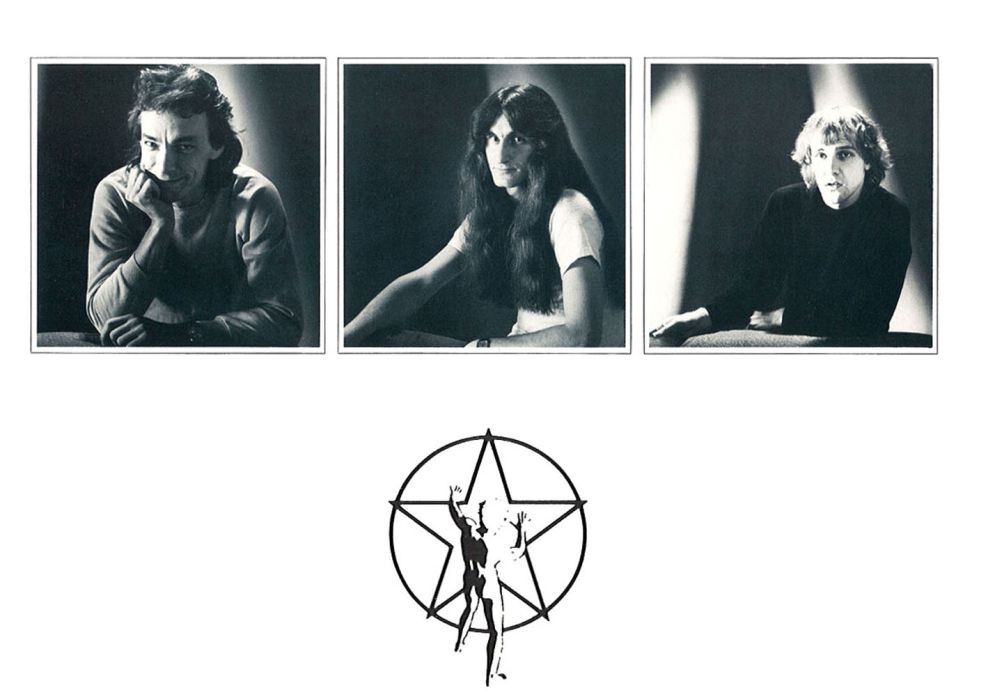
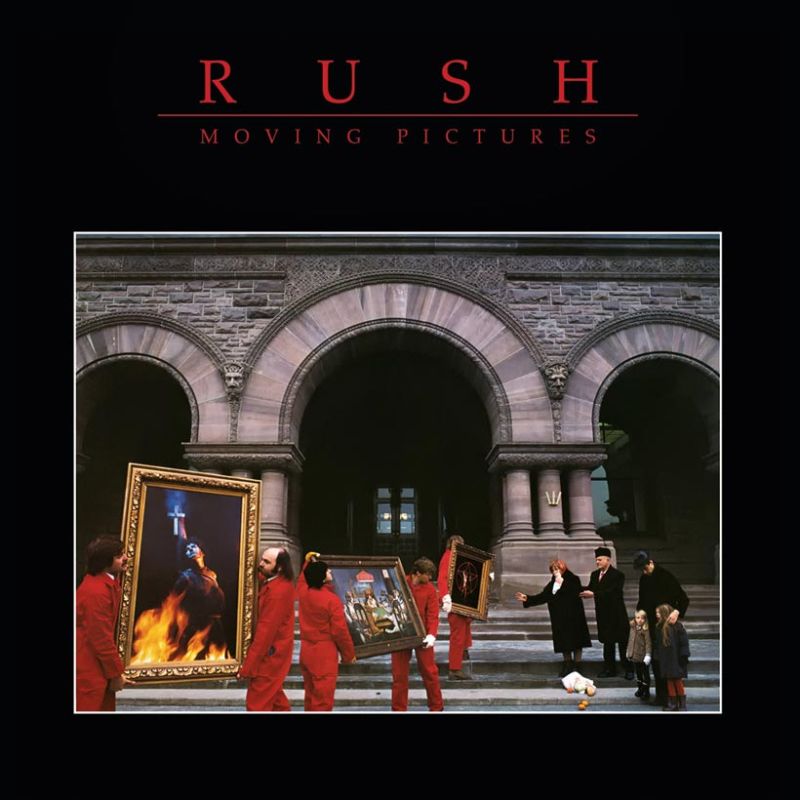
The album cover was created by Hugh Syme, who asked $9,500.00 for his work. Anthem Records refused to cover the whole bill, so Rush had to pay the rest out of their own pockets. The symbolism of the whole cover (front and back) carries a triple meaning. In the foreground are men carrying paintings. On the far right is a group of emotionally moved onlookers, tearfully watching the scenes on the moving pictures. The back cover shows a film crew shooting an entire movie based on that shot. The backdrop – the staircase and the stone arches of the building – belongs to the Ontario Legislative building in Toronto’s Queen’s Park. The “moving” pictures show the “Starman” (a figure of an individual facing a star, symbolizing the individual’s rebellion against the norms of the masses – the motif first appeared in 1976 on the back of the “2112” album sleeve), then the famous dogs playing poker (the painting called “A Friend in Need”), and a painting showing Joan of Arc being burned at the stake. The film crew on the back of the sleeve actually shot the whole scene as film. Only one frame (a photo) was used for the cover. Concertgoers only found that out in later years, when, during a projection that was part of the show, that frame (the cover photo) melted into the full film sequence.
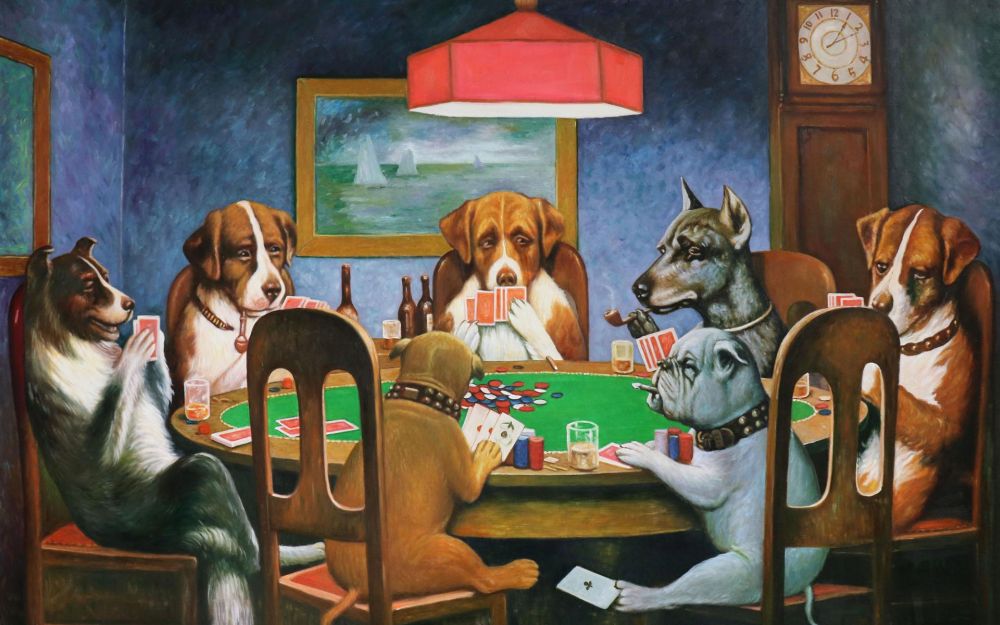
Mike Dixon, one of the guys carrying the paintings on the cover of “Moving Pictures” (he also shows up in the shot on the back of the live album “Exit…Stage Left” (1981)), says that the cover of “Moving Pictures” brings together an assortment of different people. From left to right, the guy on the far left is Bobby King, who was part of Syme’s design crew. That same King is listed in the band’s thank-yous as Syme’s assistant as early as “A Farewell to Kings” (1977), “Hemispheres” (1979) and the compilation “Archives”. Dixon says King also appears as the model for the “Starman” logo, as well as on the cover of “Hemispheres”. According to Dixon, the man carrying the painting with the “Starman” motif is Kelly Jay, singer of the Toronto band Crowbar (no relation to the sludge metal band of the same name). Back in 1973, Crowbar shared a bill with the then still “wet behind the ears” Rush. Photographer Deborah Samuel, who shot the album’s cover photo, is the one behind the nude Joan of Arc in the painting on the far left, while the people on the far right of the cover are members of her family and relatives. That said, Dixon’s account clashes with the Rush biography “Chemistry”, which states that Hugh Syme hired friends, neighbors and even his personal hairdresser’s parents for the shot.
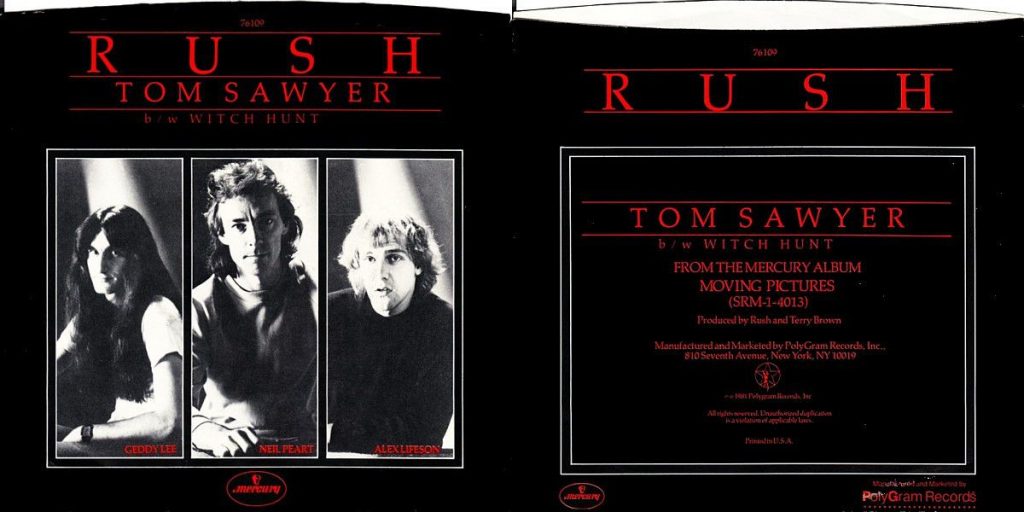
Rush released two singles from “Moving Pictures” almost simultaneously. They were Tom Sawyer (with Witch Hunt on the B-side) and Limelight (with YYZ on the B-side), both of which came out 14 days after the album. One look at Billboard’s best-selling singles chart dated March 21, 1981 must have made the band very happy indeed, as both singles really shook things up just below the top of the chart. Limelight landed at number seven and Tom Sawyer at number ten.
Unlike Limelight and Tom Sawyer, the third single, Vital Signs, came out in March of that year only in the UK, where it reached number forty-one. In 1982 Vital Signs was released in the US as the B-side of the New World Man single (but that’s another story). Judging by the song’s structure, the band was most likely using this single to test the UK market and the music trends over there, where “art pop” bands like The Police and Talking Heads, among others, had already firmly established themselves with “new wave” and ska tricks.
“Moving Pictures” is just one piece of the mosaic of a band that, with its insightful artistic legacy, had by then already built itself a monument at the forefront of rock and roll. The album’s success cemented the new course the band had charted, one it had already set with a bold artistic turn a year earlier on its predecessor, “Permanent Waves”.
“Moving Pictures” confirmed that Rush were heading into the eighties with serious ambition. They refreshed their eclectic nature very effectively and gave it a brand-new outfit. Not only did their musical transformation successfully bring their sound up to date by working in some of the sonic trends that were catching on more and more at the time, but with the music they were making back then they also, in many ways, set the pace for the development of radio-friendly art rock, wrapped in the lavish production of the eighties.
Author: Aleš Podbrežnik