

Prog rock giants Jethro Tull, led by their unbridled, energetic, lucid, sarcastic and charismatic frontman Ian Anderson, rock’s most famous flautist, who has always known how to poke at social sore spots with his one-of-a-kind lyrics and concepts, recorded twenty-one studio albums over their colorful career.
Even though their musical style kept shifting, under Ian’s watchful eye they strove for sonic innovation and stylistic eclecticism through most of their existence, and in the 1970s they created some of the key albums of progressive rock.
Over the years they toyed with elements of blues rock, hard rock, progressive rock, prog folk rock, synth pop and world music, and with their most notorious albums they managed to wind up both the self-appointed moral guardians, who in the early seventies burned copies of the groundbreaking album »Aqualung« in the US, and the Metallica fans, who had a heart attack when Jethro Tull won the Grammy for best heavy metal album for »Crest Of a Knave«.
Part of the Jethro Tull story, alongside Ian, was guitar master Martin Barre, from their second album »Stand Up« onward. Ian and Martin parted ways in 2011, and today Jetro Tull, who recorded their last studio album way back in 2003, sadly ‘vegetate’ as Ian’s solo backing band, but the best moments of their career will never be forgotten. Here’s the list of their studio albums, from worst to best.
21. Under Wraps (1984):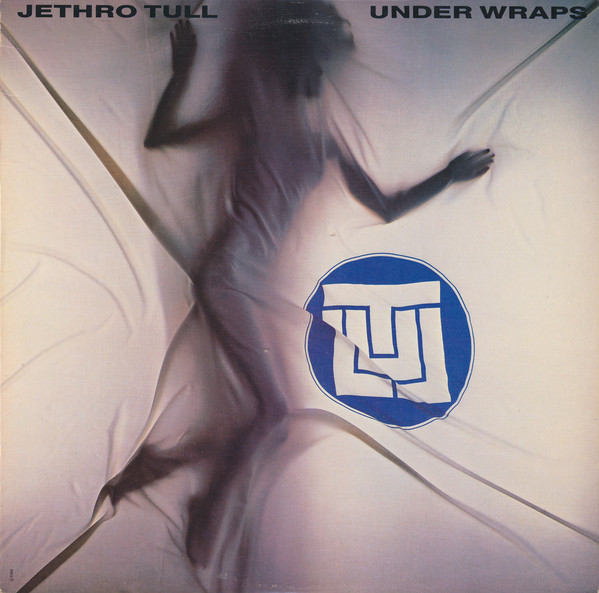
The synthetic, electronic flop »Under Wraps«, which sounds less like Jethro Tull and more like unreleased Depeche Mode material with a drum machine instead of real drums, was hands down their worst album. Its only upside was that Ian, who had released his solo debut in an almost identical musical style the year before, was at the peak of his vocal powers back then, before he permanently damaged his vocal cords during the »Under Wraps« tour. The lyrics, mostly about the Cold War and spy games, were another reason this album has aged so badly.
Key tracks: »Under Wraps #2«.
20. The Jethro Tull Christmas Album (2003):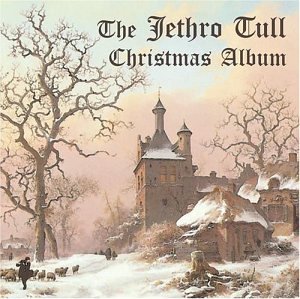
This corporate-minded Christmas album was a totally unnecessary project, born at the urging of their label of the time, when Christmas albums were the hottest trend in music, though Ian, despite his ‘non-believing’ nature, gladly took up the idea. The Jethro Tull evergreens with fresh arrangements came off corporate and empty, and only won over a handful of longtime fans who were already used to plenty of eccentric decisions from Ian. On top of that, there’s a bitter aftertaste in the fact that this is (still) their last studio album.
Key tracks: »A Christmas Song«, »Pavane«.
19. Catfish Rising (1991):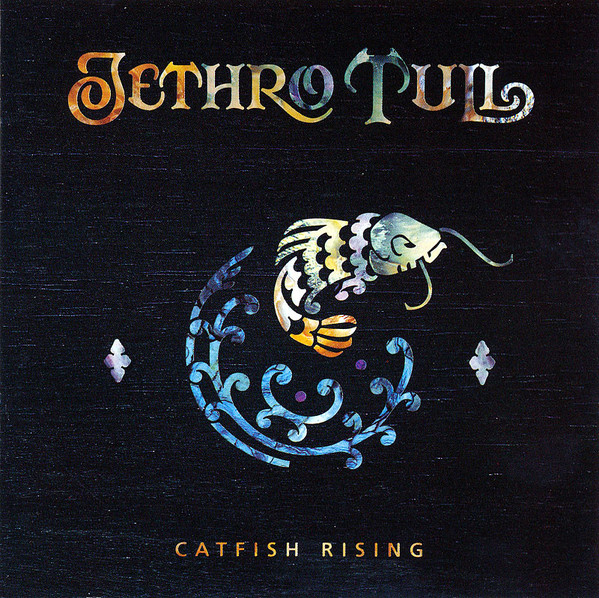
With »Catfish Rising«, Jethro Tull wanted to return to their blues rock and hard rock beginnings. The problem was that, with its typical early-nineties production, the album sounded pretty anachronistic and dull. Unlike the blues debut »This Was«, where you could hear a young band bursting with energy and ideas that were innovative for the time, »Catfish Rising« painted a portrait of a tired group in the middle of a midlife crisis.
Key tracks: »This Is Not Love«, »Rocks On the Road«.
18. The Broadsword and the Beast (1982):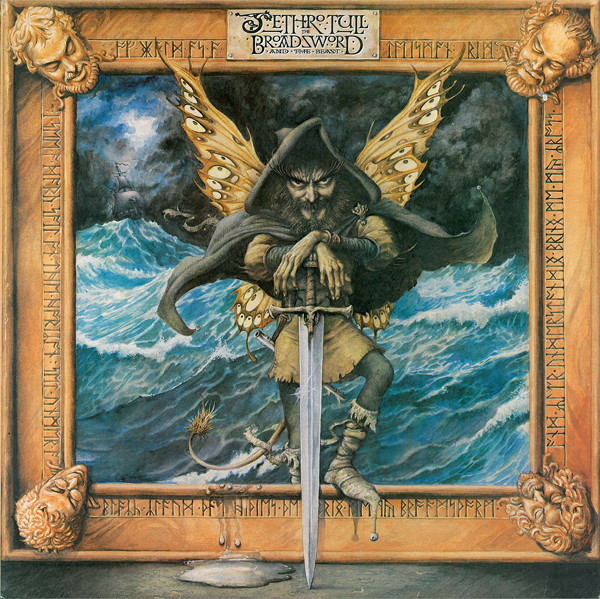
This was the album where Jethro Tull stylistically stepped fully into the eighties, with synth technology, run by then-keyboardist Peter-John Vettese, playing a major part and winning them at least as many new fans as it drove away. The end result was far from dazzling, and a lot of the songs have aged rather sadly. Ian has always held this album in high regard, mainly because it kept people interested in their music after the seventies ended, but there’s not much on it worth mentioning.
Key tracks: »Pussy Willow«, »Beastie«, »Broadsword«, »Cheerio«.
17. Rock Island (1989):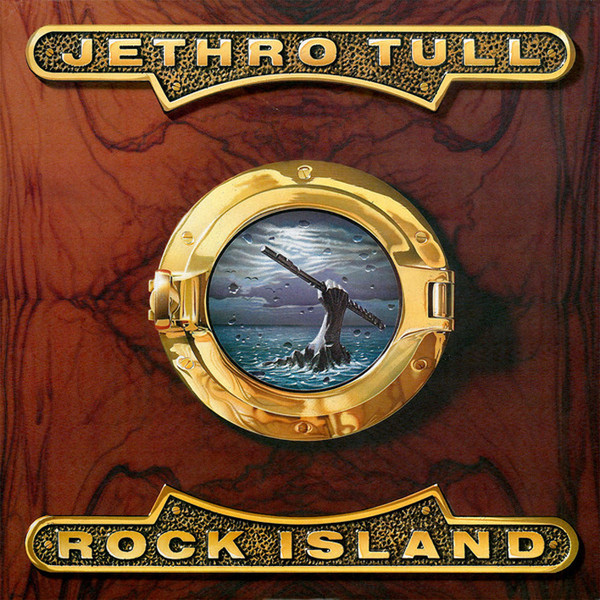
»Rock Island« was in many ways a weaker follow-up to its notorious predecessor »Crest Of a Knave«. The album does have a few bright spots, but as a whole it ranks among the duller moments of Jethro Tull’s magnificent legacy. It was made while the band had no regular keyboardist, so the inconsistency of individual arrangements is no surprise.
Key tracks: »Kissing Willie«, »Rock Island«, »Another Christmas Song«, »Strange Avenues«.
16. J-Tull Dot Com (1999):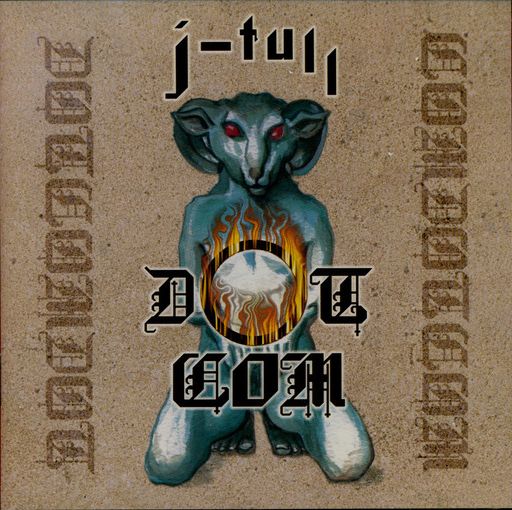
»J-Tull Dot Com« was a less exciting stylistic follow-up to its predecessor »Roots To Branches«. As a whole the album wasn’t bad at all and had a few good ideas, but it lacked consistency, and some of the world music elements didn’t quite land. The completely misguided cover and relatively weak promotion, since the band had moved to a smaller label by then, did their bit to dull this album’s reputation.
Key tracks: »Spiral«, »Dot Com«, »Wicked Windows«, »A Gift of Roses«.
15. Crest Of a Knave (1987)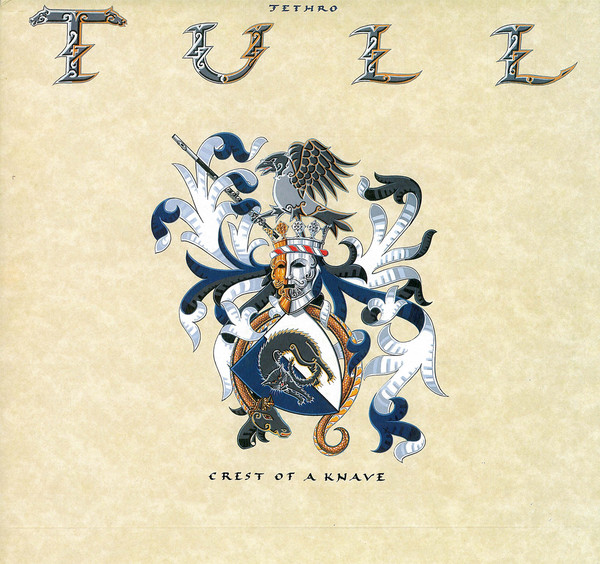
»Crest Of a Knave« is perhaps the most notorious album in the whole Jethro Tull discography, since it won them a controversial Grammy for best heavy metal album, even though it has about as much to do with heavy metal as Ian’s old, worn-out coat has with cleanliness. Even though the hard rock-leaning »Crest Of a Knave« occasionally recalled Dire Straits thanks to Ian’s changed vocal tone, and not all of its ideas were dazzling, it also had some very interesting songs that remained an important part of Jethro Tull’s live shows for years.
Key tracks: »Budapest«, »Steel Monkey«, »Farm On the Freeway«, »Said She Was a Dancer«.
14. Roots To Branches (1995):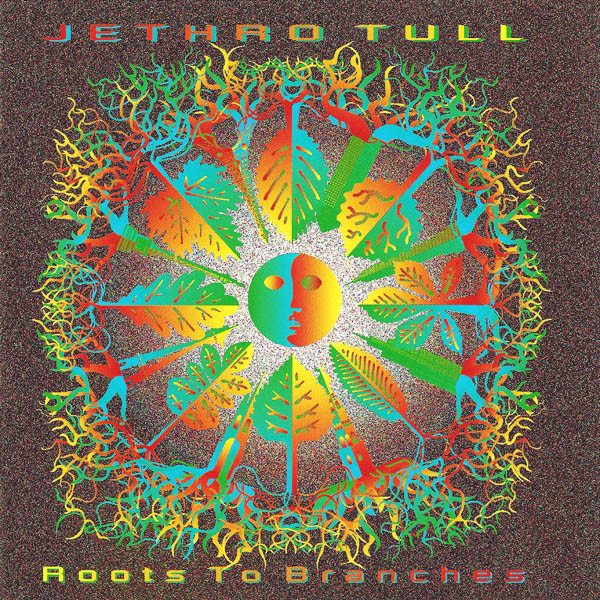
»Roots To Branches«, which some call the Indian follow-up to »Songs From the Wood«, was a welcome sonic refresh on release thanks to its weaving in of world music elements. After a trip to India, Ian fell in love with world music, which marked both new Jethro Tull work and his solo career in the second half of the nineties. The album was atmospherically dark and stylistically eclectic enough to rank as thoroughly solid, but far from a key moment in the history of the legendary prog veterans.
Key tracks: »Roots To Branches«, »Rare And Precious Chain«, »Out of the Noise«, »Another Harry’s Bar«.
13. This Was (1968)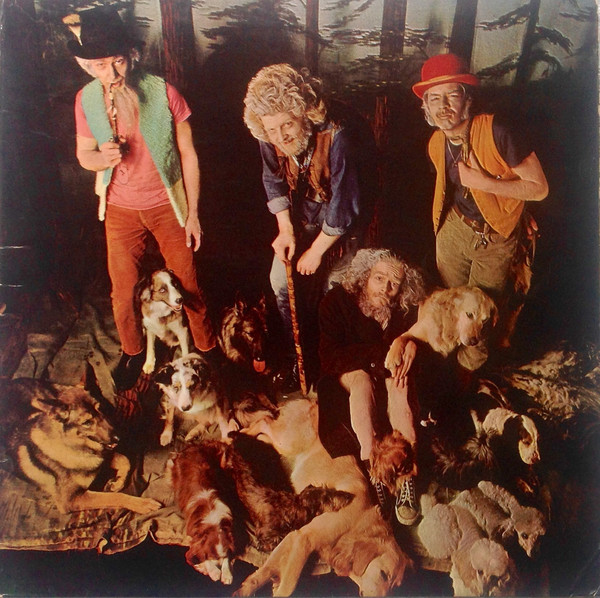
The Jethro Tull debut »This Was« (RockLine review) was a rather unusual blues rock album, one you could call ‘transitional’ progressive blues rock. Besides Ian’s vocals and flute, the key force behind the unexpected success of this very solid debut was original guitarist Mick Abrahams, who completely had the blues rock trends of the day down. Even at its release, Ian knew this was a transitional style and that the band’s future didn’t lie in blues rock.
Key tracks: »My Sunday Feeling«, »Beggar’s Farm«, »Serenade To a Cuckoo«, »A Song For Jeffrey«.
12. A (1980):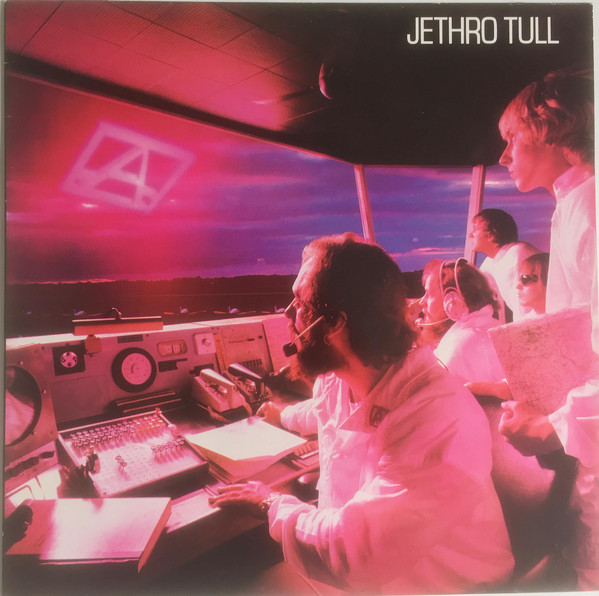
»A« (RockLine review) was originally conceived as an Ian solo album, but under pressure from Chrysalis Records it came out as a Jethro Tull release. Even though fans greeted it with considerable reservations on release, since it already carried the production influences typical of the eighties and a bigger presence of ‘trendy’ synthesizers, »A« has surprisingly held up well and ranks among the more interesting Jethro Tull releases from after their classic era. Plenty of the credit goes to the electric violin of guest keyboardist/violinist Eddie Jobson.
Key tracks: »Crossfire«, »Flyingdale Flyer«, »Black Sunday«, »Protect And Survive«.
11. Stormwatch (1979)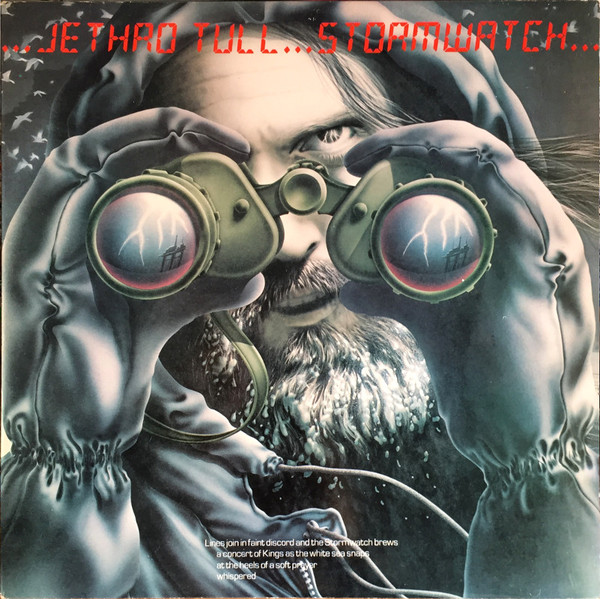
»Stormwatch« marked the end of the so-called prog folk rock trilogy and, at the same time, the close of the most successful period in the Jethro Tull story (the seventies). Even though the band wrestled with plenty of troubles during recording, most notably the poor health (and later death) of then-bassist John Glascock, the album as a whole came out very decent and is still relatively overlooked today. Compared to both of its prog folk predecessors, it had an even gloomier atmosphere, while the lyrics dealt with the ecological crisis, unstable weather, Scottish legends and Ian’s experiences from when he became the owner of a salmon farm.
Key tracks: »North Sea Oil«, »Home«, »Dun Ringill«, »Elegy«.
10. Too Old To Rock’n’Roll to Young to Die (1976):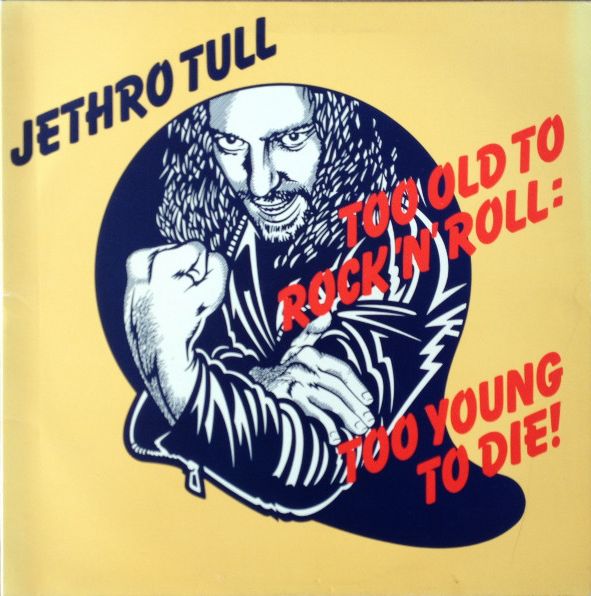
This notorious and somewhat overlooked concept album, contrary to what the media and music critics of the time assumed, didn’t tell Ian’s autobiographical story, but was a sharp critique of the music industry and of fast-changing trends (not just musical ones). As a whole, »Too Old to Rock’n’Roll to Youg to Die« was a very solid effort with plenty of symphonic arrangements, contributed mainly by keyboardist David (today Dee) Palmer.
Key tracks: »Too Old to Rock’n’Roll to Young to Die«, »Quizz Kid«, »Salamander«, »Crazed Institution«.
9. Stand Up (1969):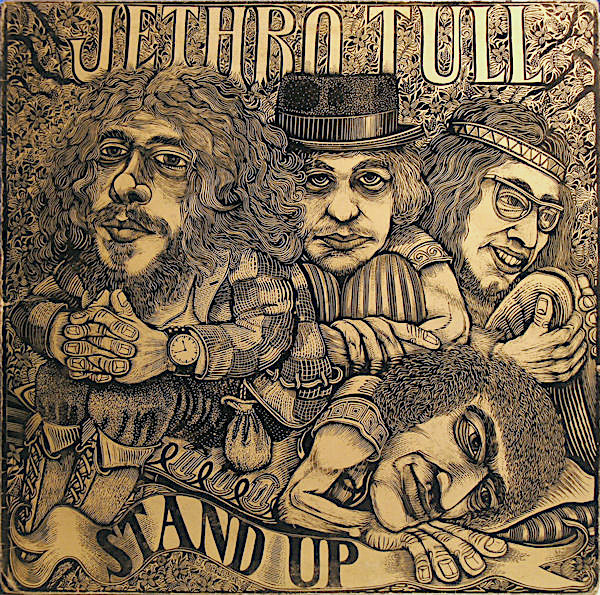
»Stand Up« (RockLine review), which still had plenty of blues rock elements, was a huge step forward from the Jethro Tull debut and is still Ian’s favorite Jethro Tull album. It was packed with Jethro Tull classics that were a must in their live shows for decades, and it also marked the debut of longtime guitarist Martin Barre, who was inseparable from the band’s classic, recognizable sound. All of this means »Stand Up« wasn’t just one of the best, but also one of the most important albums in Jethro Tull history.
Key tracks: »A New Day Yesterday«, »Bouree«, Nothing Is Easy«, »Fat Man«.
8. War Child (1974):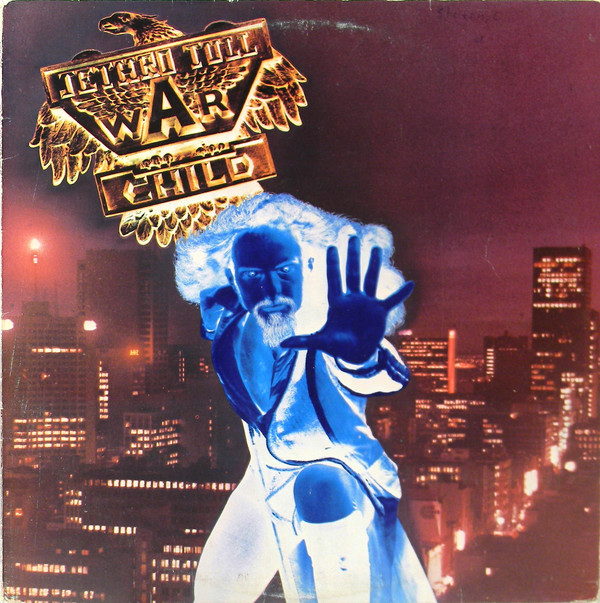
»War Child« was originally conceived as a far more ambitious project, one that was supposed to come out simultaneously in two different, interconnected parts: as an orchestral album and as a more ‘classic’ rock album. In the end, ‘only’ the rock part got made, and despite being relatively overlooked and getting a fair amount of grumbling from critics of the day, it was a very good album as a whole. At the same time, »War Child«, which made no secret of flirting with the glam rock scene of the time, was the only moment in Ian’s career when he played saxophone, which he still isn’t particularly thrilled about.
Key tracks: »War Child«, »Skating Away On the Thin Ice of a New Day«, »Bungle In the Jungle«, »Back-door Angels«.
7. Benefit (1970):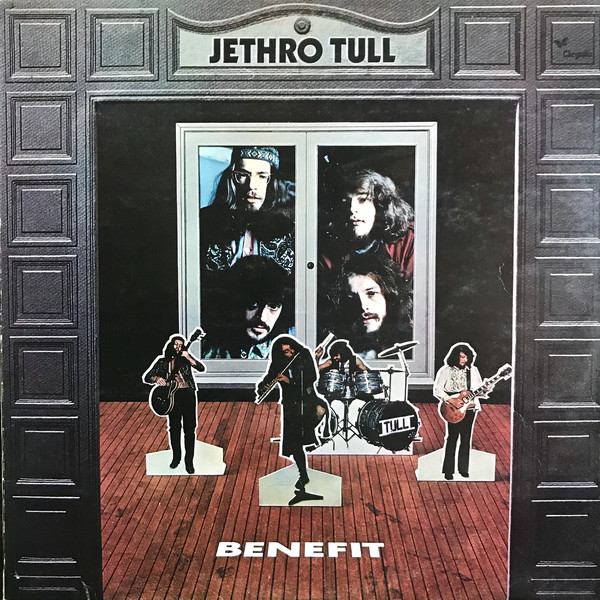
»Benefit« (RockLine review) is another one of the critically overlooked albums from this legendary prog rock band. »Benefit« came out of a ‘transitional’ period, when Jethro Tull were slowly shaking off their blues rock roots and heading stylistically toward progressive rock. With the dark nature of most of its material and a much harder sound, it was in many ways a harbinger of its far more notorious successor »Aqualung«.
Key tracks: »With You There To Help Me«, »Nothing To Say«, »To Cry You a Song«, »Sossity; You’re a Woman«.
You can read our piece on the 50th anniversary of the album “Benefit” HERE!
6. A Passion Play (1973):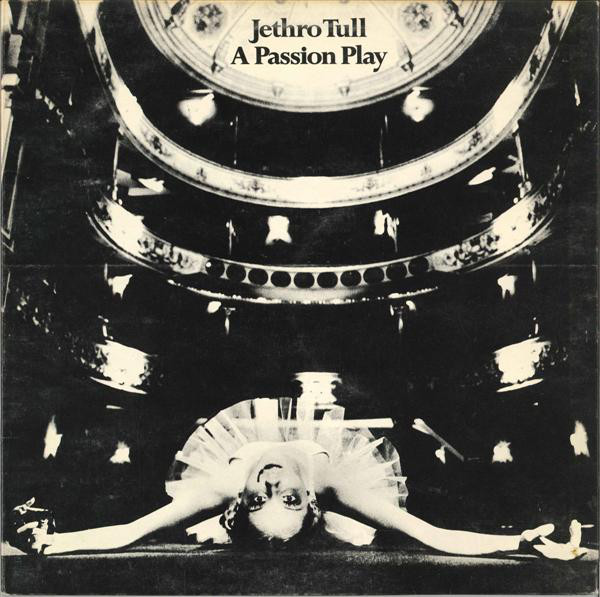
»A Passion Play« was unfairly dismissed on release, with critics of the time accusing it of being pretentious, pompous and drawn-out. Over the years the criticism softened considerably, and today »A Passion Play« is rightly recognized as one of Jethro Tull’s finest achievements. This dark concept album about the soul’s journey into the afterlife successfully built on the songwriting and arranging formula of its predecessor »Thick As a Brick« in many ways, and spiced up both parts of the »A Passion Play« suite with an eccentric tale about a nearsighted hare who lost his glasses.
Key tracks: »A Passion Play (Part 1 & 2)«.
5. Minstrel In the Gallery (1975):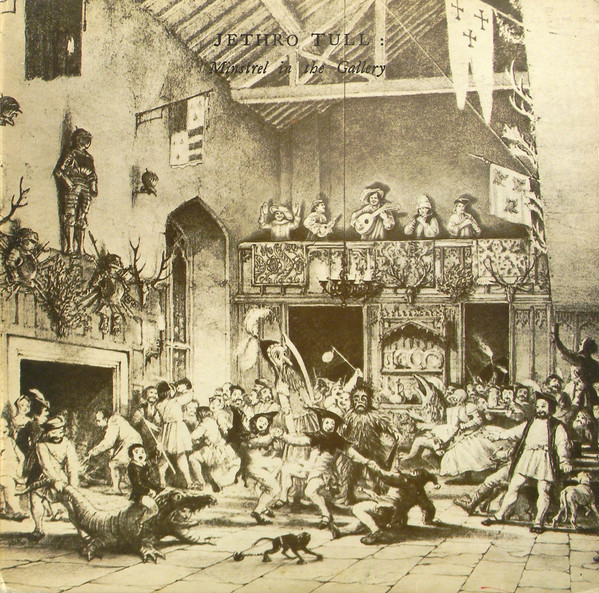
»Minstrel in the Gallery« was in many ways Jethro Tull’s peak when it comes to their experimenting with theatrical and baroque-leaning symphonic arrangements and symphonic progressive rock. The triumphant high point of the album was the epic »Baker St. Muse«. The album wasn’t a concept record, but it drew its themes and atmosphere from troubadours and traveling theaters of Shakespeare’s era.
Key tracks: »Minstrel In the Gallery«, »One White Duck«, »Cold Wind to Valhalla«, »Baker St. Muse«.
4. Heavy Horses (1978):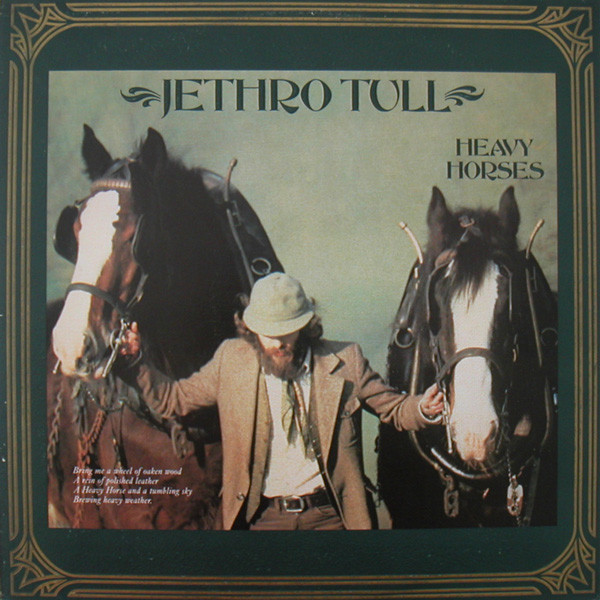
Ian’s love of farming and a special breed of English horse reached its peak on the classic »Heavy Horses«, a logical but somewhat darker and harder follow-up to its more celebrated prog folk rock predecessor. Unlike the romantic predecessor, its lyrics offered a more realistic look at the countryside and farming. Ian has always loved describing unusual subjects in his lyrics, and this time they included mice, moths, horses, hens and a weathercock.
Key tracks: »Acres Wild«, »Heavy Horses«, »Weathercock«, »One Brown Mouse«, »Moths«.
3. Songs From the Wood (1977):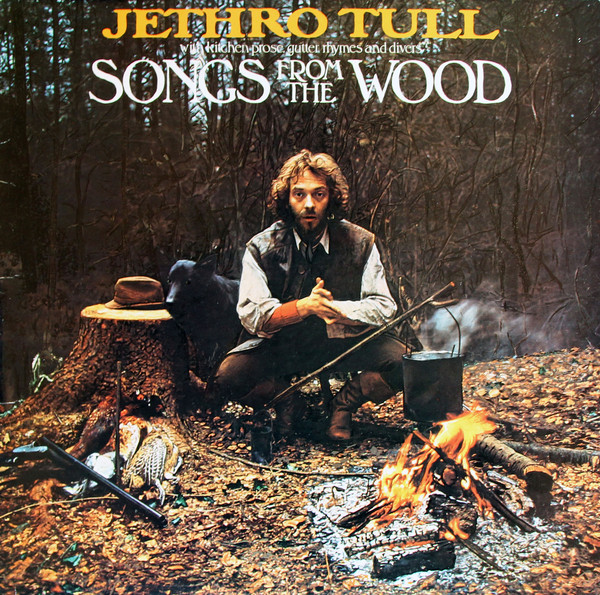
»Songs From the Wood« was the moment when, after Ian’s move to the countryside, Jethro Tull dove headfirst into prog folk rock and created one of their best albums, which also kicked off the so-called prog folk rock trilogy. The album leaned musically and thematically on British folklore, ancient legends and the romance of the forests. It also contained »Ring Out Solstice Bells«, which quickly became a household favorite and a Christmas classic.
Key tracks: »Songs From the Wood«, »Jack In the Green«, »Hunting Girl«, »The Whistler«, »Ring Out Solstice Bells«.
2. Aqualung (1971):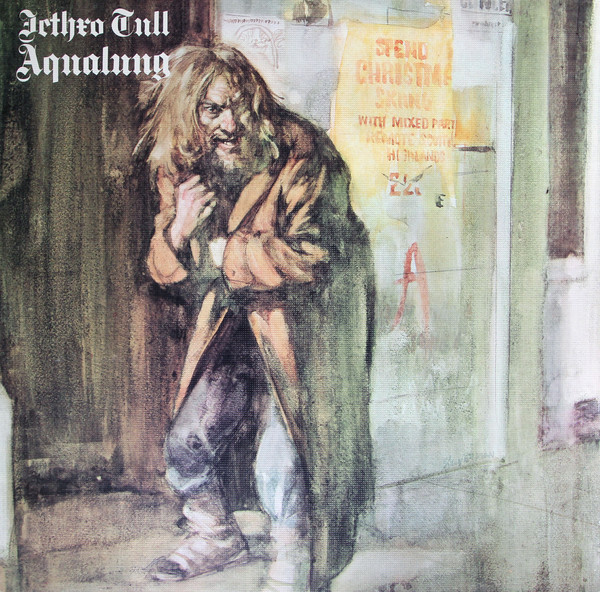
With »Aqualung« (RockLine review), which by Ian’s own account was never a concept album, Jethro Tull became a world-famous band and one of the key groups of early progressive rock. »Aqualung«, which besides progressive rock also contained plenty of acoustic folk rock elements and, mostly thanks to Martin Barre’s guitar technique, ‘rowdy’ hard rock elements, is the album most music fans think of today when you mention Jethro Tull. Most of Ian’s lyrics carried a biting critique of organized religion and the modern capitalist order, which creates an ever-growing number of disenfranchised social outcasts. That’s the main reason »Aqualung« is still a very relevant album today.
Key tracks: »Aqualung«, »Locomotive Breath«, »Mother Goose«, »Cross-Eyed Mary«, »My God«.
1. Thick As a Brick (1972):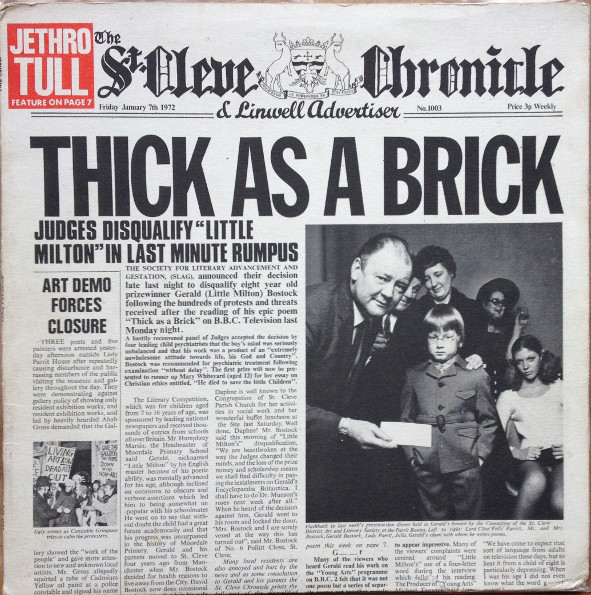
»Thick As a Brick« (RockLine review), a parody of concept albums that ironically became one of progressive rock’s cult concept achievements right after release, is also the definitive magnum opus of the legendary Jethro Tull and their wily, thoroughly seasoned chieftain Ian Anderson. Even though only a handful of Jethro Tull fans outside Great Britain understood its message and lyrics, »Thick As a Brick« became one of the most revered albums of the 1970s, usually landing on lists of the ten best progressive rock albums of all time. »Thick As a Brick«, which in modern times would have come out as »Thicc As a Bricc«, also boasted a cover that was provocative for its day, in the form of a parody of a typical English newspaper.
Key tracks: »Thick As a Brick (Part 1 & 2)«.
Author: Peter “Dr. ProgRock” Podbrežnik
