

Just over a week ago, exactly half a century passed since Deep Purple, with their fourth studio album »Deep Purple In Rock«, announced a new era of rock and catapulted themselves onto the world pedestal of one of the biggest and most important bands to shape the face of rock ‘n’ roll, or heavy rock, if you like. After this album, the world of rock was never the same. It’s one of the foundational, most important works in the evolution of the band’s style and sound, and its radicalism set off a domino effect that radicalized the sound and style of rock ‘n’ roll itself. This is one of those legendary, literally carved-in-stone rock albums, so it really isn’t hard to spin a mythical legend around it.
But Deep Purple’s road to this timeless monument was far from easy. Three albums had hinted that this was a band with potentially promising dimensions, and certainly an interesting one, but what actually gave them name recognition (for the time being only across the pond) were their covers of songs by Cream, Joe Stump, Jimi Hendrix, The Beatles, Neil Diamond, Donovan and Ike & Tina Turner. With their third album »Deep Purple«, released in June 1969, the band found itself at a sort of artistic crossroads. On that record, Deep Purple were swept up in a kind of transgression, clamping on psychedelic-progressive rock leanings. Once again, nobody knew what to expect from their career going forward.
Just think about it. The beginning of the seventies. The world was only just coming to after the hangover headache caused by the hippie spree of sticking flowers into gun barrels. The Beatles had broken up, Jimi Hendrix – the man who introduced rock guitar to the masses – had suddenly and far too early passed away, and the famous »Lizard King« Jim Morrison had only a few months left before joining Jimi. Cream and Blind Faith had burned out as fast as they had blazed up like meteors with multi-million record sales. What remained were The Kinks and The Who, who had started pushing the decibel level up a notch through their musical arsenal in the mid-sixties. They weren’t the only ones, but they were among the first at it.
In early 1970, Black Sabbath, with their debut and its forging of seriously heavy riffs and grotesque, »scary-villainous« lyrics, showed where one of the new versions of rock, built on accentuated guitar phrases (heavy metal), was heading. On the other side there was Led Zeppelin, who had quickly put out two albums by 1970. Their sound created a raw, unbridled noise, weighed down with »blues roots« rhetoric, debauchery and the odd folk interlude, and it rejected any equating with the “heavy” label. With »Deep Purple In Rock«, or just »In Rock« for short, Deep Purple thus joined an unholy trinity that co-defined the look of rock’s development, based on favoring bristling guitars, for a good while. Next to all the loose, deafening-for-its-time noise and colorfully virtuosic playfulness embodied by »Deep Purple In Rock«, Black Sabbath came across as rigid, clumsy and rough around the edges. And Led Zeppelin’s third studio album, on top of everything seasoned with acoustic and folk touches, couldn’t even come close to the vast arsenal of riffs presented on “Deep Purple In Rock”. Not to mention the cheeky rondo generated by the diverse cannonade of unbridled guitar phrasing combined with the rocky sound of the organ, which »Deep Purple In Rock« had in surplus.
After the debut “Shades of Deep Purple” and its follow-up “Book Of Taliesyn“, the third album “Deep Purple” didn’t bring the band any real progress either, other than that the »naughty« media on the American continent stopped comparing them to Vanilla Fudge. At the same time, it slowly signaled that the members of the first Deep Purple lineup were drifting apart. Jon Lord – the quiet leader and visionary of the band in the first Purple era – Richie Blackmore and Ian Paice wanted to try out a more aggressive, harder sound, and they felt Rod Evans and Nick Simper simply wouldn’t be able to keep up.
So one day Blackmore turned to his buddy Mick Underwood from their shared The Outlaws days to recommend a good singer. Mick didn’t beat around the bush and suggested he ask Ian Gillan, who was playing with Underwood in Episode Six at the time. Let’s not forget: that same Mick Underwood later founded Quartermass, and Blackmore with Rainbow covered the only Quartermass hit, the song Black Sheep of the Family. But that’s another story. It was no secret either that Gillan was already cooking up the idea with Underwood and Episode Six bassist Roger Glover of starting a band of their own, since he felt Episode Six weren’t going anywhere. So Lord and Blackmore, at the first real opportunity, headed to an Episode Six gig, with Blackmore having already done the courting over the phone with Gillan about the singer potentially joining Deep Purple. Gillan couldn’t hold the news in and told Glover before the show, so the whole band realized right away that another story was unfolding parallel to their own. Richie even climbed onstage himself during the gig for a jam with the band. The next day the band members announced Gillan’s intention to leave to their manager Gloria Bristow. Everyone agreed on the singer’s departure, and in return for their blessing, Gillan promised to conscientiously fulfill all the obligations tying him to the band, including playing the remaining confirmed gigs.
Since Deep Purple were looking for a bassist too, Gillan had to hint to Glover around this time that he should think about joining Deep Purple himself. But Glover, as a founding member of Episode Six, absolutely didn’t want anything that could lead to Episode Six falling apart. After all, he’d been in the band since day zero. All of this was happening almost exactly a year before the release of »Deep Purple In Rock«. Deep Purple had a somewhat harder time getting to Glover, but they eventually reached a consensus. On June 7, 1969, Glover and Gillan showed up at Jon Lord’s home. Ian and Roger presented Jon with material they had written together. Since Deep Purple had a recording session booked for that very afternoon, they could only use the bassist for the recording and in no other context. So they took advantage of that by recording an early version of the song Hallelujah. It was meant to be the next single for release on the American market. Lord was extra impressed with Glover’s playing, but Roger found the idea of releasing Hallelujah as a single rather bizarre, since he himself considered the song too shallow. Glover’s first meeting with Lord, Blackmore and Paice also had him cracking up over their hairstyles and overall look, which struck him as old-fashioned for the time. The next day Glover was accepted into Deep Purple. Through June, both bands had to play a series of gigs, and Deep Purple’s managers (HEC Ltd.), Tony Edwards (as »E«) and John Colleta (as »C«), hinted to Glover and Gillan to keep as far away as possible from Episode Six manager Gloria Bristow during that time, because she could very likely have a nervous breakdown.
With the new lineup, Deep Purple were thus already meeting in secret and building on Hallelujah, while Simper and Evans had no inkling in their wildest dreams of what was brewing behind the scenes, thinking their spots in Deep Purple were still safe. In one of the »gaps« between Mk I lineup gigs, Blackmore and Lord booked a space at the Hanwell Community Centre, where the band in its Mk II lineup played a few jams on the first day and recorded Hallelujah on the next. After that they booked De Lane Lea studio, where they also recorded the final version of the song. Through July, both Deep Purple and Episode Six played live shows. On one of the dates the two bands even played together, and Glover’s first encounter with roadies was a funny one. When he started packing up his own gear after the show, a guy suddenly appeared from nowhere, telling him not to do his job for no reason, which badly shocked the bassist, who wasn’t used to that kind of luxury.
In July 1969, Evans and Simper slowly found out about their fate. They had no reason to be overjoyed about it. What’s more, the carefree Simper was even teased by a friend who hinted over the phone: »I heard you’re not in Deep Purple anymore?« Nick of course didn’t believe it, but just a few days later he read the news in a print publication. The Mk I lineup played its last gig in early July 1969 in the middle of Welsh Cardiff, and a week later Deep Purple played their first concert in London with a completely new lineup, the Mk II. At that gig Gillan used congas for the first time in his musical career. They let him amuse himself during the longer instrumental stretches of the rest of the band. He was thrilled. He capped the band’s first show with a personal realization that Deep Purple’s approach to music was completely radical and very abstract. Totally different from how, say, Black Sabbarth, Jethro Tull or Led Zeppelin approached music at the time.
So what happened with Evans and Simper after that? Nothing all that remarkable. Rod Evans joined Captain Beyond, and before he vanished from the scene entirely, he also ended up leading an “unfortunate Deep Purple knockoff” that got shut down in no time once legal proceedings kicked in. Simper stayed in London, where he formed Warhorse, and later made a living as a house painter and an artist. Simper in particular had a hard time coming to terms with how Deep Purple got rid of the two of them. But even that had its upsides. All that jealousy, betrayal and anger swirling around the birth of the Mk II lineup turned out to be a major catalyst, fueling the new Deep Purple’s creativity.
The members had technical chops that were nothing short of brilliant for the time, and Gillan was considered a stunning singer back then, developing incredible vocal power in every register, so the quintet could unleash a monstrous stage presence that was unimaginable at the time. Meanwhile, the tensions between Gloria Bristow and the HEC Ltd. management cooled off, and Episode Six took on a guy who was both a bassist and a singer, former Big Three member Johnny Gustafson. Episode Six played their last gig with Gillan and Glover on July 26, 1969.
On the equal contributions of all five members of the new lineup, Roger Glover said: “Ritchie wasn’t just a guitarist, he was a brilliant innovator. He was phenomenal at what he was doing in the late sixties and early seventies. He created things you’d never come up with on your own. He was an infectious, dynamic writer. But I don’t think he could have pulled it off alone. He needed the others. In the band, he was the motivating character.”
Speaking of Ritchie, it’s worth mentioning a backstage incident from one of the band’s gigs in 1970. Ritchie remembers: “I often blame myself for it. We were at the Rock’n’Roll Circus club. It was a bigger venue in France. I don’t know why, but I always liked pulling childish pranks on other people. Practical jokes. It was backstage. At one point Ian (Gillan) wanted to sit down. I noticed he was drunk and quickly pulled the chair out from under him. But I hadn’t realized we were standing at the edge of a platform raised about 5 meters above the ground. Ian fell down that drop straight on his head. I heard his head hit the hard floor. I thought it was all over and that he was dead. Then he climbed back up and I asked him: ‘Are you okay?’ He answered: ‘Yeah. I hurt my head a little, that’s all.’ But after that he was never the same again. From the moment he smacked his head on the ground, it wasn’t the same personality anymore.”
As mentioned, at the first Mk II gigs Gillan was often left standing around on stage with nothing much to do, but in July new ideas quickly started trickling in, and the singer got actively involved in them at rehearsals. The band ran through the new material at the Hanwell Community Centre.
Roger Glover remembers: “Every new idea I brought to the band, they wanted to try out right away to see how it worked. That’s how Speed King came about first. Blackmore was looking for an uptempo number the band could open their shows with.”
In its first version Speed King was called Kneel & Pray, and the band first tried it out on stage at the end of August. Before it found its place on the album, the band completely changed the arrangement twice, and even when they came into the studio to record the final version, it still wasn’t totally finished. Glover adds: “Richie suggested I come up with a phrase similar to the one in Hendrix’s Fire.” Gillan hints that the lineup of Deep Purple at the time had instant, excellent chemistry, which on the one hand allowed for eccentricity and on the other paired that eccentricity with “normality.” Ian Paice chimes in: “Suddenly, in a working environment like that, anything was possible.”
As for the musical influences on “In Rock,” there’s an interesting contrast with Gillan and Glover’s Episode Six background, which came out of concise, breezy pop, versus something that sounded adventurous, less uptight about experimenting, and built on experience that didn’t demand much focus. Gillan says: “It all piled up. Jon Lord was a classically trained musician, definitely inspired by Jimmy Smith. Ian (Paice) was Buddy Rich carved out in flesh. As for me, I was influenced by Elvis Presley, Little Richard, Chuck Berry, Fats Domino, Ella Fitzgerald and Jerry Lee Lewis. Roger’s later influence, which started to come through, was Bob Dylan. Put all that together and you’re guaranteed something unique. If you took any one of us out of the story, the result would still have been the same. For me, rock music was a kind of attitude.”
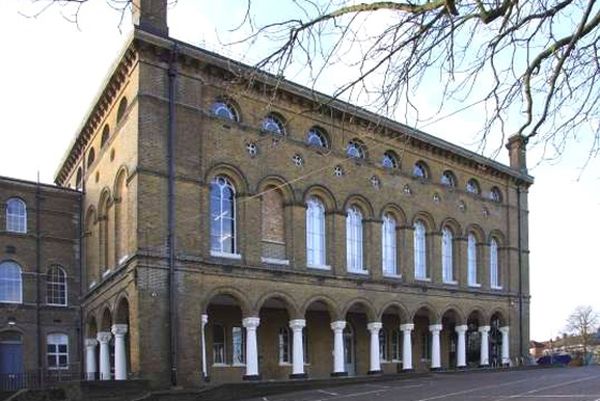
The ideas were boiling over and Deep Purple churned out new material fast. Even though the Hanwell Community Centre sat on a remote enough corner of west London that the neighbors were supposed to get a quiet night’s sleep, the band made quite a racket while jamming and writing, and it didn’t go unnoticed. At that time, another band was rehearsing its own material in the room next door in the very same building. Called Spice. They quickly caught the noisy phrasing coming through the wall from Deep Purple, so they promptly borrowed two or three of those phrases and worked them into their first compositions. Not long after, that band changed its name to Uriah Heep.
Even before the recording of “In Rock,” another major thing happened for Deep Purple. The birth of the live document “Concerto For Group And Orchestra.” From August on, Lord was up to his neck in grinding away on this project, which Edwards and Colleta had green-lit. The two booked The Royal Albert Hall and reached an agreement on working with the Royal Philharmonic Orchestra. Lord skipped rehearsals with the band, who were already eagerly running through the new material, which annoyed Blackmore in particular. Finally September arrived and the band performed Lord’s work together with the orchestra at a concert that was recorded and later released as a live album. Gillan remembers being skeptical about how people would take the band’s move, but, like the others, he was wrong. Thanks to all these maneuvers, and ever more convincing live shows, by the day they played with the orchestra at The Royal Albert Hall the band had managed to stir up serious buzz and interest among the wider public. So glowing reviews rained down from every direction after this bold “fusion of rock and classical music.”
Once “the storm had settled,” the band pointed all its energy back at recording “In Rock.” It was recorded at three different London studios. First at IBC, where they put Speed King on tape, followed by Living Wreck. Ian Paice says that when it comes to drums, the latter is his favorite “In Rock” track. Because of the drum sound, which, in Ian’s words, comes across as distinctly live, hard, steely and cheeky on this song! The rest of the crew, though, kept weighing up whether to put this track on the album at all. Right up to the last minute. The guys felt the song was simply too weak for that.
The band recorded the shorter, wildly noisy and deliberately chaotic intro to Speed King separately. Once Blackmore’s guitar mayhem in that intro dies down, Lord’s Hammond organ comes in, and Glover recalls: “Halfway through his part, Jon made a mistake. He played a wrong chord. Instead of doing it over and recording it again, he made a short pause and slyly turned the atonal line to his advantage. Obviously Lord was perfectly happy with that trick.” The band still wasn’t satisfied with this version of Speed King, though, and went back to IBC in January 1970 to record the song once more.
In early November 1969 the famous Child In Time began taking shape too. Glover says: “This song isn’t completely original either, it draws inspiration from another one. The first thing I did after joining Deep Purple was go on holiday together with Richie and Ian (Paice). One day we rented a boat and sailed down the Thames, spinning records by all kinds of artists the whole day. One of the picks was the album by It’s A Beutiful Day, with the song Bombay Calling on it.” Jon Lord, who already knew the song by then, didn’t hide his enthusiasm for its arrangement. Deep Purple struck a deal with It’s A Beautiful Day: in exchange for using the main motif of Bombay Calling, they let It’s A Beautiful Day freely use the main motifs of Wring that Neck, which in It’s A Beautiful Day’s hands became Don And Dewey and landed on their second album “Marrying Maiden” (1970). Deep Purple pulled this cult track together fast, and it became a notorious live favorite. By the time they got to the recording, it was already extremely well honed on stage.
Into the Fire also comes from the IBC studio sessions, as does the instrumental Jam Stew. The band never recorded a vocal version of this instrumental, and when it showed up at a gig for one of the BBC’s shows, Gillan marked out the vocals on the track for the very first time. Glover came up with the idea for Into the Fire too, and the song is built on a chromatic, especially destructive Blackmore phrase that soon found a spot in the live set. The band particularly enjoyed playing it, because this was the number where they could push their newly discovered thunderous punch to the max.
On January 1, 1970, the band moved into De Lane Lea studio, where they cut Hard Lovin’ Man that very day. A sound engineer named Martin Birch worked with the band on it. This track was also Glover’s contribution, and it came out of the jams played at the Hanwell Community Centre. Glover continues: “This one’s a monster. My favorite track on the album. It packs in all of our essence from that time and captures our onstage energy on tape in the most honest, vivid way. That goes especially for Jon Lord’s solo, which stayed within a hair’s breadth of what he was doing onstage when we played this song. It shows our core need to experiment, all the quirkiness in the choice of inserts and transitions, two great solos, unstoppable punch, a macho lyric and a whole lot of cheekiness.” The band was thrilled with Birch’s approach. For the time it was very modern, since Martin was one of the few engineers (along with Alan McKenzie – who worked with Episode Six) who actually listened to the band back then and made the effort to catch its essence on tape. Birch went on to produce all of the band’s albums later. Right up until its breakup in 1976. Don’t get me wrong, though: “In Rock” was still produced by Deep Purple themselves. Not everyone was happy with De Lane Lea studio, though. Ian Paice was one of them – the small room bugged him, and his drums never reached the sonic character he was expecting: “The drum sound was ‘flat.’ Back then it was really hard to find a decent room for recording drums.”
The guts the band showed in deciding to produce the album themselves brought a good dose of chaos into the making of it, too. Suddenly all ten hands of the quintet were twiddling knobs on the mixing desk, with every member dictating the sound they wanted. Paice comments: “It’s a wonder we didn’t end up with a wall of noise. The sound was just getting overloaded!” Glover adds: “We were all unconsciously making moves that made the album harder and harder. And because the album was coming together in the gaps between gigs, we carried that stage energy into the studio. All the meters were constantly pushed into the red!”
Deep Purple recorded one more track at IBC studio. The short but punchy Cry Free, which took at least thirty takes. That track didn’t make it onto the album later. The last track the band cut for the album at De Lane Lea was Flight of the Rat. It was March 1970, and the band had developed the song at the Hanwell Community Centre, after Lord was noodling around on the Hammond organ and somebody mentioned Flight of the Bumblebee. The final track for the album, recorded by Deep Purple at Abbey Road studio, was Bloodsucker.
“In Rock” is an album that would never have been what it is if Deep Purple hadn’t really been a live band at heart. All the ideas were born onstage, backstage, and in the space of the Hanwell Community Centre. And a whole lot of water went under the bridge before they reached the recording tape. The guys played and tested them in all sorts of variations, both onstage and in rehearsals, and arrangements could get turned completely upside down. The hardest part was remembering it all. Back then there were no pocket gadgets to jot an idea down quickly. Still, Deep Purple often came into the studio with a new song they’d already honed to a shine onstage. Ian Paice adds: “If a song sounded great on the album, it sounded downright brilliant onstage.”
Over the following months the band had to deal with the fallout from the bankruptcy of Tetragrammaton Records, the label they had a contract with in the US. Luckily, they bought the rights back from Warner Bros Records. That left the hunt for a hit! Edwards and Colletta turned up in front of the band with the awkward question the band had been expecting all along: “We need a hit!” In the first week of May 1970, Deep Purple went into De Lane Lea once more, but they just couldn’t find the right inspiration. Roger Glover remembers: “At two in the afternoon we went back to the studio and tried again. No luck. So at eight we headed to the pub and got properly hammered. Richie and I left the others and went back to the studio. Richie grabbed a guitar and started playing a riff I liked, and Richie said he’d borrowed it from Ricky Nelson’s Sometime. I said, ‘We can’t use that!’ Richie replied, ‘Why not? Have you ever heard the song?’ ‘No,’ I said, and Richie added, ‘Good.’ When the others came back from the pub, we finished the song off. We borrowed the title from an old Arthur Alexander song, and the rhythmic feel was lifted from the Canned Heat hit On the Road Again.” Gillan adds: “In the state I was in after coming back from the pub to the studio, it was incredibly hard to come up with the most banal lyric possible for a hit.” And that’s how Black Night was born. The next day Edwards and Colletta were in ecstasy!
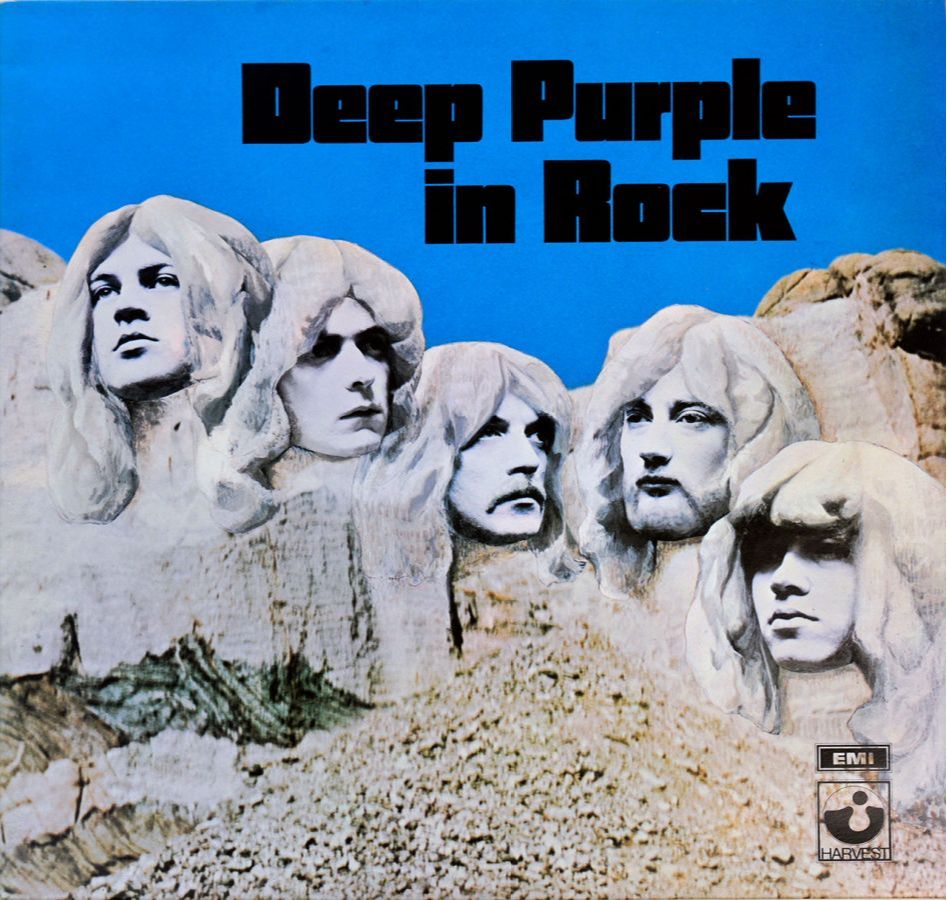
“Deep Purple In Rock” came out on June 5, 1970 on Harvest Records and sold really well. By September 1970, when the Black Night single was only just starting to storm the charts, “Deep Purple in Rock” was already high up on them! It held on there for a full 68 weeks. Lord says the idea for the cover came from manager Tony Edwards, and adds that “Deep Purple In Rock” is his favorite album Deep Purple ever made together. The album reached number four on the UK best-sellers chart and stayed in that chart’s top thirty for another whole year after that. That lasted right up until the album “Fireball” replaced it, and even then it kept charging back onto the charts now and then. The eye-catching cover probably helped sales too, with the band members carved into the rock of Mount Rushmore, where the heads of five American presidents normally sit. With “In Rock,” Deep Purple entered their most creative era, stringing together the albums “Fireball,” “Machine Head,” “Made In Japan,” “Who Do We Think We Are,” “Burn” and “Stormbringer.” These came out over the next four years and crowned Deep Purple as one of the most notorious and respected rock bands in the world.
In a 1971 interview, Jon Lord summed up what “In Rock” meant with these words: “In Rock was truly the achievement of all our live work. The first three albums were charming, but directionless. Nobody on the planet knew what the hell the band was even doing or what it wanted. Then we consciously stopped for a moment, got ourselves together and started thinking about writing material we all understand. The result is ‘In Rock,’ which was a turning point for us. We started believing in what we were creating. We’re not interested in educating our audience, we’re more interested in how to entertain them. And that’s the heart of it all.”
Jon adds: “We learned a huge amount with ‘In Rock.’ The album took six months to make, and I think it was all truly worth it. I can honestly say it’s the first album we’re completely happy with. It boosted our confidence. During that long stretch of making it, we learned a lot about ourselves and our music, as well as about how we perceive our new musical direction. ‘In Rock’ is the foundation for our whole new sound and our new way of thinking. We’re seen as very extroverted personalities. We love firing up our crowd and hanging out with them.”
Given that “Concerto For Group And Orchestra” came out right before “In Rock,” many expected “In Rock” to lean harder on classical music elements for inspiration. That wasn’t the case. Jon Lord explains: “I feel we’re moving away from classical music now, because classical was never meant to be the band’s musical direction. It was more of a musical experiment, if anything. As you may already know, we dealt with classical themes on the early albums, but it all gradually ran its course. Right now we’re not using any compositional approaches that come from classical music. The only exceptions are the occasional solo bits of ours.”
By the mid-seventies the image of, say, “heavy rock” was firmly established through an extravagant, arrogant – even macho, if you like – posture, riding on the wings of a whole invasion of bands using the original format that “In Rock” had sketched out at the dawn of the seventies. Deep Purple breathed color into the “rock ‘n’ roll TV set.” And those colors were followed by an invasion of bands. After “Deep Purple In Rock” came out, the family tree of rock quickly branched out into genres and subgenres. For all of them, the album “In Rock” served as the foundation, with few acts able to challenge Deep Purple at that time. Queen were among those.
Many years later, Gillan said: “That album was one of a kind, because it was the first studio record the Mk II lineup made together. The joy that came with making it, we relived while recording future albums, but not on all of them. Take »Who Do We Think We Are«, which I still spin every now and then, and there isn’t a bad song on it – if anything, the songs are even more polished – but the album is missing an essential element. It’s called soul. That’s an album I only see as a selection of songs. But when we talk about »In Rock«, »Fireball«, »Machine Head«, and also »Perfect Strangers« and the ones we’ve made recently, those albums all came with exactly the same joy in the studio. We had no idea what kind of pit we’d fallen into with »In Rock«.”
Apparently a bottomless one, because with the arrival of »In Rock«, heavy rock arrived among us. And it stayed right here! Forever.
Author: Aleš Podbrežnik
